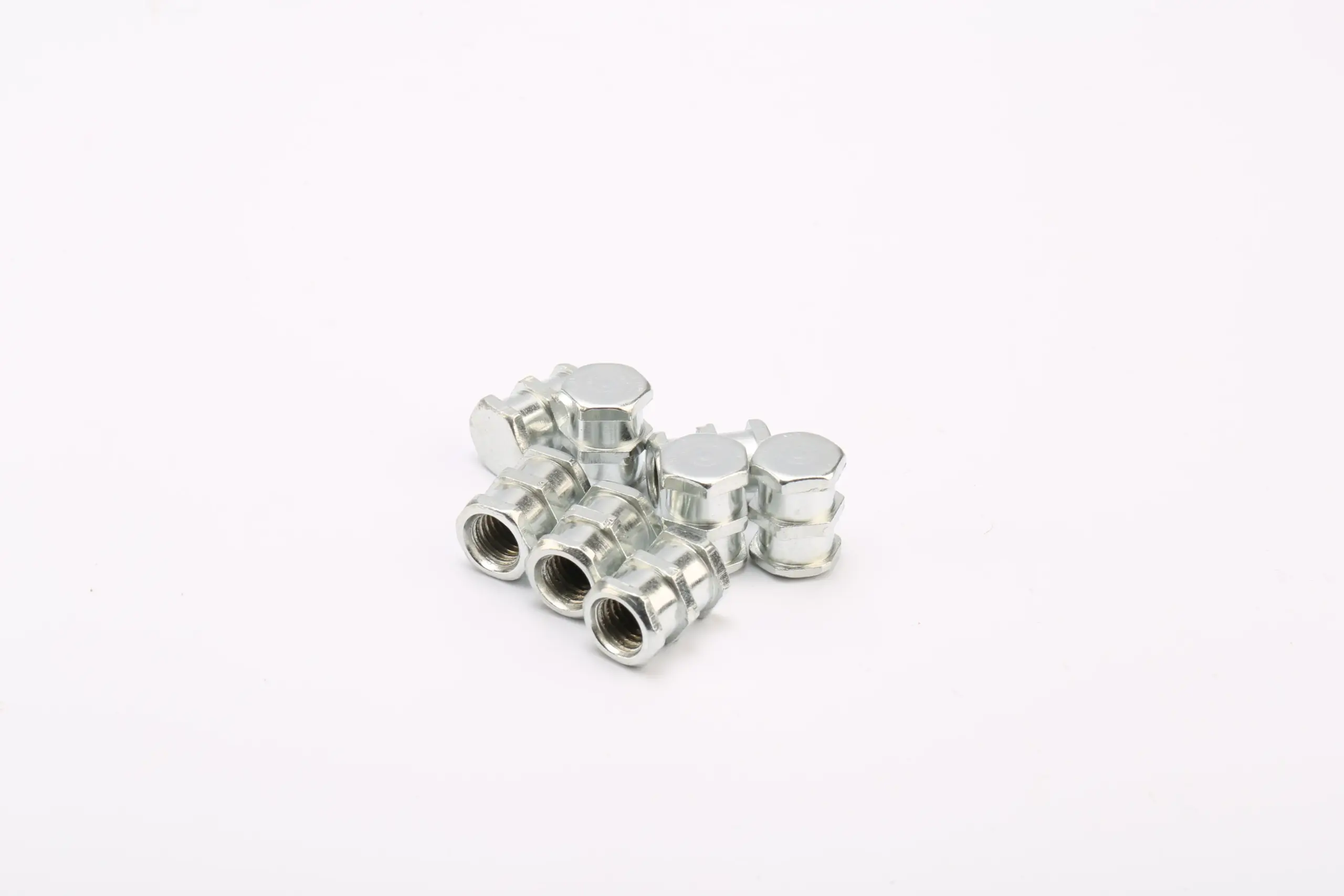
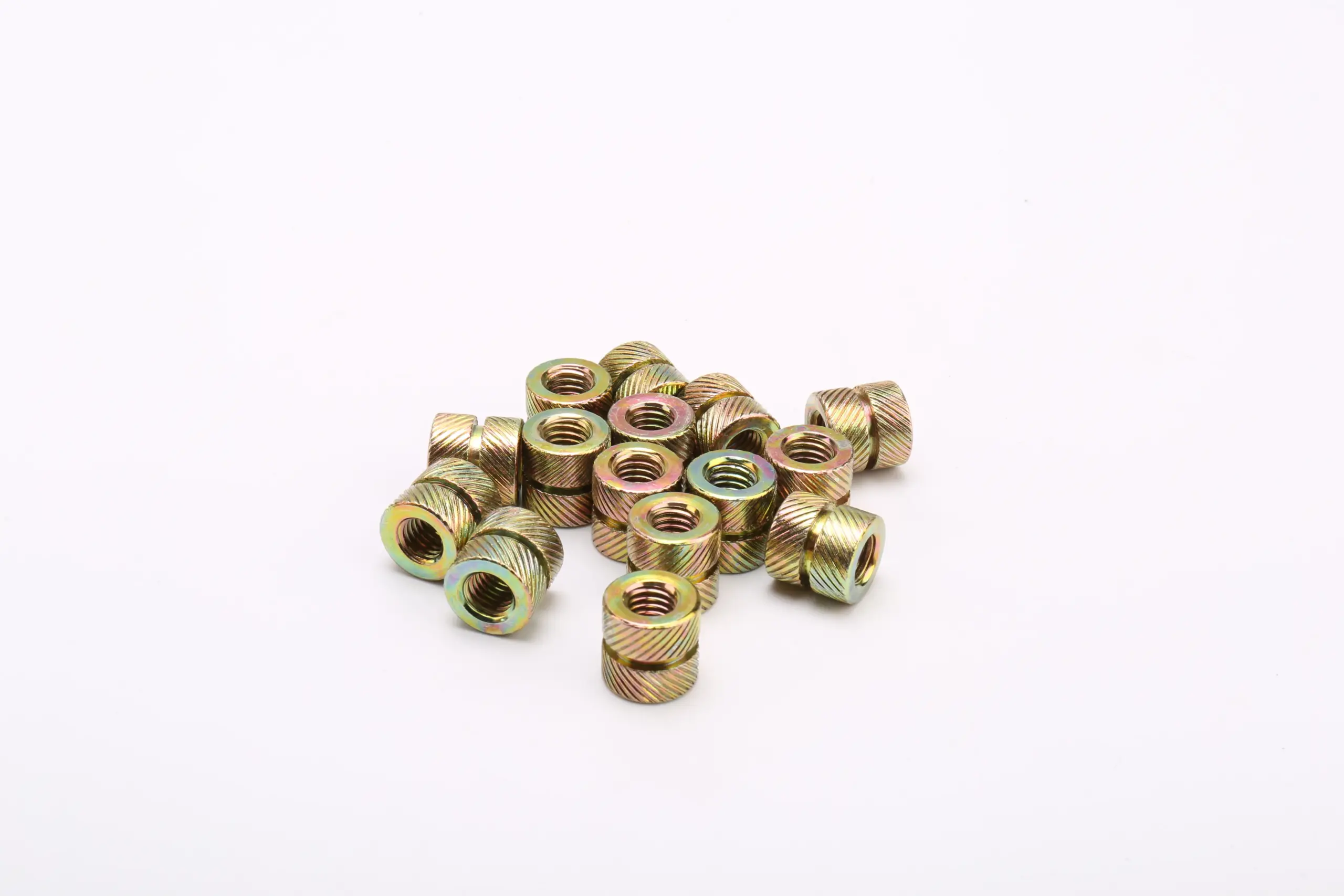
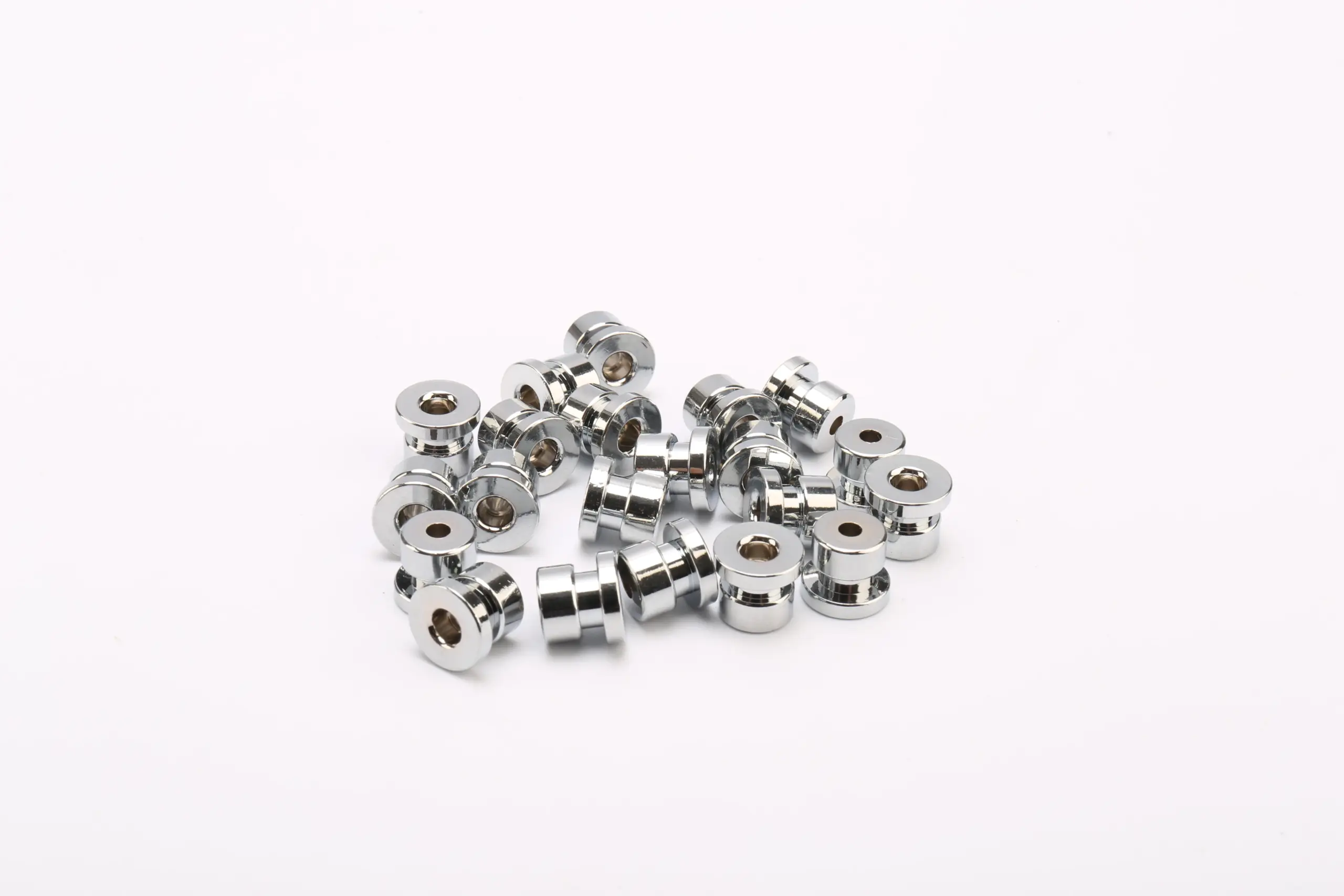
Rivet nuts create a threaded attachment point in a sheet or panel by deforming a tubular body during installation. The gallery shows flanged and knurled examples in several sizes. The visible shape is only part of the specification: the panel material, hole size, grip range and installation tool determine whether the nut can be set correctly.
Tubular body and flange
The flange sits on the accessible side of the panel, while the tubular body passes through the hole and is deformed on the opposite side. The flange can provide a seating surface and limit insertion depth. Check its diameter and thickness against the panel recess or cover. A flange that stands too high may interfere with the mating part.
How installation creates a clamp
The installation tool pulls or compresses the body so that it grips the panel. The correct procedure depends on the nut design and tooling. Do not improvise a setting method from the photograph. Confirm the required hole, grip range and tool setting with the supplier. An improperly set nut may turn, sit proud or damage the panel even when it appears attached.
Grip range and panel preparation
The panel thickness must fall within the nut’s specified grip range. Measure the actual material at the hole, including coating or laminate if it affects the stack. Deburr the hole and remove chips before installation. For soft or brittle panels, review the risk of crushing, cracking or pull-through. A backing washer or different insert style may be needed, but only after the joint is reviewed.
Knurl, thread and inspection
A knurled body can help resist rotation in the panel, but it does not replace correct hole sizing and tool setup. After installation, check that the flange is seated, the body is expanded as intended and the internal thread is clear. A mating screw should start by hand. Inspect the panel around the nut for cracks, distortion or loose material.
Specification checklist
- State the thread and nut body dimensions.
- Provide the panel material, thickness and hole size.
- Confirm the grip range and installation tool.
- Inspect flange seating, body set and thread condition.
Set several samples in the production panel and check them before approving the process. Record the tool setting and the accepted visual result.
FAQ
Can a rivet nut be installed without a special tool?
The approved installation method should come from the supplier. A substitute method can damage the nut or panel and should not be assumed to be equivalent.
Does the flange carry the load?
The flange provides a seating surface, but the joint behavior depends on the panel, body deformation and application. Do not infer a load rating from the image.
What is the most important panel detail?
The actual material and thickness at the hole, because they determine the available grip and installation behavior.
Browse the rivet nuts category, or compare embedded nuts and embedded and knurled nuts.