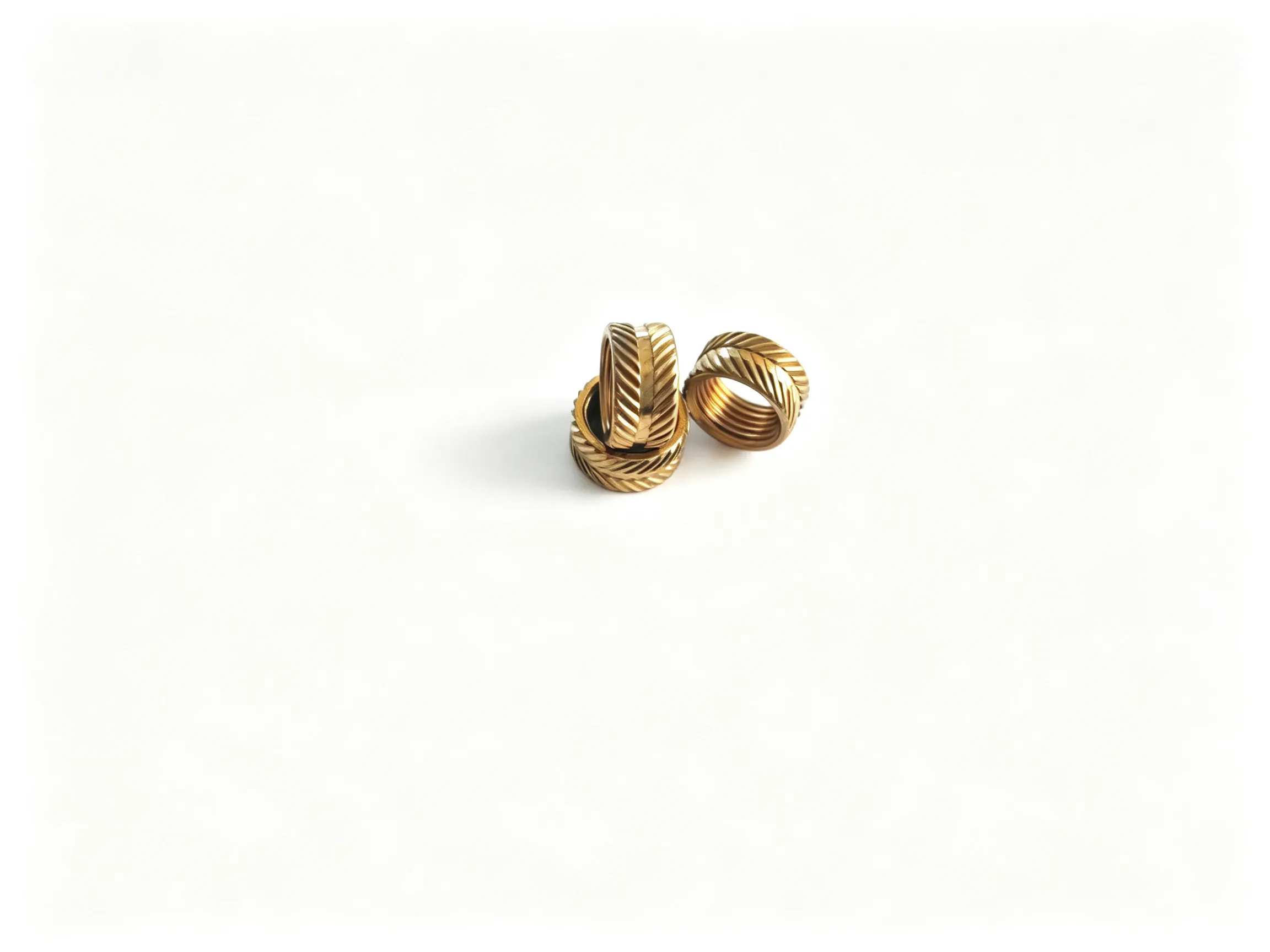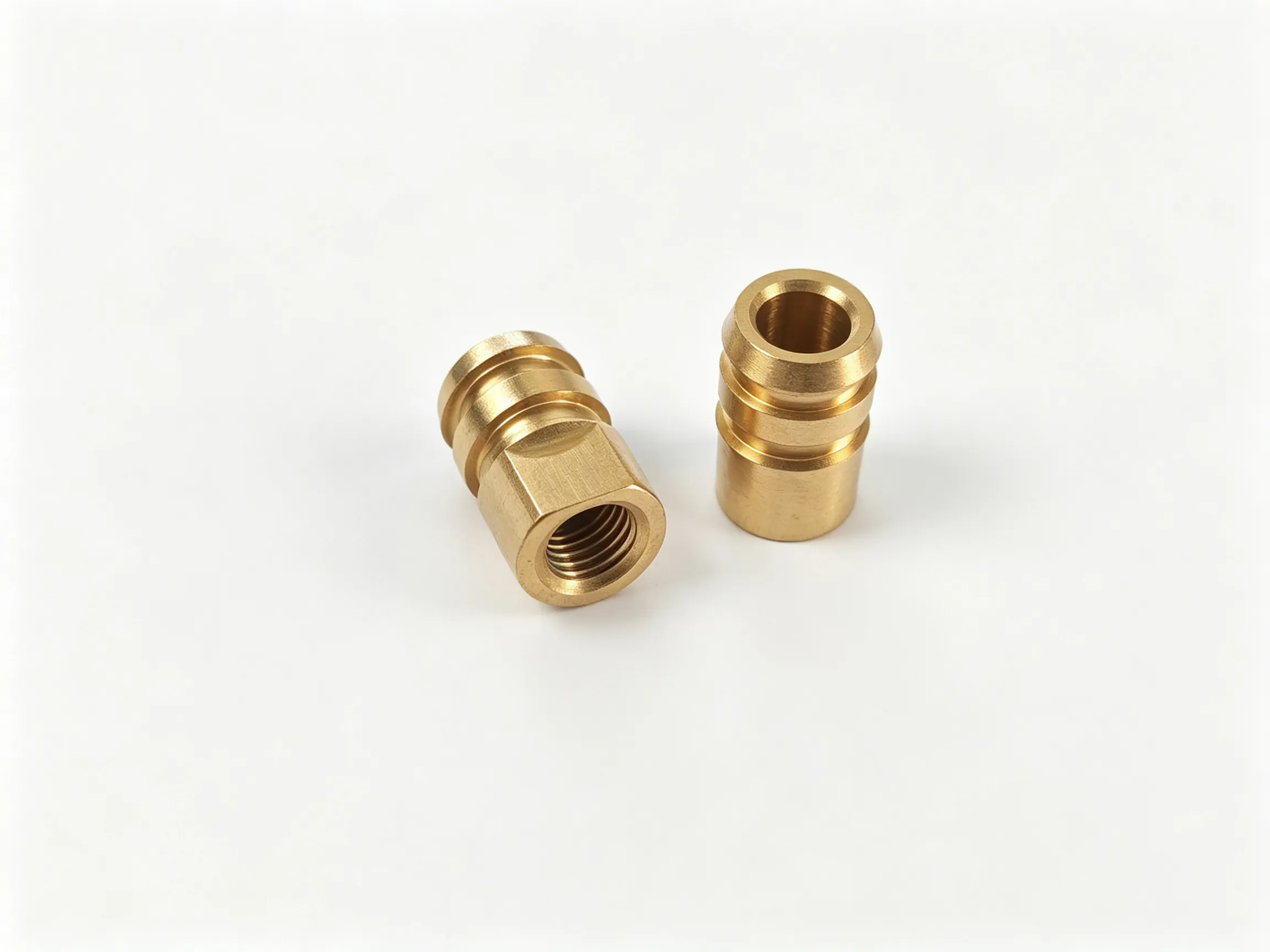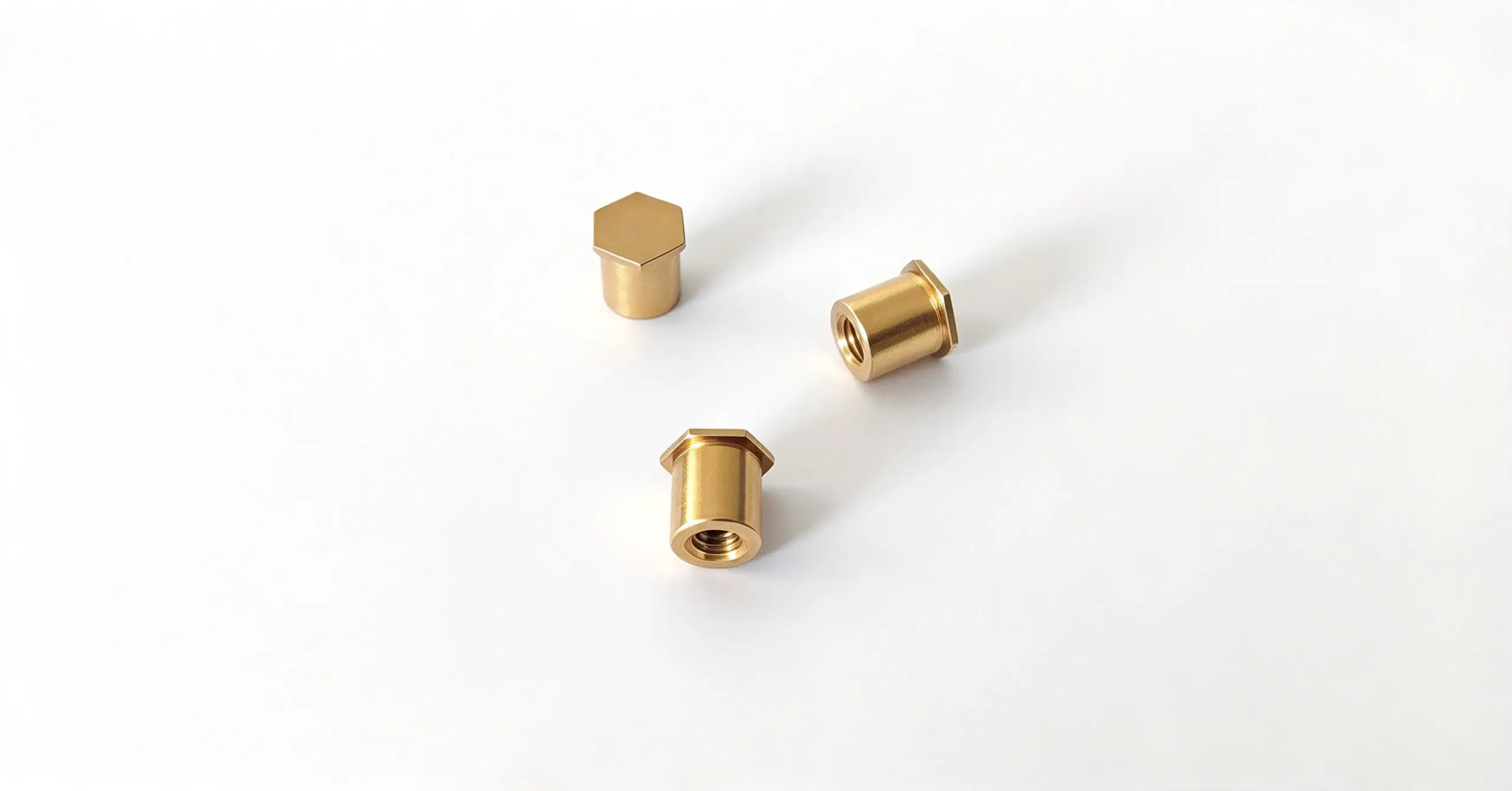


Embedded knurled nuts combine a threaded insert body with an external knurl and, in the gallery, a visible flange at one end. The flange can provide a seating or bearing surface, while the knurled section engages the surrounding material. These features should be matched to the installation process and the panel or molded part, not selected from the photograph alone.
Flange and knurled body
The flange is the first feature to identify because it may control seating depth and the visible surface around the hole. The knurled body below it can provide a key against rotation, but only when the hole and installation method suit the pattern. Check the flange diameter, thickness and edge condition against the recess or counterbore.
Molded-in and post-installation possibilities
An embedded nut may be placed during molding or installed afterward, depending on the component design. These routes require different hole preparation and process controls. The drawing should say which route is approved. Do not assume that a flange is intended to sit flush, or that the knurl is designed for a particular plastic, without confirming the process.
Hole, wall and seating checks
Provide the hole diameter, depth and surrounding wall thickness. The flange should contact the intended face without rocking, and the body should not crack or distort the material during installation. If the nut sits in a recess, check that trapped air or excess material can escape. A small radius at the hole edge can also affect how the flange seats.
Thread and surface protection
Protect the internal thread from plating, debris and installation pressure. After installation, confirm that the bore is clear and that the mating screw can be started by hand. For a visible flange, define the acceptable marks and cleaning method. A knurled or ribbed body can collect material, so the production process should include a way to remove loose particles before final assembly.
Approval points
- Confirm flange diameter, thickness and seating face.
- Define the knurl or rib pattern and body length.
- Provide the hole, material and approved installation route.
- Inspect thread cleanliness, seating and surrounding material.
Run a trial with the actual panel or molding material. Check the installed height, pull-through appearance and thread condition before approving the lot.
FAQ
Is the flange always a load-bearing surface?
It can provide a seating surface, but the drawing and joint design must confirm its function. Do not assume a load rating from the shape.
Can the nut be installed after molding?
That depends on the selected design and process. Confirm the approved installation method with the supplier and the part designer.
What is the main thread check after installation?
Verify that the bore is clear, undamaged and able to accept the mating screw by hand.
Browse the embedded and knurled nuts category, or compare diagonal-knurl embedded nuts and custom embedded nuts.