Slotted screws with a single-slot drive for general assembly and maintenance. Produced to custom head, thread and length requirements. The notes below focus on the features that need to be confirmed before a drawing is approved.
Slot and head geometry
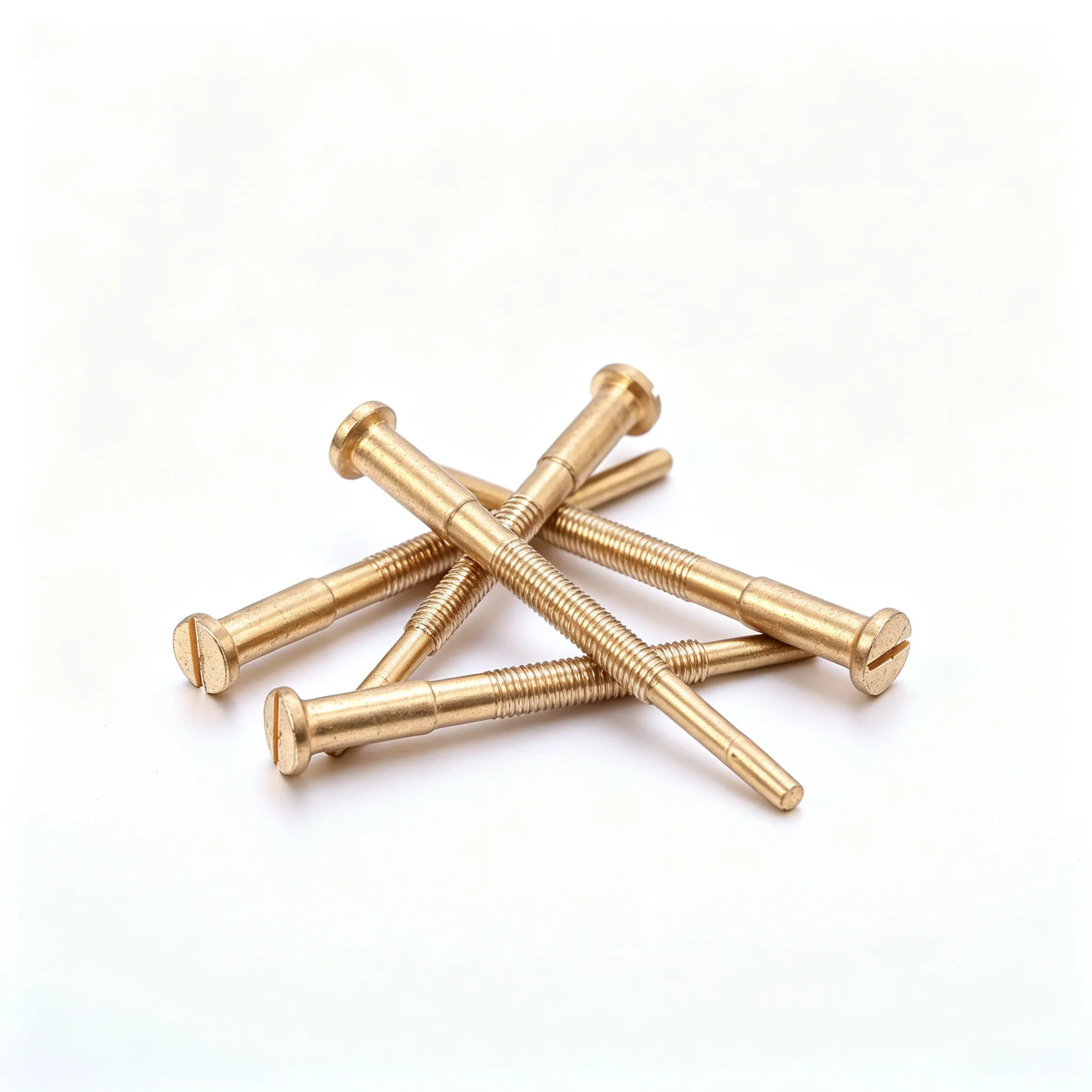
This slotted screw uses a single-slot drive. The slot is simple to inspect and can suit a conventional screwdriver, but the blade must match its width, depth and end condition. A worn or undersized blade can burr the slot and make removal difficult.
Begin with the interface that receives slotted screw. The mating bore, panel or bracket establishes which surfaces locate and which clear. A dimension that is correct on the screw can still fail at that interface.
Thread and seating
Specify the thread, length, head profile and any shoulder or plain section. Identify the face that seats and the clearance around the head. The slot drive does not establish whether the screw is a machine screw, a self-tapping screw or a special fastener.
Use functional lengths for slotted screw rather than overall length wherever possible. The distance from the seating face to the first thread, the length of a locating step and the depth of a bore all describe how the part behaves in the assembly.
Blade fit
Check the slot against the selected blade before installation. The blade should engage across the slot without rocking and should approach the screw squarely. Confirm that nearby parts do not limit the available rotation.
Define the assembly orientation for slotted screw and the surfaces that must remain accessible. If the part can be installed in more than one direction, say how the correct orientation is recognized and whether the thread or a keyed feature prevents reversal.
Material and finish
State the base material, finish and any appearance requirement. A dark or bright surface is not a material grade. If the head is visible, define the acceptable slot edges and surface marks for the final viewing condition.
When slotted screw will see moisture, cleaning agents or a different metal, state the exposure rather than selecting a finish from color alone. Functional surfaces such as threads, bores and locating diameters may need different protection from cosmetic surfaces.
Assembly check
Trial the screw in the actual assembly. Check that the head seats without rocking, the thread engages over the intended length and the slot remains usable after tightening. Inspect the slot for deformation.
Production inspection of slotted screw should follow the functions that control assembly. Check the locating features, the thread or bore and the seating face, then add the visible edge and surface checks that matter for the finished part.
FAQ
Can any flat blade be used?
No. The blade should match the slot width, depth and condition to avoid damage.
Does a slotted head define the thread type?
No. The drive and thread are separate features and should both be specified.
What should be inspected after assembly?
Check seating, thread engagement and the condition of the slot and head.
Browse the slotted screw category, or compare customized flat-head slotted screw manufacturer and customized slotted screw manufacturer.