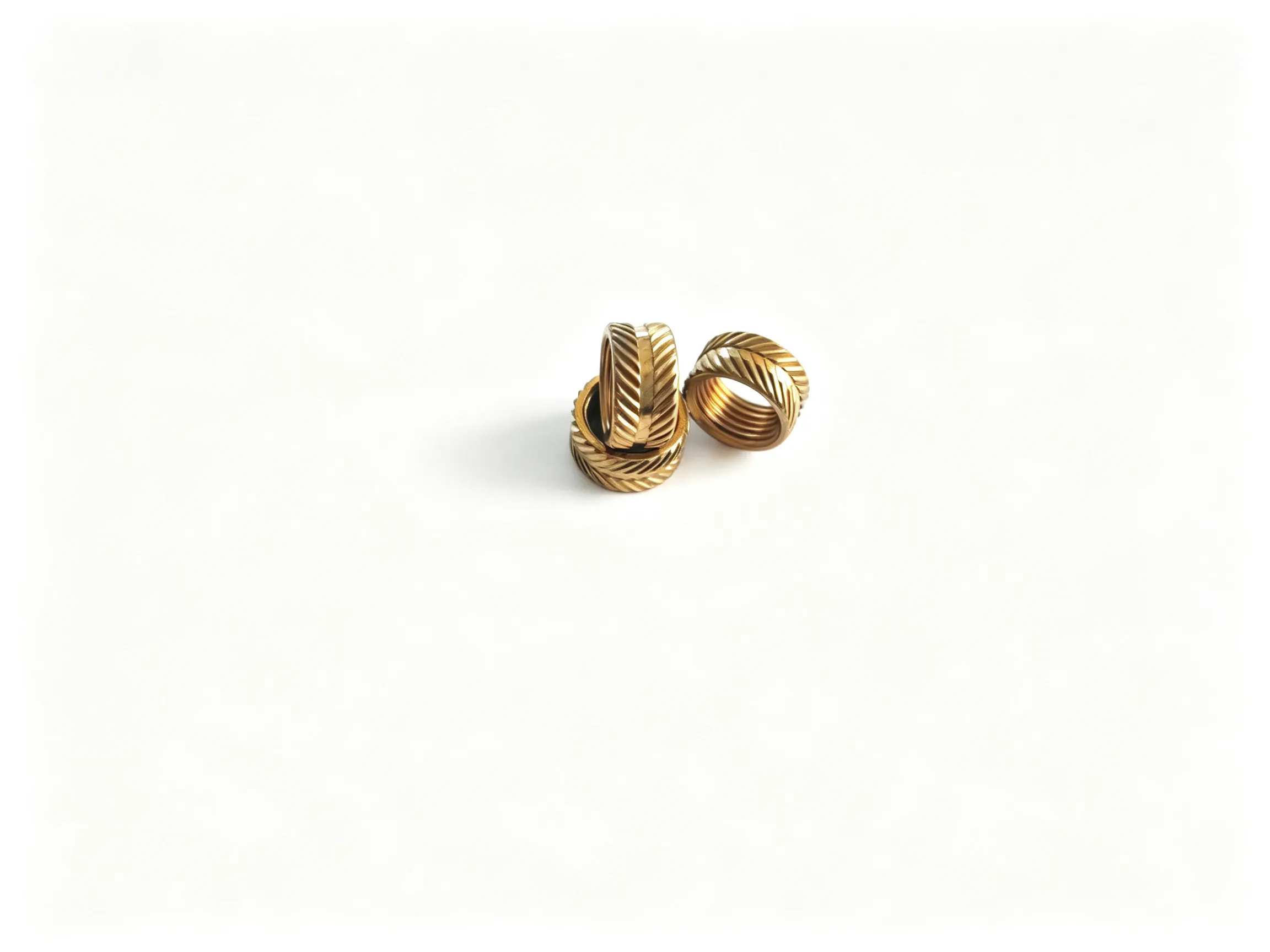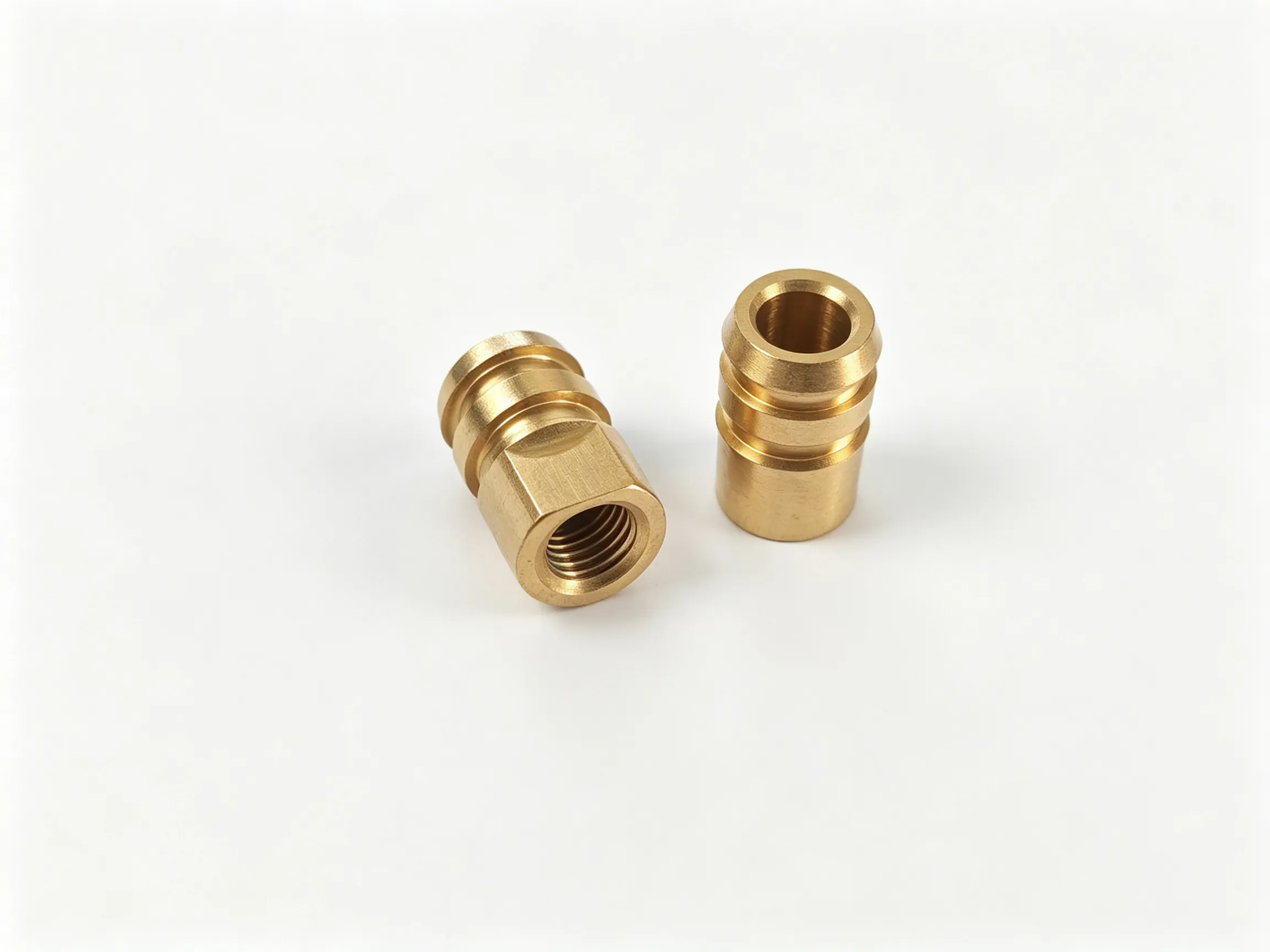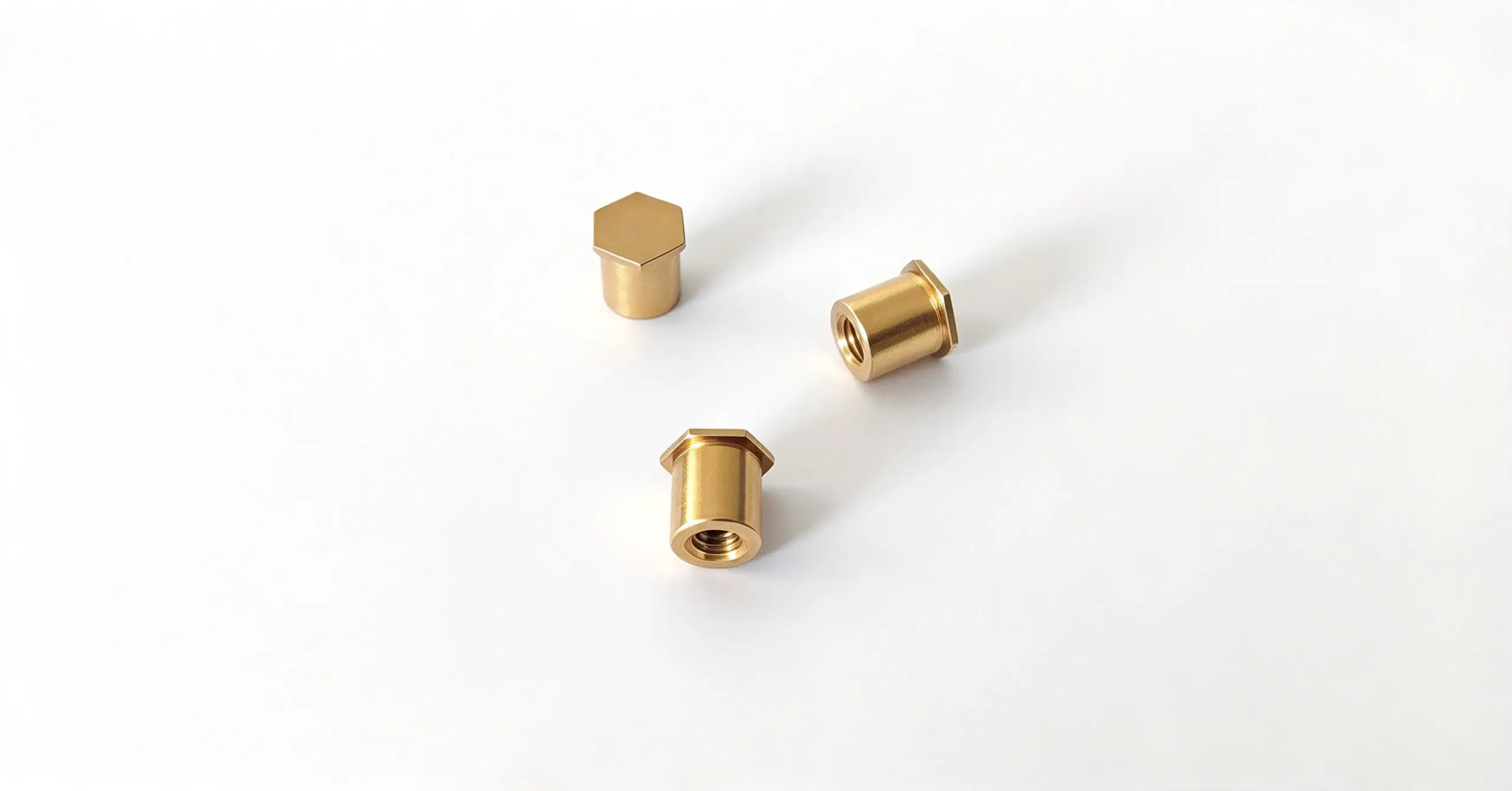


Embedded nuts create a threaded connection inside plastic, wood or composite parts where a normal nut would be difficult to reach. The gallery shows small threaded inserts with a patterned outer body and a central bore. The outer profile is not just decorative: it must suit the hole, the installation method and the material around it.
How an embedded nut provides a thread
The internal thread accepts a mating screw, while the outer body transfers the connection into the surrounding material. A patterned or ribbed surface can help resist rotation and provide a mechanical key, but the actual behavior depends on the hole and installation process. Confirm which end enters first and which face remains at or below the surface.
Outer profile and hole preparation
Review the outside diameter, length, rib or knurl pattern and any flange. The hole should be sized for the selected installation method, with a clean entry and enough surrounding material to support the insert. A hole that is too tight can damage the pattern; one that is too loose may not provide reliable engagement. Burrs and trapped chips can prevent the nut from seating squarely.
Choosing an installation method
Heat, ultrasonic, press-in, molded-in and other methods are not interchangeable. The drawing or process specification should identify the approved method and the equipment conditions. Do not assume that a ribbed body is automatically suitable for every plastic or composite. The material, wall thickness, melt behavior and required surface finish all belong in the process review.
Thread protection and inspection
Keep the internal thread clear during handling and installation. After the nut is installed, check that the bore is not deformed and that a mating screw starts by hand. Inspect the surrounding material for cracks, whitening, sink marks or excess flash. If the nut must sit flush, verify the installed height rather than the free length alone.
Specification checklist
- Define the thread and usable depth.
- Show the outer profile, flange and installed orientation.
- Provide the hole size, panel material and wall thickness.
- State the approved installation method and inspection points.
A trial installation in the actual material is more useful than a dimensional check alone. Record the process settings that produce an acceptable seat and thread.
FAQ
Are embedded nuts only for plastic?
The page describes plastic, wood and composite applications, but the actual material and installation method must be confirmed for each design.
Does the outer pattern guarantee resistance to rotation?
It can contribute to the connection, but performance depends on the hole, material and installation process. Do not treat the pattern as a stand-alone rating.
What should be checked after installation?
Check seating, surrounding-material condition, thread cleanliness and whether a mating screw engages freely.
Browse the embedded nuts category, or compare custom embedded nuts and stainless steel embedded nuts.