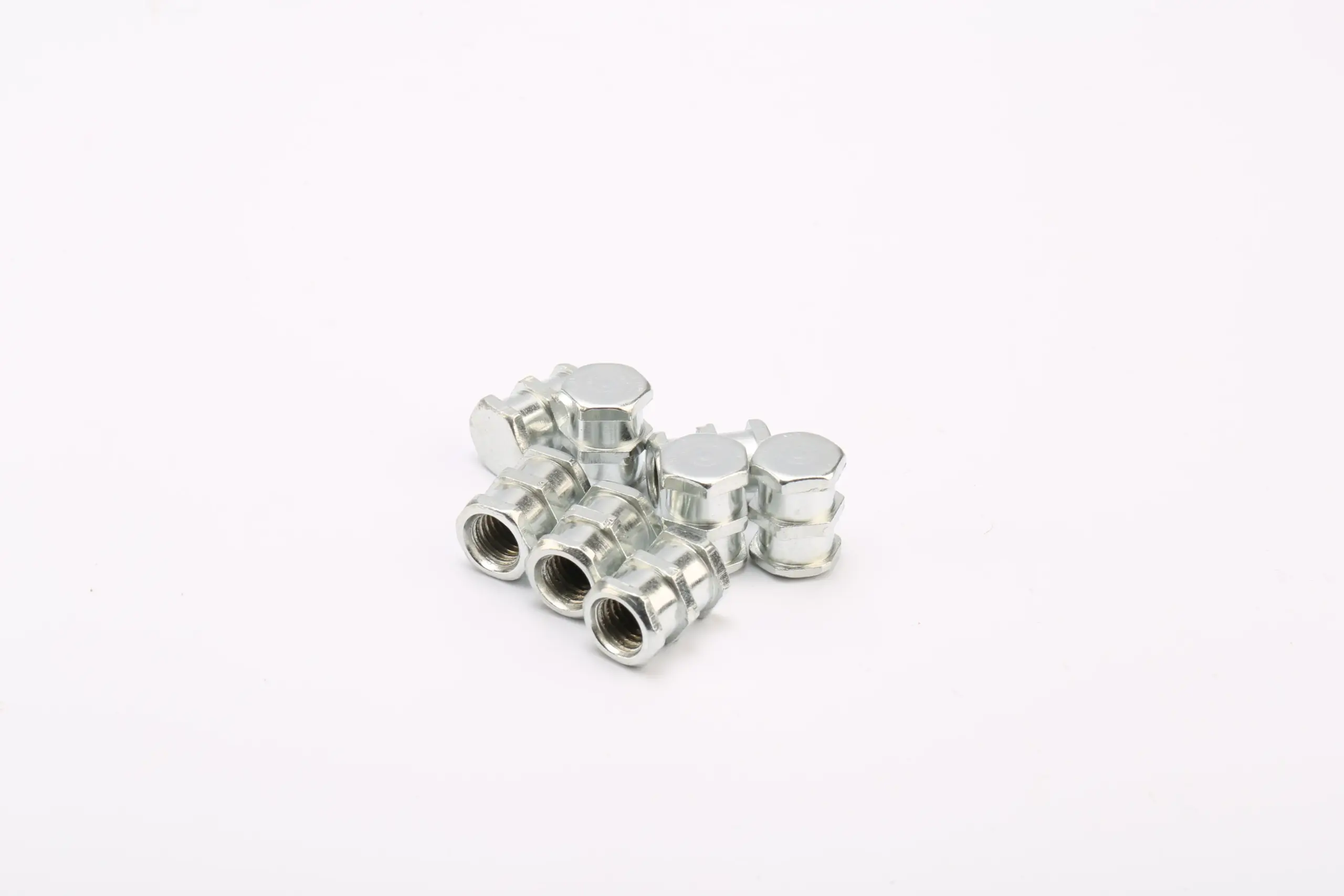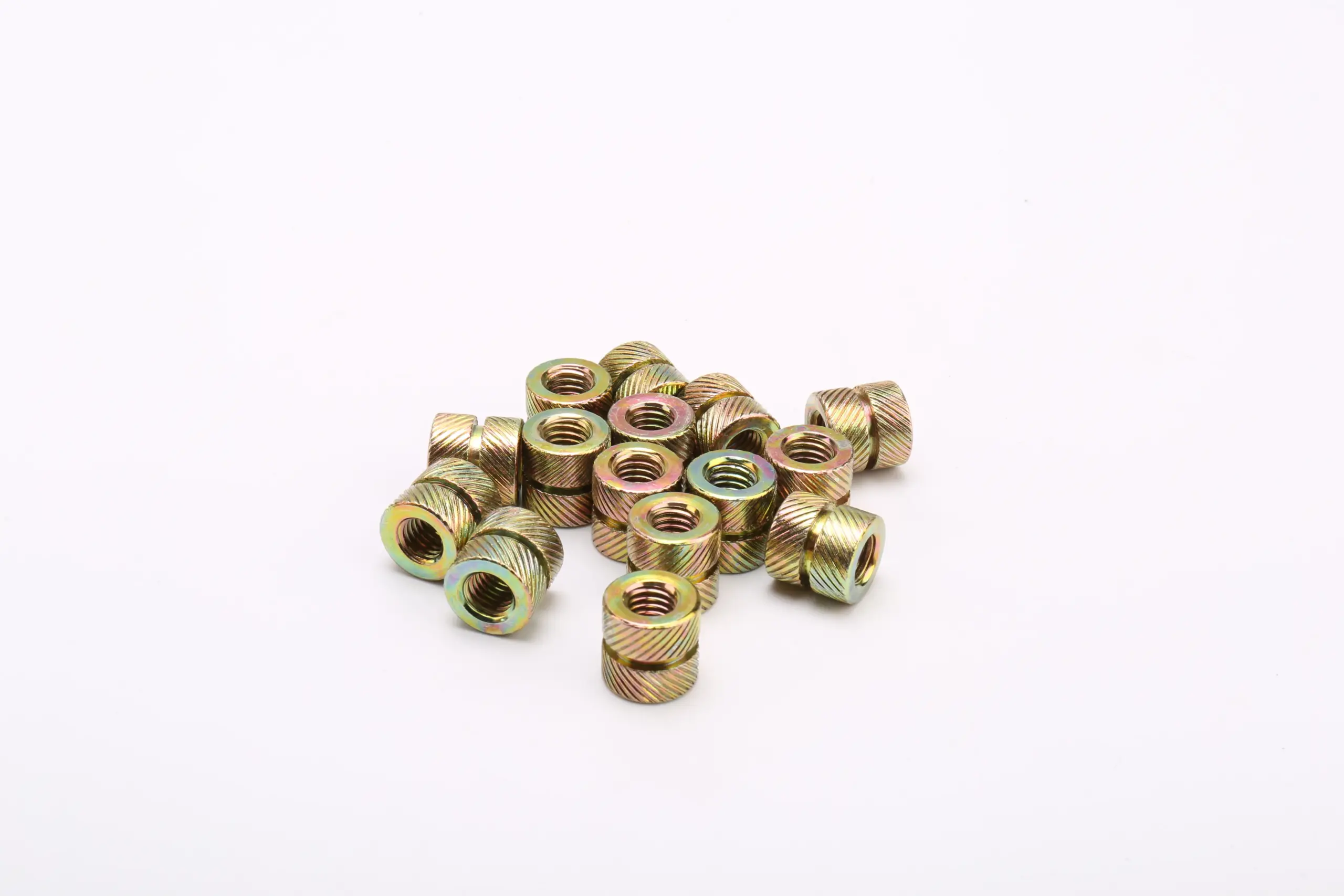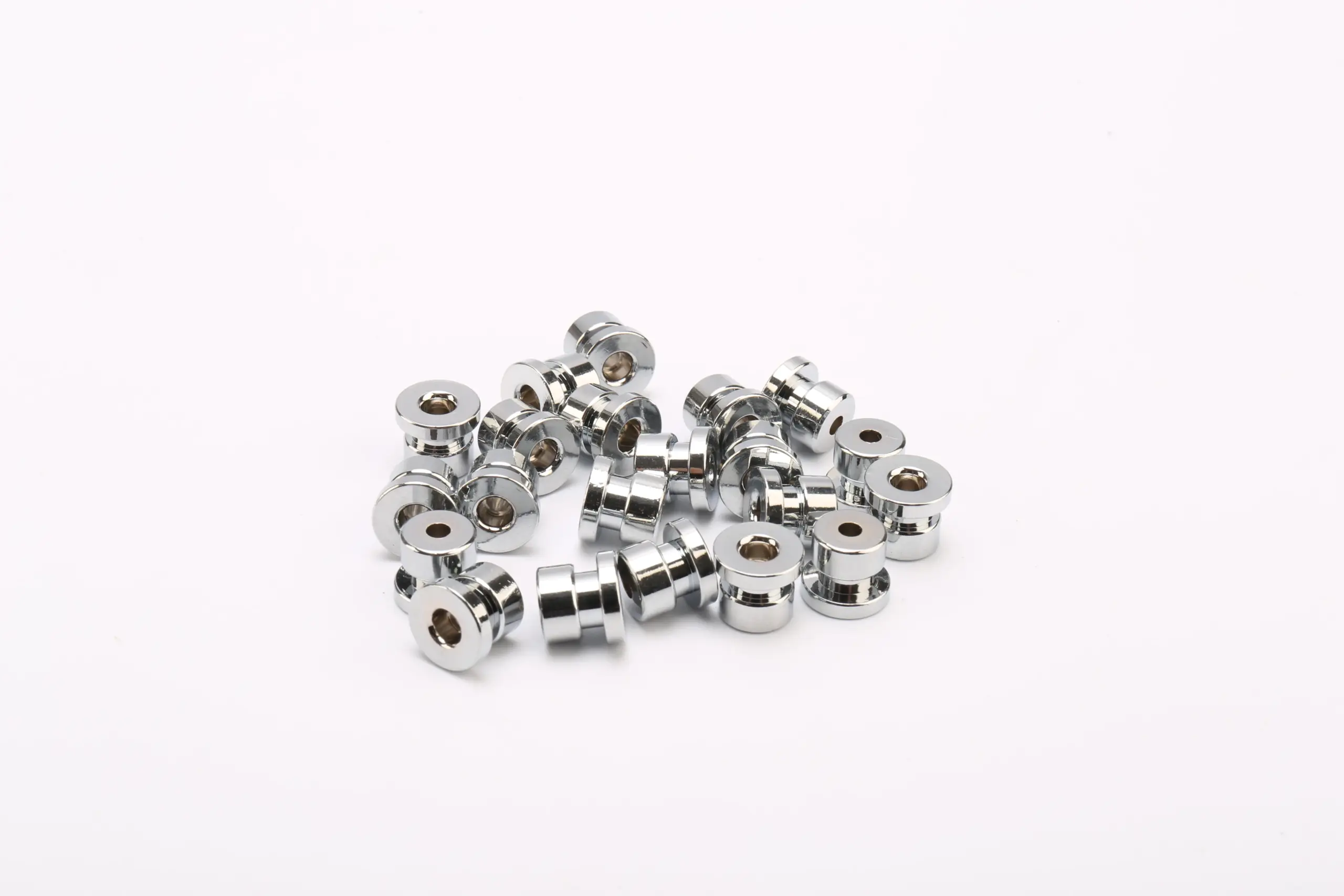


Square nuts use a four-sided body that can be located against a flat surface or used where a square outline is preferred over a hex. The gallery shows silver-toned parts with a square outer profile and a central threaded section. The exact body depth, corner treatment and thread position should come from the drawing.
Square outline and barrel section
Some views show a square outer body with a cylindrical section around the bore. Confirm whether that section is a seating collar, a projection for a recess or simply part of the body. The square outline may provide orientation, but it does not by itself prevent loosening. Check the corner radius and the clearance needed for a socket.
Thread axis and seating
The thread should be aligned with the mating fastener and the bearing face should be square to the load path. A tilted or burred face can reduce contact and make the nut difficult to seat. If the nut fits into a pocket, check the pocket depth and the clearance around the barrel. A washer may be appropriate when the mating surface is soft or irregular.
Wrench access and orientation
Square nuts can be useful in tight rectangular spaces, but the available swing angle still matters. Confirm the tool approach and the distance to nearby walls. In a channel, check that the nut can be positioned before tightening and that it will not rotate during assembly. The part should start by hand and turn freely before final seating.
Material, finish and inspection
The silver appearance should be confirmed as a material or coating requirement. Check the thread after finishing and inspect the square faces for dents or burrs. For visible hardware, define the acceptable surface condition and protect the corners during packing. If the nut is used in a moving assembly, review the retention method separately.
Ordering information
- State thread, square size, body depth and corner radius.
- Show the barrel or collar and the intended seating face.
- Provide the recess, channel or washer interface.
- Confirm material, finish and appearance requirements.
Approve the sample in the intended recess or fixture. Check seating, thread engagement and tool clearance before production.
FAQ
Is a square nut stronger than a hex nut?
The outside shape alone does not establish strength. The thread, material, dimensions and joint design must be evaluated together.
Can it be used as a T-slot nut?
Only when the slot, flange and body geometry are designed for that use. A general square nut should not be assumed to fit an extrusion slot.
What should be checked first?
Confirm the thread, seating face and available wrench clearance before reviewing appearance.
Browse the square nuts category, or compare stainless steel square nuts and hex nuts.