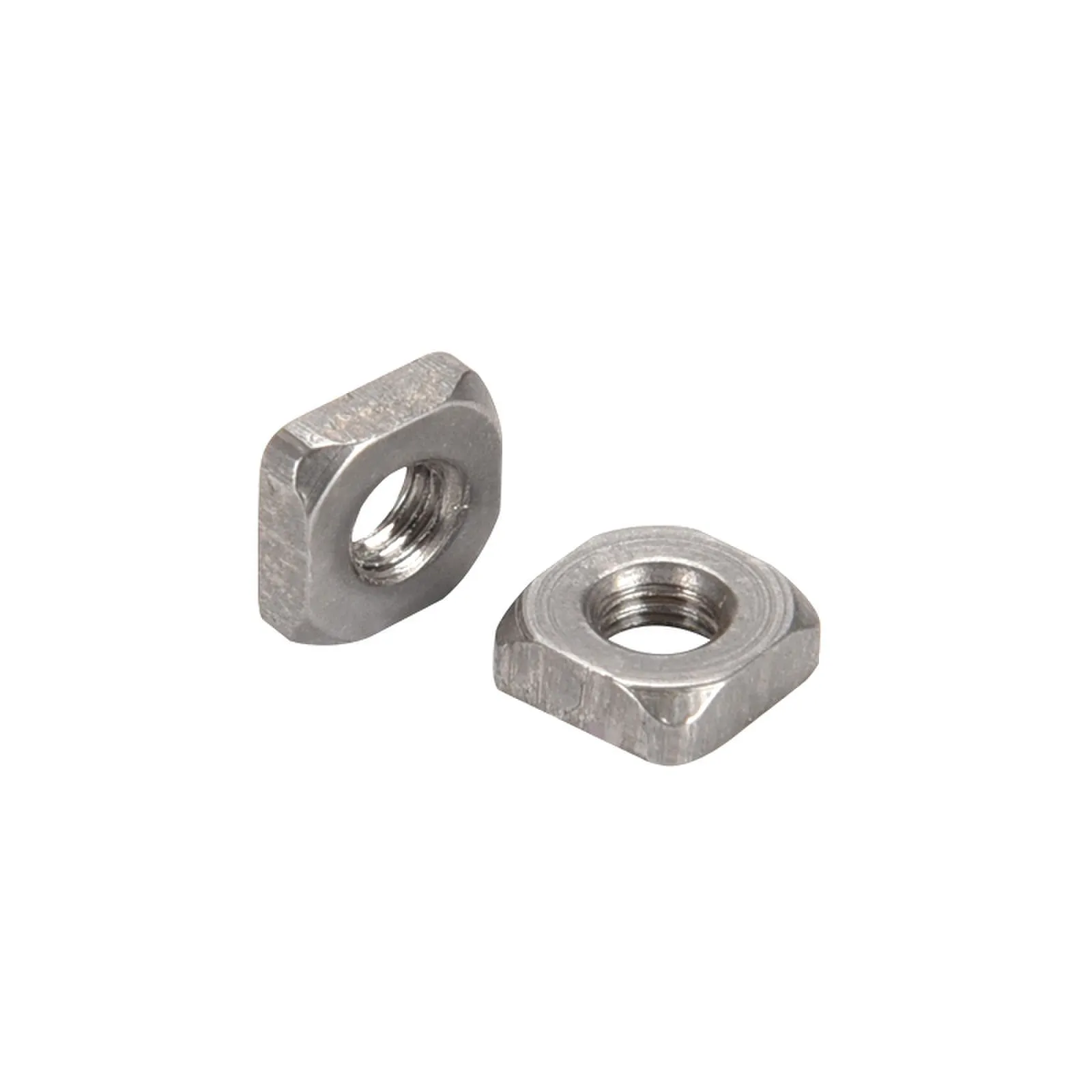
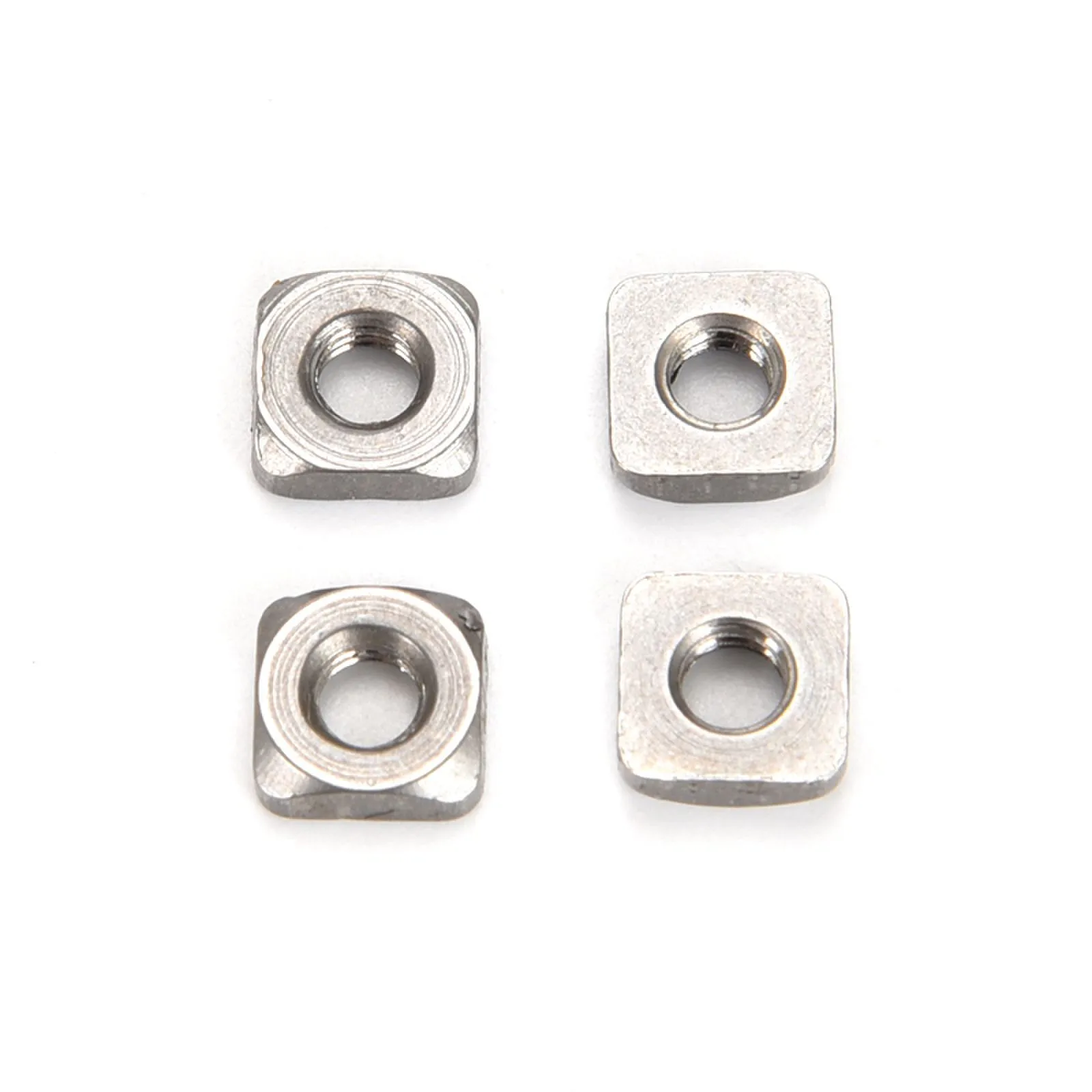
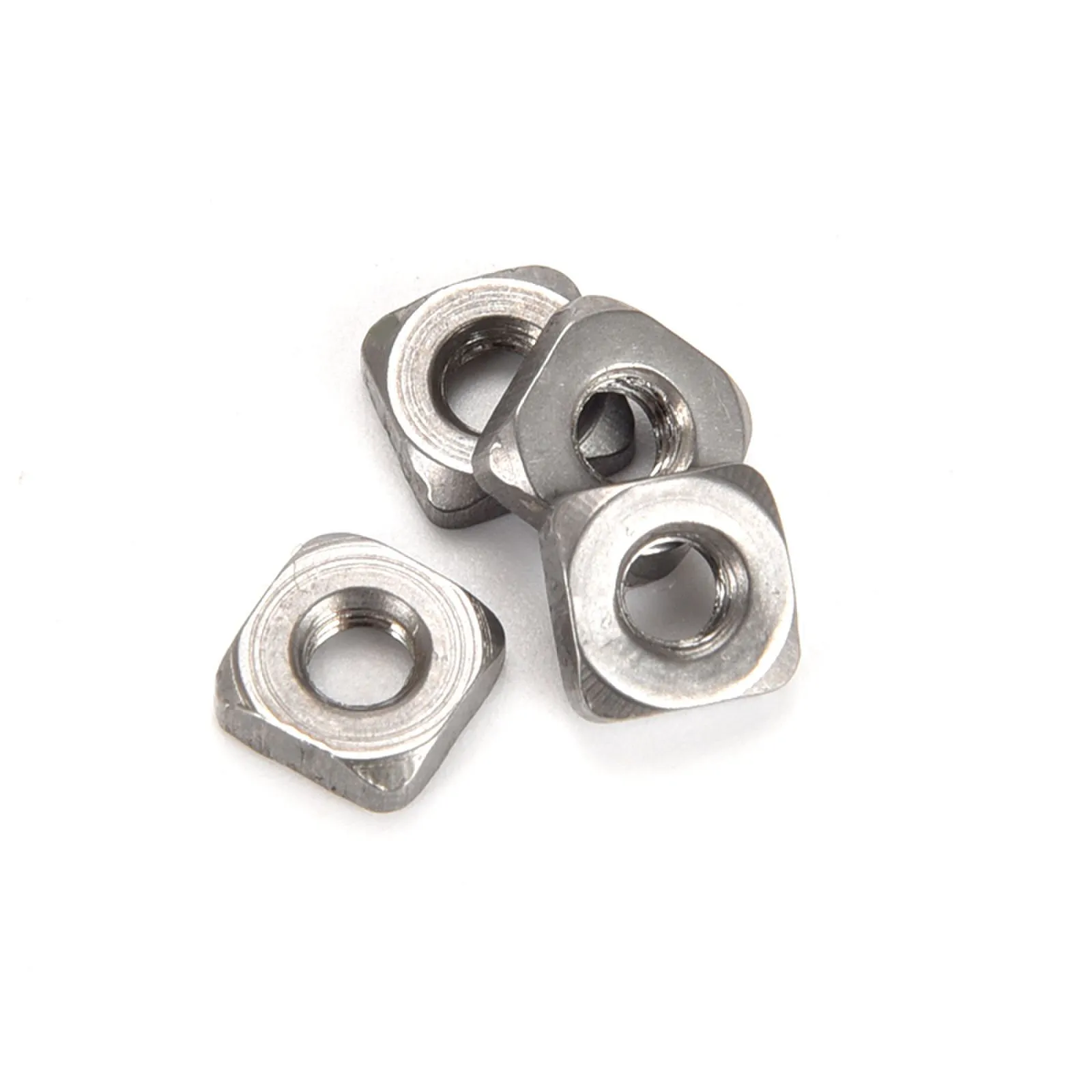
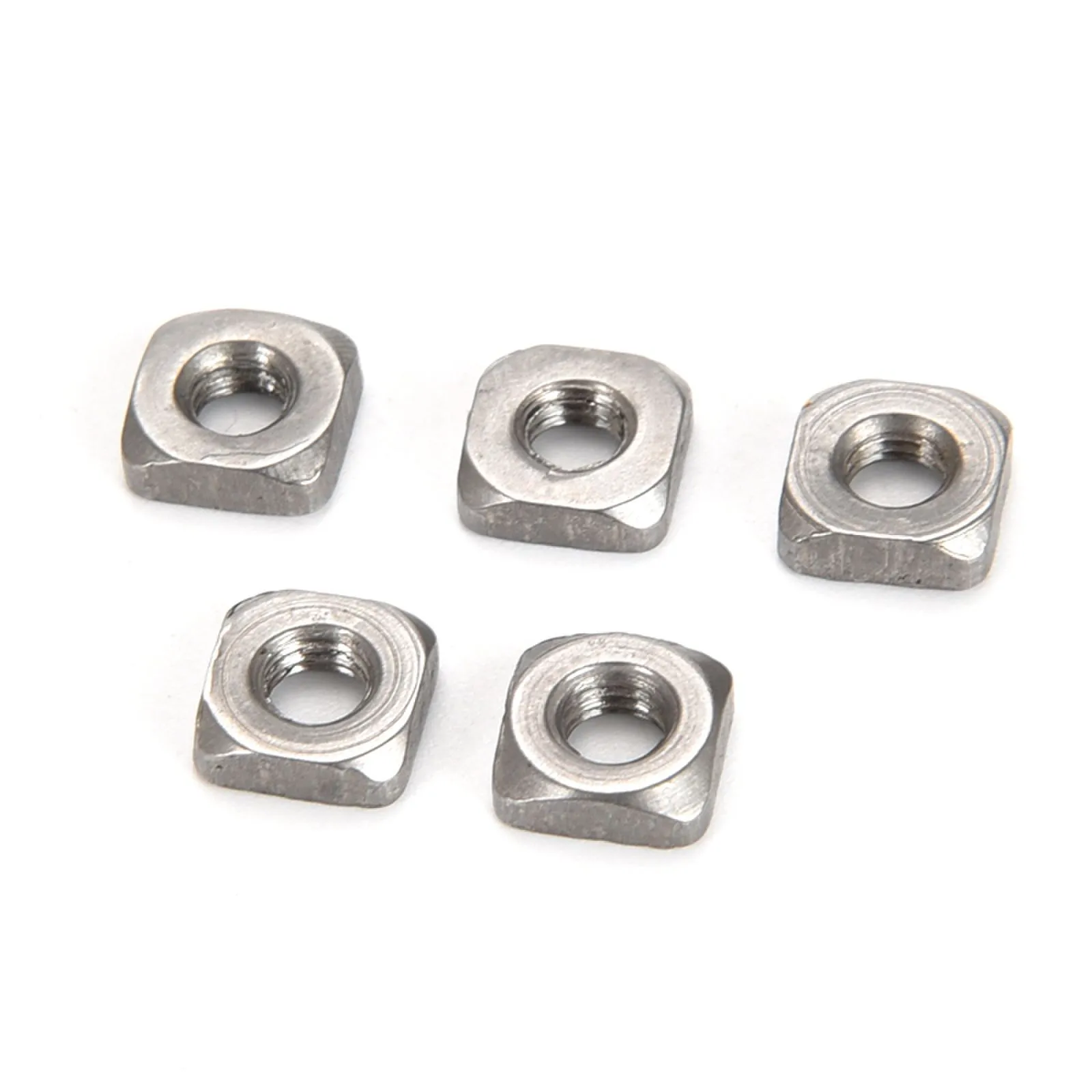
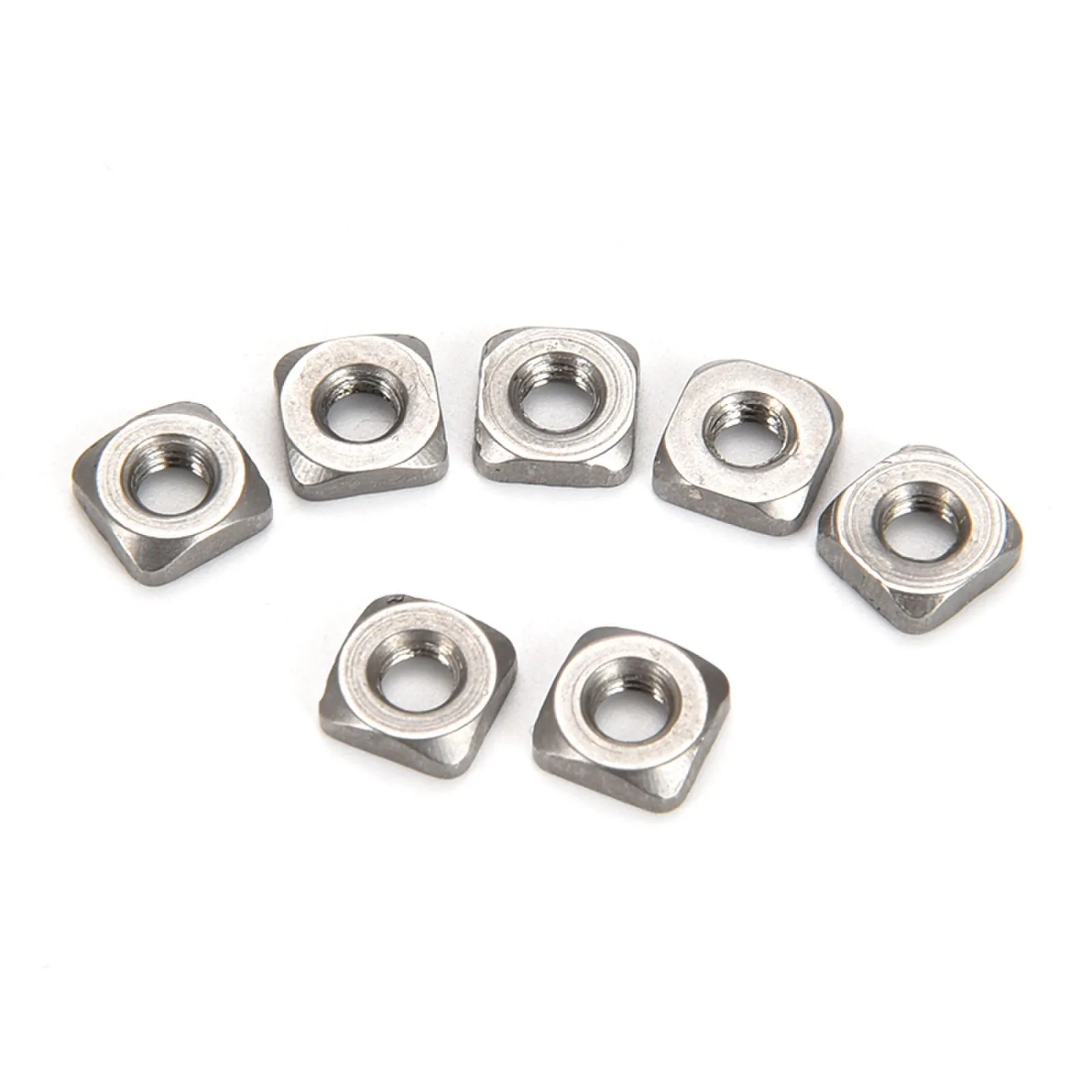
Stainless steel square nuts use a four-sided body for controlled orientation and wrench access. The square outline can sit against a flat feature or fit a channel where a hex nut would be less convenient. The gallery shows rounded-corner square bodies with a central thread; the exact material grade and finish still need to be stated on the purchase drawing.
Square body and controlled location
A square nut offers four broad flats that can contact a mating surface or guide. That can help keep the nut from turning when access is limited, or align it within a rectangular recess. The corners are usually relieved or rounded, so confirm the actual corner profile and the space needed for the socket. A square body is not automatically a locking feature.
Thread and bearing surface
Check the thread size, pitch, direction and usable depth. The bearing face should be flat and supported; a rough or tilted face can reduce contact even when the thread is correct. If the nut sits in a pocket, confirm the pocket depth and corner clearance. A washer may be needed when the clamped material is soft or the hole is oversized.
Material and corrosion review
The title identifies stainless steel, but the grade, passivation and surface condition should be confirmed for the environment. Stainless steel is not interchangeable with every other corrosion-resistant material. Review contact with dissimilar metals, cleaning chemicals and trapped moisture. For visible parts, define the acceptable surface appearance and whether marks from wrenching are permitted.
Installation and access
Start the nut by hand and check that it seats without rocking. Use a tool that fits the flats rather than gripping the corners. In a channel or recess, confirm that the nut can be positioned before the screw is tightened and that it will not rotate during assembly. For maintenance, check that the nut can be reached after nearby components are installed.
Ordering checks
- Define thread, square size, thickness and corner radius.
- Show the bearing face and any recess or channel interface.
- State the stainless steel grade, finish and passivation requirement.
- Agree on appearance and inspection criteria.
A trial fit should confirm orientation, thread engagement and tool clearance. If the nut is visible, protect the faces during handling and packing.
FAQ
Is a square nut self-locking?
No. The shape can help with location, but a separate locking method is needed when the joint must resist loosening.
Does stainless steel mean no corrosion?
No. The grade, environment and contact with other materials still matter. Confirm the material specification for the application.
Can the nut be used in a recessed pocket?
It can be reviewed for that use when the pocket depth, corner clearance and seating face are defined.
Browse the square nuts category, or compare the general square nut page and hex nuts.