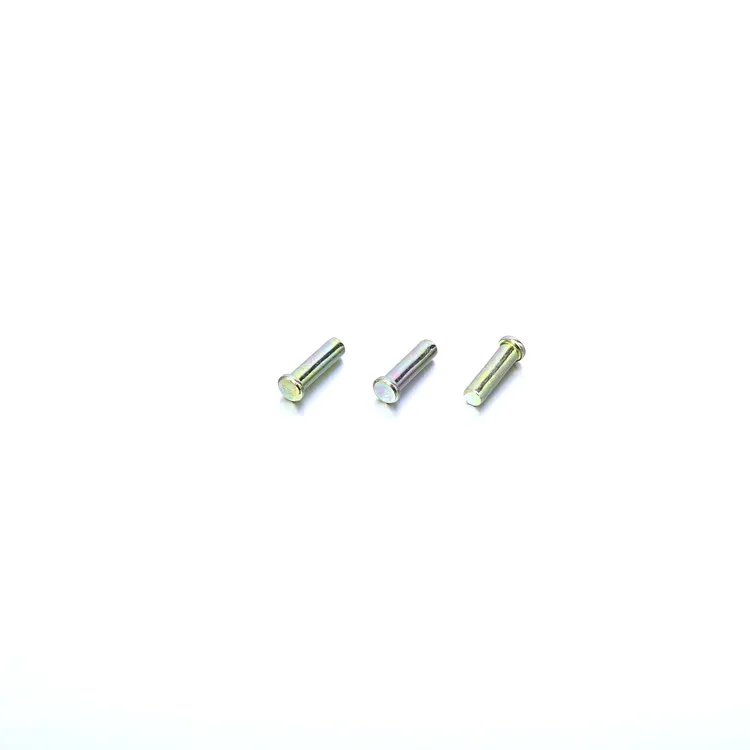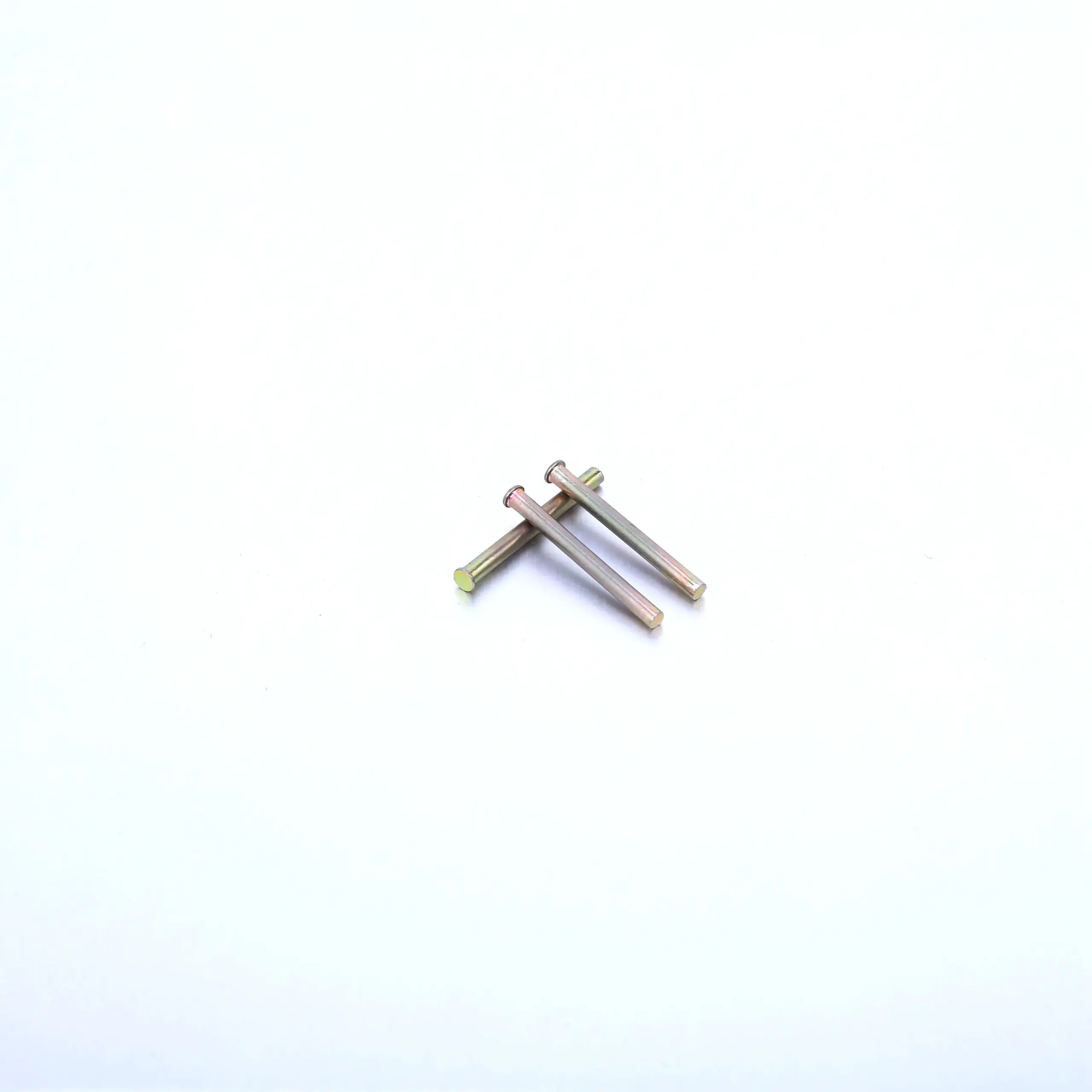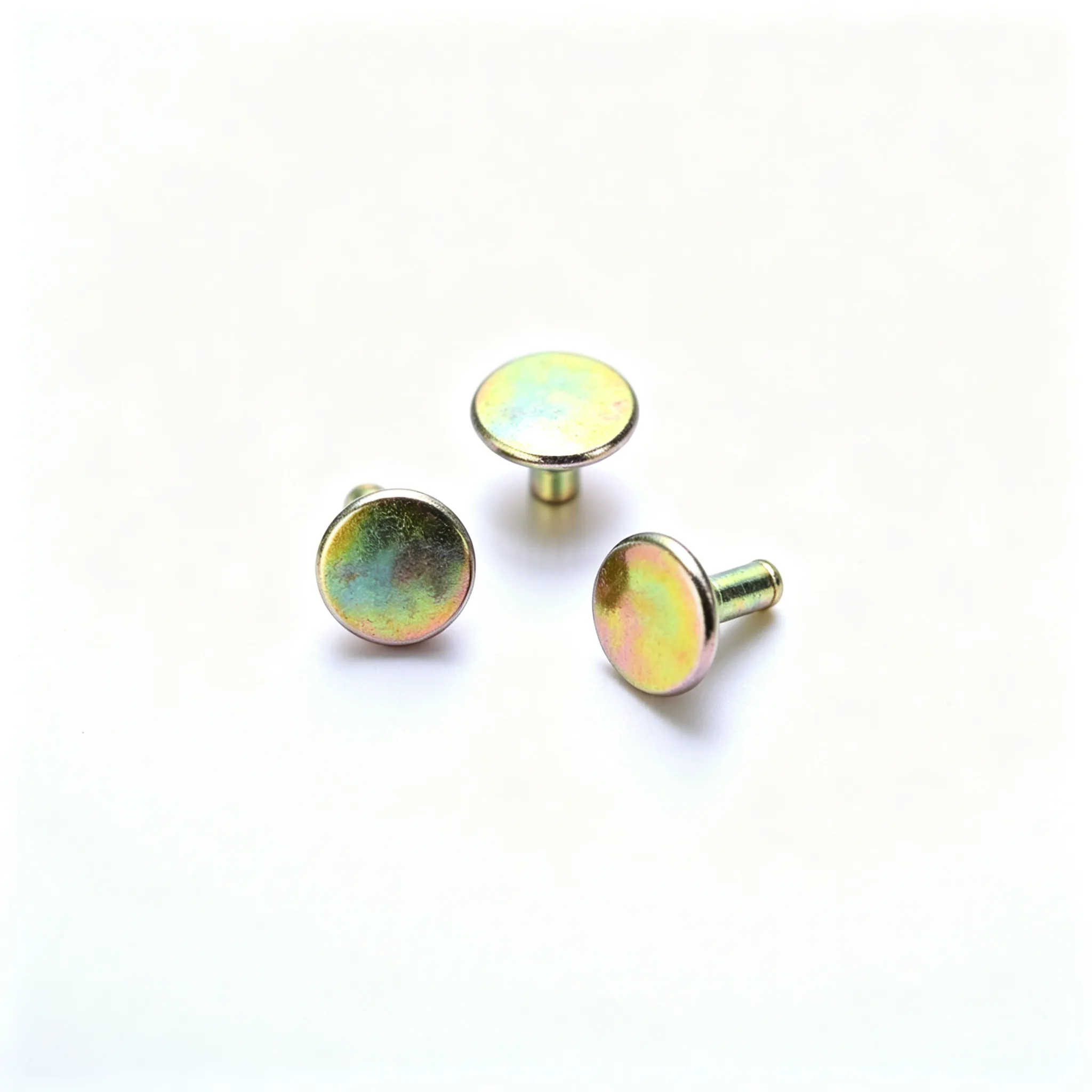


Pan-head semi-tubular rivets use a rounded, low-profile head and a short hollow setting tail. The pan head spreads the bearing area around the hole while keeping the visible profile relatively smooth. The semi-tubular tail is designed to roll or flare during setting, making this a headed permanent fastener rather than a hollow tube or a blind rivet.
Construction and working principle
The head and the semi-tubular shank perform different jobs. The head bears against the accessible side of the workpiece, while the hollow tail is formed on the opposite side to retain the assembly. The head diameter and height, shank diameter, hollow depth and grip length all affect the finished joint. A pan head should not be selected from appearance alone; the bearing area and the clearance around the head must suit the mating part.
Typical applications
Pan-head semi-tubular rivets can be considered for hinges, linkages, appliance components, electrical hardware, small mechanisms and light-duty assemblies that need a rounded visible head. They are useful when a flat or countersunk head would remove too much material or when a slightly raised head is acceptable. Both sides of the assembly normally need to be accessible for setting and support.
Pan head versus other head styles
A pan head leaves a rounded profile above the surface, while a flat head provides a different bearing and appearance and a countersunk head is intended to sit lower in a prepared hole. These are not cosmetic swaps: the head style changes clearance, bearing area and installation requirements. Confirm the head profile on the drawing and check it against the mating component.
Setting and joint control
The setting tool should match the pan-head radius and the tail geometry. The opposing support must allow the tail to form without damaging the workpiece. Hole clearance and stack tolerance should be controlled so the head seats consistently and the tail fills the intended space. For a joint that must move, define the required clearance and bearing surface rather than relying on an unset rivet sample.
How to specify a pan-head semi-tubular rivet
- Provide the head diameter and height, shank diameter and overall length.
- State the hollow depth, tail form and required installed height.
- Include the hole size, stack thickness and available setting access.
- Confirm material, finish, quantity and any appearance or inspection requirement.
FAQ
Can a pan-head rivet sit flush?
A pan head normally leaves a raised profile. If a flush surface is required, review a flat or countersunk head and the corresponding hole preparation instead of forcing a pan head into a flush application.
Is a pan-head semi-tubular rivet the same as a blind rivet?
No. A semi-tubular rivet is set by forming its hollow tail, usually with access to both sides. A blind rivet uses an internal setting element and is intended for one-side access.
What information is needed for a quote?
Send the drawing or sample, head and tail dimensions, stack and hole details, material, finish and expected quantity.
See the Rivets category, or compare semi-tubular rivets and stainless steel semi-tubular rivets.