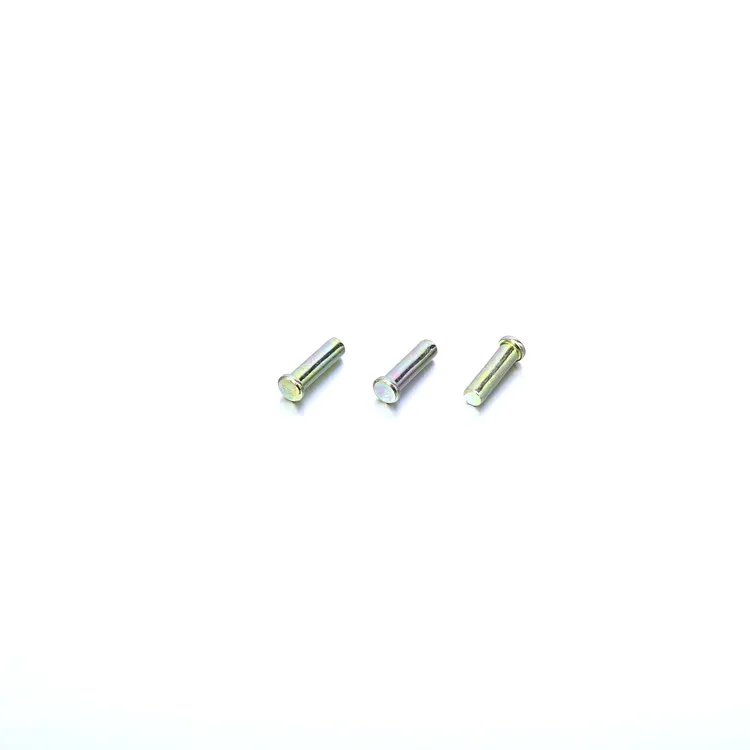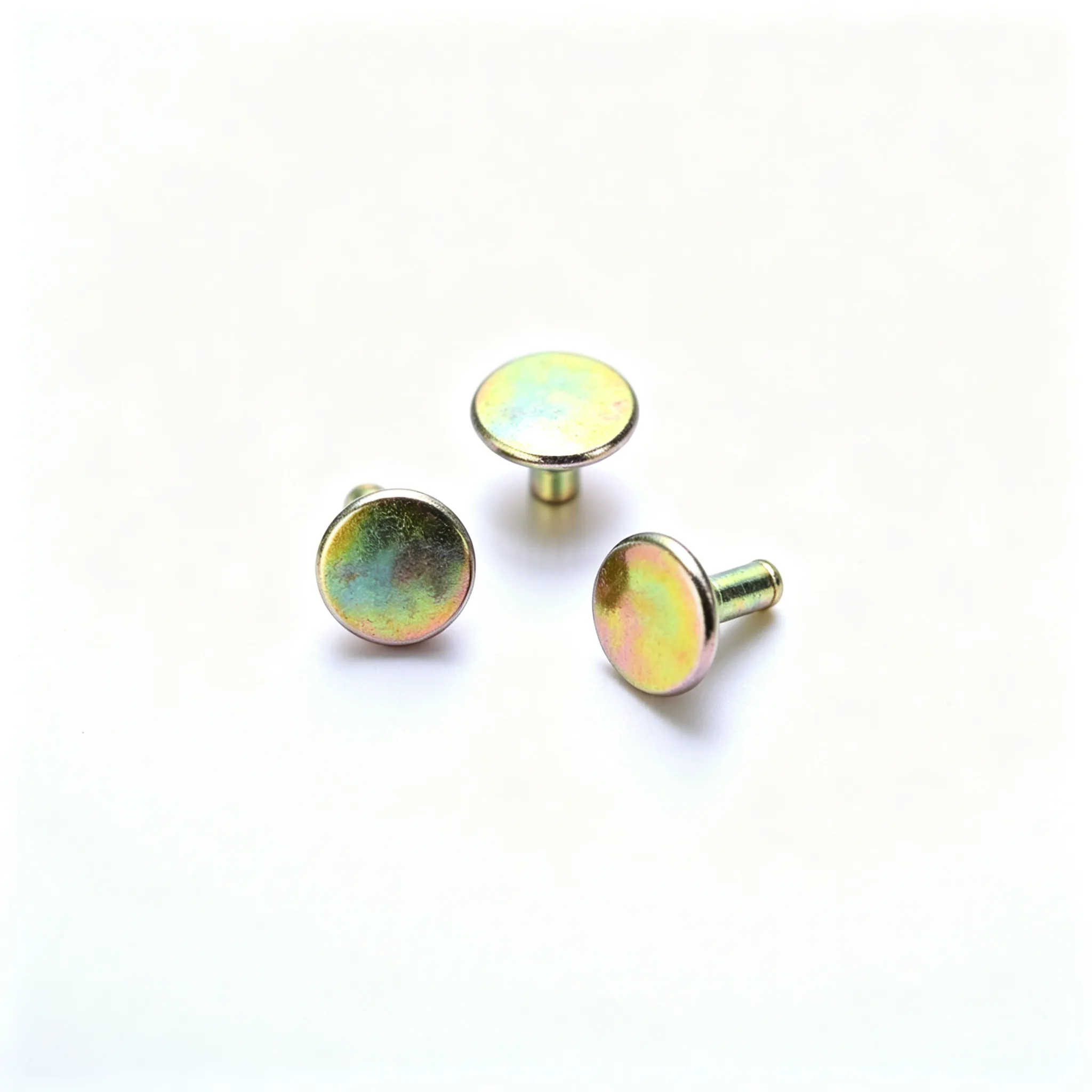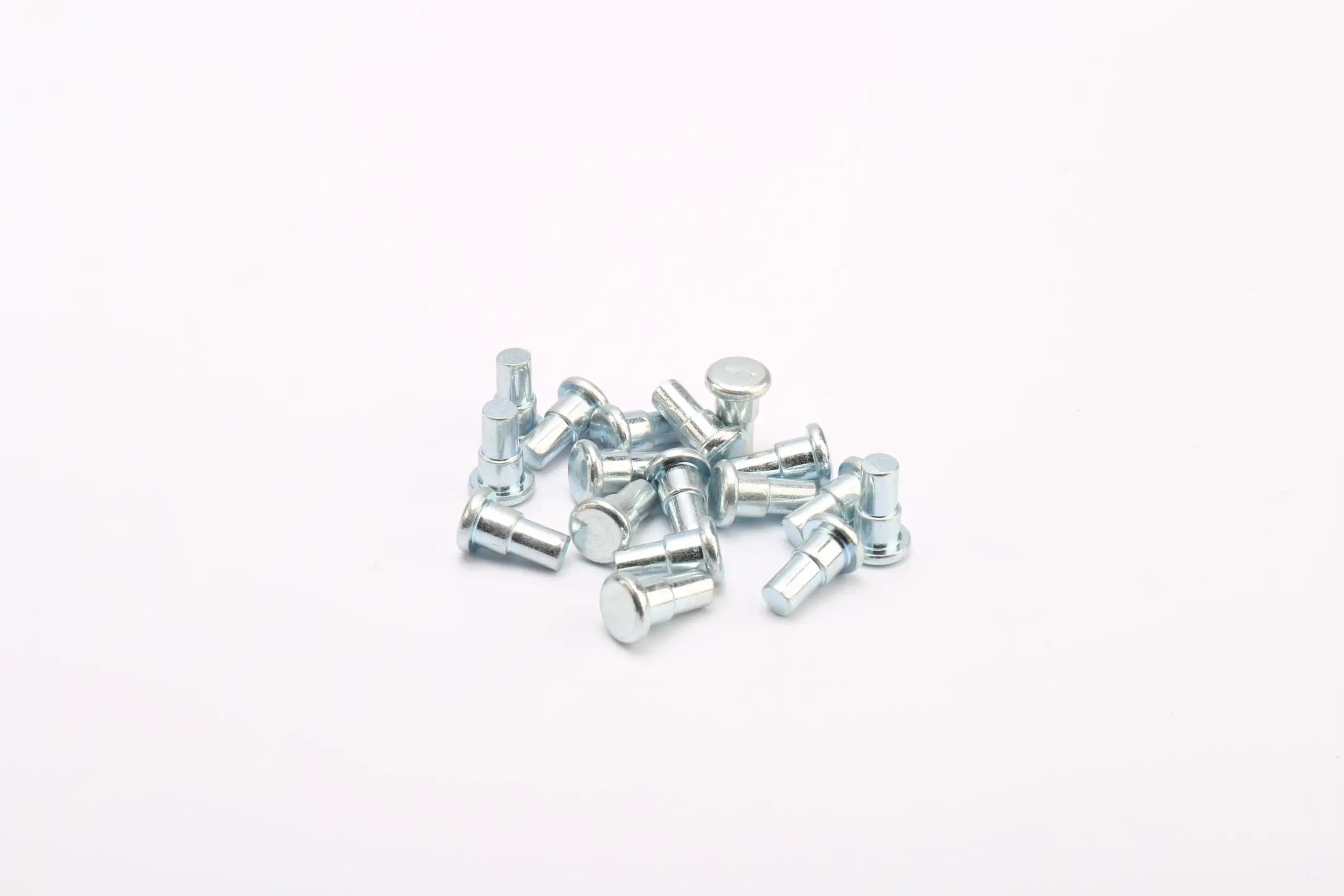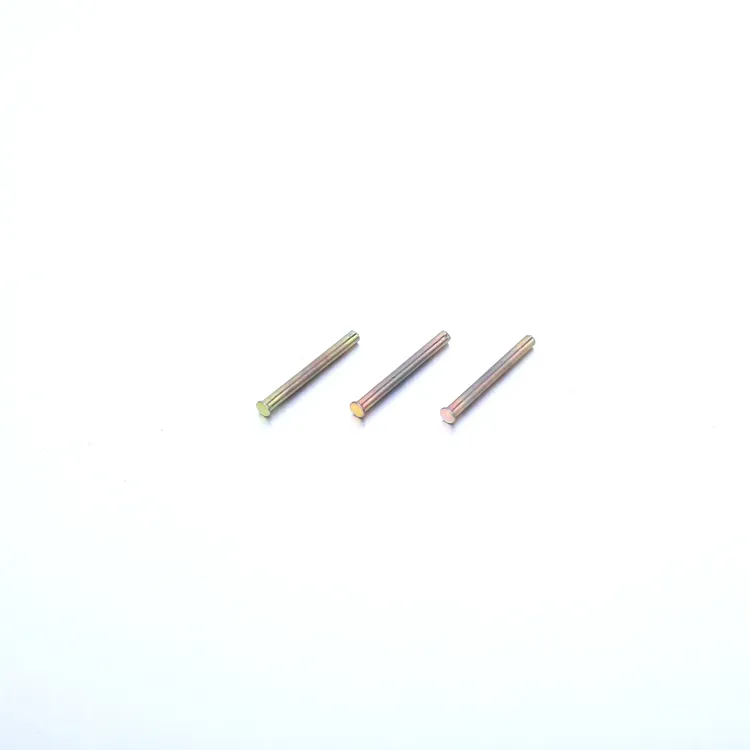
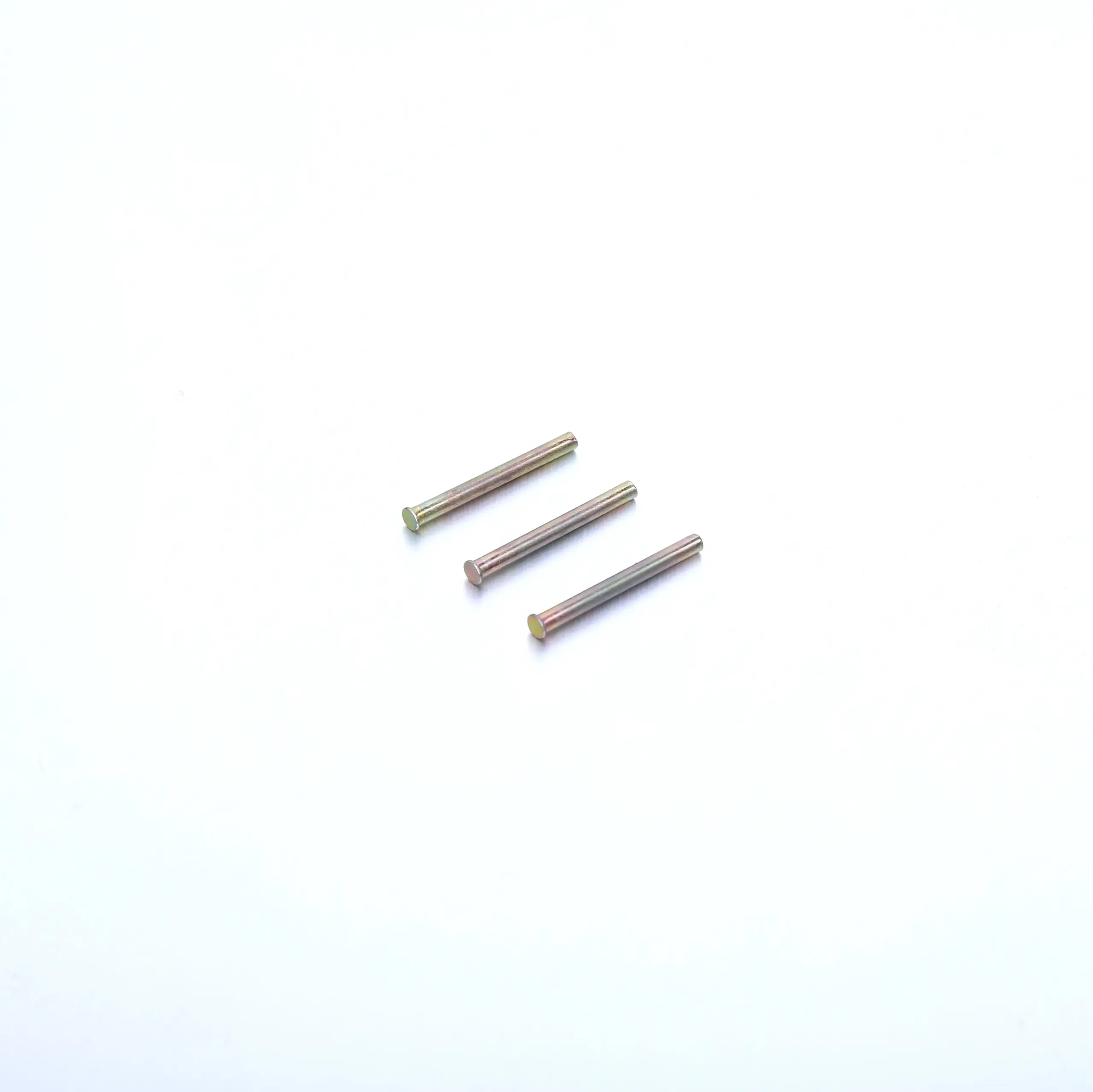
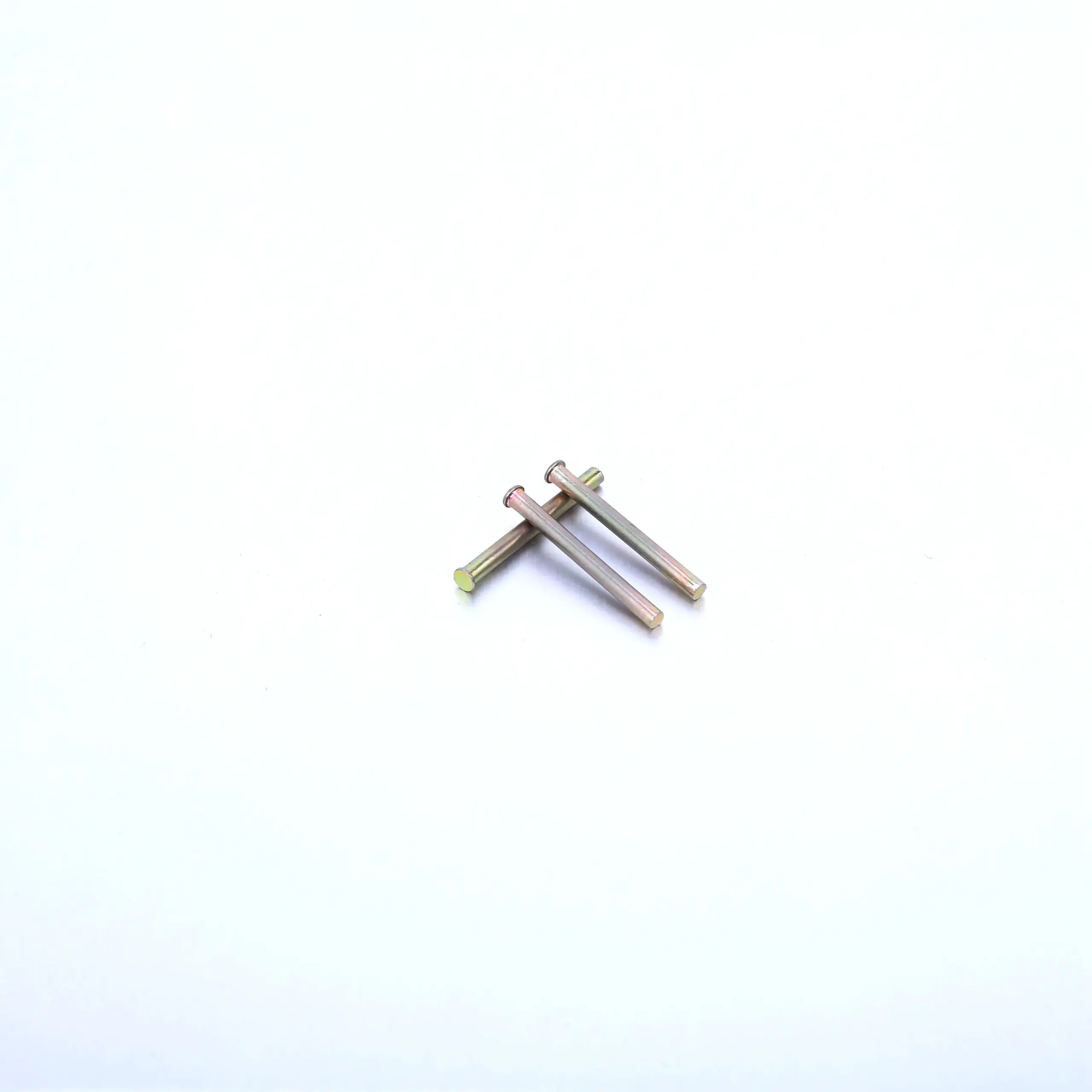
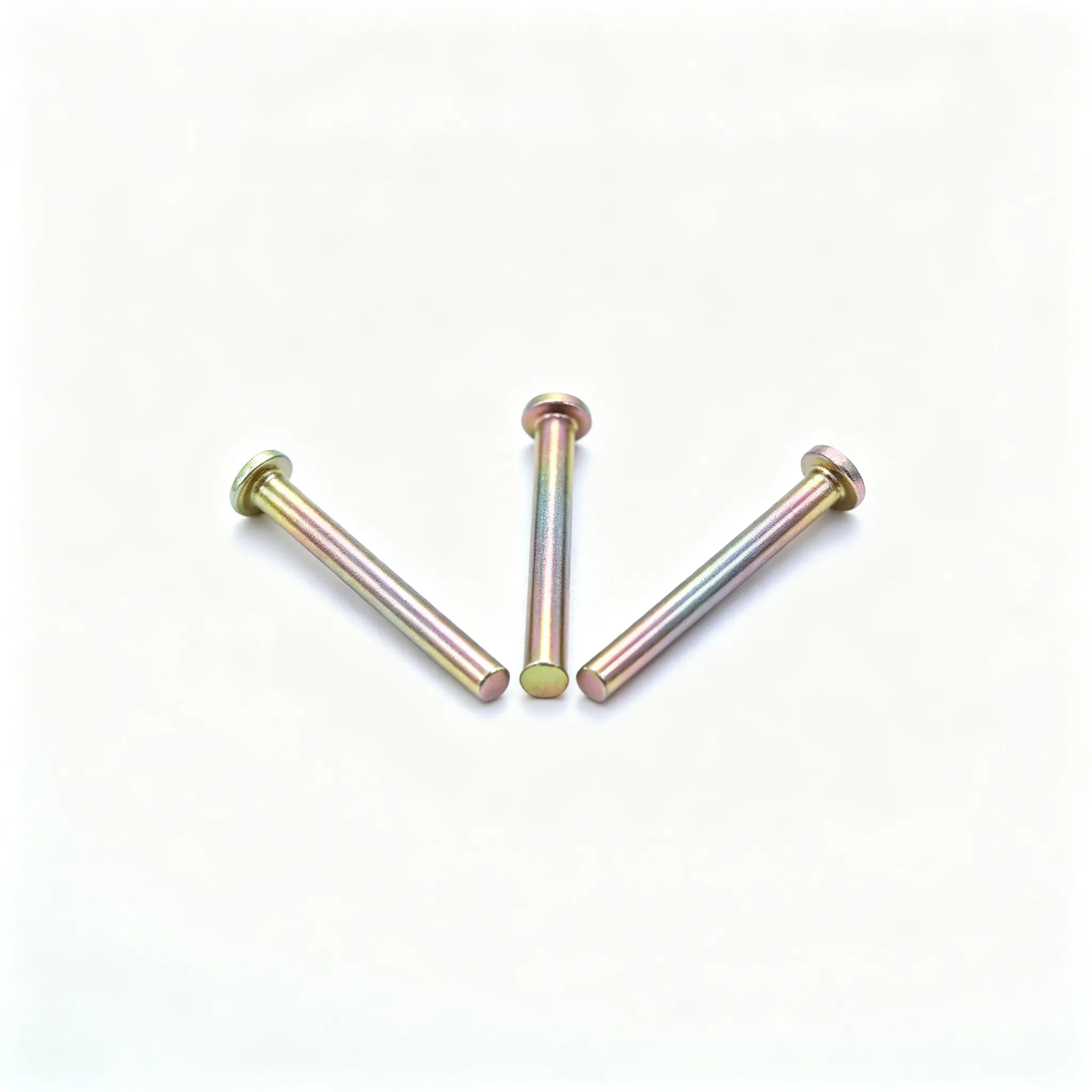
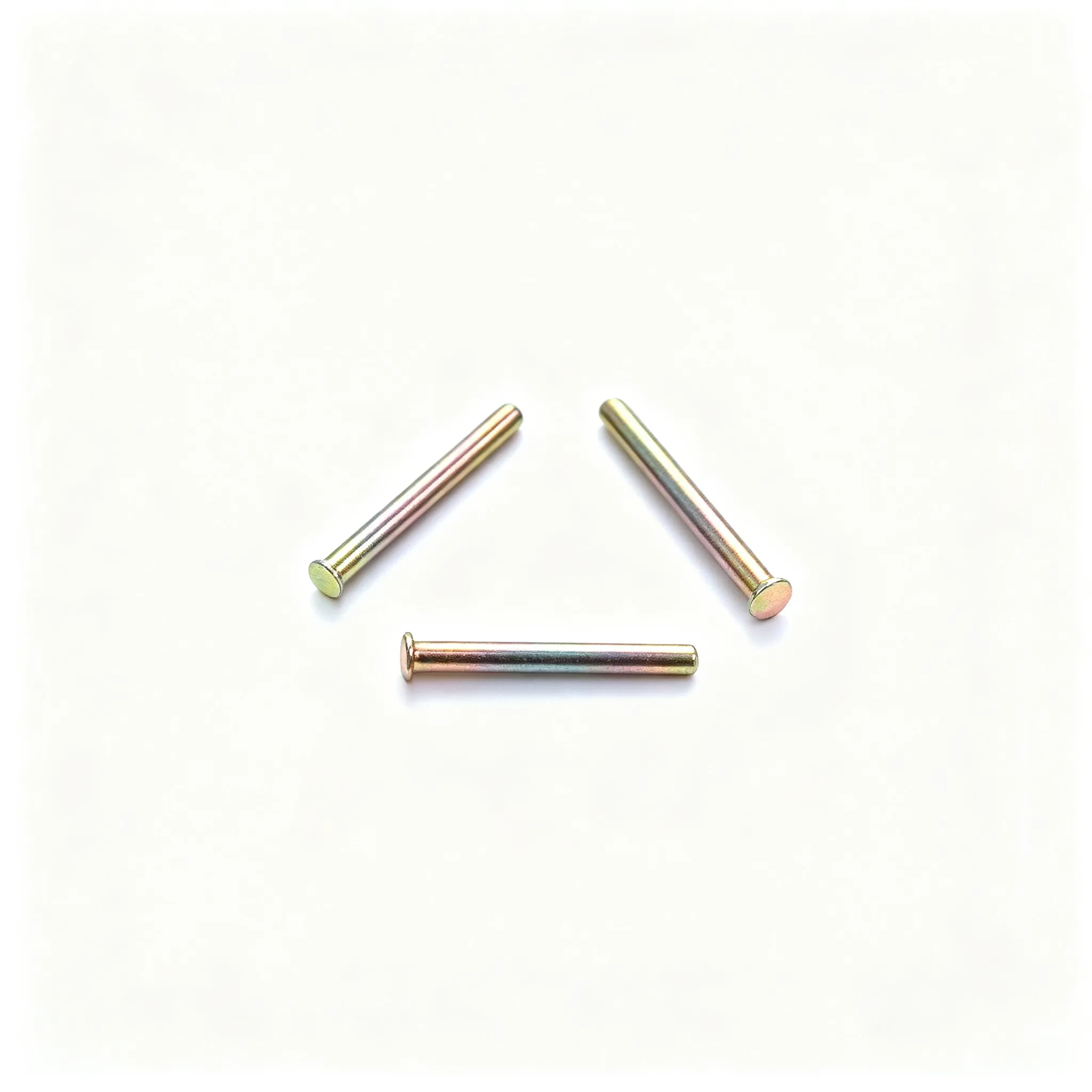
Flat-head rivets provide a low, broad bearing surface with a relatively straight shank below the head. The gallery shows a simple flat top, a short under-head transition and several shank lengths. This is a different geometry from a stepped rivet: the visible body does not have an obvious locating shoulder, so the page should be read as a general flat-head family rather than a part with a built-in spacer.
A low head with a straightforward body
The images include parts with different lengths and finishes. They do not establish whether the body is solid, semi-tubular or tubular, and they do not show a dimensional tolerance. Confirm the cross-section and the intended setting process before selecting a sample.
Applications for a plain flat-head rivet
This format can be considered for panels, brackets, tags, small hinges and general hardware where a low head is preferred. It can also be used where a decorative or easy-to-clean surface is useful. The assembly should identify whether the head is exposed, whether it will be painted or plated after installation, and whether the joint must remain tight under vibration.
If the application needs a controlled spacing or a locating shoulder, compare this page with a stepped rivet. A plain shank may be the better choice when the hole and plate thickness already establish the position; a step may be better when the assembly needs a second diameter to locate or space a component.
The photograph is not a material certificate
The flat head can hide a poor fit underneath. Check the underside of the head and the first part of the shank for burrs, laps or a radius that could prevent seating. A visual inspection of the top face alone is not enough.
How to specify a flat-head rivet
- Define the head diameter, head height, top profile and under-head condition.
- Show the shank diameter, length, end form and the intended setting method.
- State the workpiece thickness, hole fit and the surface that should receive the head load.
- Provide the material, finish, appearance requirement, inspection plan and quantity.
Installation and inspection
Trial the rivet in the actual workpiece material. Confirm that the head sits flush or at the intended height, the shank reaches the required depth and the joint does not crush a soft panel. Inspect the head after setting for cracks, dents and tool marks. If the head is visible, define which marks are acceptable before production.
Check a sample from both sides. The underside may show deformation that is hidden after assembly, and that deformation can affect the holding surface. For a painted or coated assembly, confirm whether the rivet is finished before or after installation and how touch-up will be handled.
FAQ
Is this a solid rivet?
The title does not establish the cross-section. The gallery shows a straight body, but the drawing or sample must confirm whether it is solid, semi-tubular or tubular.
When should a stepped rivet be used instead?
Use a stepped design when the drawing needs a locating shoulder, spacing feature or a defined change in diameter. A plain flat-head rivet does not provide that geometry by default.
Can the head be flush with the surface?
Flushness depends on the head height, the workpiece preparation and the installation method. Confirm the required surface condition on the drawing.
Browse the flat-head rivet category, or compare flat-head stepped rivets and colored zinc-plated flat-head rivets.