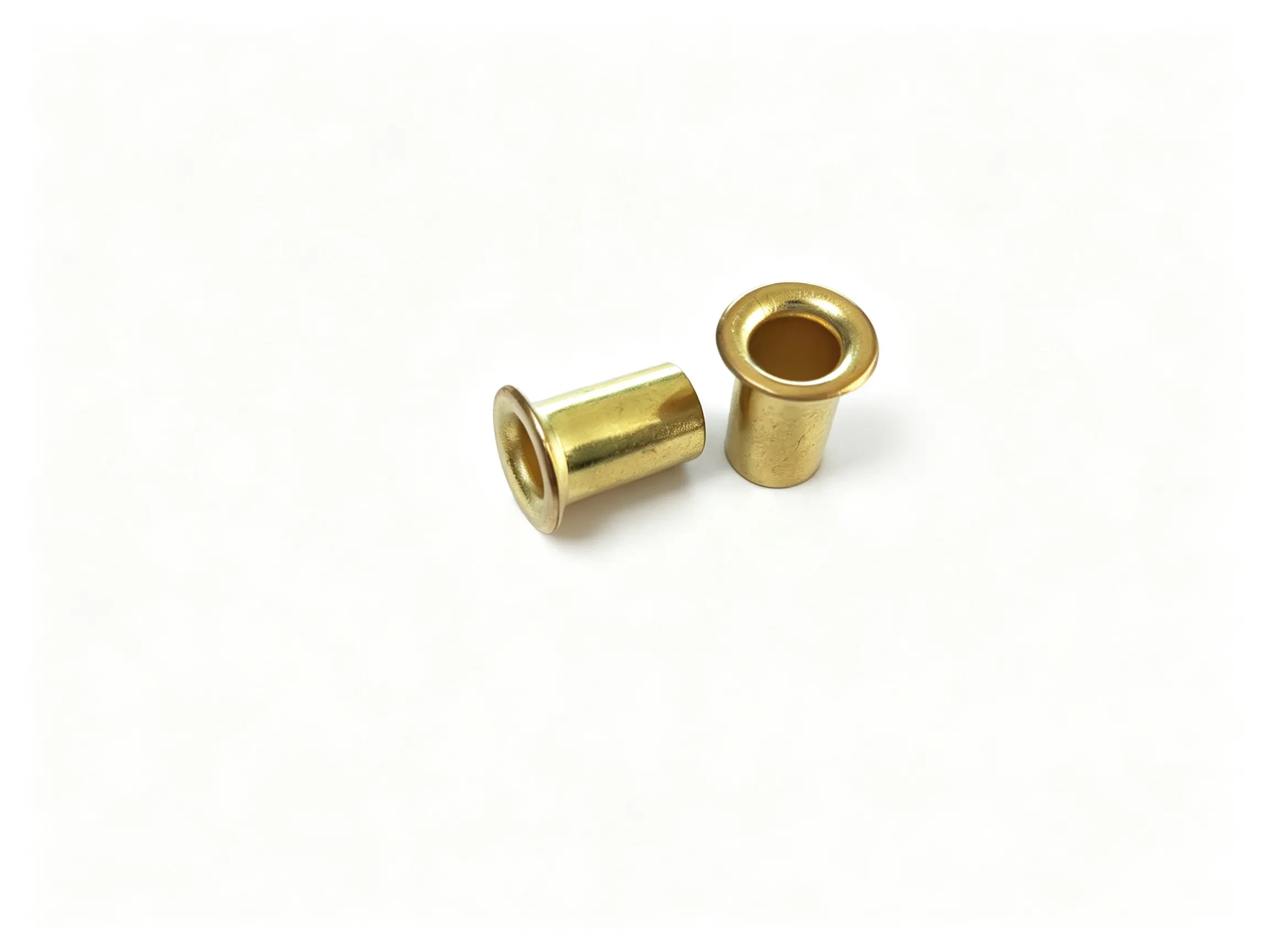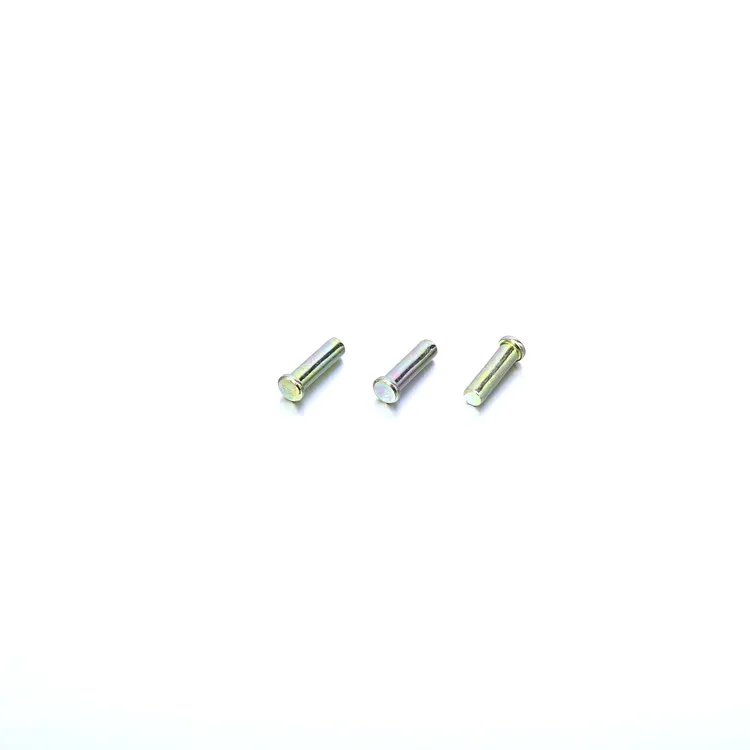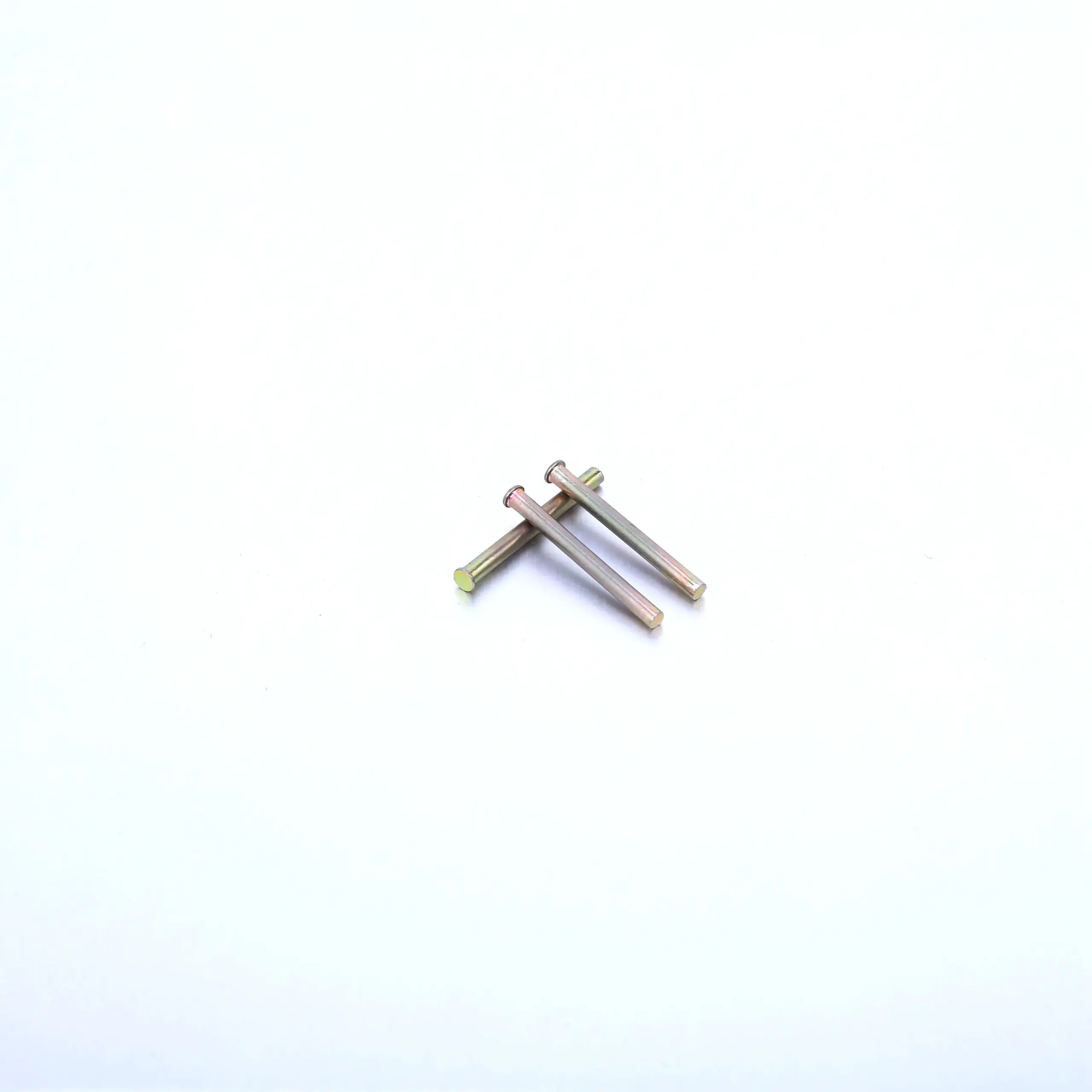


Idler wheel male and female nails are paired pin parts with a stepped shaft and a matching socket or bore. The gallery shows small cylindrical pieces with a head, a locating section and an internal feature on the mating part. The male and female halves should be specified as a pair, because the fit between the shaft, socket and wheel determines how the assembly locates and moves.
Male and female parts as a pair
The gallery shows both parts separately and in groups. It does not establish the shaft diameter, socket depth or the clearance between them. Those dimensions are the core of the fit, so do not select the pair from the photograph alone.
Wheel location and pivot questions
A stepped shaft can provide a shoulder for axial location, but the shoulder may also create a wear point. Check the bearing area and the surrounding clearance. The assembly drawing should show the order of assembly and how the male and female parts engage.
What the photographs leave open
The images show the general pairing and the presence of a socket, but they do not provide a scale or a tolerance. They also do not prove the material, hardness or finish of either half. The visible color may be a plating or the base metal, and the two halves may have different requirements.
Check the socket for depth, concentricity and burrs. On the male part, check the shaft diameter, end form and the transition to the head. If the pair is supplied as a set, confirm that the two halves are matched and that the packaging keeps them together.
How to specify an idler wheel pin pair
- Show the male shaft diameter, length, head and locating shoulder.
- Dimension the female socket diameter, depth, head and outside body.
- State the wheel bore, axial clearance, retention method and assembly order.
- Provide the material, finish, fit requirement, inspection plan and quantity.
Inspection and trial assembly
Inspect the male shaft for straightness, burrs and damage at the end. Check the female socket for depth, debris and a damaged entry. Confirm that the pair engages without forcing and that the heads or flanges sit against the intended surfaces. If the parts are plated, verify that the coating has not changed the fit.
Assemble the pair with the actual wheel or roller. Check free rotation or locked position as required, and inspect for axial play. Run a short functional trial and look for wear marks that indicate edge contact. Keep the matched pair together for future comparison.
FAQ
Are the male and female parts sold as a matched set?
The page describes the pair, but the ordering unit should be confirmed. If the fit is critical, request that the two halves be supplied and inspected as a set.
Can the pin be used without the female part?
That depends on the assembly. The male shaft may fit another socket, but the bore, depth and retention must be reviewed before substitution.
What controls the wheel clearance?
The shaft, socket, wheel bore and the surfaces that limit axial movement all contribute. The clearance should be defined on the assembly drawing.
Browse the Chicago rivet and binding post category, or compare Chicago rivets and internally threaded copper rivets.