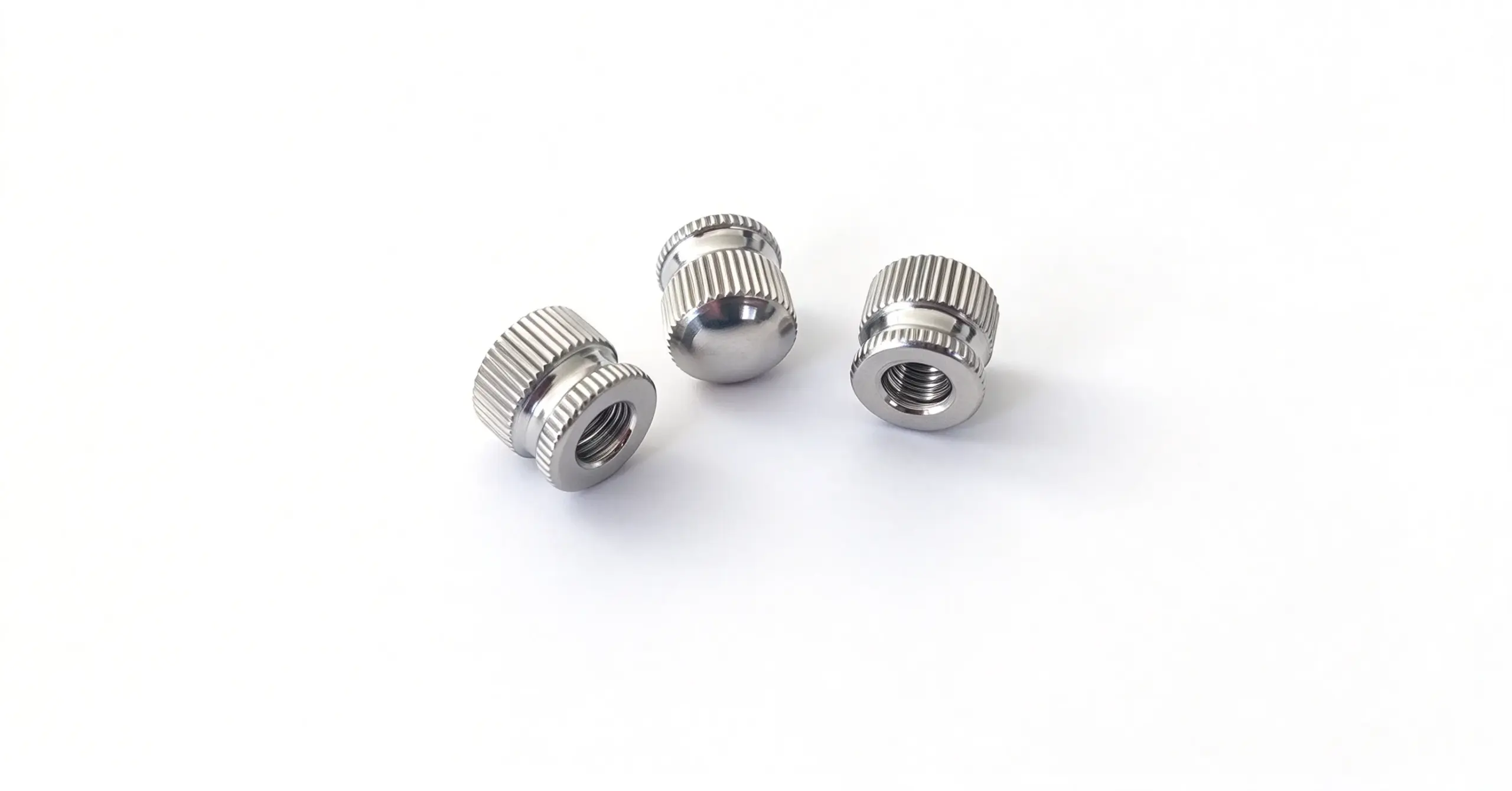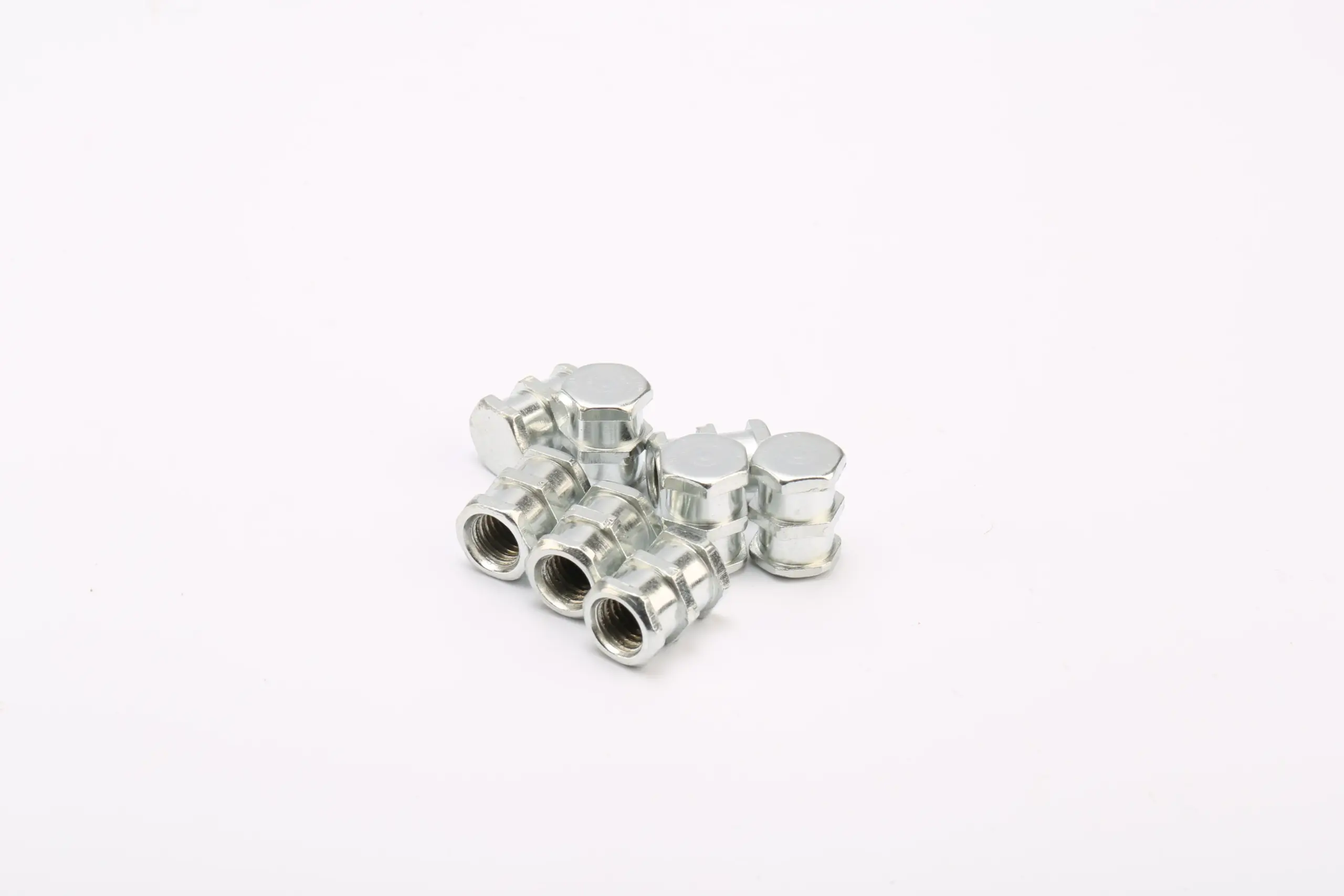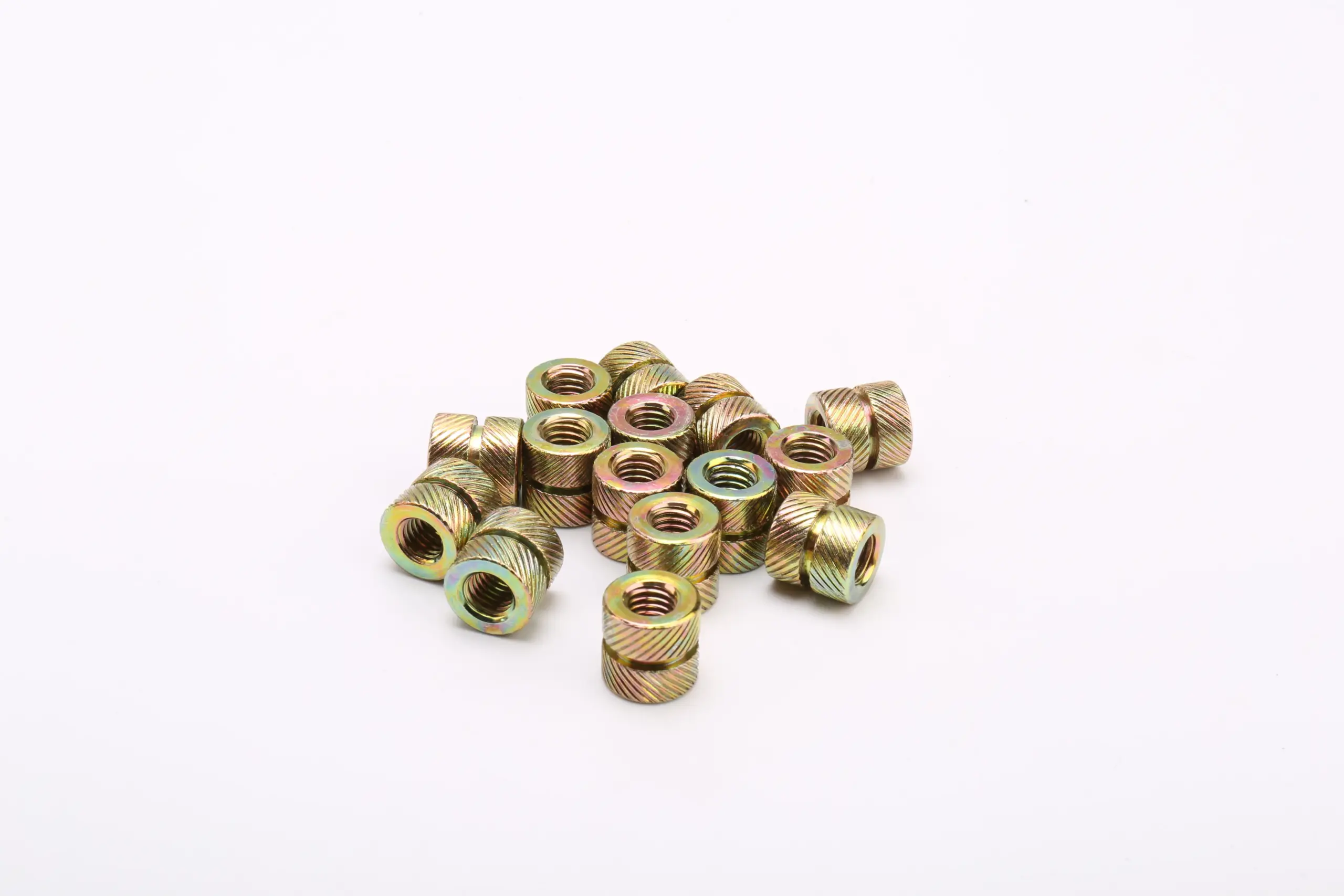


This hex nut page shows a compact six-sided body with a raised central section around the threaded bore. That detail matters: the part may be a conventional hex nut, a collar nut or an insert-style component, and the drawing should settle which surfaces seat and which surfaces fit into a panel. The photographs are useful for orientation, but they do not replace a dimensional specification.
Reading the photographed profile
Several views show a dark six-sided outline and a cylindrical section projecting from one face. Treat the projection as a feature to be confirmed, not as a standard collar. It may provide a bearing surface, a locating section or a body for installation. The height of the hex, the diameter of the projection and the position of the thread all affect how the part behaves in an assembly.
Thread and collar interface
Check that the internal thread runs through the intended length and that the entry is clear. The collar or projecting section should not bottom on a nearby feature before the intended face seats. If the nut is installed into a recess, verify the recess diameter, depth and edge condition. A close-fitting collar can be difficult to start if the hole has burrs or coating buildup.
Assembly access and orientation
The six-sided body may be turned with a wrench or socket, but access can be limited by the projection and the surrounding structure. Confirm the tool approach from the correct side and allow room for the socket to clear the panel. For a maintenance joint, check that the nut can be removed without disturbing adjacent parts. The orientation shown in the gallery should be matched to the drawing before a sample is approved.
Material and finish questions
Color alone does not establish the base material or coating. Ask for the material, finish, thread condition and any required appearance standard. If the nut will contact a dissimilar surface, review the joint with the responsible engineer. Cleaning agents and assembly lubricants should also be checked against the selected finish, especially when a decorative face remains visible.
Checks before ordering
- Confirm whether the raised section is functional or only a visual feature.
- Define the thread, hex size, overall height and projection dimensions.
- Provide the mating hole or panel thickness and the intended seating face.
- State the material, finish, quantity and inspection requirements.
A sample should be assembled in the intended orientation. Verify thread engagement, face contact and tool clearance before approving a production run.
FAQ
Is this the same as a standard hex nut?
Not necessarily. The gallery shows a projecting section that should be defined on the drawing before the part is treated as a standard nut.
Can it be used in a molded panel?
It can be reviewed for that use when the hole, seating face and installation method suit the design. The page alone does not establish a molded-in rating.
What is the most important dimension to confirm?
The functional seating face and the thread position are usually the first checks, followed by the available tool clearance.
Browse the hex nuts category, or compare the six-sided hex nut page and thin-head hexagonal nuts.