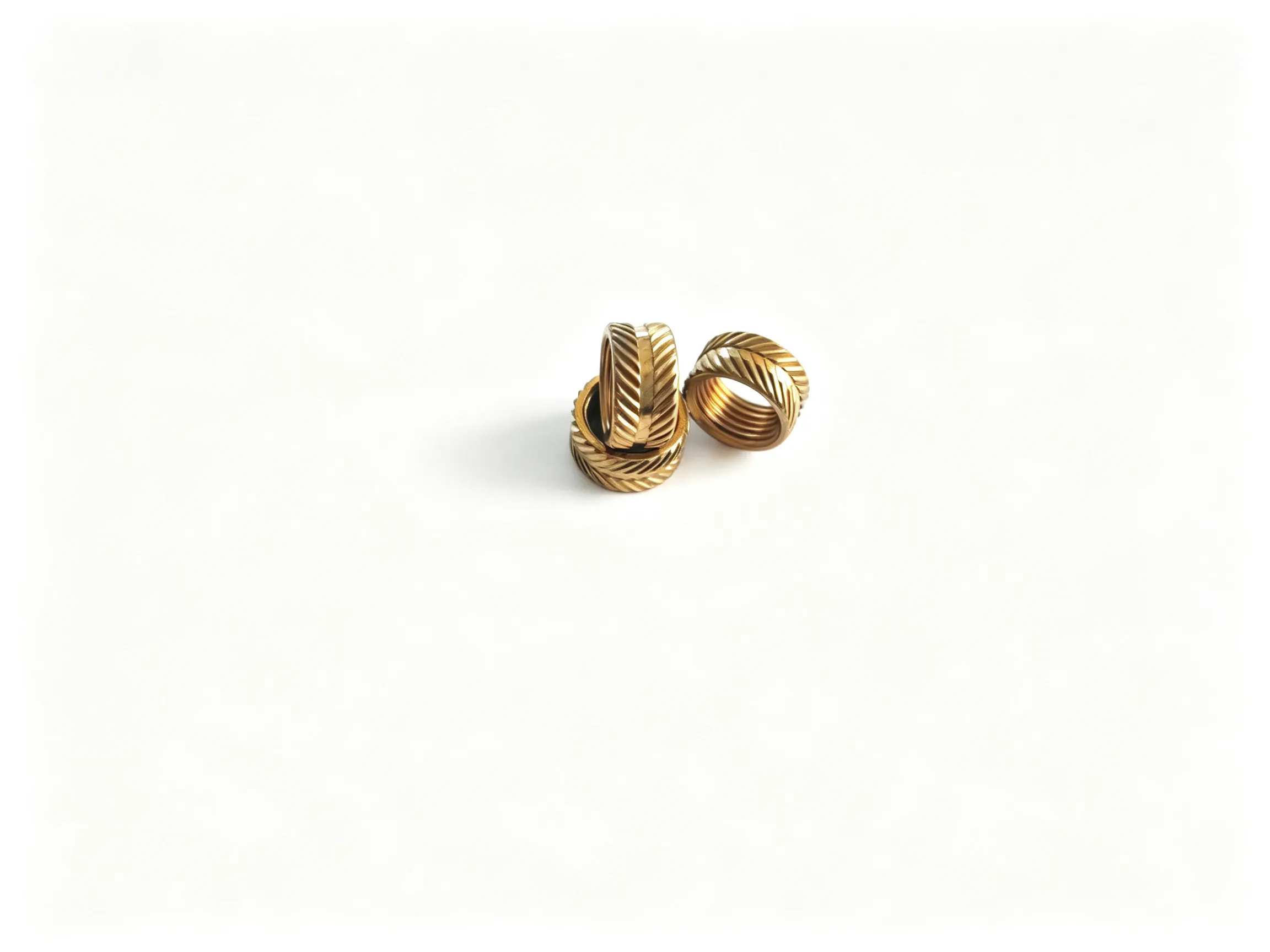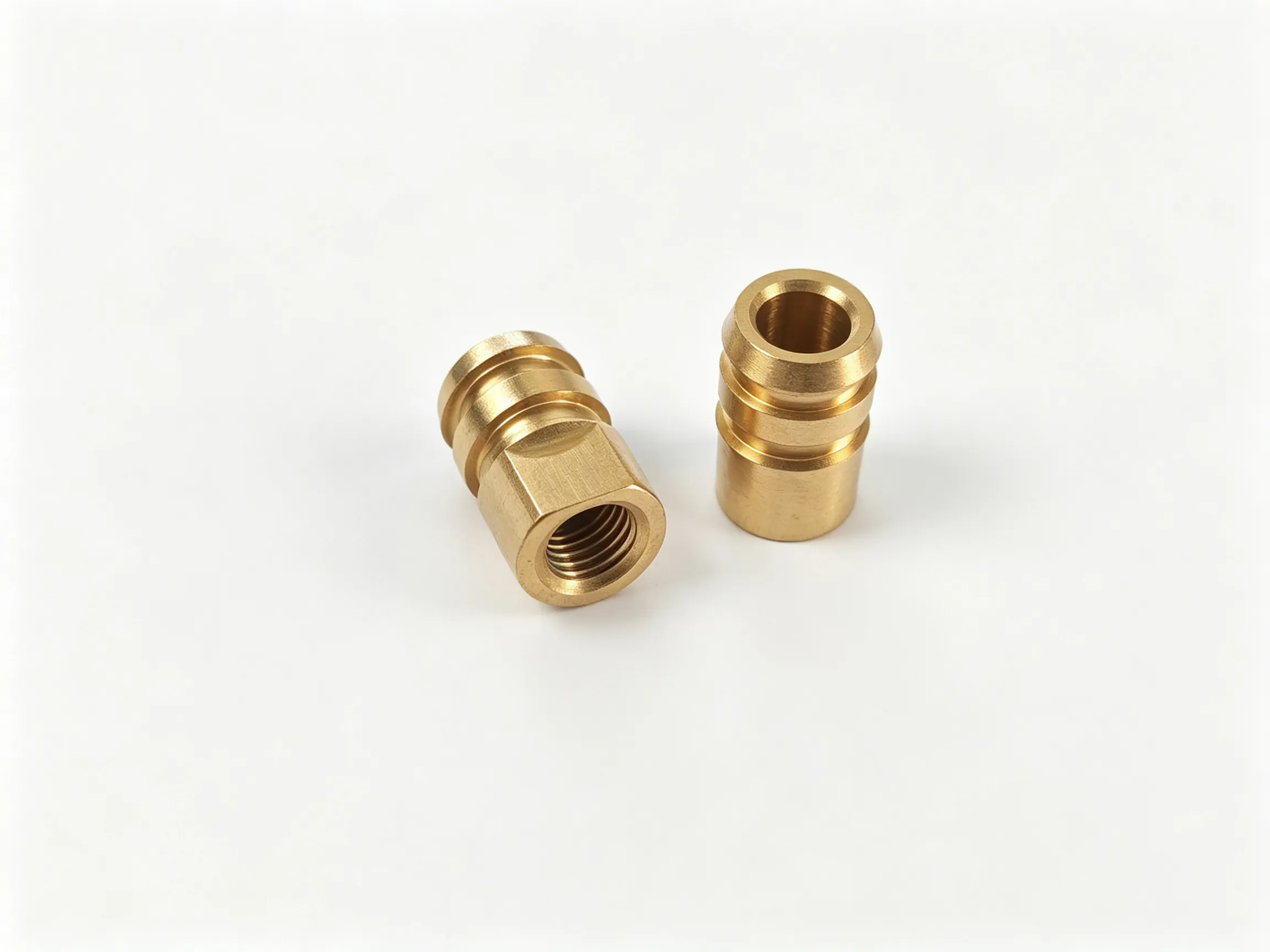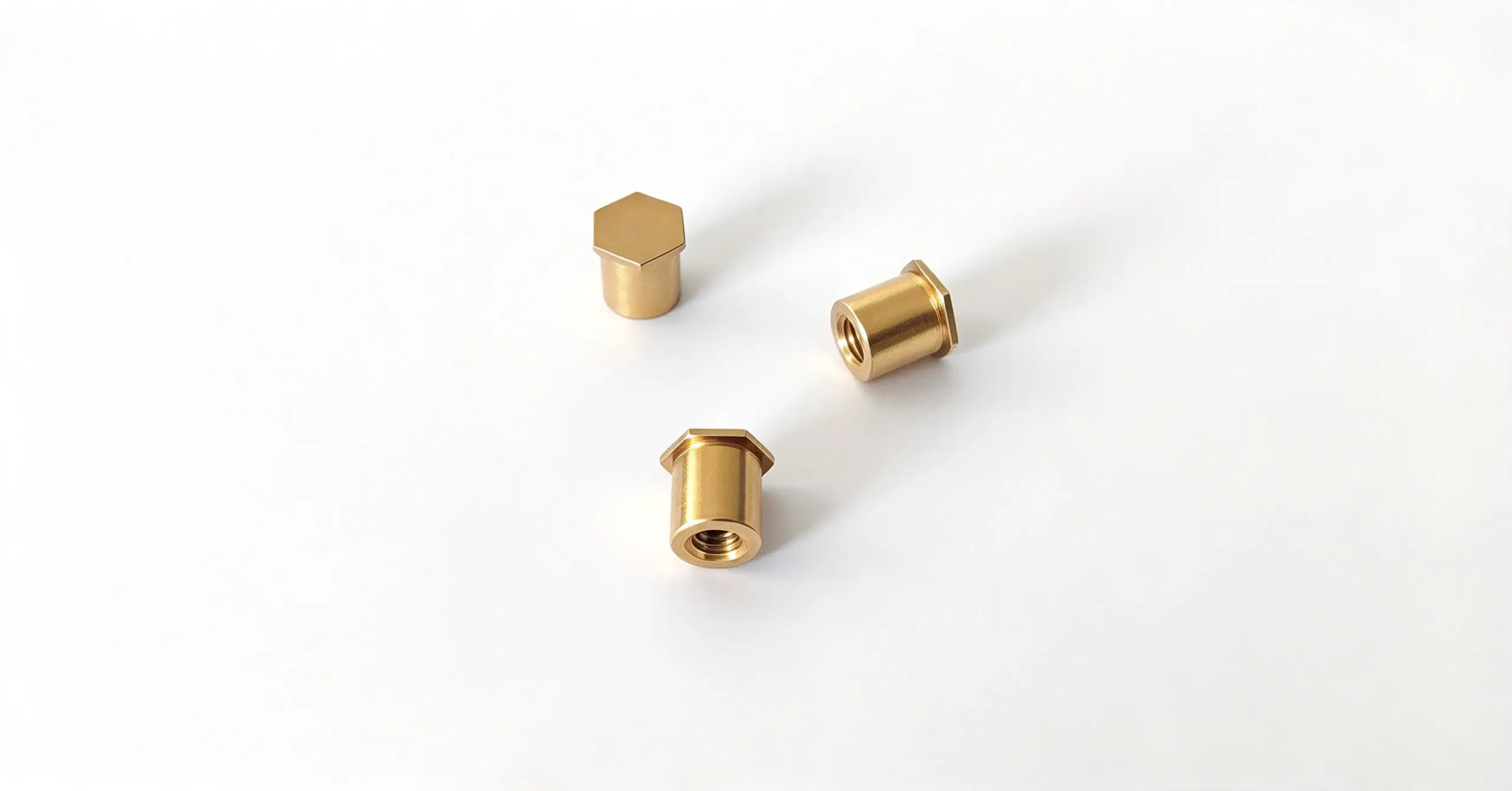
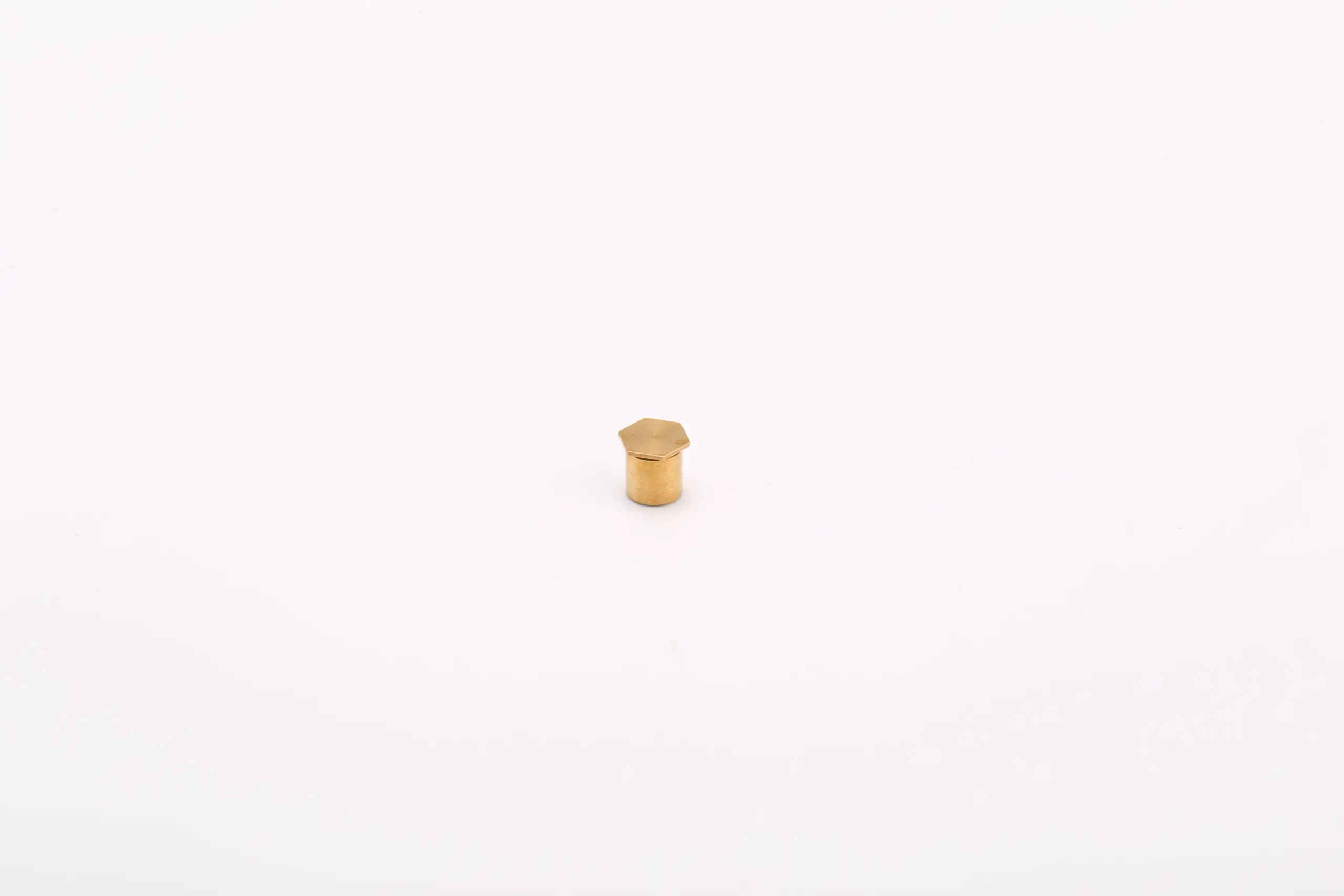
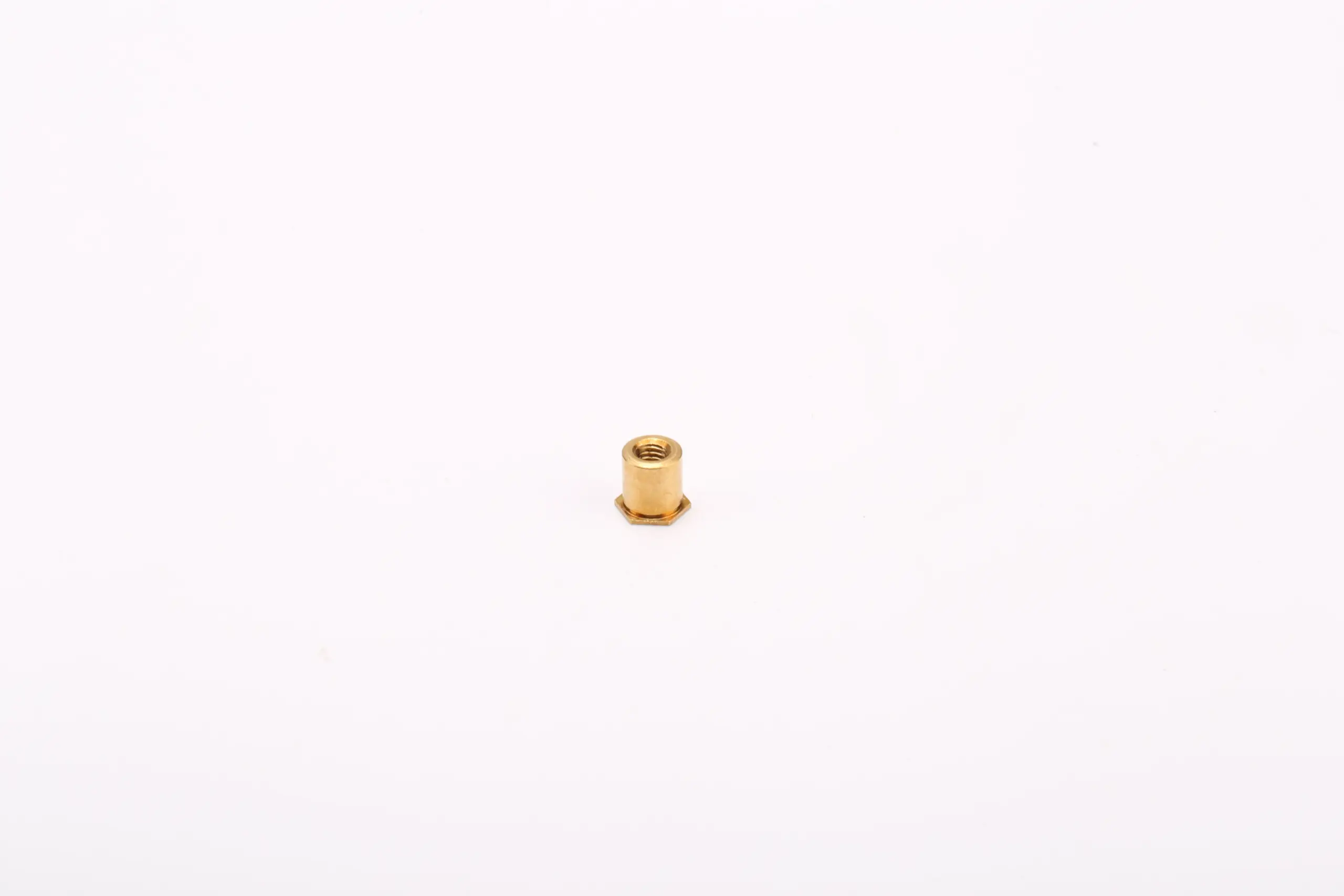
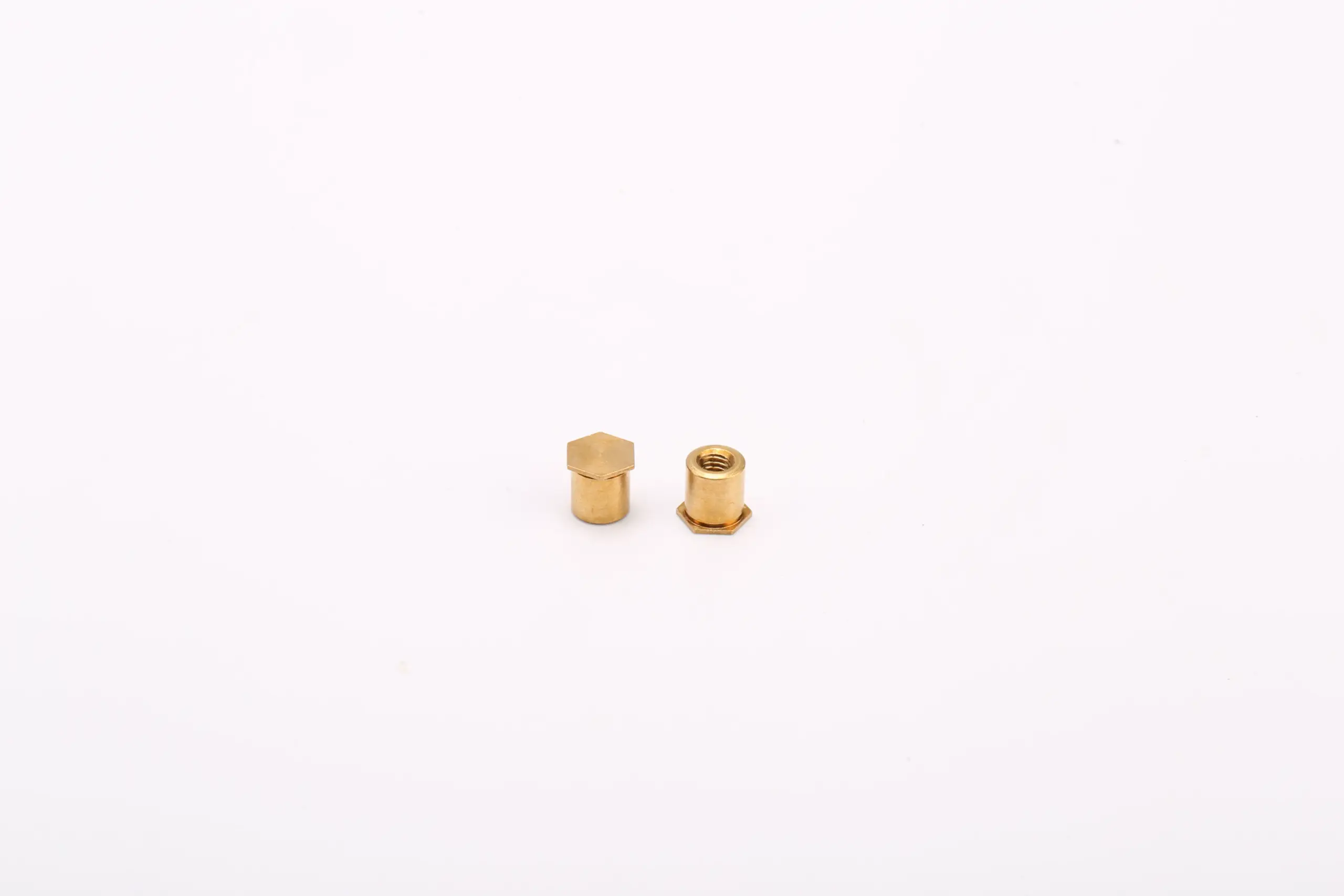
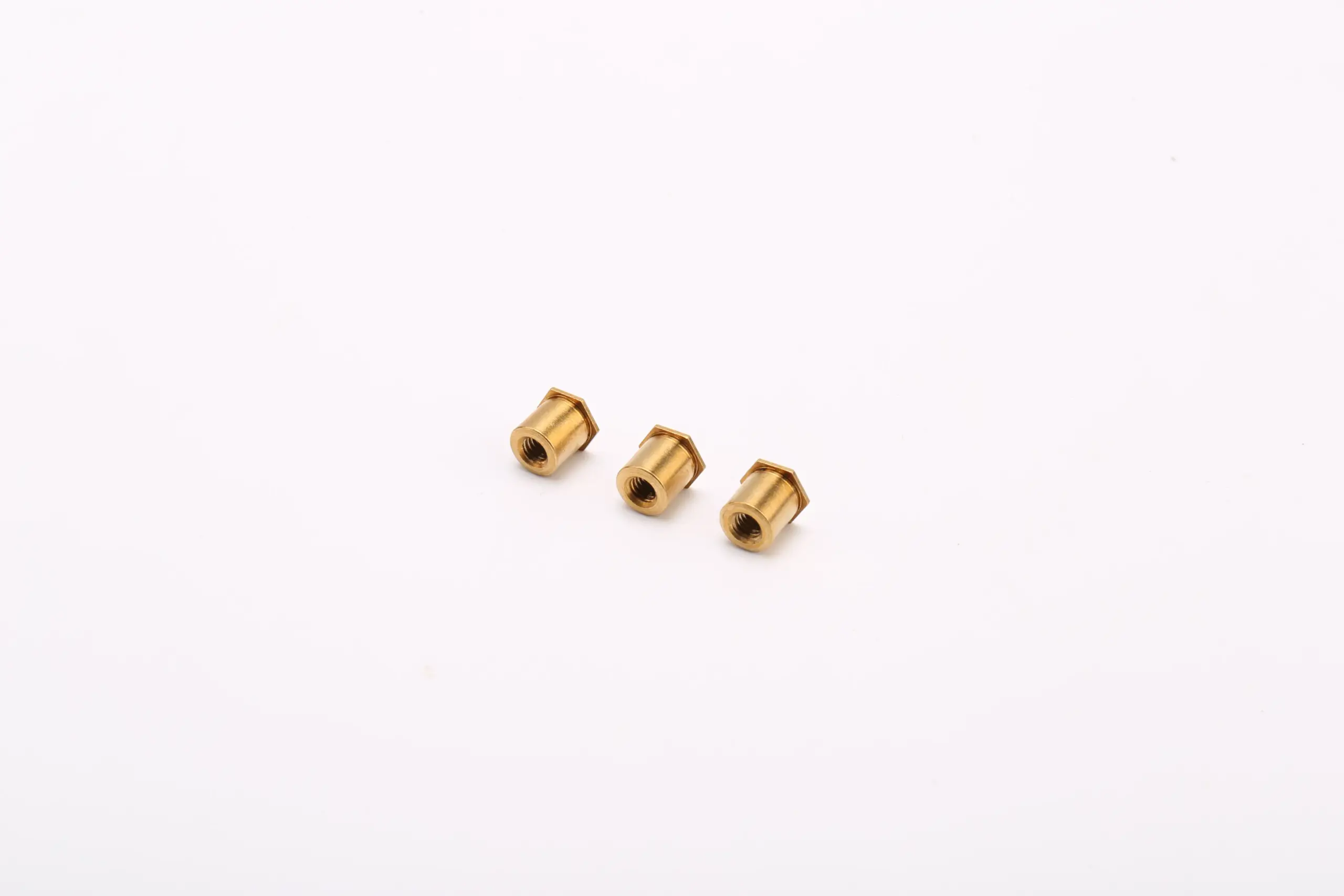
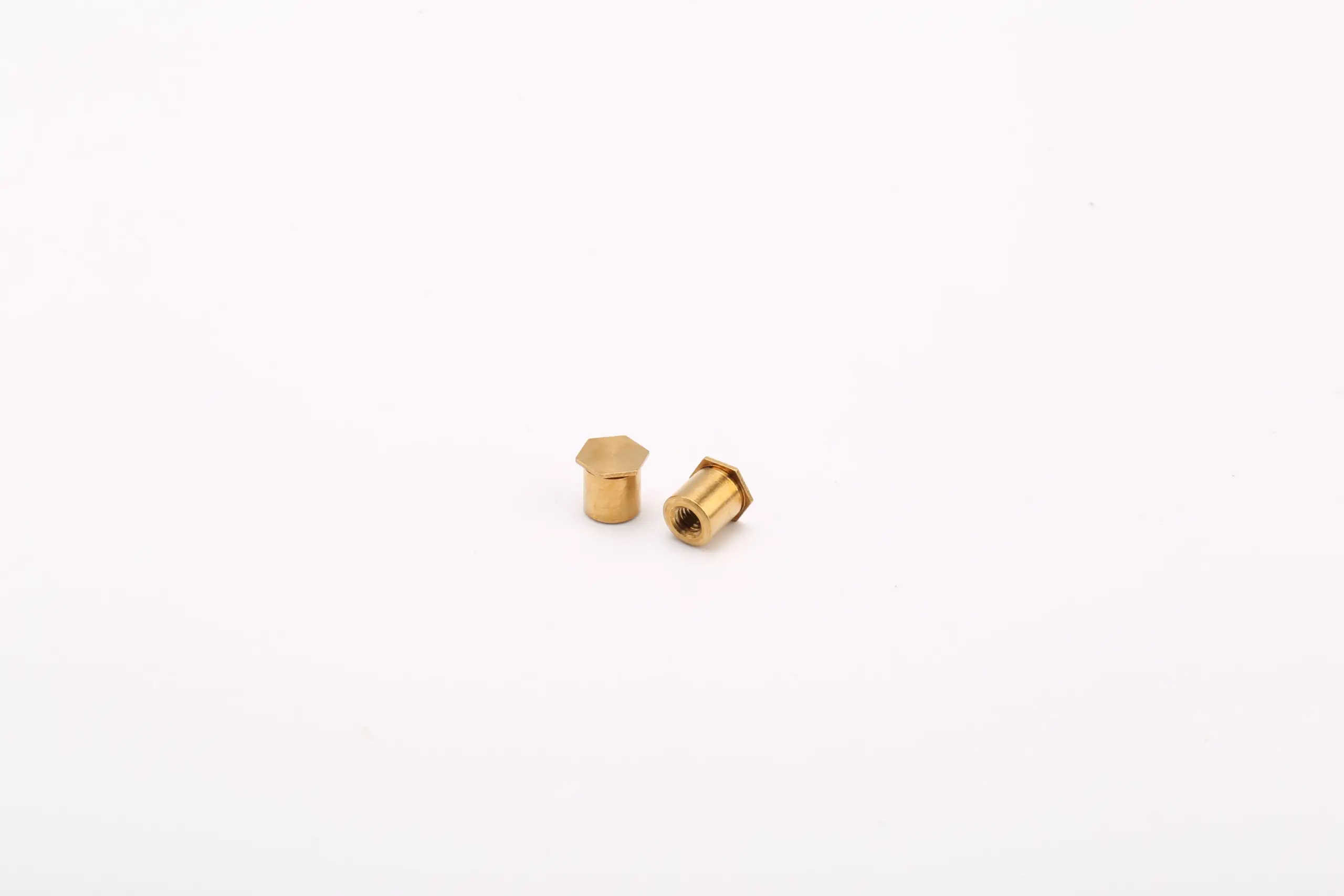
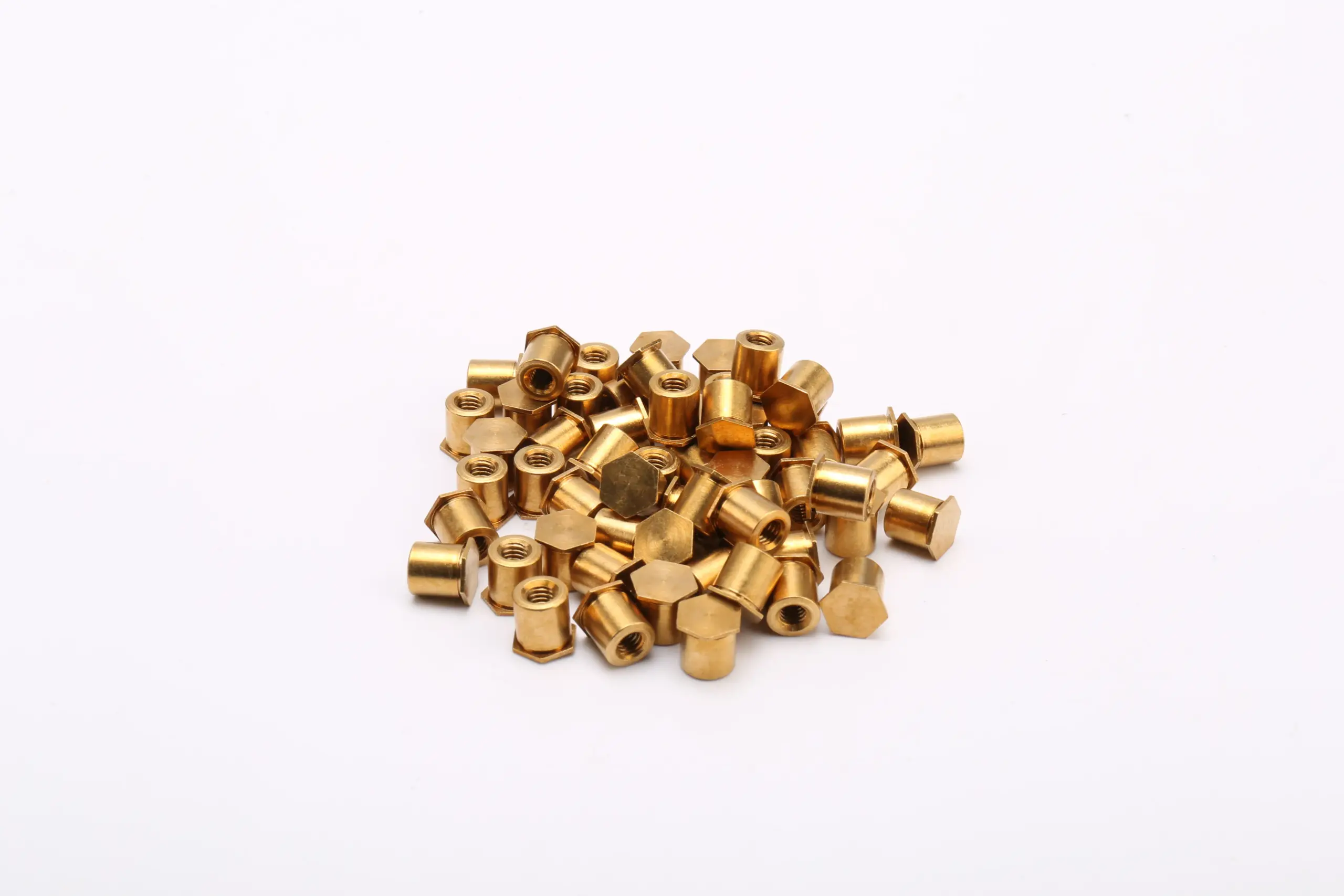
Thin-head hexagonal nuts use a low-profile six-sided body to save axial space in a threaded assembly. The gallery shows small gold-toned nuts with a narrow height relative to their width. The reduced height can help in tight stacks, but it also changes the available thread engagement and wrench contact, so those details must be checked together.
Low-profile body and space saving
A thin head can fit where a standard nut would protrude too far or contact a cover. The six flats still provide a wrenching feature, but the shorter height may limit socket engagement. Check the available depth around the nut and the clearance above it. A low profile does not automatically mean a low-strength joint; the thread and material still need review.
Thread engagement versus height
Confirm the thread size, pitch and usable depth. A thin nut may have fewer engaged threads than a standard-height nut, so the mating screw and joint design should be checked as a system. The screw should not bottom before the nut seats, and the nut should not run out of thread before the intended clamp is reached. Use the drawing rather than the photograph to establish usable thread.
Wrench access and handling
The reduced height can make the nut harder to hold and easier to cross-thread. Start it by hand and keep the socket square to the flats. Check that the tool does not touch the adjacent surface or the clamped part. For small nuts, a driver with a retaining feature may be useful, but it must not damage the thread or the finish.
Material, finish and inspection
The gold-toned appearance should be confirmed as a material or finish requirement. Inspect the thin section for distortion, burrs and incomplete thread. If the nut is used in a visible location, define the acceptable marks from handling and wrenching. Cleaning agents should be checked against the finish, especially on a small part where surface loss is more noticeable.
Specification checklist
- Define thread, across-flats size and nut height.
- Check usable thread depth against the mating screw.
- Provide the clearance above and around the nut.
- State material, finish and inspection requirements.
Trial assembly should confirm that the socket engages enough of the flats and that the screw reaches the required thread without bottoming.
FAQ
Is a thin nut weaker than a standard nut?
The height can affect thread engagement and the joint, but strength depends on the full design. Evaluate the thread, material and application rather than the profile alone.
Can a standard socket be used?
Check that the socket engages the short flats without touching nearby parts. A thin nut may need a different tool or holding method.
What is the main dimensional check?
Confirm the usable thread depth and the available axial space together.
Browse the Nuts category, or compare hex nuts and compact hex nuts.