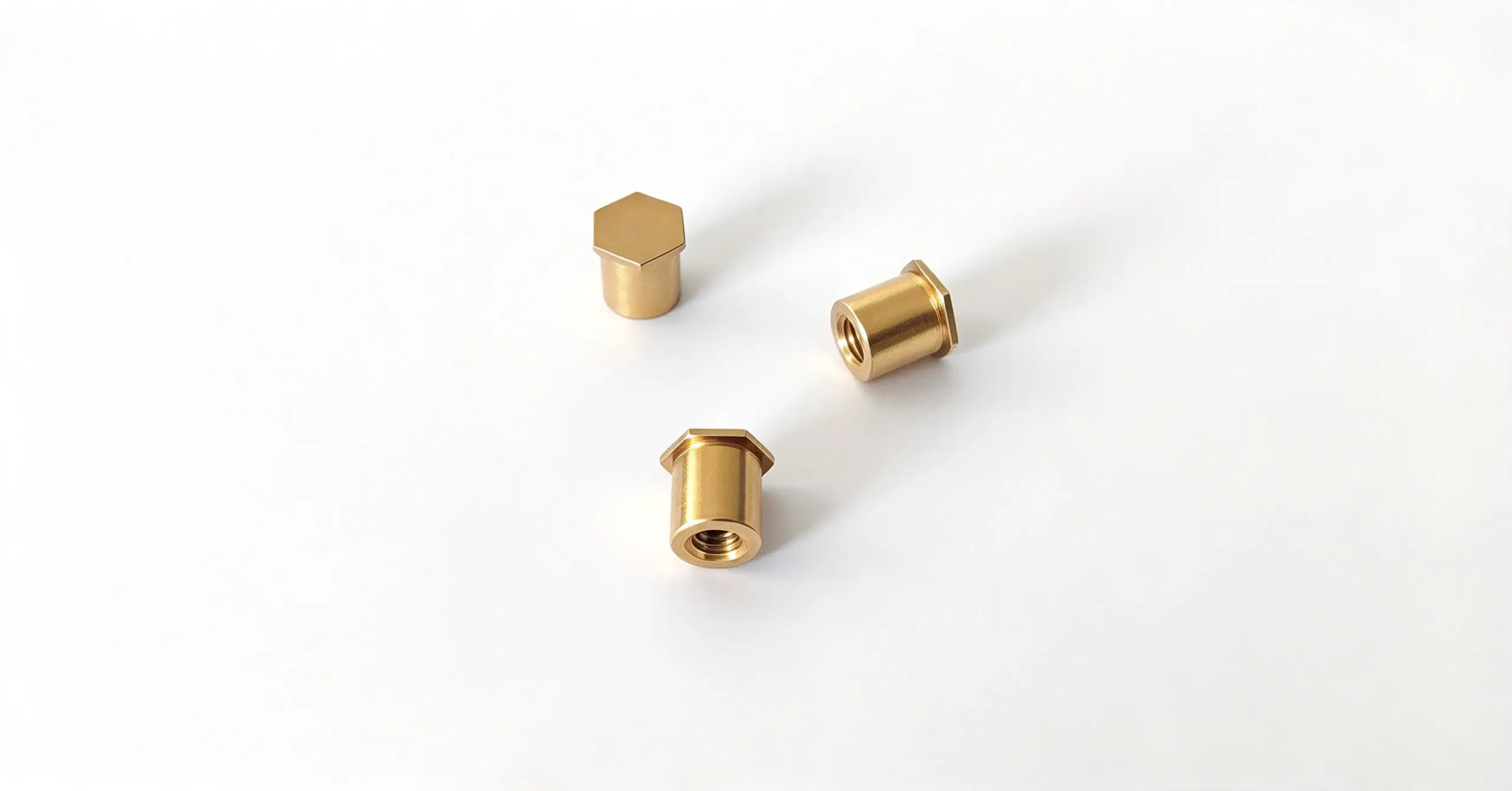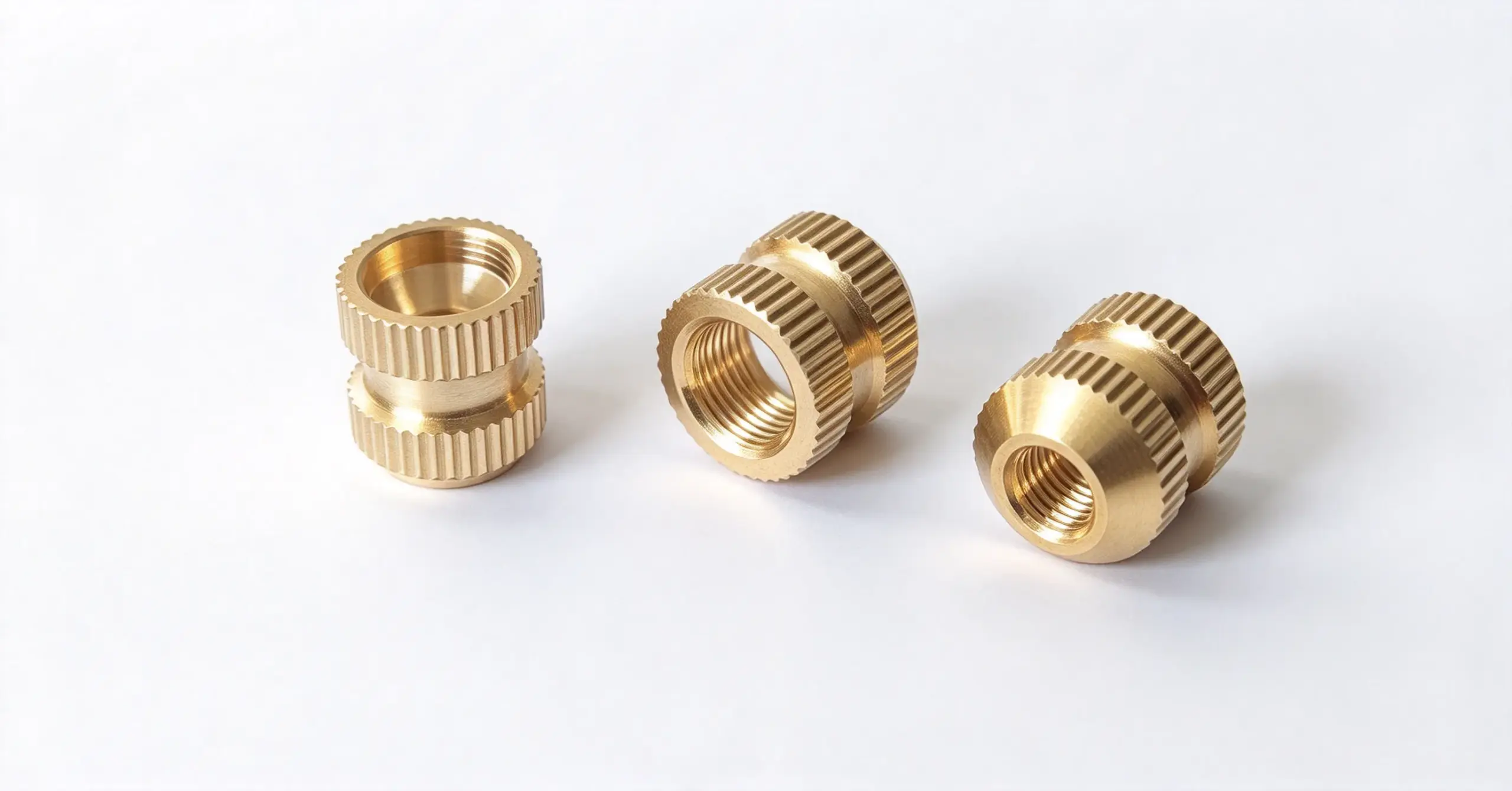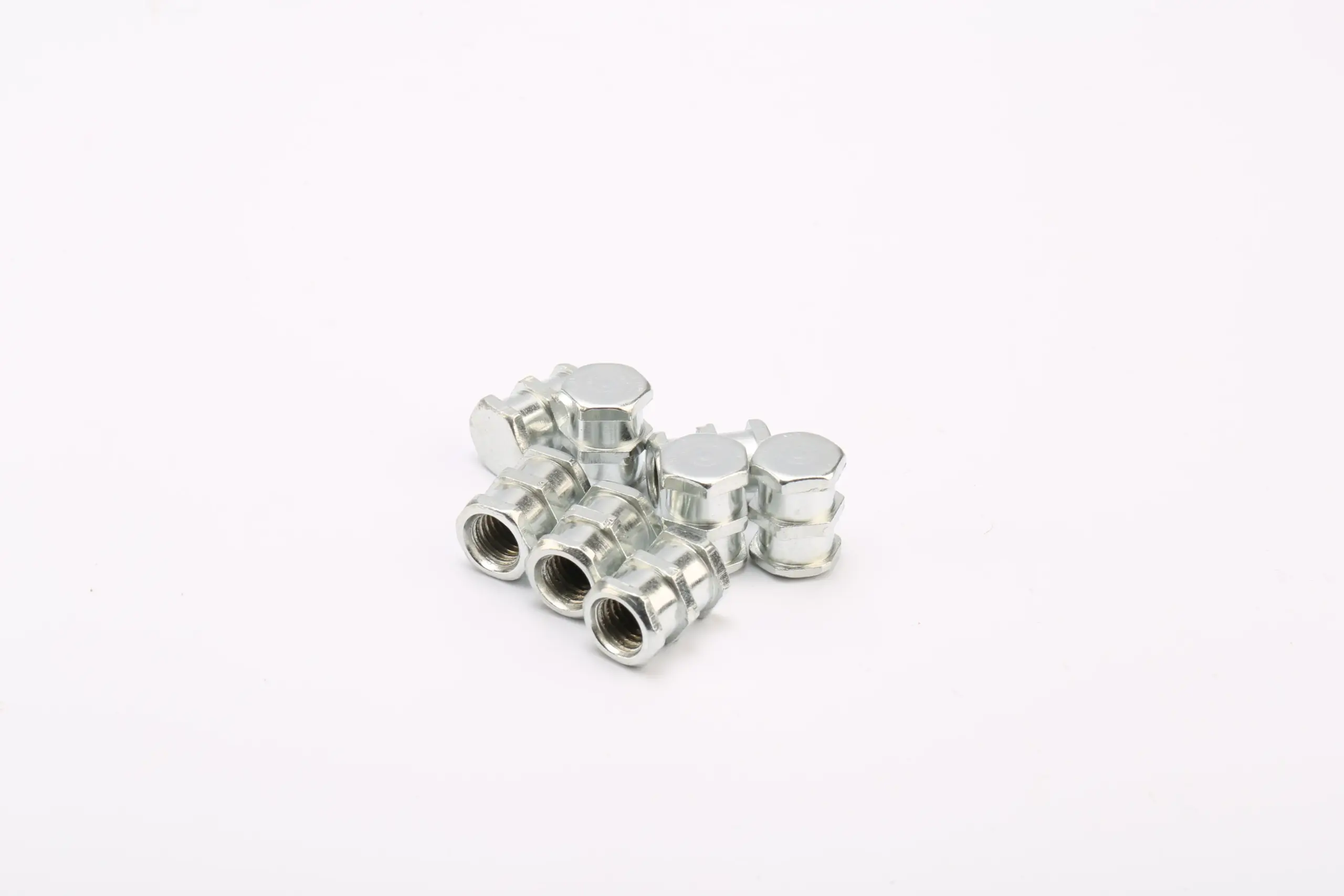
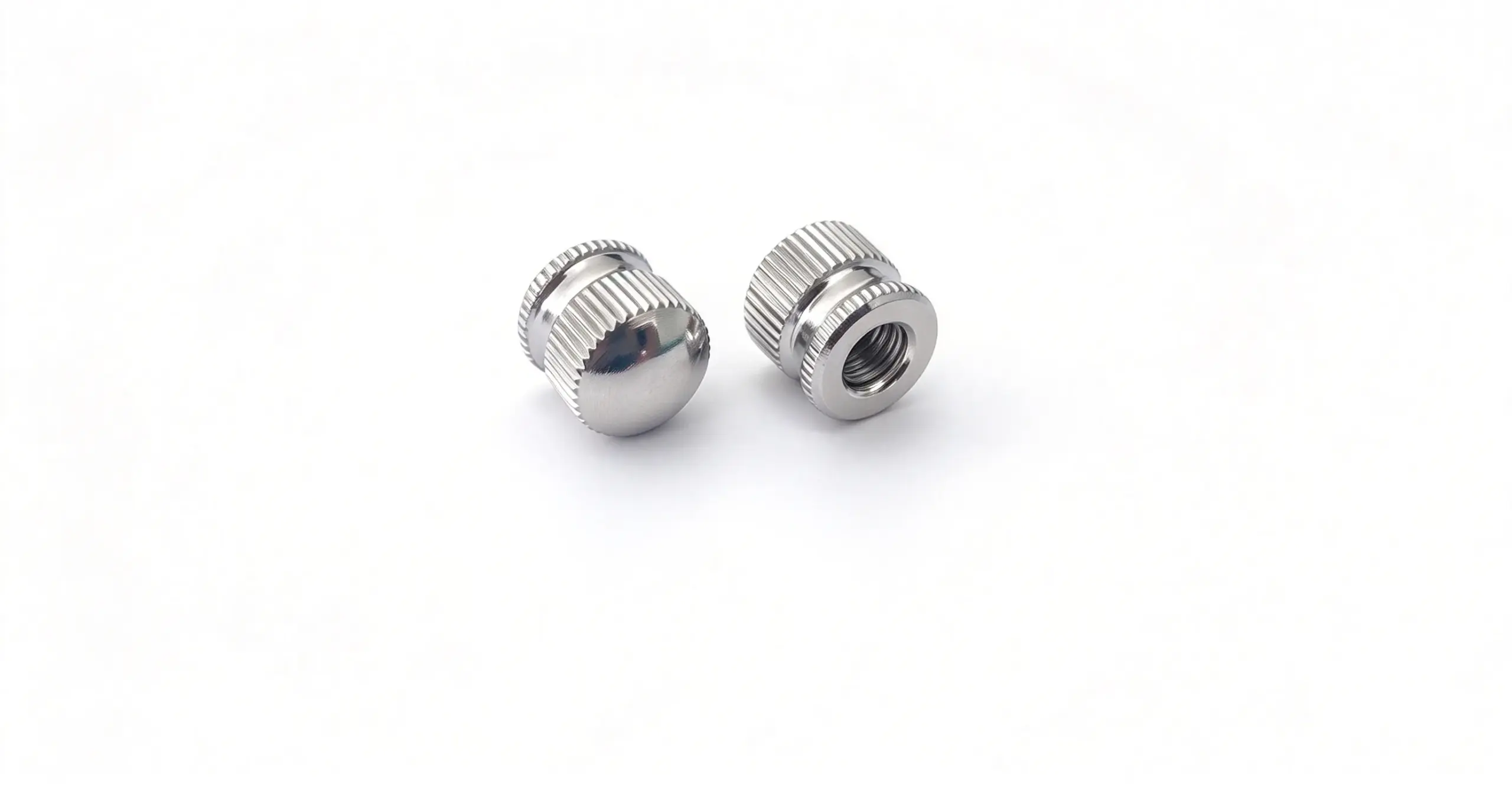
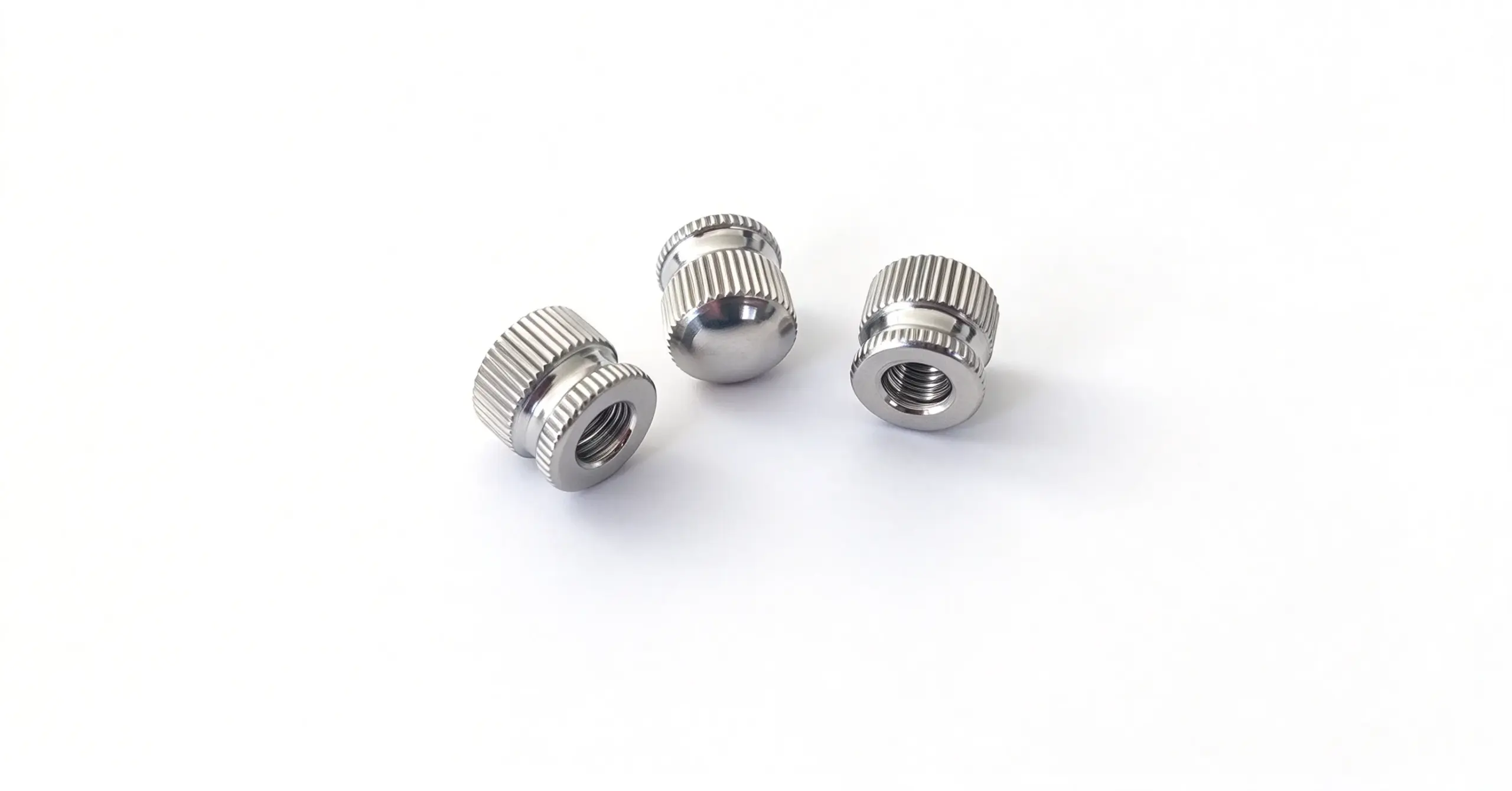
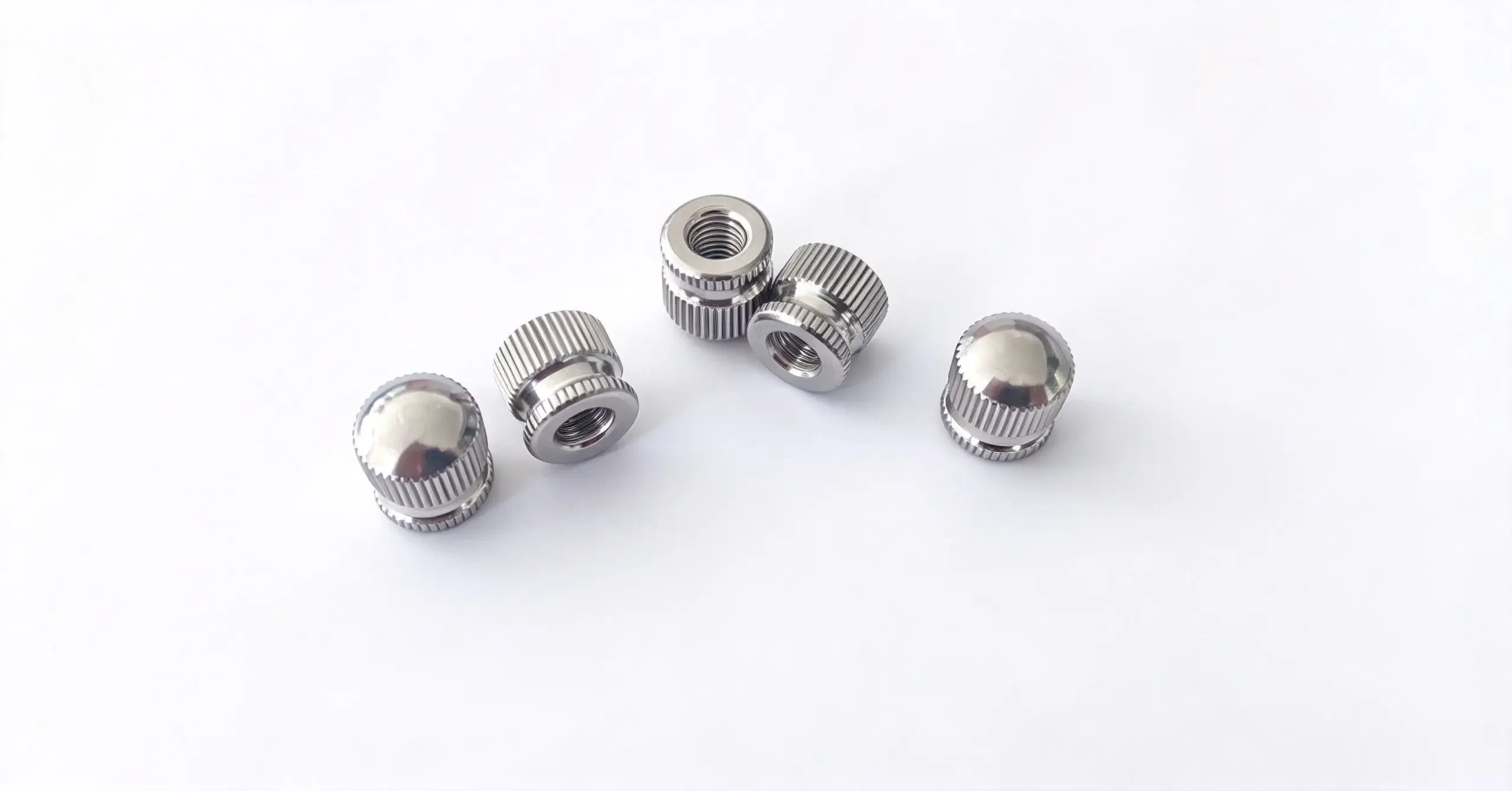
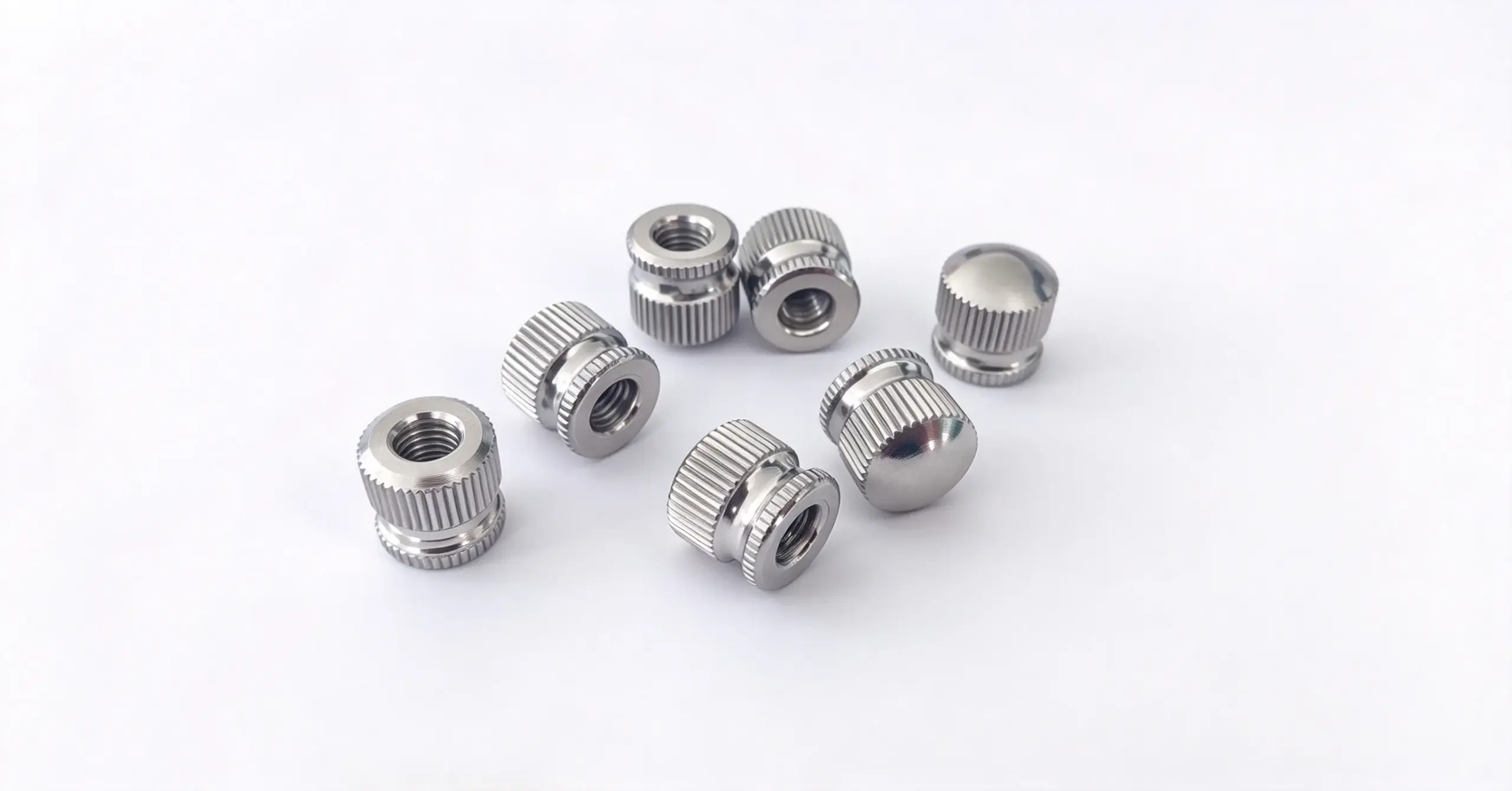
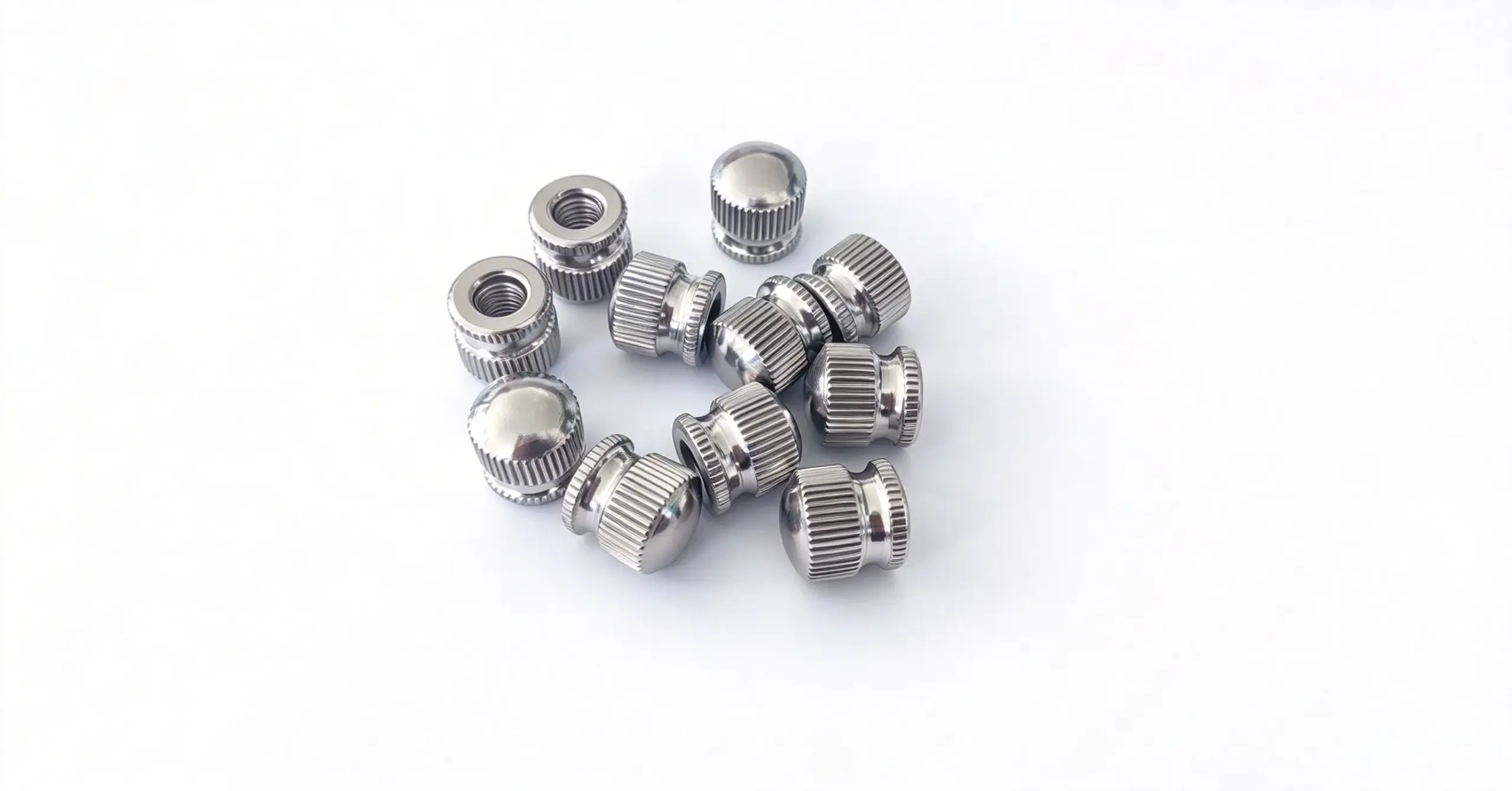
These custom knurled nuts have a closed end, an internal thread and a stepped outside profile. The gallery shows straight knurling on two outer bands, separated by a circumferential recess. The closed end and the thread opening need to be specified together: the usable thread depth must suit the mating screw without allowing it to bottom out before the joint is seated.
Closed-end profile and knurled bands
The larger knurled band, reduced middle section and narrower end band create distinct contact surfaces. Depending on the assembly design, those surfaces may provide hand grip, location or engagement with a surrounding component. The drawing should identify which diameter fits the housing and whether the recess is functional clearance or part of the retention arrangement.
The photographed closed end distinguishes this design from a through-hole embedded nut. Specify the closed-end wall, overall height, thread entry and usable thread depth separately. A similar outside diameter does not make two nuts interchangeable when their internal depths or mating shoulders differ.
Assembly requirements to review
This profile can be considered for custom equipment, covers, housings and other assemblies that need an internally threaded component with a defined outside shape. The intended installation method must be provided with the inquiry. Knurling alone does not establish whether the nut is hand tightened, pressed into a bore, molded into another part or retained by an additional feature.
- Identify the mating screw, required thread engagement and clearance at the closed end.
- Show the housing or panel thickness and the surfaces that locate the nut.
- Confirm access to the knurled bands if the nut will be turned by hand.
- For an embedded installation, provide the receiving material, bore dimensions and approved assembly process.
Information for a custom quotation
Send a dimensioned drawing or sample with the thread size and pitch, overall height, both knurled diameters, band widths, recess dimensions and usable thread depth. Mark the locating surfaces and any dimensions that must be checked against a mating component. Include the required material grade, finish, quantity and inspection requirements.
The silver appearance in the gallery does not identify a material grade or coating specification. State those requirements explicitly, including any restrictions on burrs, visible marks, cleanliness or protective packaging. If appearance is important, an approved sample can define the finish alongside the written specification.
Sample fitting and inspection
Check that the mating screw starts freely and reaches the required engagement without contacting the closed end too early. Inspect thread entry, the end wall, knurl edges and the transition into the recess. Trial the nut in the actual housing or fixture to confirm seating, clearance and the agreed installation method.
For repeated assembly, review grip access and wear on the functional surfaces. Define acceptance criteria for the finished part rather than assigning a tightening torque or retention force from a photograph. Keep the approved sample and drawing revision together for production review.
Frequently asked questions
Is this the same as an open embedded knurled nut?
The photographed product has a closed end. A through-hole nut has a different internal clearance arrangement, so screw length and usable thread depth must be checked before substituting one for the other.
Can the knurl and stepped profile be specified to a drawing?
Provide the required profile, mating component and installation method for YIWAN to review. Knurl dimensions and the purpose of each shoulder should be defined before sample approval.
What is the first fit check?
Confirm that the nut seats correctly and that the screw achieves the required engagement without bottoming out.
Browse the knurled nuts category or compare the open embedded / knurled nut profile. Send YIWAN your drawing and assembly requirements for a project-specific review.