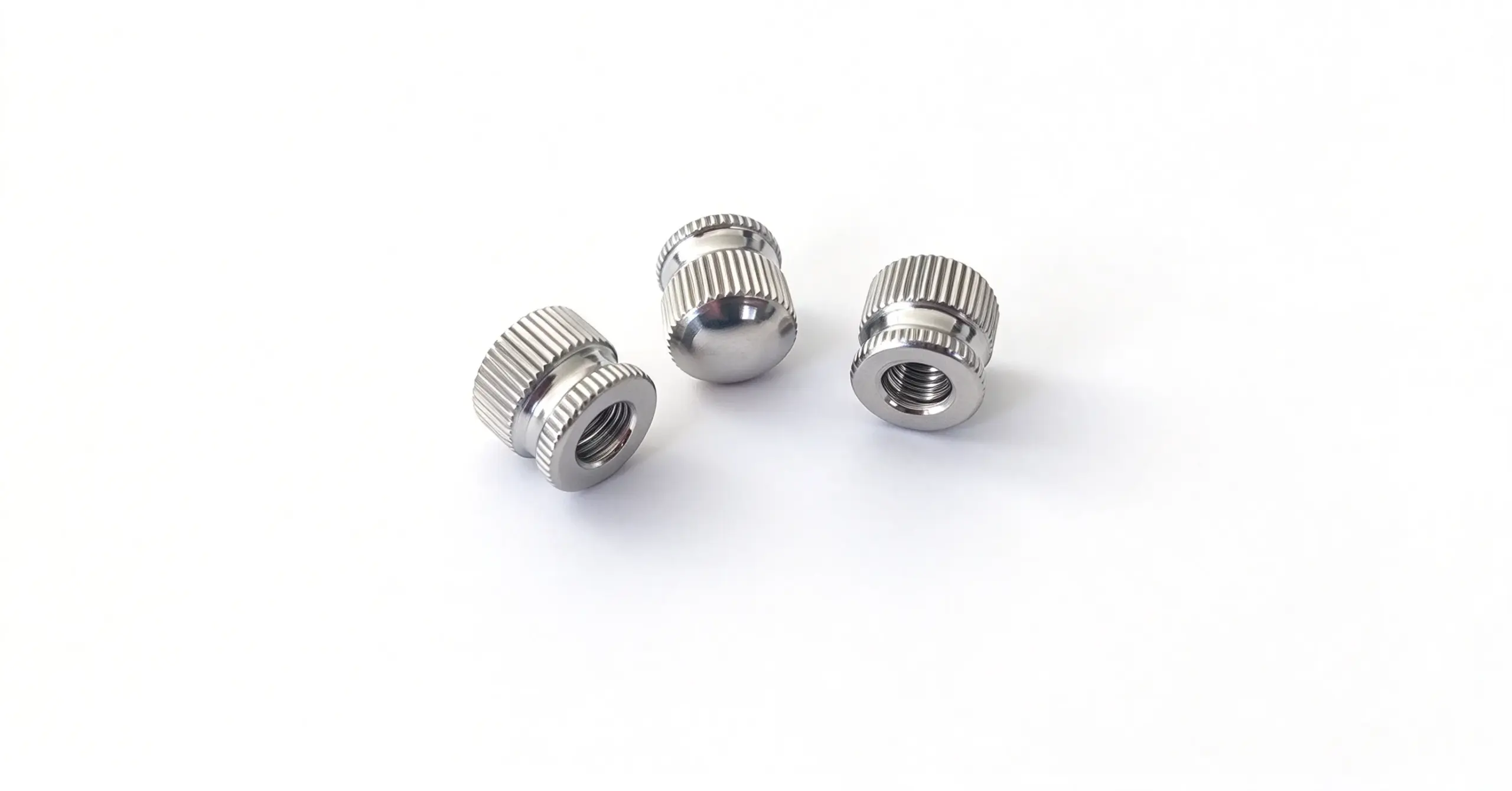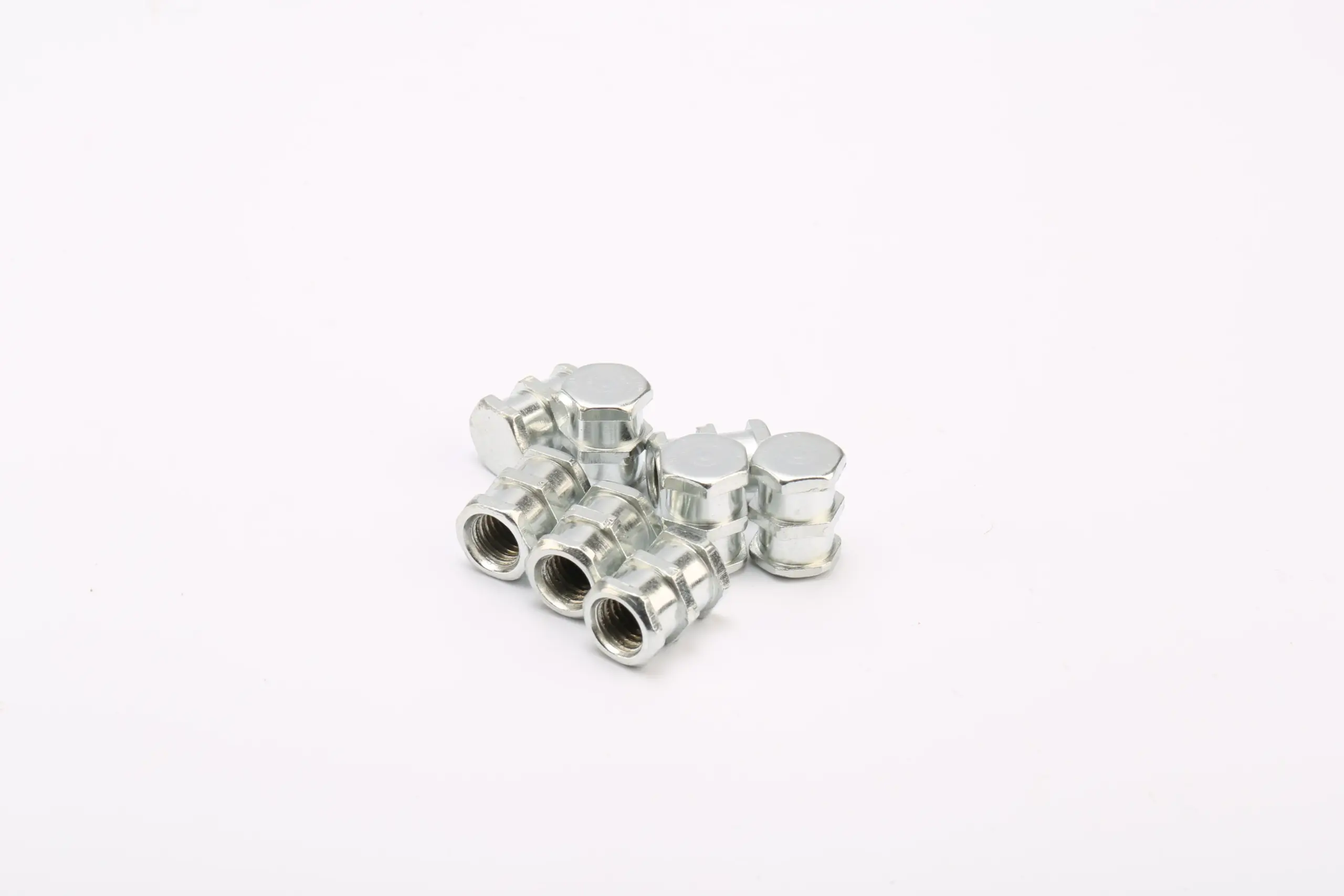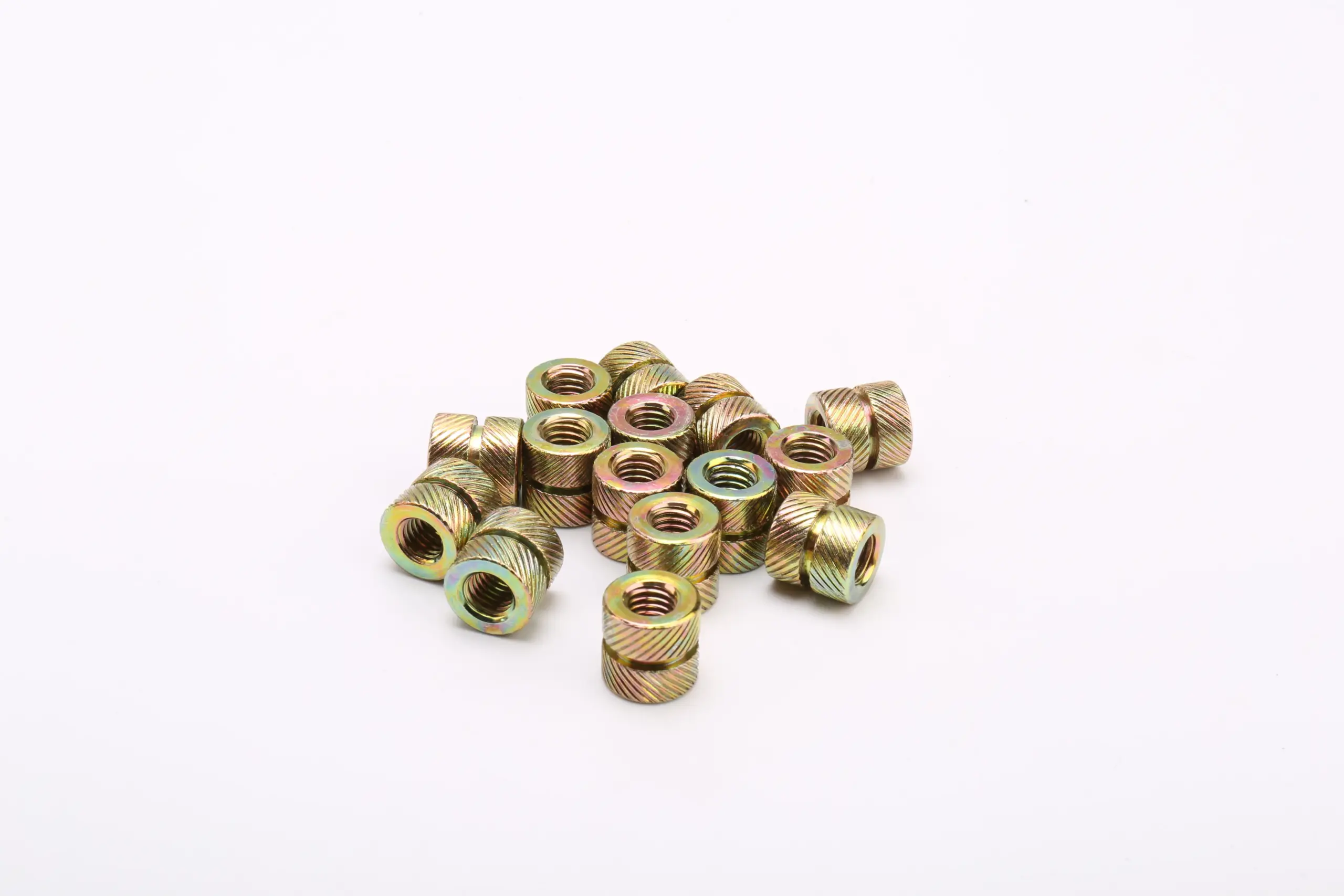
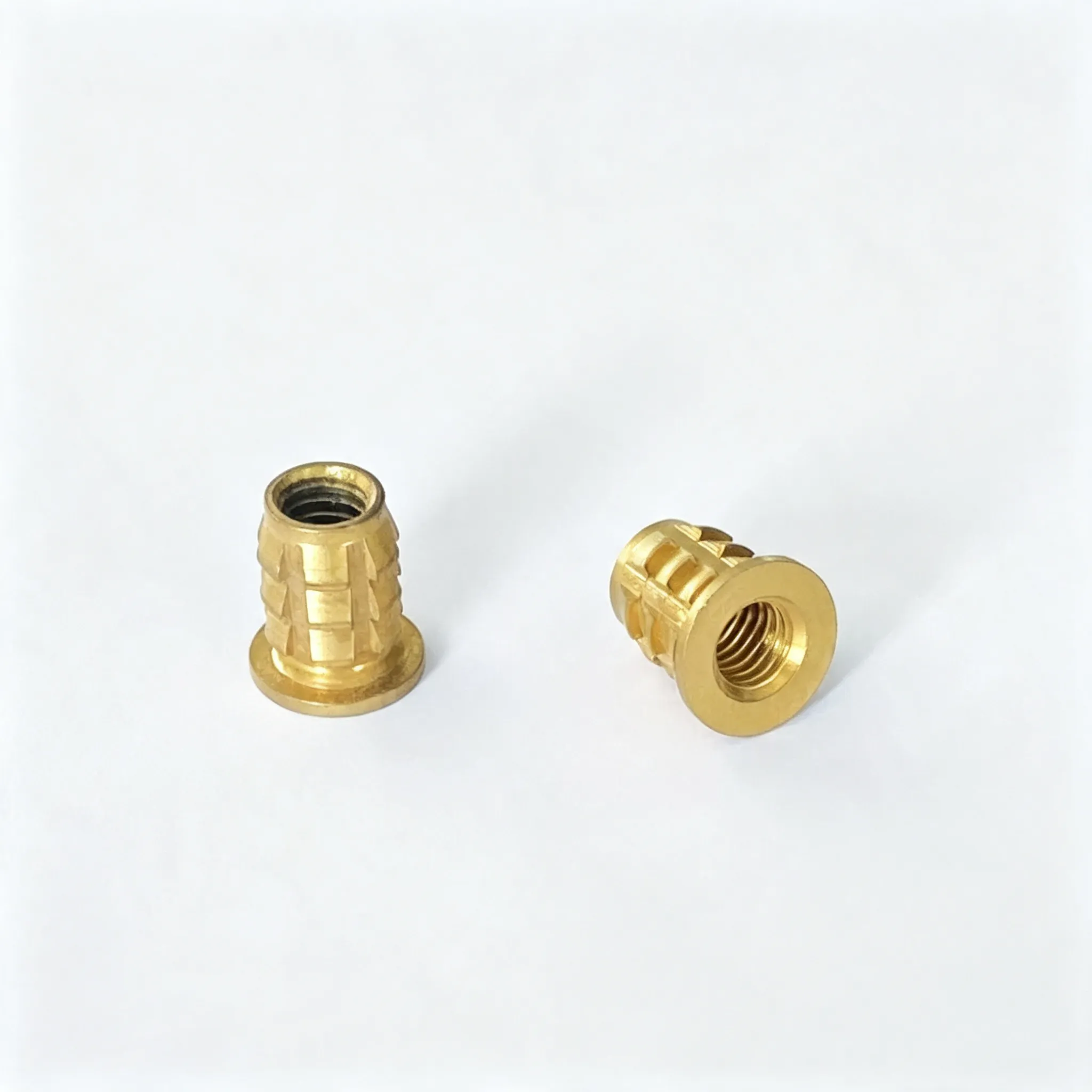
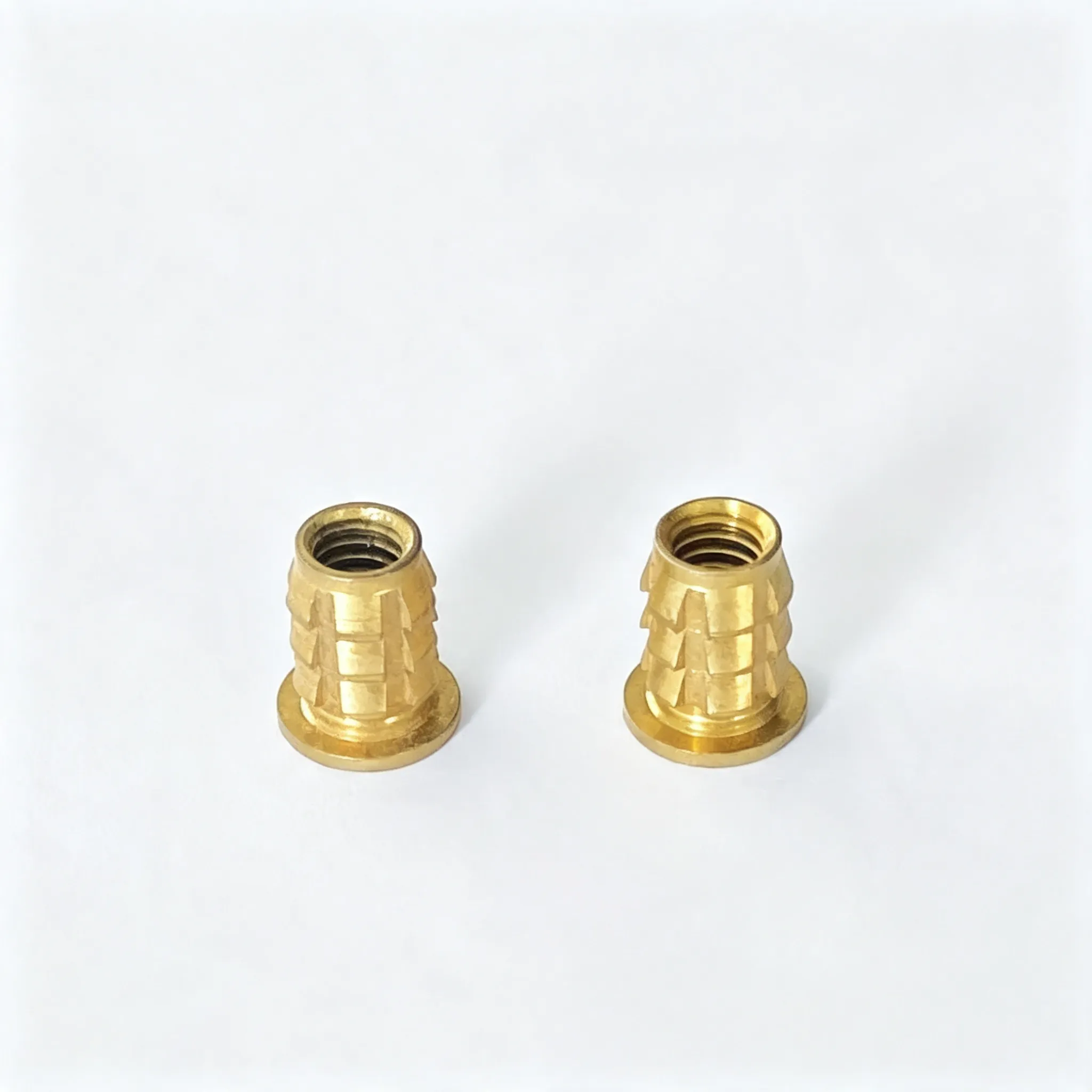
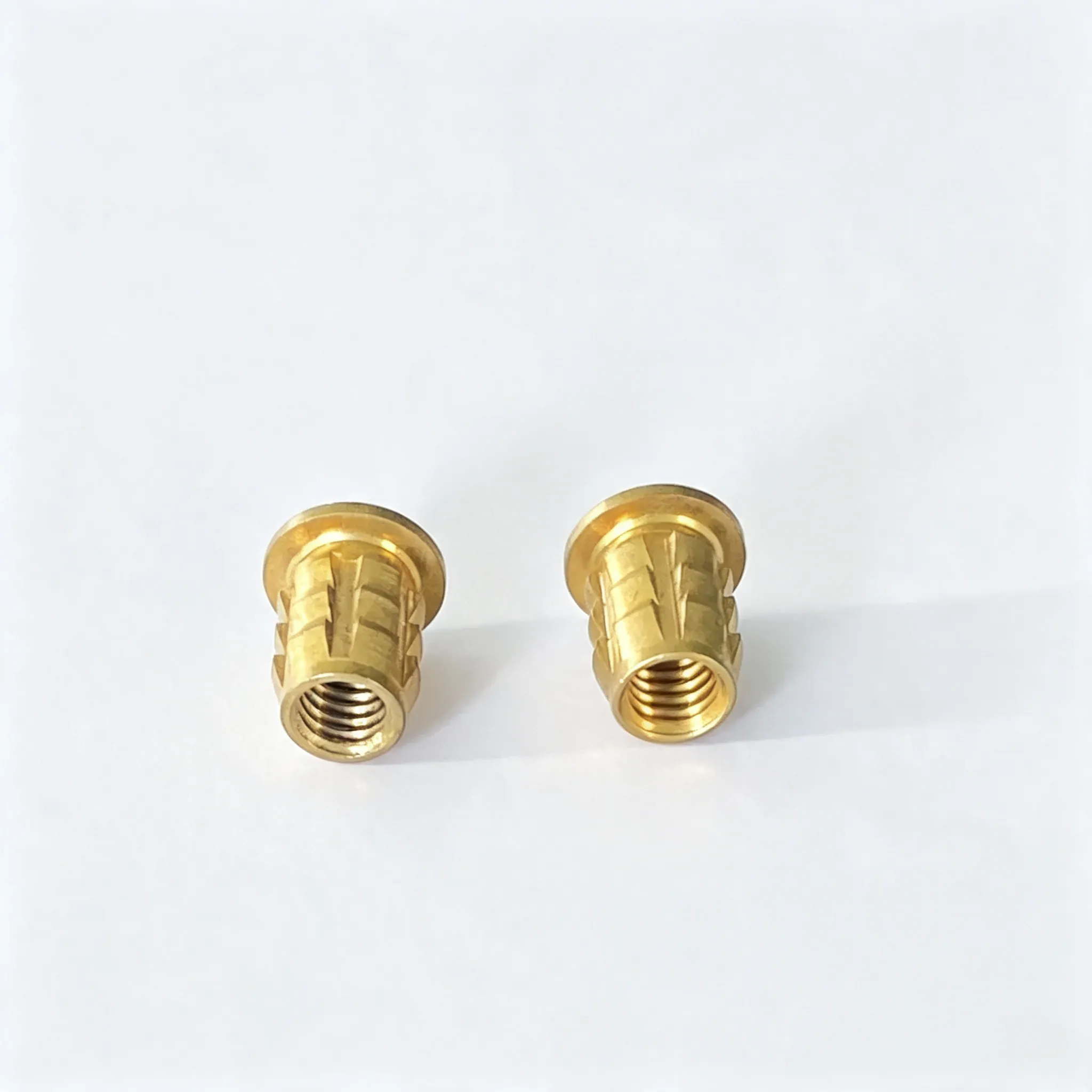
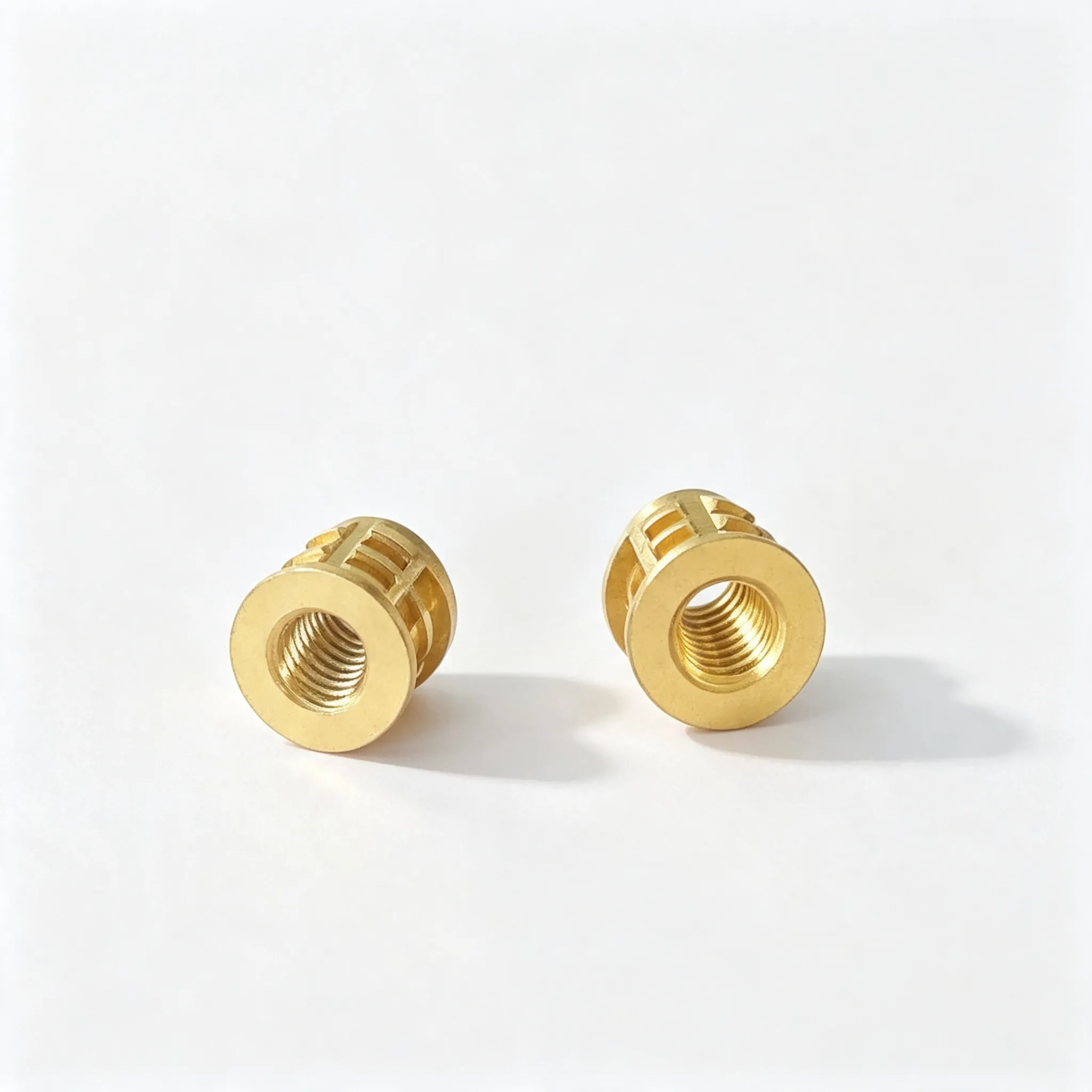
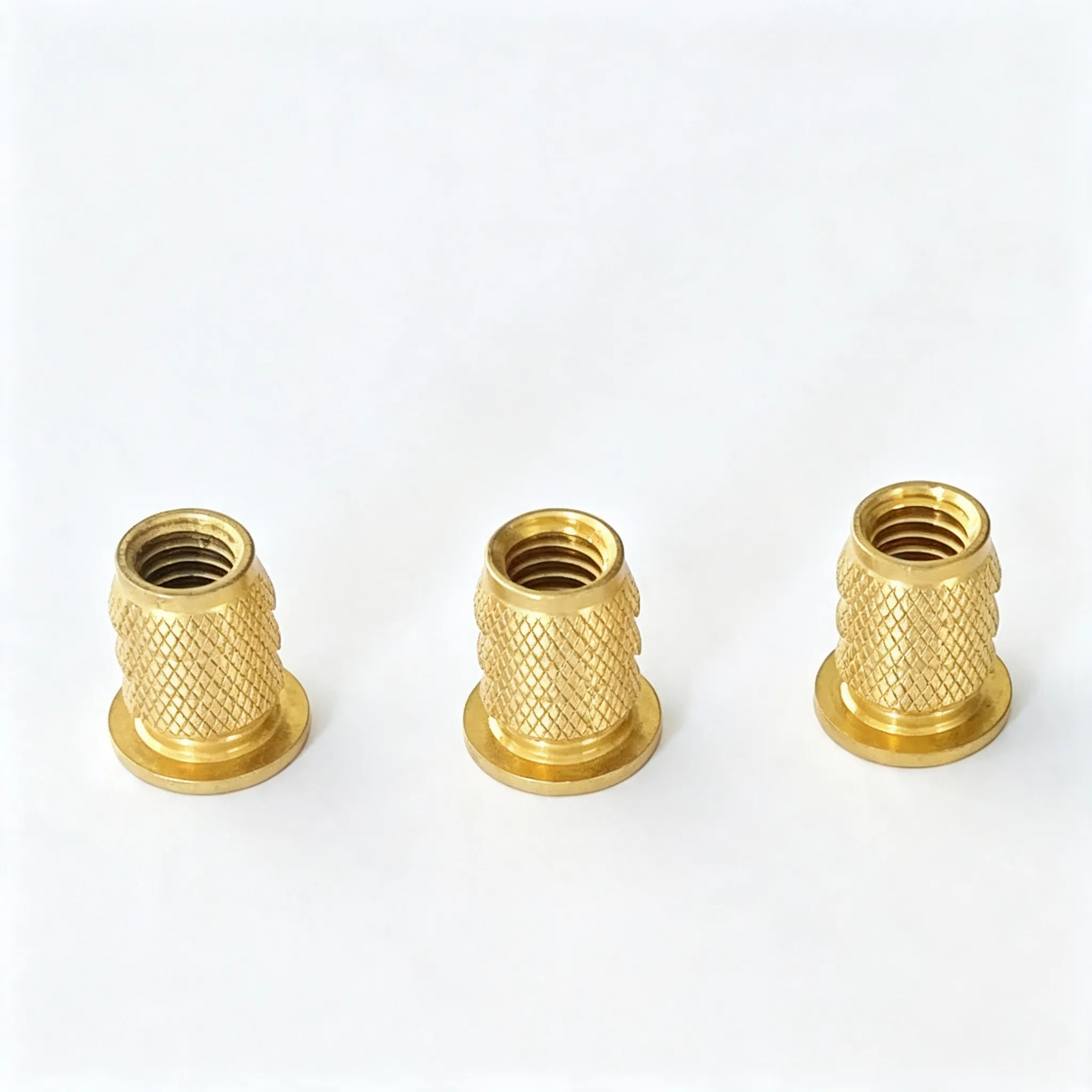
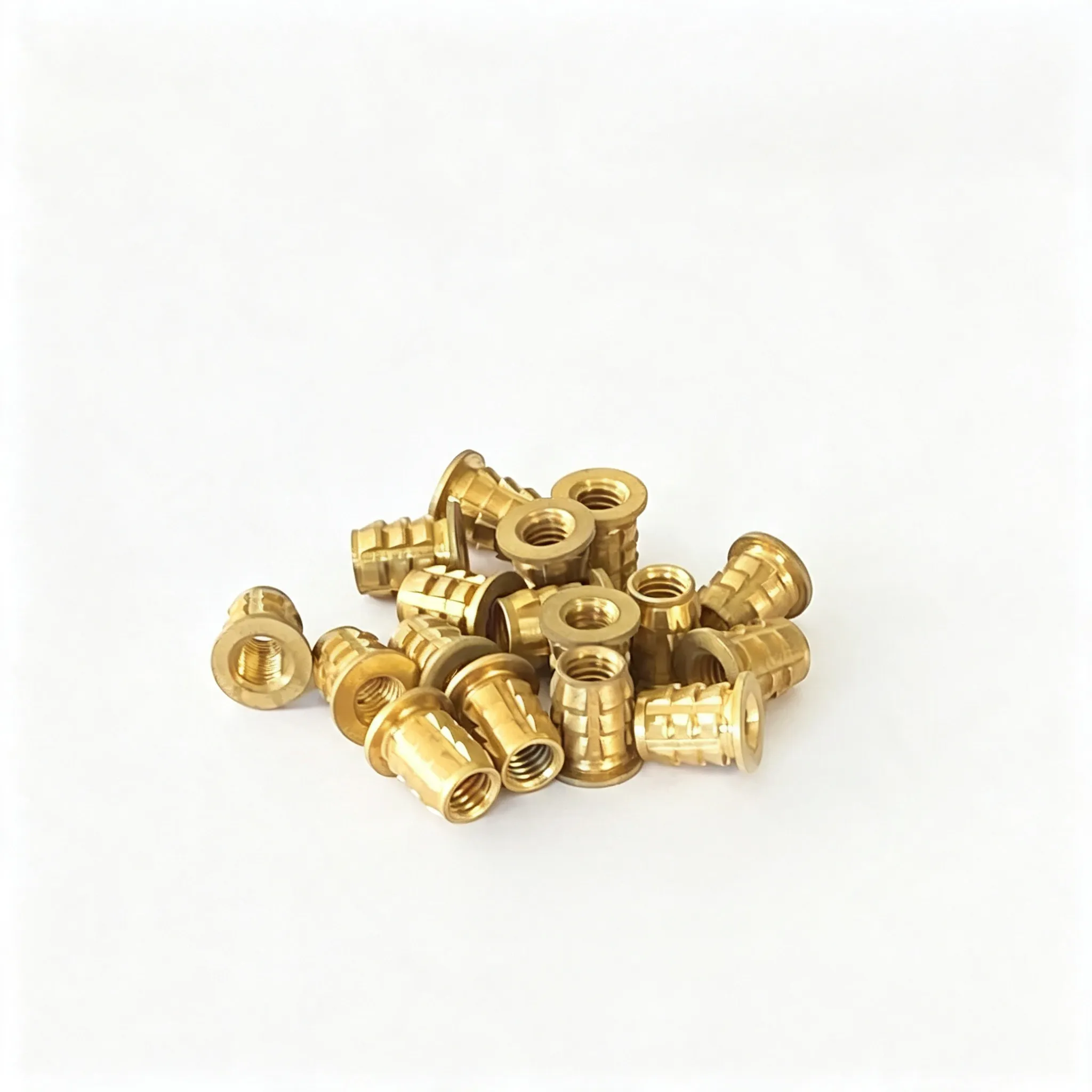
Internal and external thread nuts provide two threaded interfaces in one part: a bore for one connection and an outside thread for another. The gallery shows brass-toned inserts with a flanged or knurled body. This dual-thread construction can be useful for adapters and spacers, but the thread directions, lengths and seating faces must be specified together.
Two thread systems in one body
Identify the internal thread and the external thread separately. Record size, pitch, direction and usable length for each. The part may connect a stud, screw, rod or another threaded component on either side. A thread that is visually present may not be long enough for the intended engagement, so the assembly stack should be checked rather than the nut alone.
Flange and knurled body
The flange can provide a seating or stopping surface, while the knurled section may offer grip or a key in a molded part. Confirm which feature is functional. If the outside thread is used for adjustment, check that the knurl does not interfere with the mating thread or the tool. The body should be turned through its full range without binding.
Assembly sequence
Decide which connection is made first and how the part will be held during tightening. If both threads are engaged at once, the assembly can lock before the intended faces meet. Provide a drawing that shows the order of assembly and the surfaces that should remain clear. For an adapter, confirm that the internal and external threads do not require opposite directions unless that is intentional.
Thread compatibility and inspection
Check both threads with suitable gauges or mating parts. Inspect the transition between the internal and external sections for burrs or incomplete threads. After finishing, confirm that neither thread is blocked or reduced below the usable length. If the part is used in a visible assembly, define the appearance of the flange and knurl and protect them during handling.
Specification checklist
- Define both thread systems, including direction and length.
- Show the flange, knurl and seating surfaces.
- Provide the mating parts and assembly sequence.
- State material, finish and inspection requirements.
A trial assembly with the actual mating components is the best way to confirm engagement and seating. Record the approved thread combination before production.
FAQ
Can both threads be tightened at the same time?
Only if the assembly sequence and thread directions are designed for it. Otherwise one connection may loosen or bind while the other is tightened.
Is the outside thread always for adjustment?
No. It may be for a fixed connection, an adapter or another function. Confirm the intended use on the drawing.
What should be checked first?
Confirm both thread sizes and directions, then verify the seating faces and assembly order.
Browse the Nuts category, or compare embedded nuts and custom embedded nuts.