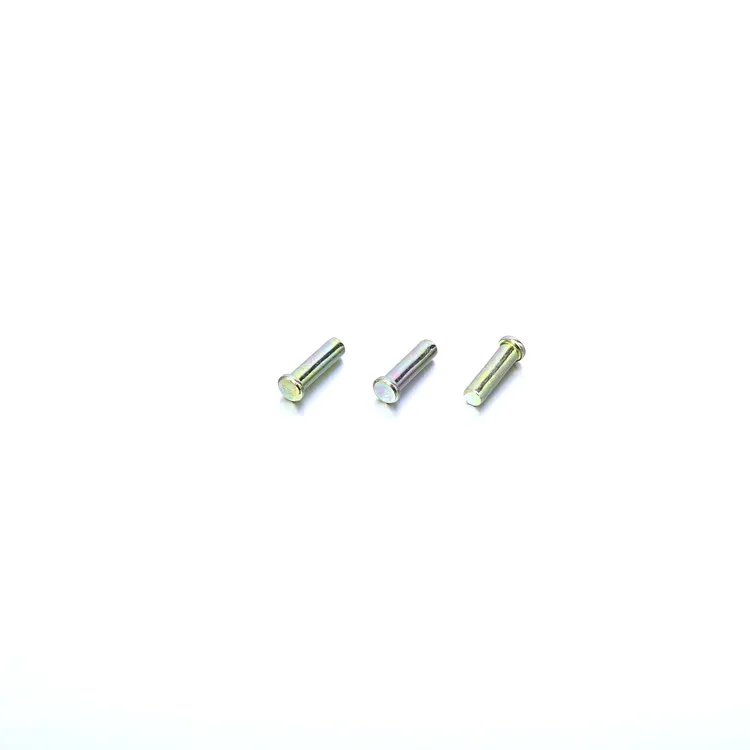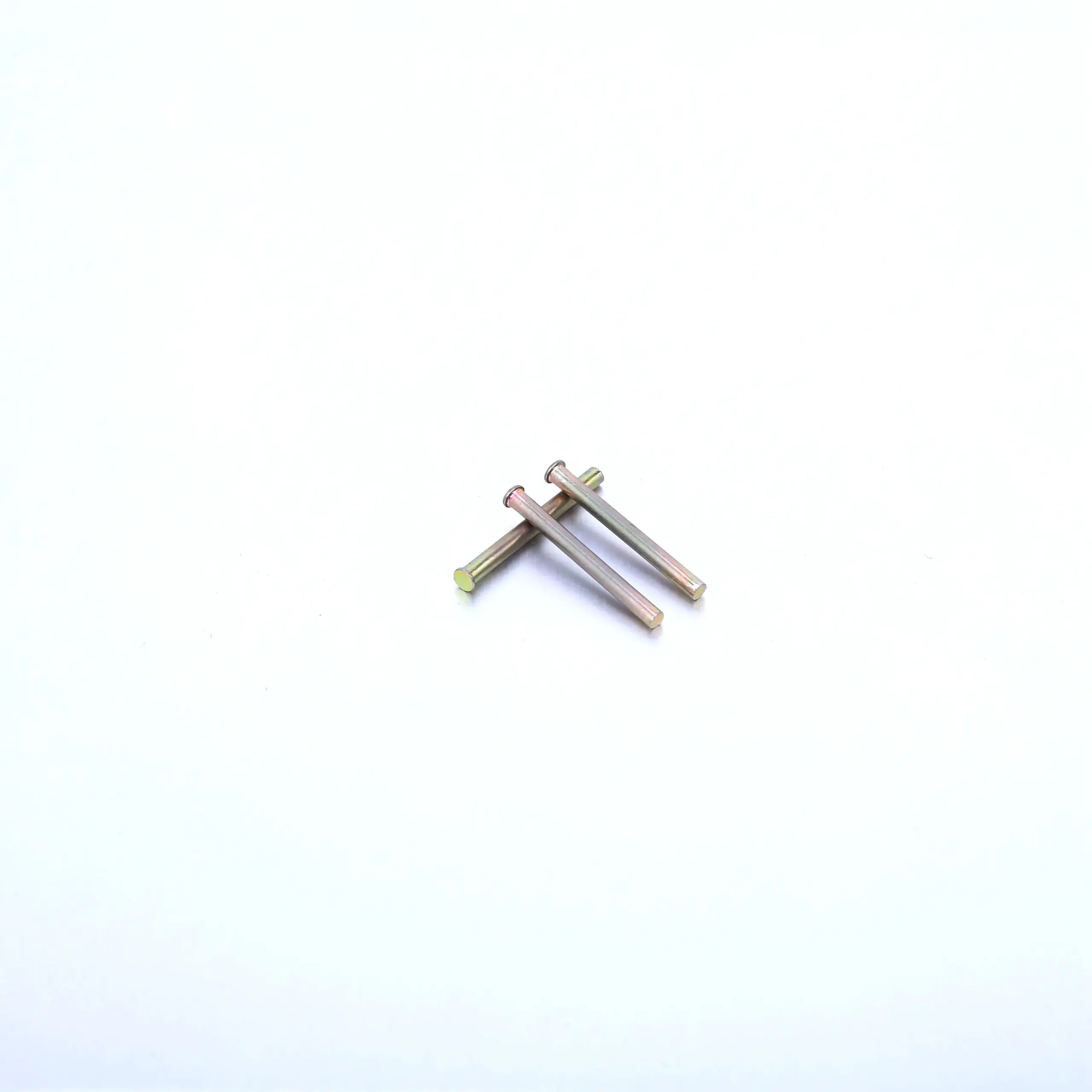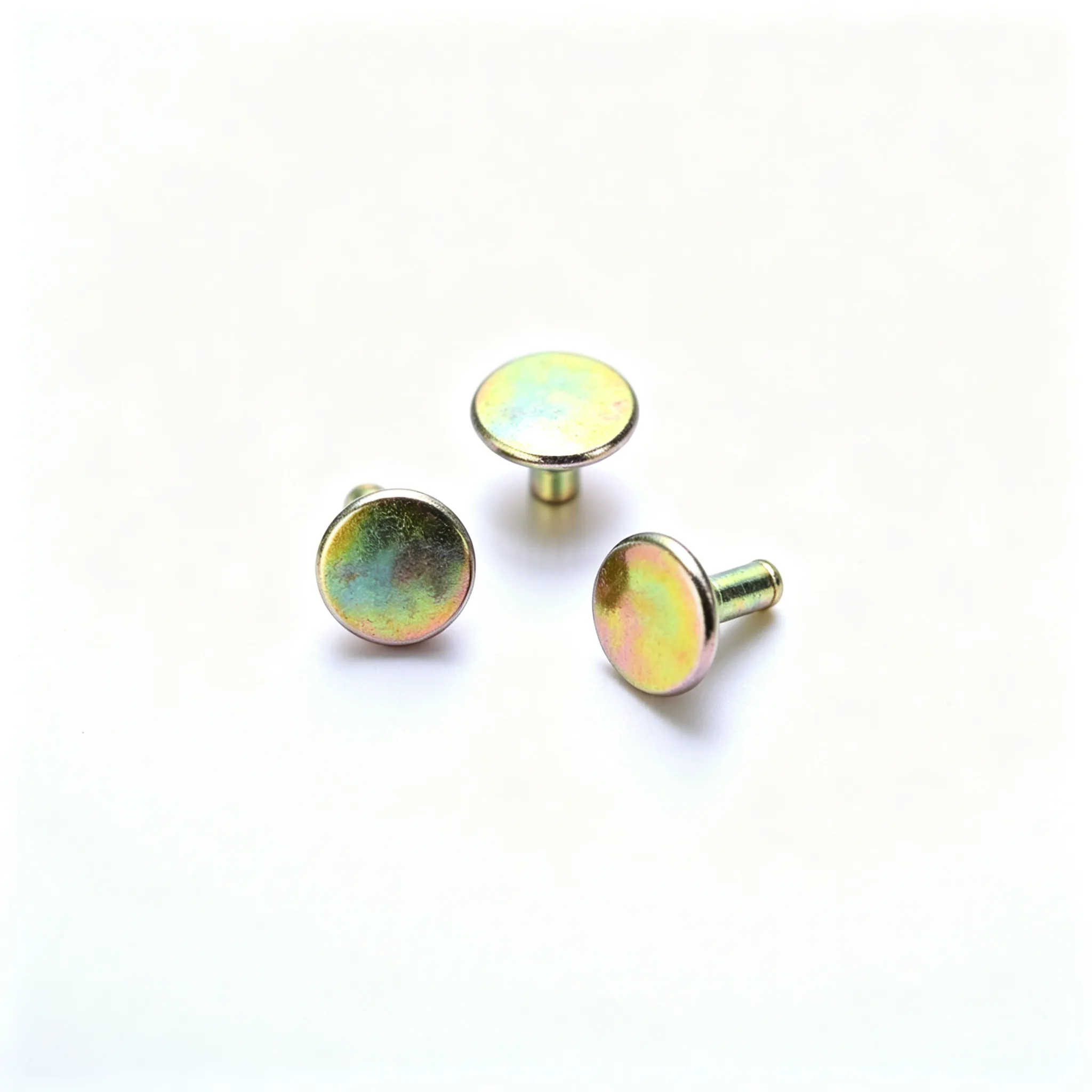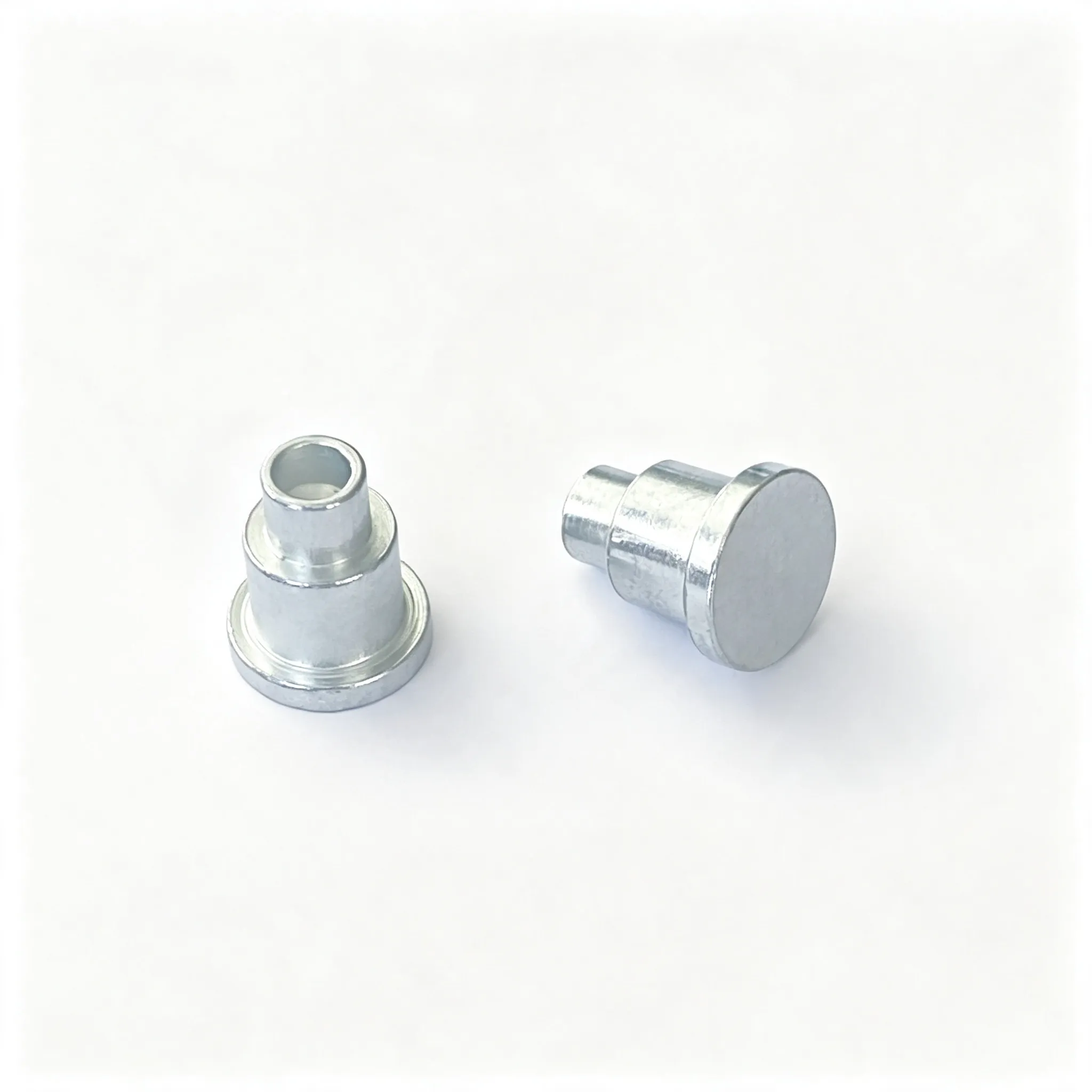
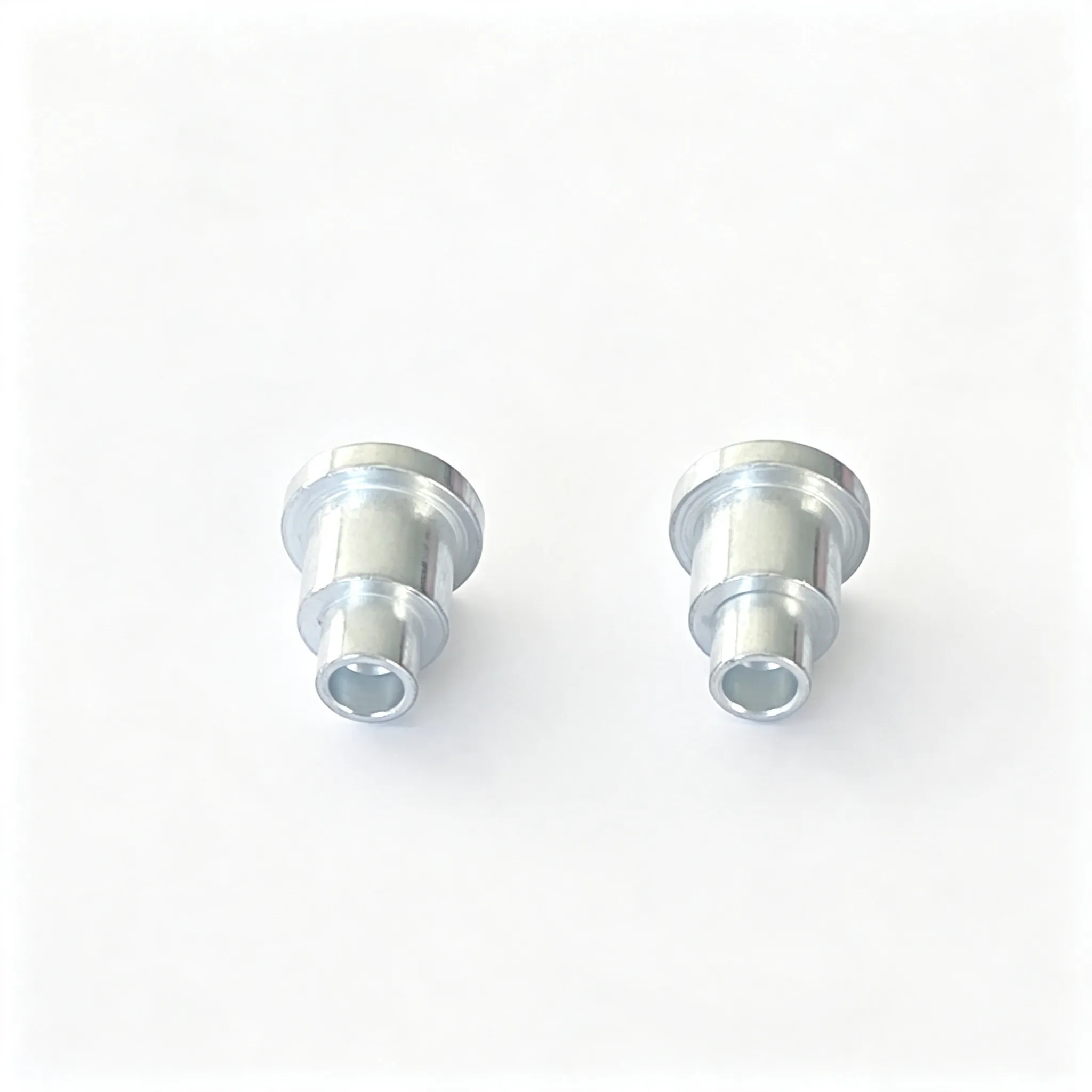
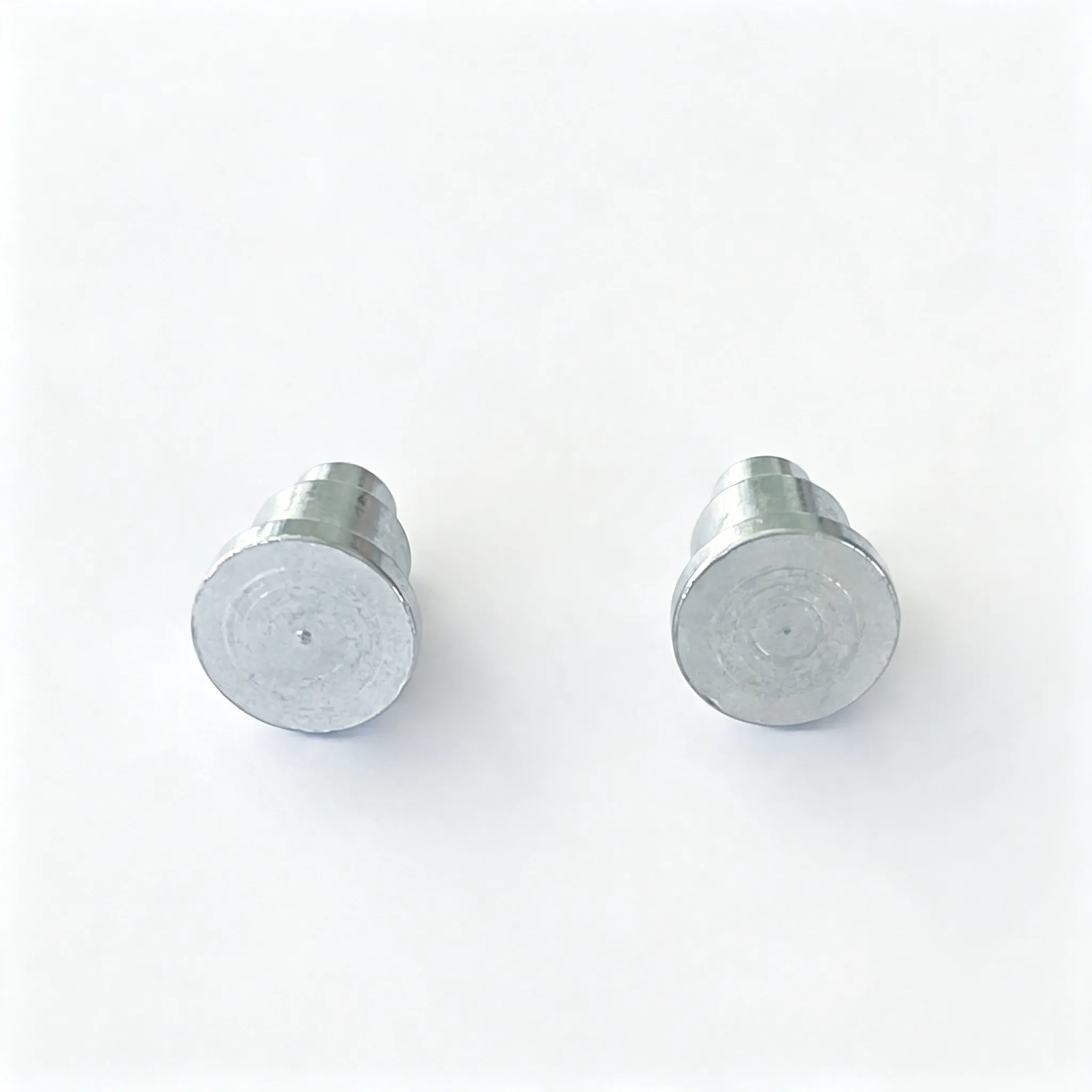
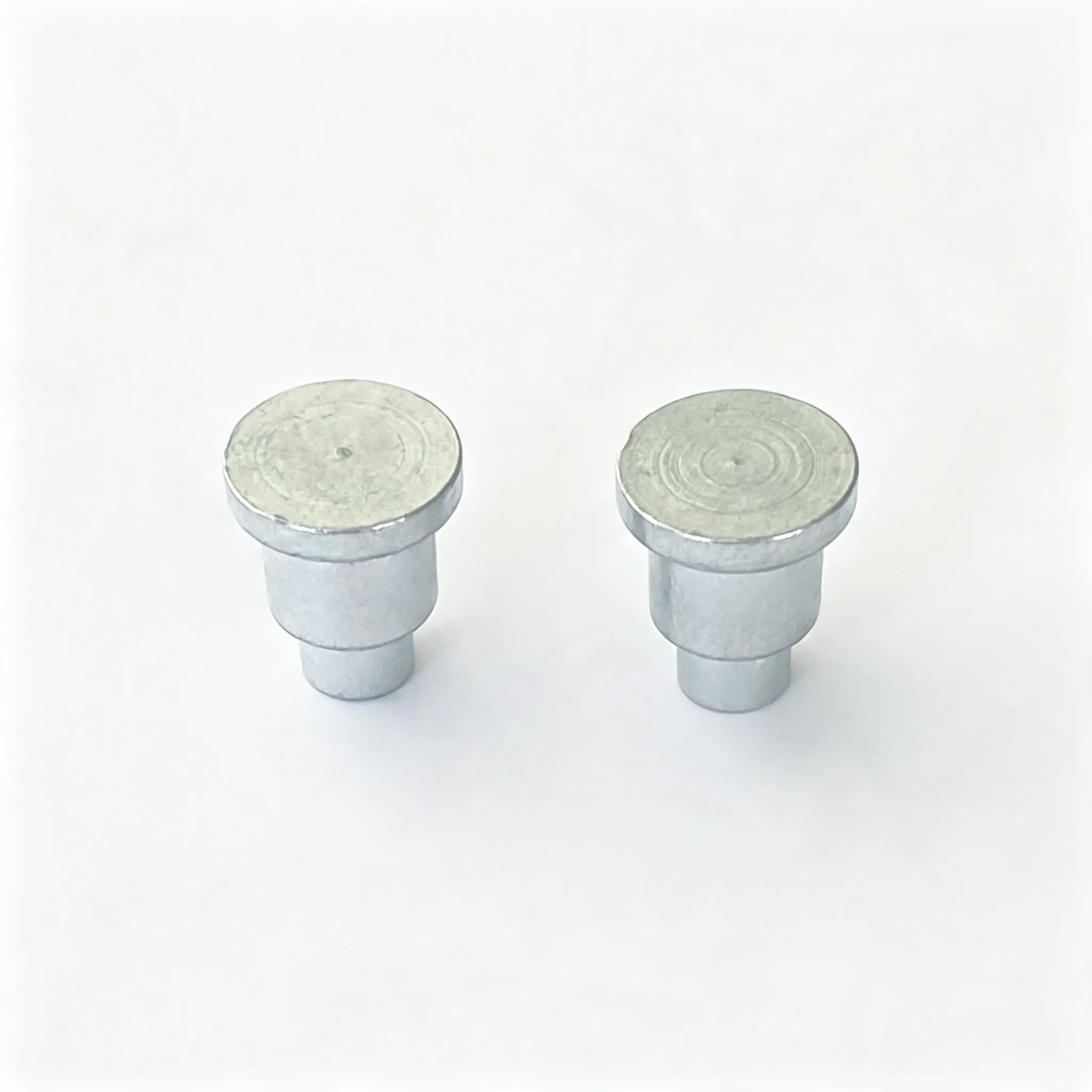
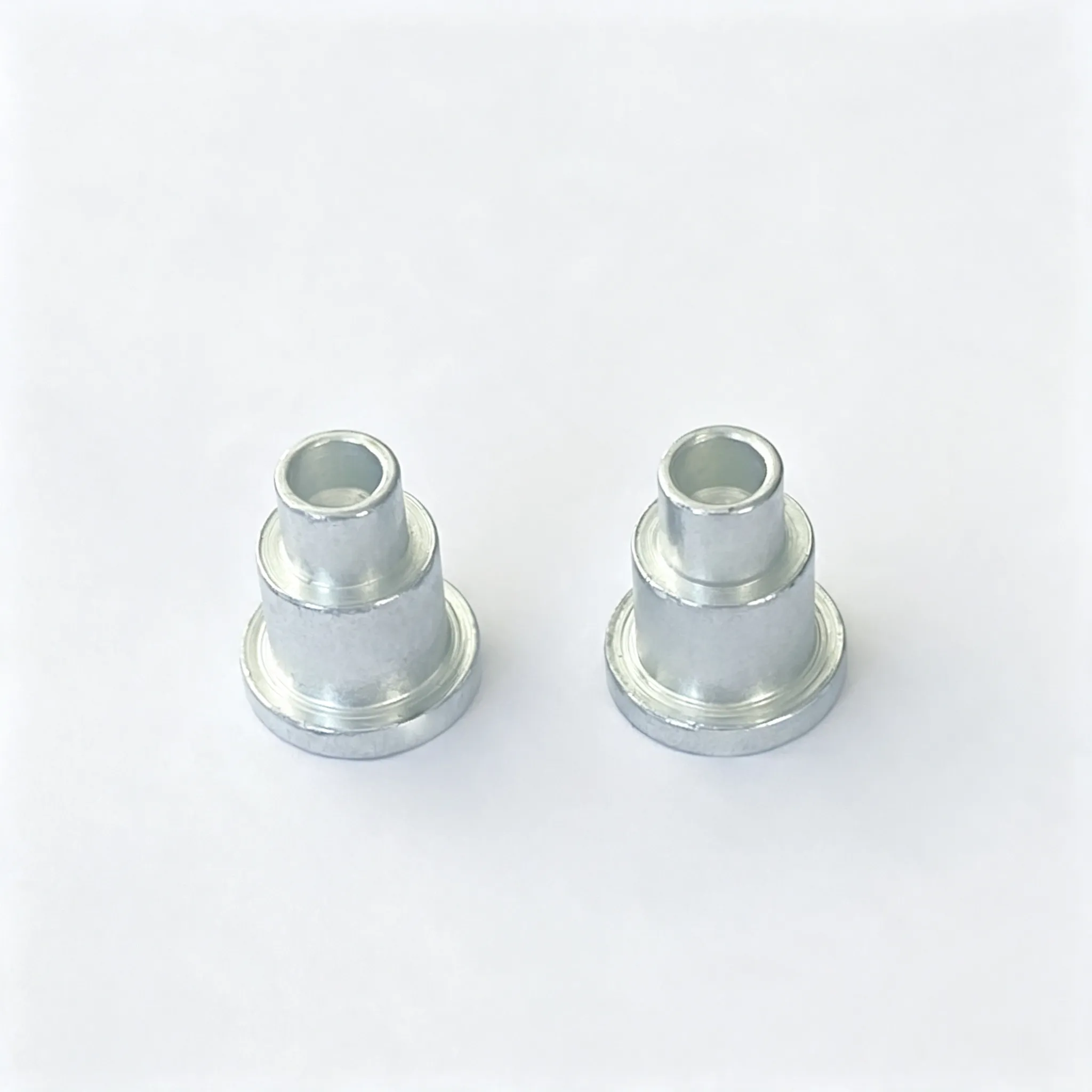
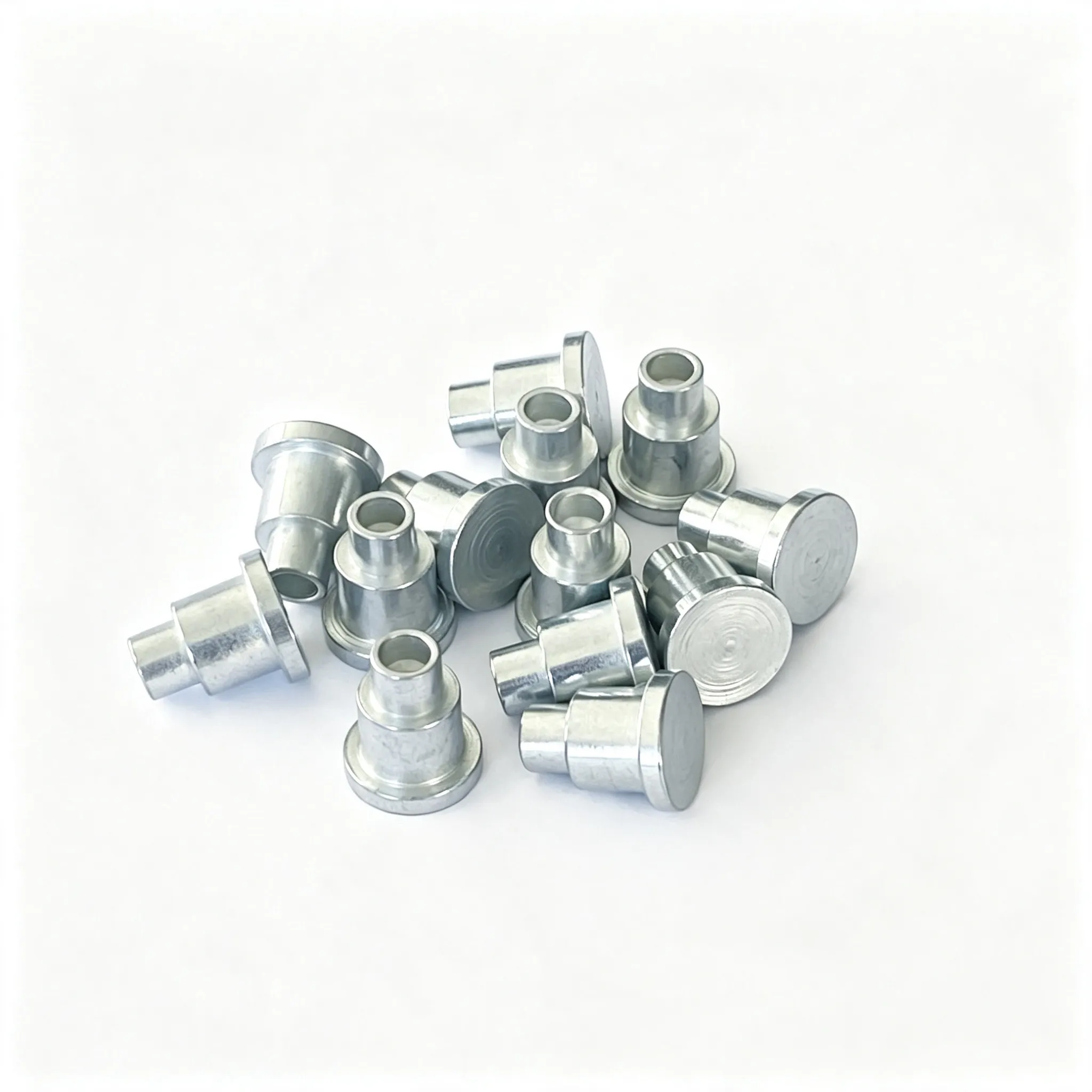
Step flat-head rivets use a flat bearing head and a stepped shank for low-profile locating and joining. The flat head presents a broad, level face rather than a domed profile, while the step forms a shoulder that can position a plate or control the assembled depth. This head style is useful when the visible side should stay relatively low and a defined seating surface matters.
Construction and working principle
The head, step and shank each need a separate dimension on the drawing. The flat face bears against the workpiece; the step controls the axial position of a mating component; and the smaller section is formed or retained to close the joint. Hole clearance and stack tolerance affect how the head seats. If the application requires a perfectly flush surface, the hole may need a countersink or recess, so “flat head” should not automatically be read as “flush mounted.”
Typical applications
Step flat-head rivets can be considered for panels, tags, hinges, electrical hardware, compact mechanisms and assemblies that need a low visible profile with a locating shoulder. They may also suit applications where a rounded head would interfere with a mating surface or where a broader flat bearing area is useful. Confirm the surrounding clearance and the required edge distance.
Flat head versus pan head
A flat head provides a level top face and a different bearing footprint; a pan head leaves a rounded raised profile. The choice affects clearance, appearance, hole preparation and how the load is distributed around the joint. If a flush result is required, the head shape and workpiece recess must be designed together rather than selected independently.
How to specify a step flat-head rivet
- Provide the head diameter and thickness, shank diameters and step location.
- State whether the head sits on the surface or within a recess.
- Include the hole size, stack thickness and installed clearance.
- Confirm material, finish, quantity and the required end form.
Material, finish and installation checks
Confirm the substrate, finish and required surface appearance before production. Check the flat head against the actual workpiece: a small recess, burr or mismatch can change the visible seating and the installed height. The step should contact the intended shoulder without binding the mating part, and the finished end should retain the assembly without marking the low-profile head.
FAQ
Does a flat head sit flush automatically?
No. A flat head has a level bearing face, but a flush installation may still require a recess or countersink in the workpiece. Provide the intended surface condition.
Can a step flat-head rivet be used as a pivot?
It can be reviewed for a pivot-style joint when the shoulder, bearing area and clearance suit the movement. State the expected rotation and load rather than assuming the flat head provides a bearing surface.
What should be included in an RFQ?
Send the drawing or sample, head and step dimensions, hole and stack details, material, finish and expected quantity.
Browse the Rivets category, or compare pan-head step rivets and solid stepped long rivets.