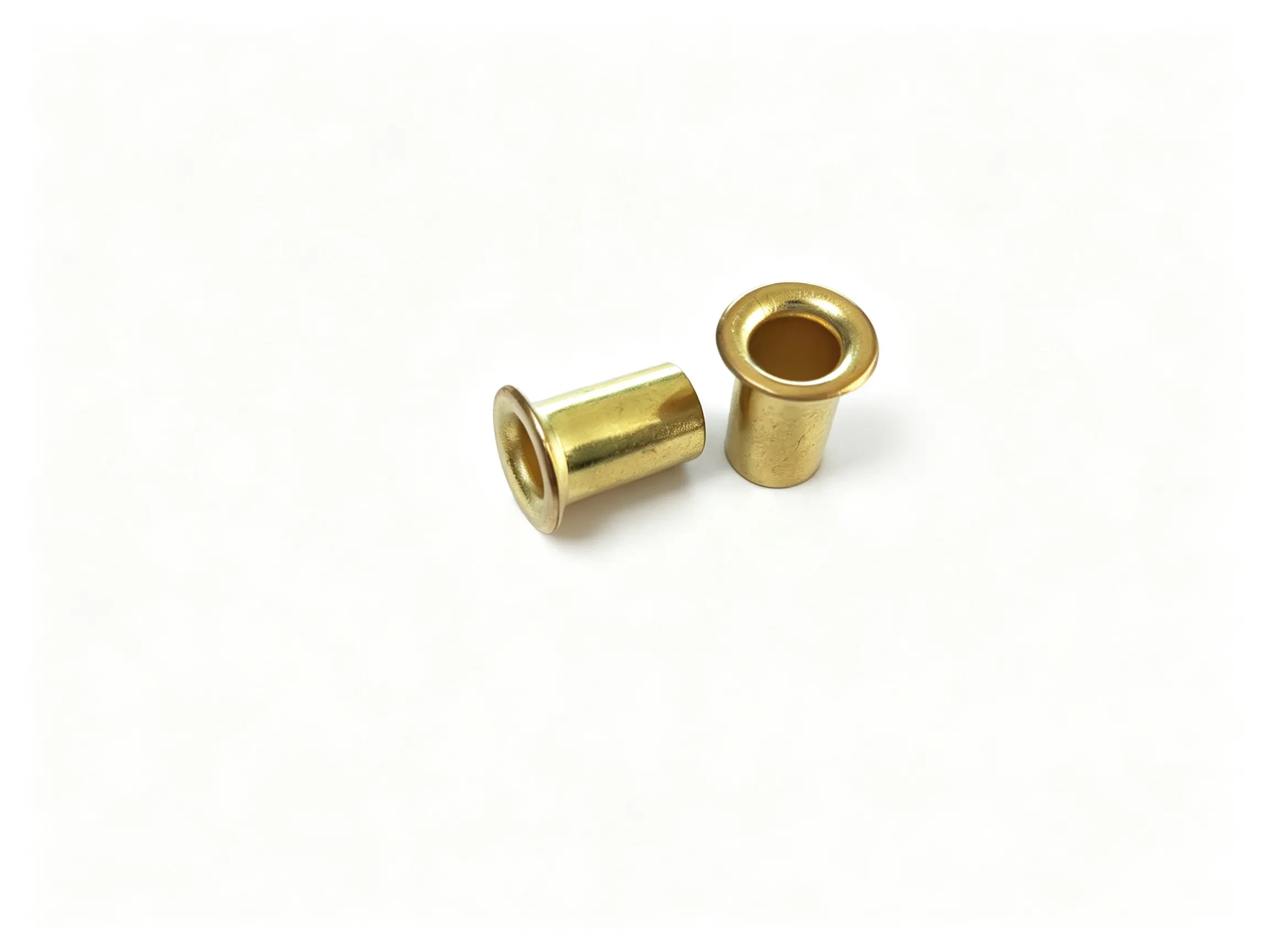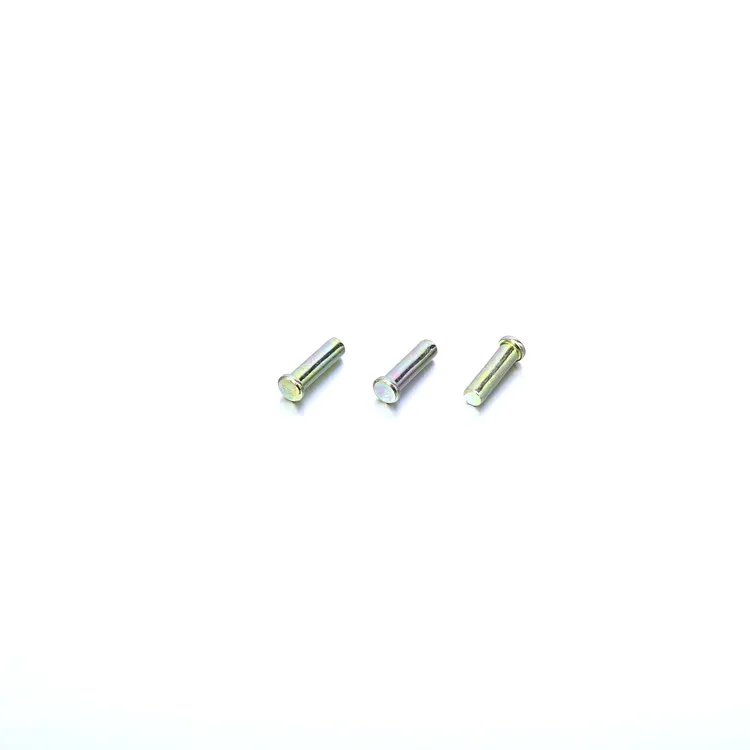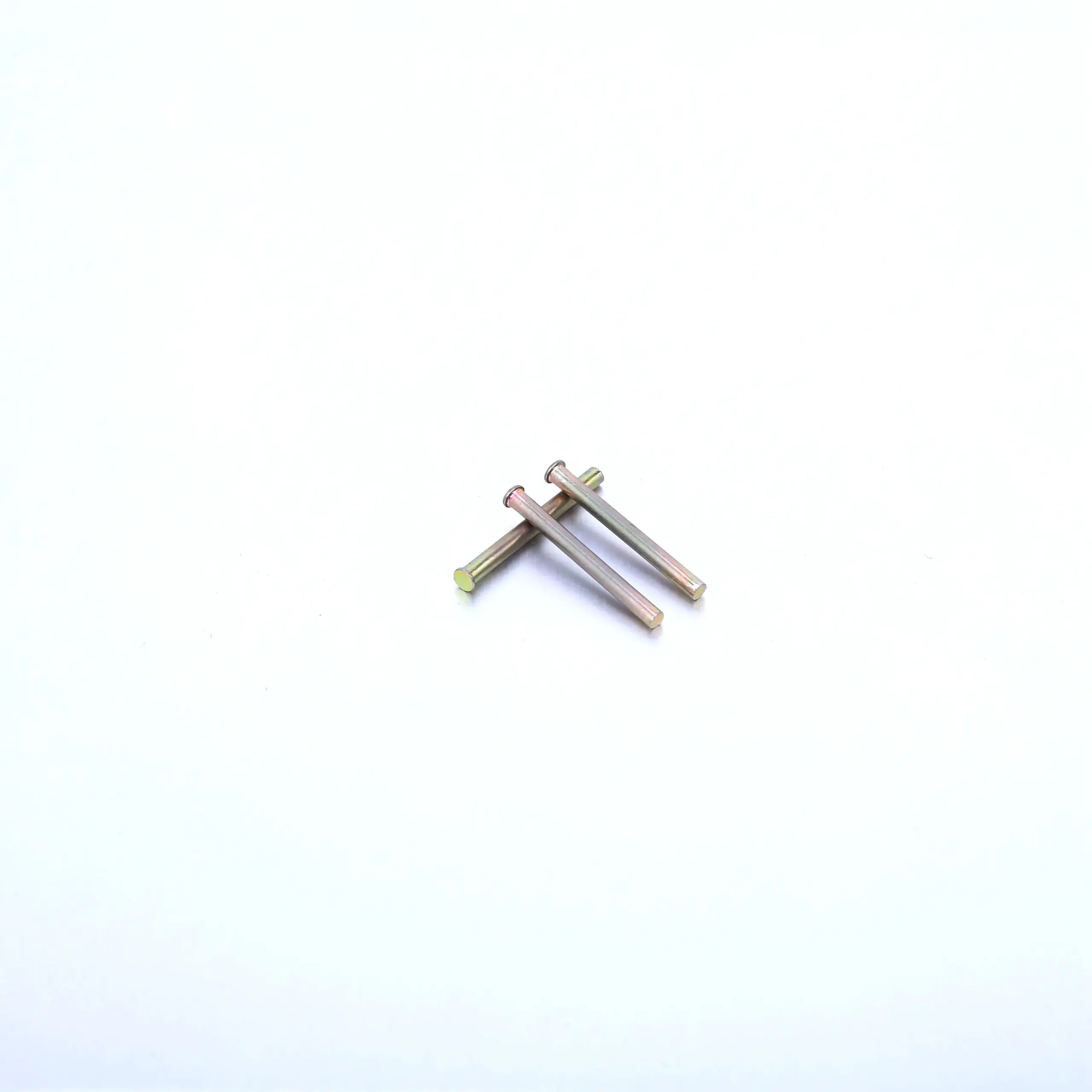


Tubular rivets use a hollow cylindrical body and a formed head to create a lightweight fastener, spacer or pivot point. The open body can be useful when the assembly needs a through-passage, a controlled bearing surface or a visible hollow center. A tubular rivet is not the same as a semi-tubular rivet: the semi-tubular type has a short hollow tail intended to flare during setting, while the tubular body remains open through the part.
Construction and working principle
The basic form is a head and a tube. Depending on the joint, one or both ends may be rolled, flared or otherwise formed to retain the mating parts. The tube inside diameter, outside diameter, wall thickness and installed length all affect the joint. The hole in the workpiece must match the selected body size, and the forming method must be compatible with the material and wall thickness.
Because the body is open, a tubular rivet can sometimes serve as an eyelet, a wire passage or a simple pivot. These functions should be stated at the design stage rather than inferred from the product name, since a fastener intended for clamping and a part intended for movement have different requirements.
Typical applications
Typical applications include eyelets, tags and labels, electrical components, hinges, light-duty fastening, spacers and small pivot joints. Tubular rivets are also used where a conventional solid fastener would add unnecessary weight or close off a passage that needs to remain open.
Customization options
Custom requirements can include head shape, tube diameter, inside diameter, wall thickness, length, end form, material and finish. For a pivot or wire-passage application, provide the mating pin or wire size and the required clearance. For a fastening application, provide the full stack and the intended installed shape.
Material and finish selection
Material choice should reflect the required strength, formability and corrosion exposure. Brass and copper alloys may be considered for electrical or decorative parts, stainless steel for corrosion-resistant assemblies, and aluminum where low weight is important. Plating and other finishes must be defined with the substrate and service environment in mind; the appearance of the sample alone is not a complete specification.
How to specify a tubular rivet
- Provide the tube outside diameter, inside diameter and wall thickness if critical.
- State the installed length, stack thickness and required end form.
- Explain whether the hollow center is for appearance, wire passage, pivoting or another function.
- Confirm material, finish, quantity and any electrical or corrosion requirement.
FAQ
Is a tubular rivet the same as a semi-tubular rivet?
No. A tubular rivet has an open tubular body. A semi-tubular rivet has a short hollow tail and a solid portion that supports the joint. The two forms are selected for different setting behavior and joint requirements.
Can a tubular rivet be used as a spacer?
It can be considered for spacer or pivot applications when the tube dimensions, bearing surface and end form suit the load. Confirm the installed clearance and the way the part will be retained.
What information is needed for a quotation?
Send the drawing or sample, tube dimensions, stack or mating-part details, material, finish and expected quantity. If the part carries a wire or moves against another component, include that requirement in the RFQ.
See the tubular and hollow rivets category, or compare copper hollow rivets and stainless steel tubular rivets.