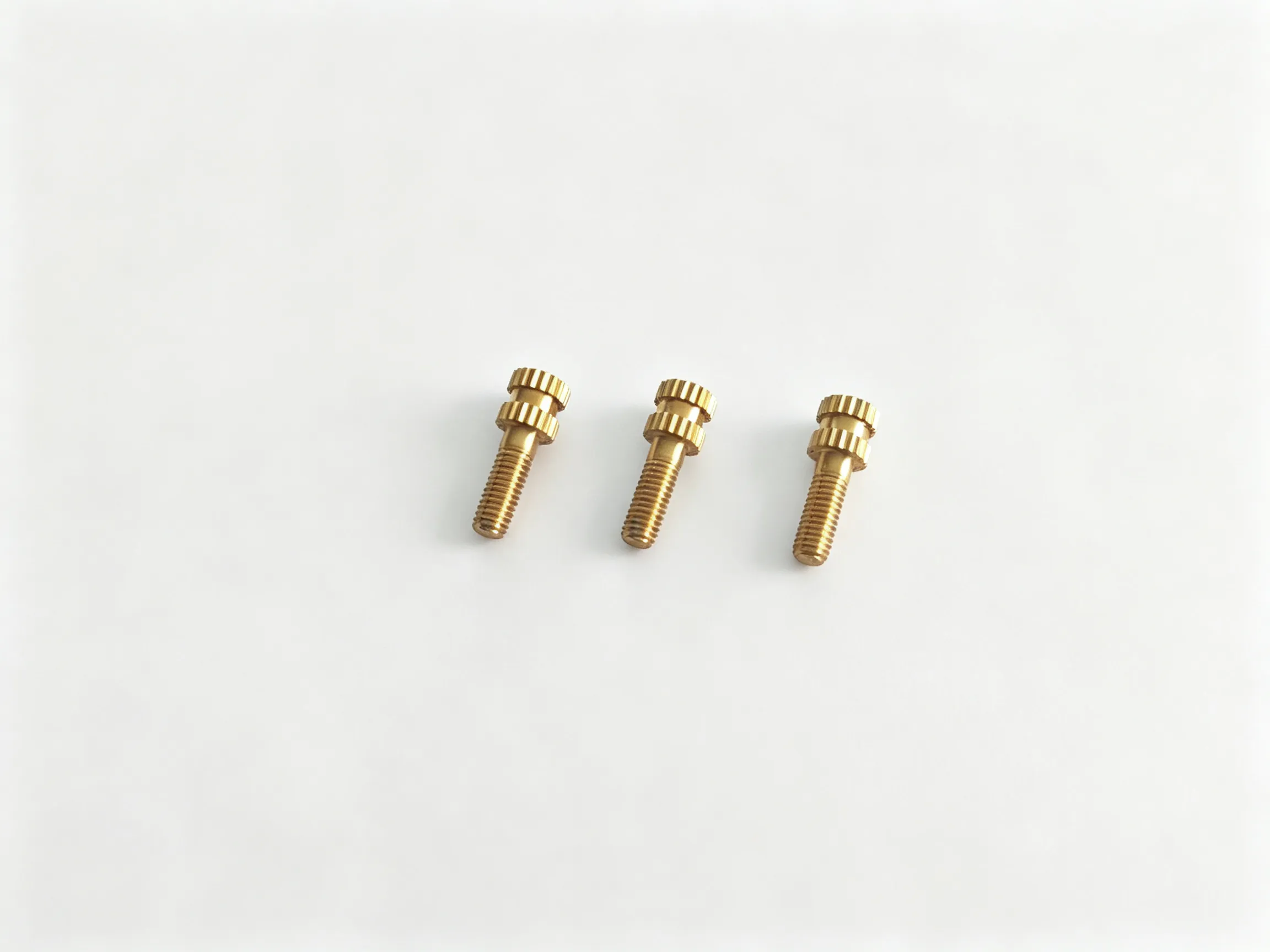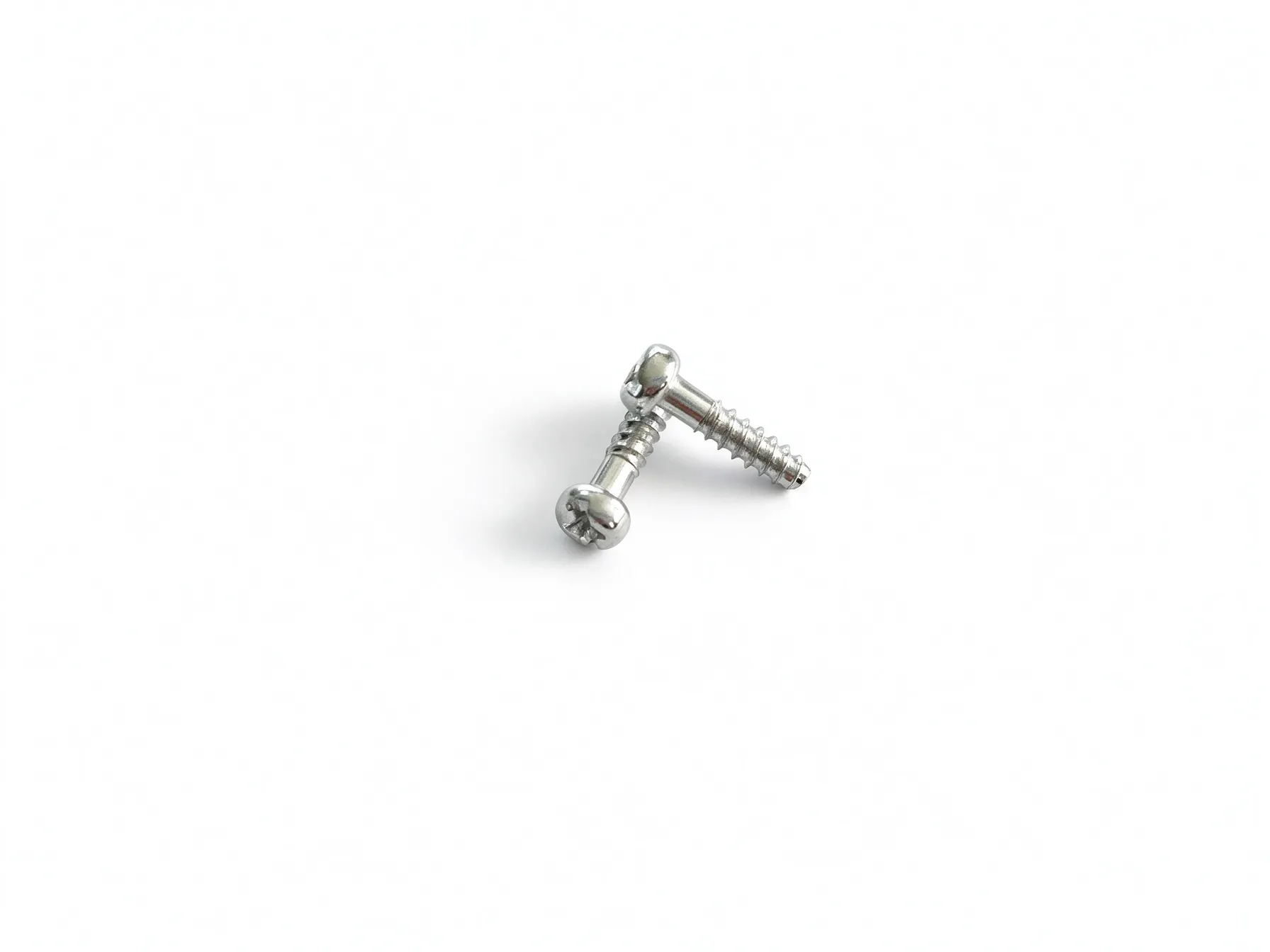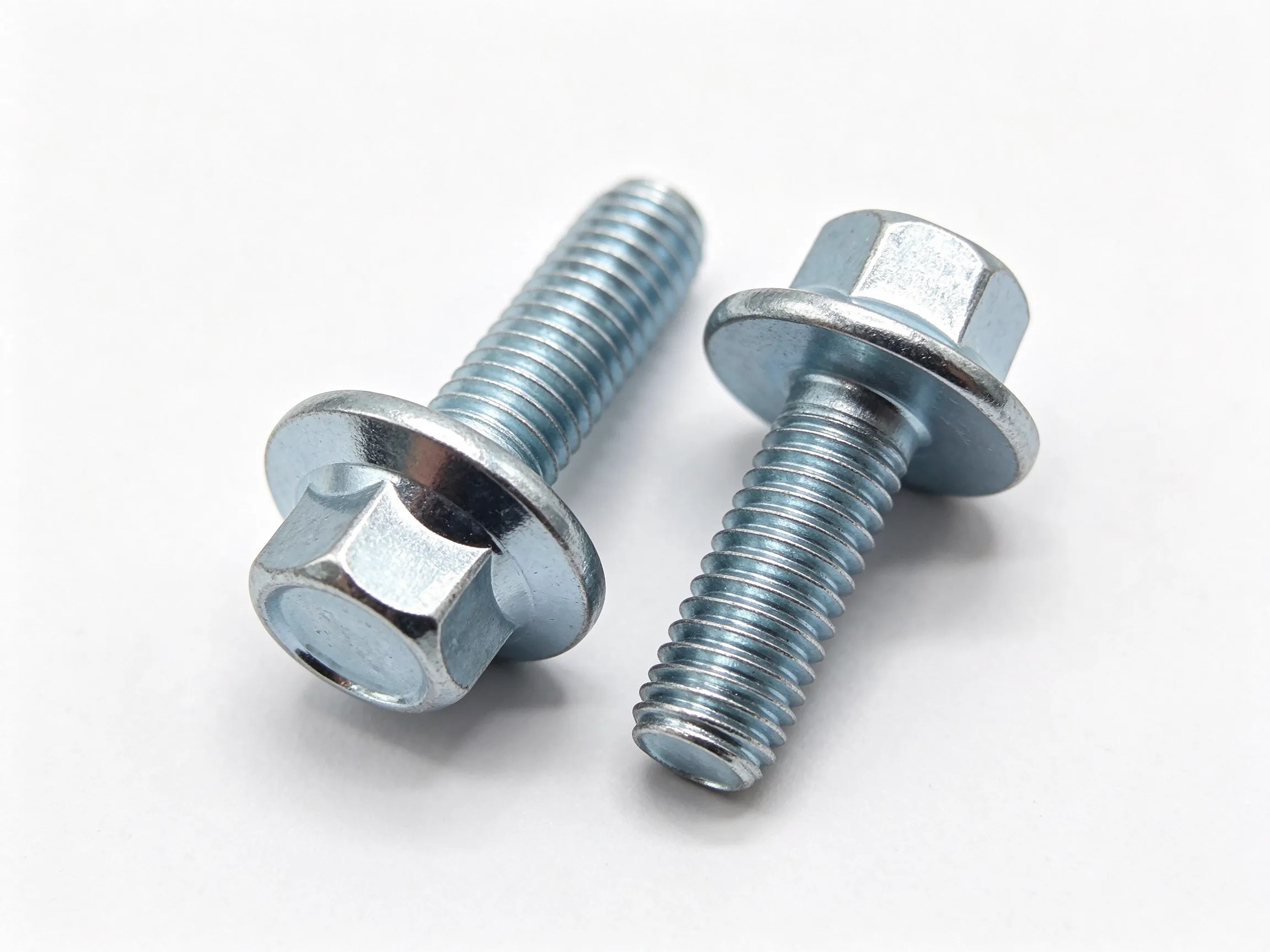


Phillips step screws combine a cross-recess drive with a smooth shoulder and a threaded end. The shoulder provides a defined locating or spacing section, while the Phillips recess allows installation from above the head. This construction is useful when an assembly needs a removable fastener and the mating component should bear on a smooth section rather than directly on the thread.
Construction and working principle
The shoulder diameter determines the fit in the mating hole. Its length determines where the screw seats and how much space remains beneath the head. A plate intended to move needs an explicit clearance after tightening; a plate intended to remain fixed needs an identified clamping face. These conditions cannot be established by selecting thread length alone.
The product photographs show broad, low-profile heads with a cross recess and an unthreaded shoulder. Confirm the exact head profile, recess dimensions and shoulder geometry on the drawing. The photograph does not establish a standard series, strength class or precision fit.
Typical applications
Phillips step screws can be considered for light linkages, appliance mechanisms, panel fittings, guides and small pivoting components. The smooth shoulder can separate the bearing surface from the fastening thread. For repeated movement, provide the mating material, load and expected motion so that shoulder wear and clearance can be reviewed. A threaded fastener still needs a retention method suitable for its service conditions.
Shoulder location versus ordinary clamping
An ordinary machine screw generally secures a stack by bringing the head toward the mating thread. A step screw adds a shoulder that can establish a separate seating position. If the shoulder is too short, a moving component may be pinched; if too long, the assembly may have unwanted axial play. Check the assembled stack, any washer and the thread transition together.
How to specify a Phillips step screw
- Provide head diameter, head height and the required Phillips recess.
- Dimension the shoulder diameter, length and seating reference.
- State the thread designation, engagement and available hole depth.
- Include the mating stack, required movement, material, finish and quantity.
Material, finish and installation checks
Specify the substrate and coating rather than inferring them from the bright surface. For close-fitting shoulders, define inspection after finishing. Use a driver that matches the recess and can approach the head squarely. Check that the thread engages freely and that the screw seats at the intended shoulder before applying the agreed tightening method. Inspect the recess for damage and confirm the final axial clearance on an assembled sample.
FAQ
Does a Phillips recess determine the screw thread?
No. The recess and thread are separate features. Specify both, along with the head and shoulder dimensions.
Can the shoulder be used as a pivot?
It can be reviewed for that function, but the hole fit, bearing length, material pairing, retention and installed clearance must suit the movement.
Why can a tightened screw leave the plate loose?
The shoulder may have seated before the plate was clamped. Check the shoulder length against the complete stack and the required fixed or moving condition.
Explore the step screws category, or compare short step screws and step positioning pins.