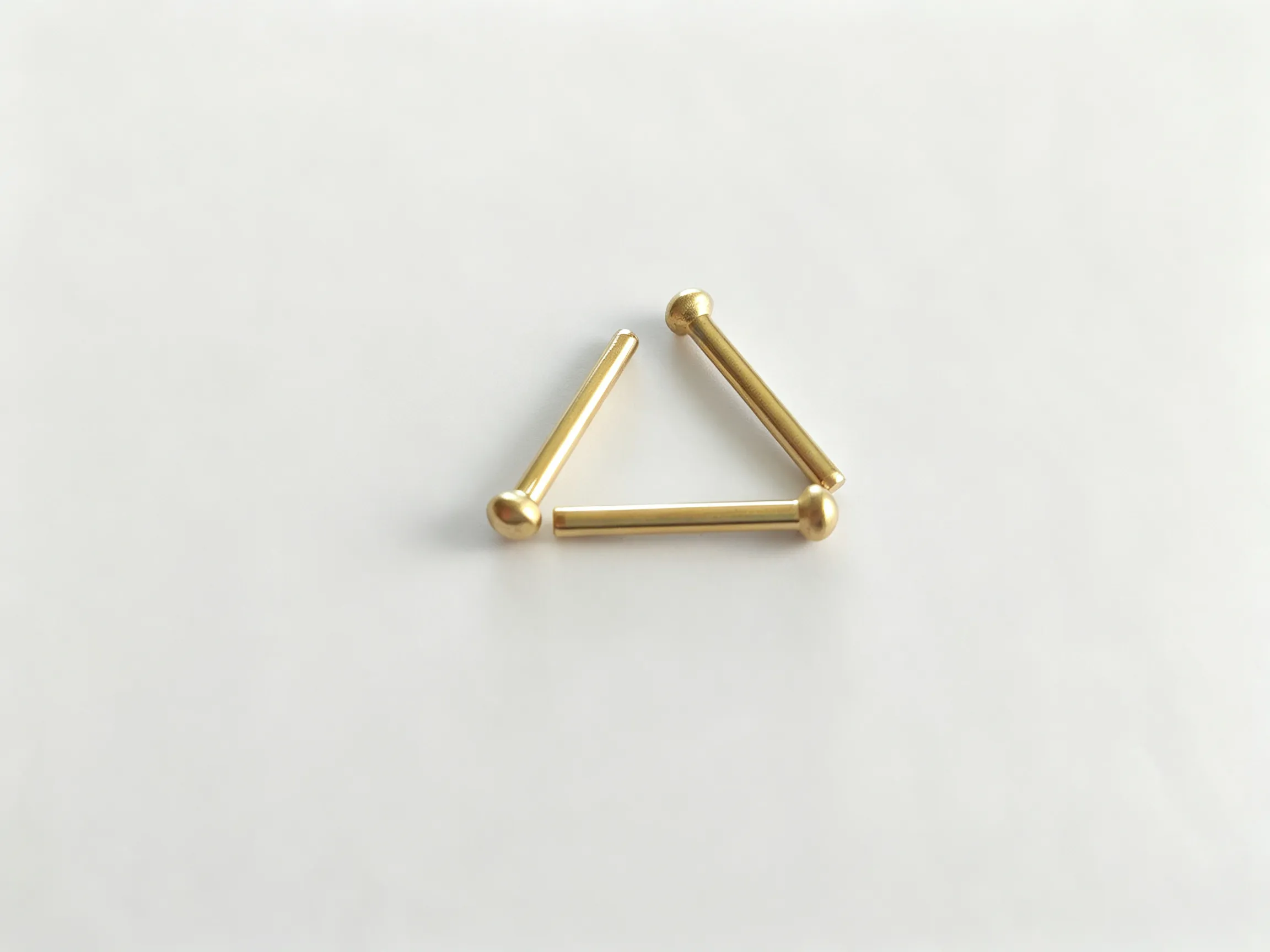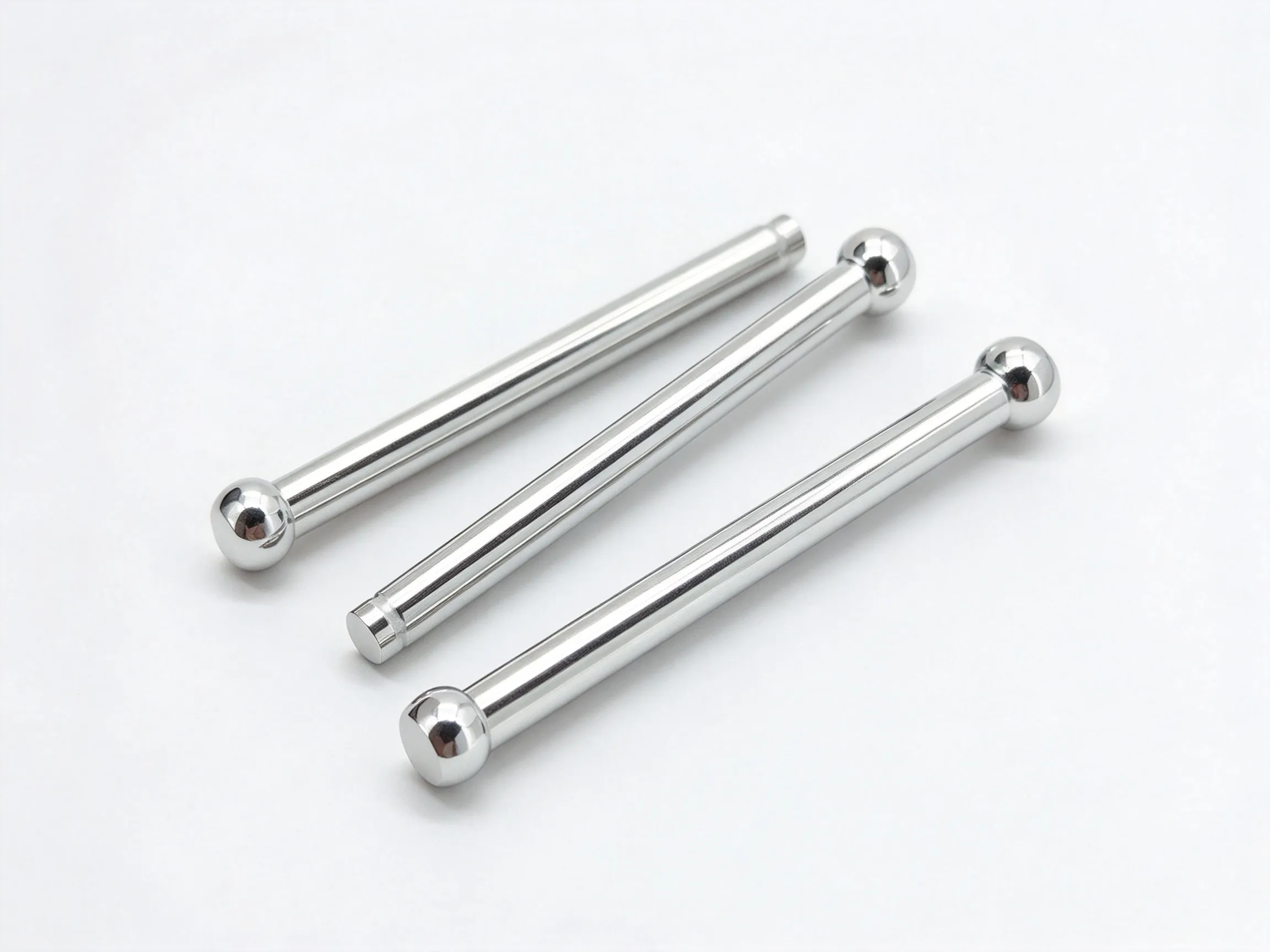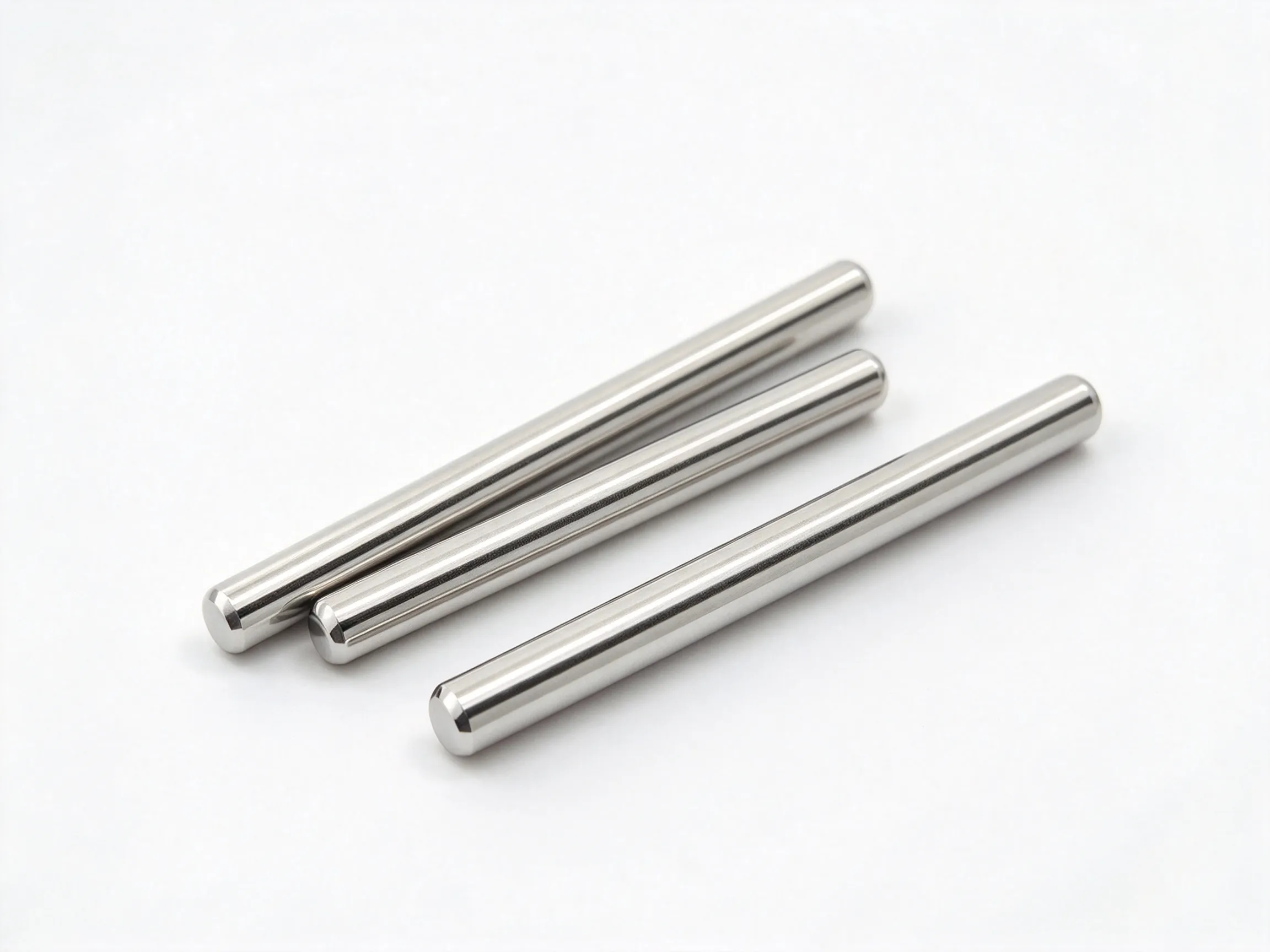
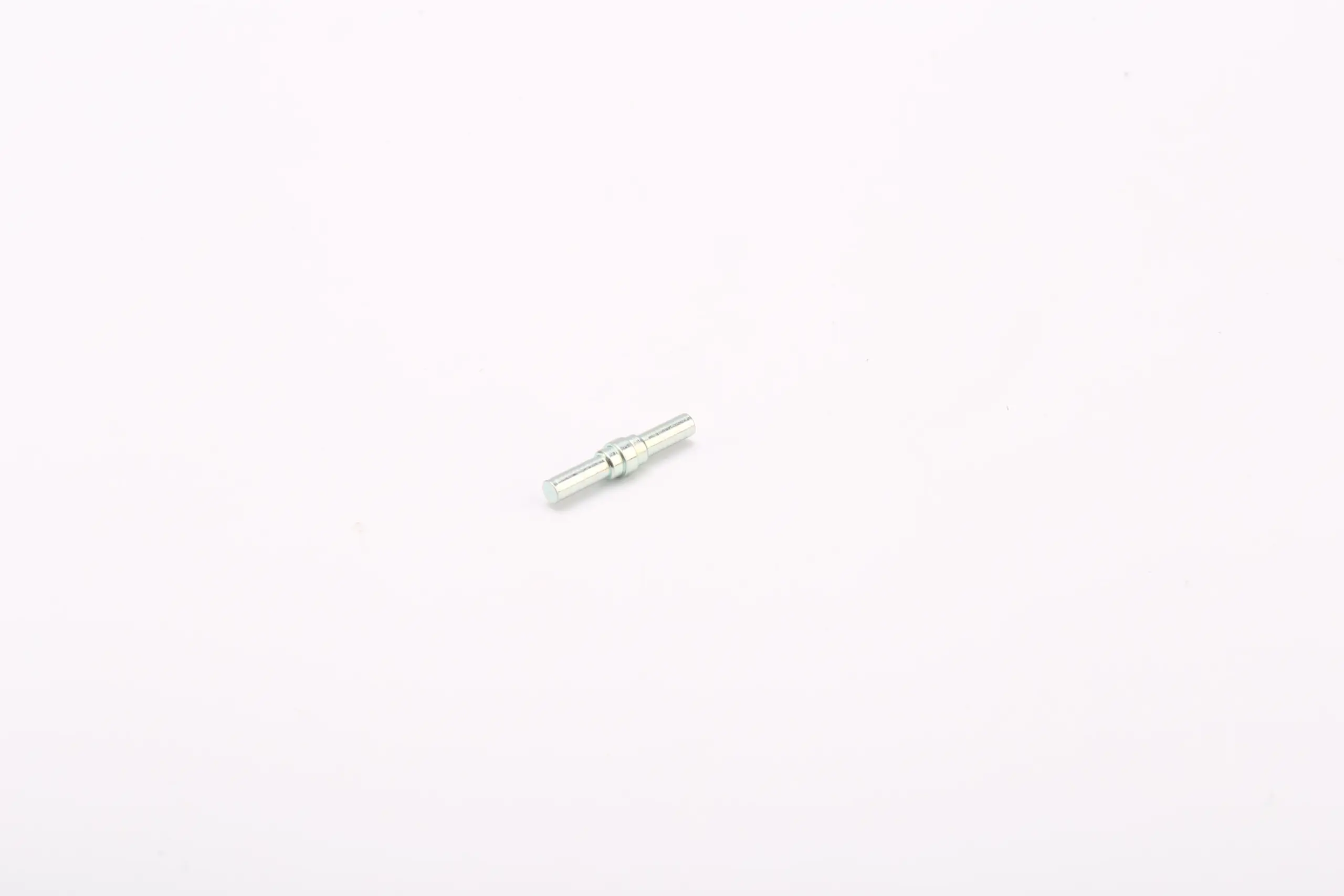
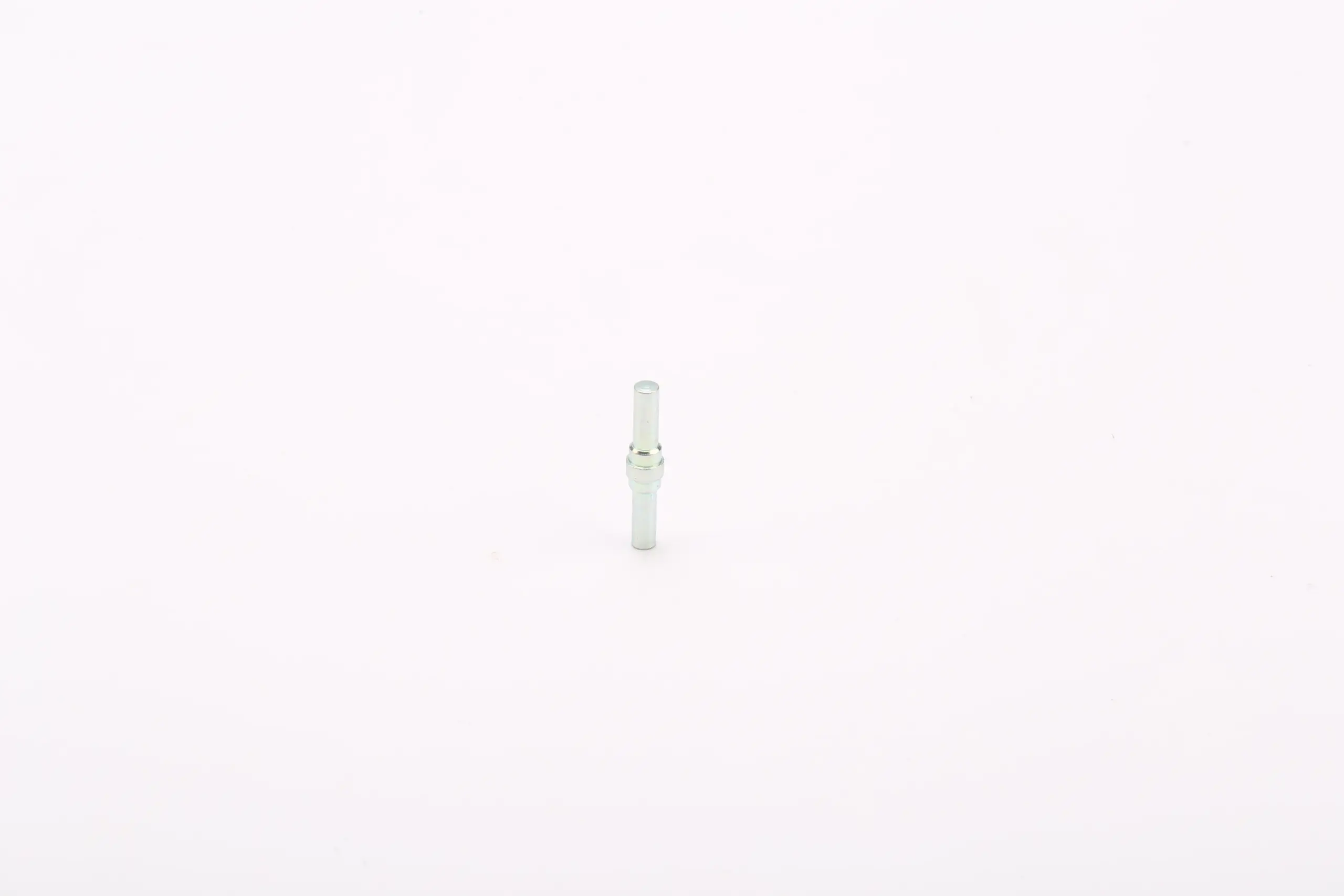
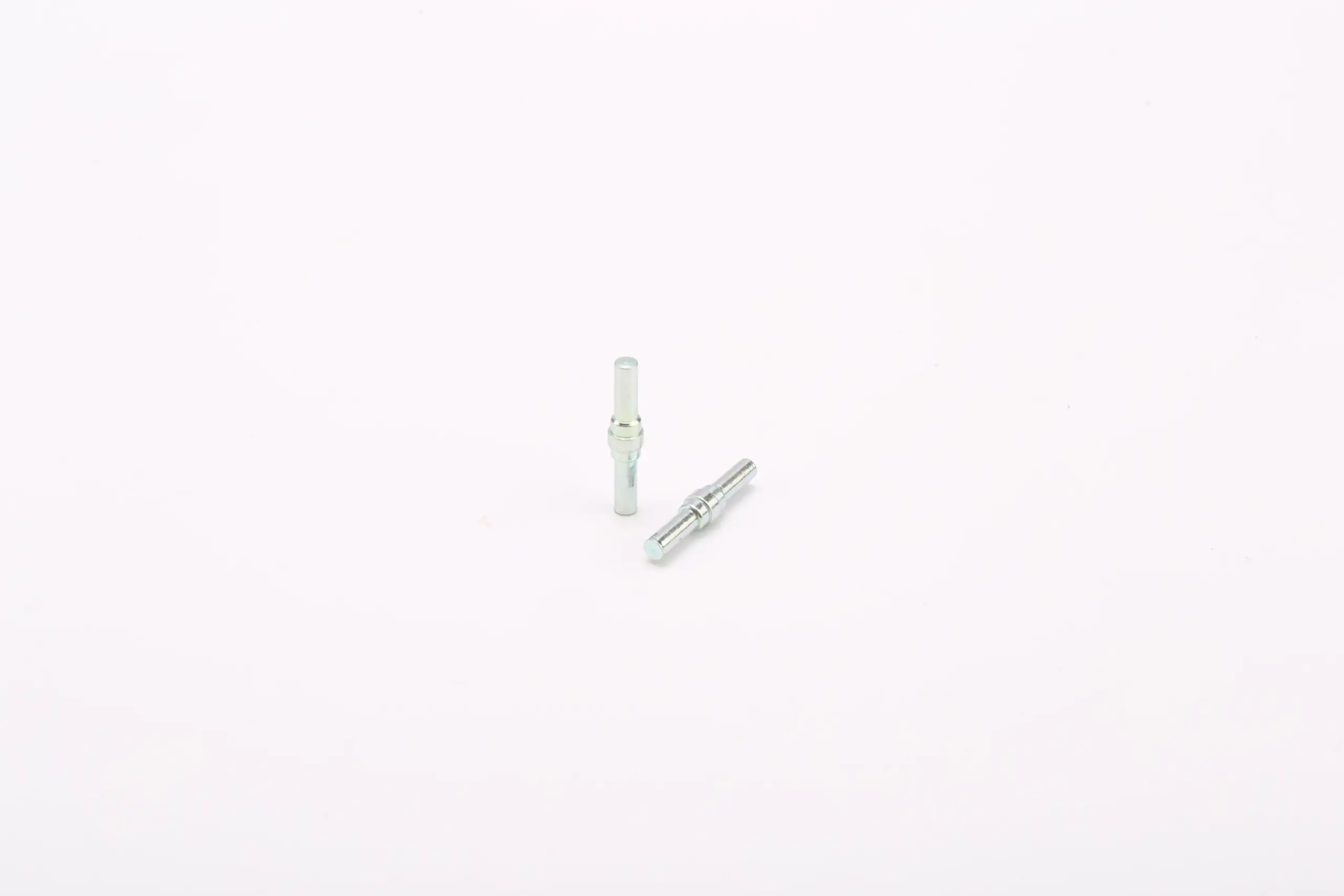
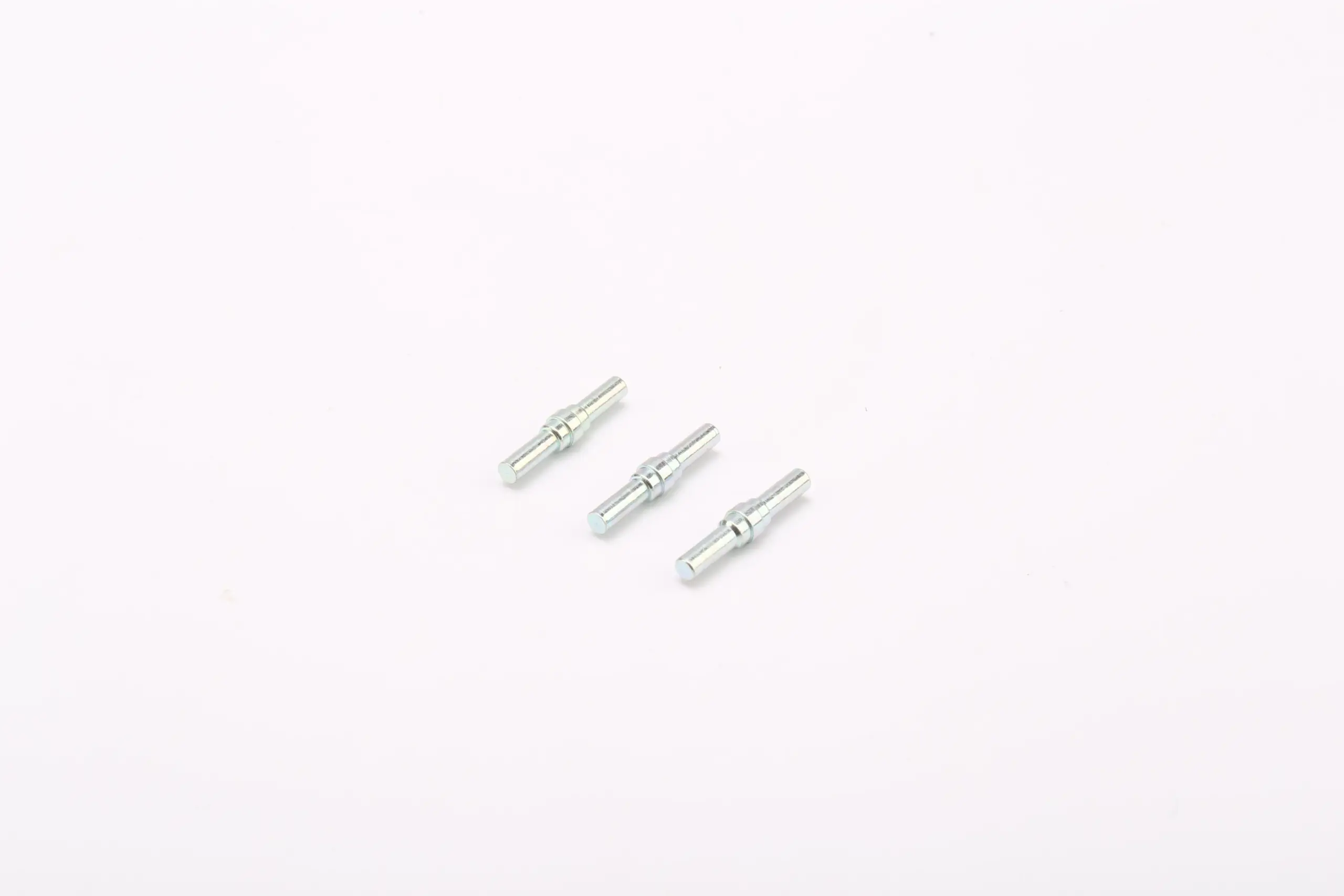
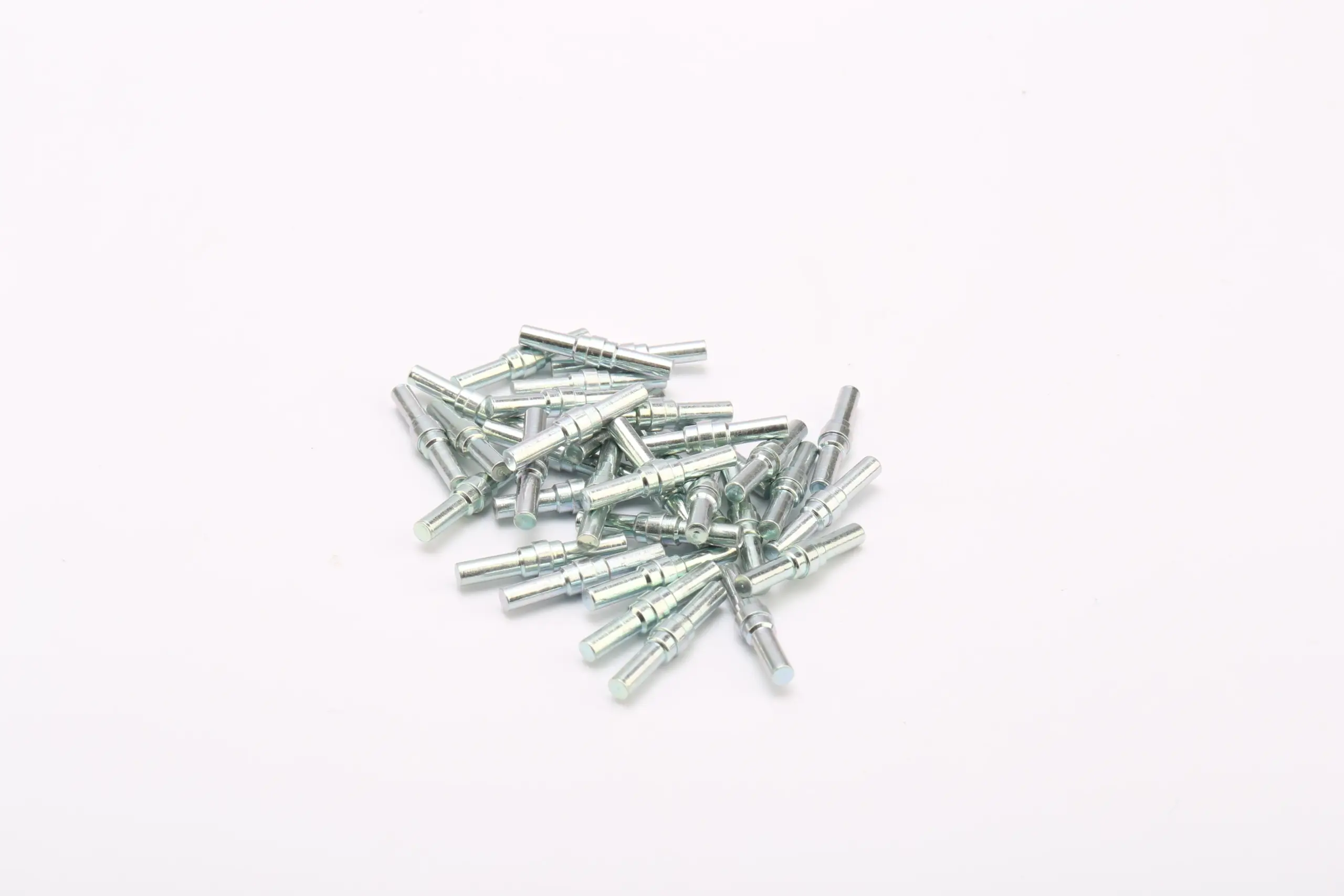
Step positioning pins use several plain cylindrical sections and a defined shoulder to locate components at different diameters or axial positions. The photographed parts have smooth ends and a raised central stepped section, without a visible fastening thread. Their function should be specified through the mating holes, seating faces and retention method rather than inferred from the pin’s overall length.
Construction and working principle
Each cylindrical section can engage a different hole or component, while the shoulder establishes a seating reference. The drawing needs to show which diameter locates, which face controls depth and how the pin remains in place. If two sections locate separate components, their alignment matters as well as their individual diameters.
The central profile includes more than one change in diameter. Dimension these features separately and identify any relief required at a mating-hole edge. Do not assume that a visible narrow section is a retaining-ring groove unless its dimensions and purpose are confirmed.
Typical applications
Step positioning pins can be considered for component alignment, guide assemblies, fixtures, mechanical linkages and shoulder-based spacing. A larger section may establish a stop while a smaller end enters another component. Explain whether the joint must stay fixed, slide, rotate or come apart for maintenance. The same outline can serve different functions when the fit and retention change.
Fit and retention selection
A plain positioning pin has no screw thread to provide axial attachment. Retention must be established separately, for example through a specified interference fit or an additional retaining component. The selected method depends on the assembly. State where a removable fit is required and where the pin is secured. A shoulder can control insertion depth, but it does not automatically prevent withdrawal.
How to specify a step positioning pin
- Dimension every diameter, section length, shoulder and seating reference.
- Provide the mating-hole sizes and the required fit at each interface.
- Identify alignment requirements, retention and any intended movement.
- State material, finish, quantity and the functional inspection points.
Material, finish and installation checks
Specify the material and finished surface condition for the bearing contact, wear and environment. The silver appearance does not establish stainless steel or a particular plating process. For a close fit, define whether dimensions apply before or after finishing. Check mating-hole edges and lead-ins so the pin can enter without shaving material or damaging its locating surface.
During trial assembly, support the mating component and apply installation force through the intended surface. Confirm shoulder seating, retention and the required movement after installation. If removal is part of maintenance, include the extraction access in the design review.
FAQ
Is a step positioning pin automatically a press-fit pin?
No. The pin and hole dimensions determine the fit. Specify the required condition at each locating section.
Can a step positioning pin be used as a pivot?
It can be reviewed for that use when the bearing length, clearance, material pairing, load and axial retention suit the movement.
What information is needed for a quotation?
Send the drawing or sample, mating-hole and stack details, fit requirements, retention method, material, finish and expected quantity.
Explore the custom parts category, or compare threaded stepped locating screws and eccentric screws for adjustable positioning.