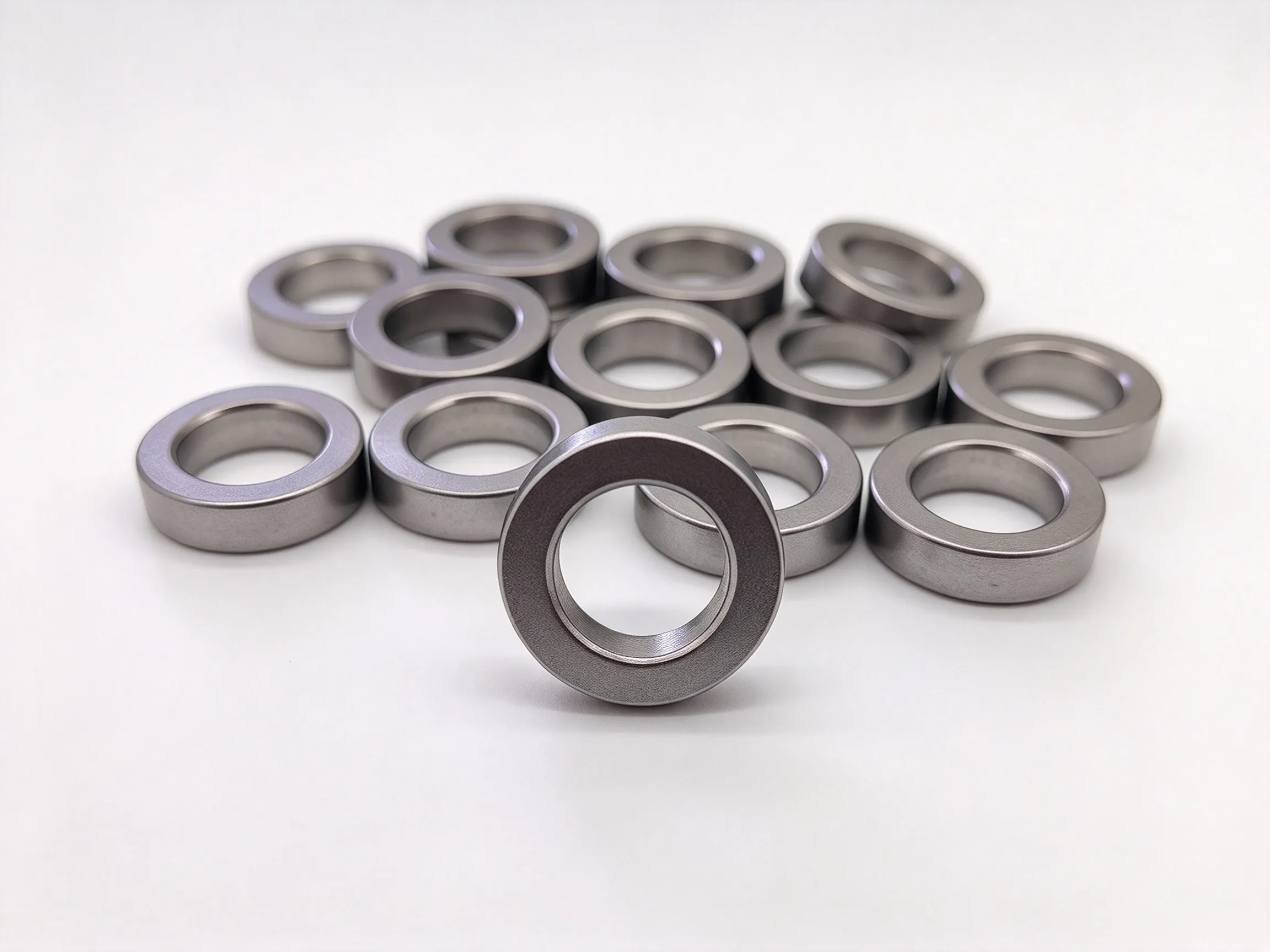
Stainless steel small parts are compact components for assemblies that need a clean metal surface and a small footprint. The gallery shows a variety of tiny silver-colored pieces, including pin-like and sleeve-like forms. The page is intentionally broad, so the actual part should be defined by a drawing or sample rather than by the group photograph.
Small parts need clear datums
The gallery shows several forms but no scale. Do not estimate size from the image. A measured sample can help, but the critical dimensions should still be written down so the next lot can be compared consistently.
Where small stainless components are used
These parts can be considered for equipment, fixtures, locks, hinges, small mechanisms and general hardware. Stainless steel may be chosen for appearance or service exposure, but the grade and finish should be confirmed. If the part is used near a magnet, a sensor or a dissimilar metal, include that condition in the review.
The application should state whether the part moves, carries load or only fills a gap. A small pin used as a pivot needs a different surface and clearance review from a spacer that is clamped in place. Do not use the same inspection plan for every small part.
Material, finish and handling
The bright silver appearance does not establish the stainless grade or the surface treatment. Ask for the material specification and any passivation or polishing requirement. Check that the finish does not close a small bore or round a functional edge. If the part is visible, define the acceptable surface marks.
Small parts are easy to lose, mix and damage. Specify the packing method and whether the parts should be supplied in a way that protects functional surfaces. If the parts are fed automatically, confirm that they will not tangle or bridge in the feeder.
How to specify a stainless small part
- Provide a dimensioned drawing or measured sample with the functional features marked.
- Define the bore, outside diameter, length, step and end condition.
- State the stainless grade, finish, allowable burrs and appearance requirement.
- Agree the inspection method, packing, quantity and any traceability requirement.
Inspection and trial fit
Inspect the functional features under suitable magnification. Check the bore for burrs and the ends for damage. Measure the critical dimensions at several points if the part is small or thin. Confirm that the finish is present on the required surfaces and does not interfere with the fit.
Trial the part in the actual assembly. Confirm that it seats, aligns and retains as intended. Check for binding, rocking or edge contact. If the part is visible, compare the finish with the approved sample. Record the approved dimensions and packing method for future orders.
FAQ
Is every part in the gallery the same type?
No. The page is a broad small-parts category. The drawing defines whether a particular item is a pin, sleeve, spacer or another component.
How can tiny parts be inspected?
Use the method appropriate to the feature, such as magnification, a bore gauge or a profile check. A visual check alone may not be sufficient.
What is the main risk in bulk supply?
Mixing, tangling and surface damage are common risks. Specify the packing and handling method for the actual production process.
Browse the Washers & Small Parts category, or compare stainless steel hardware accessories and hardware spare parts.