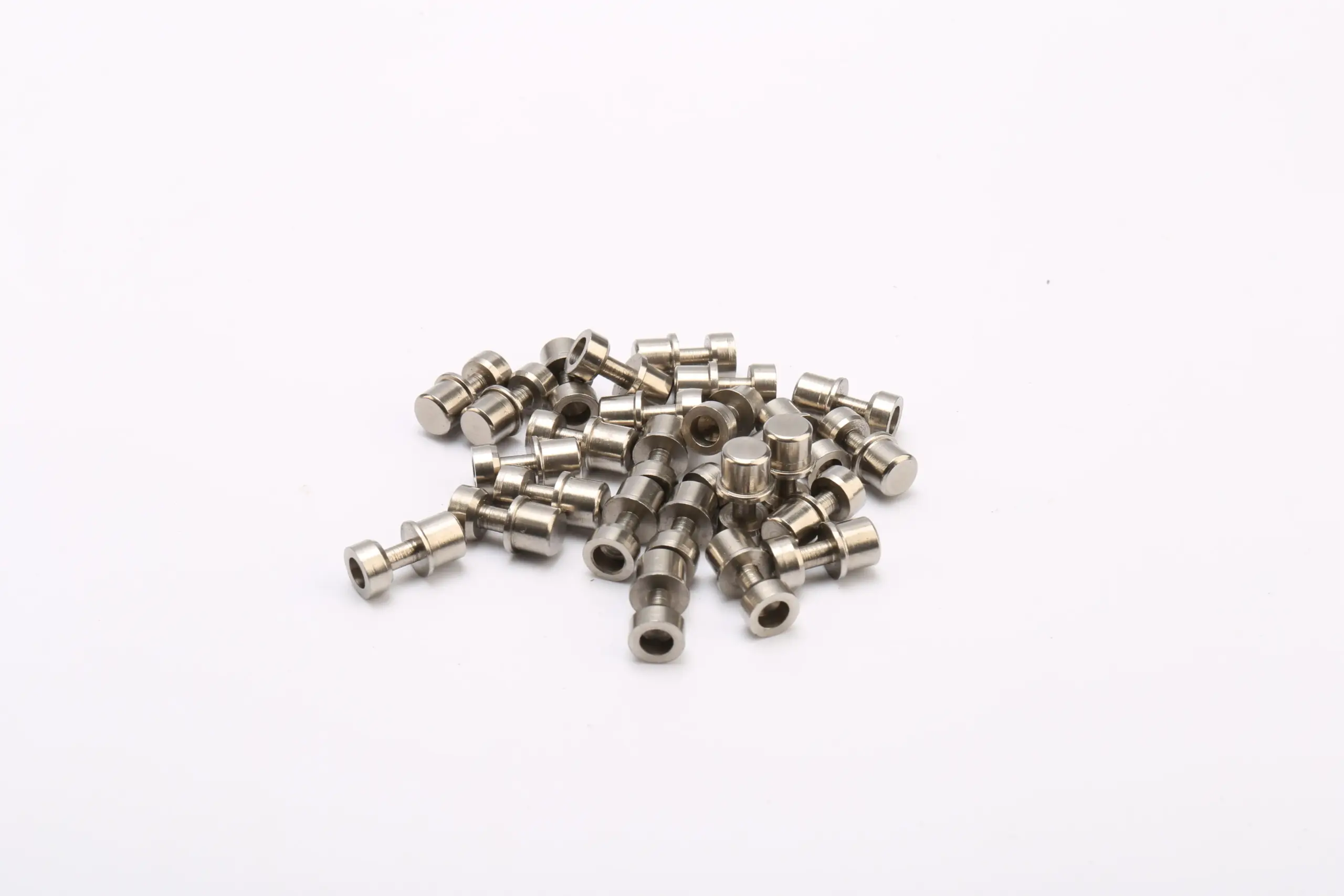
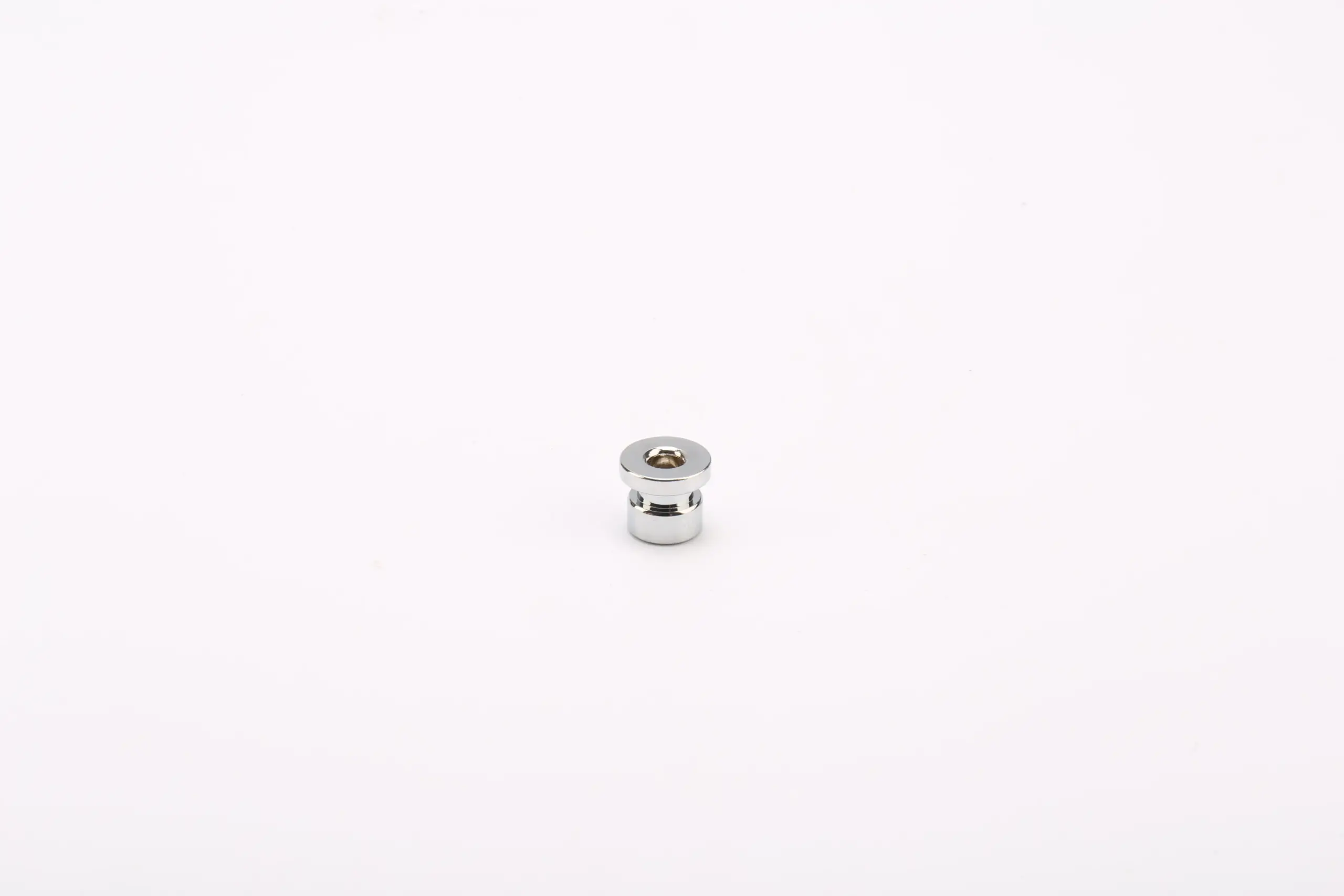
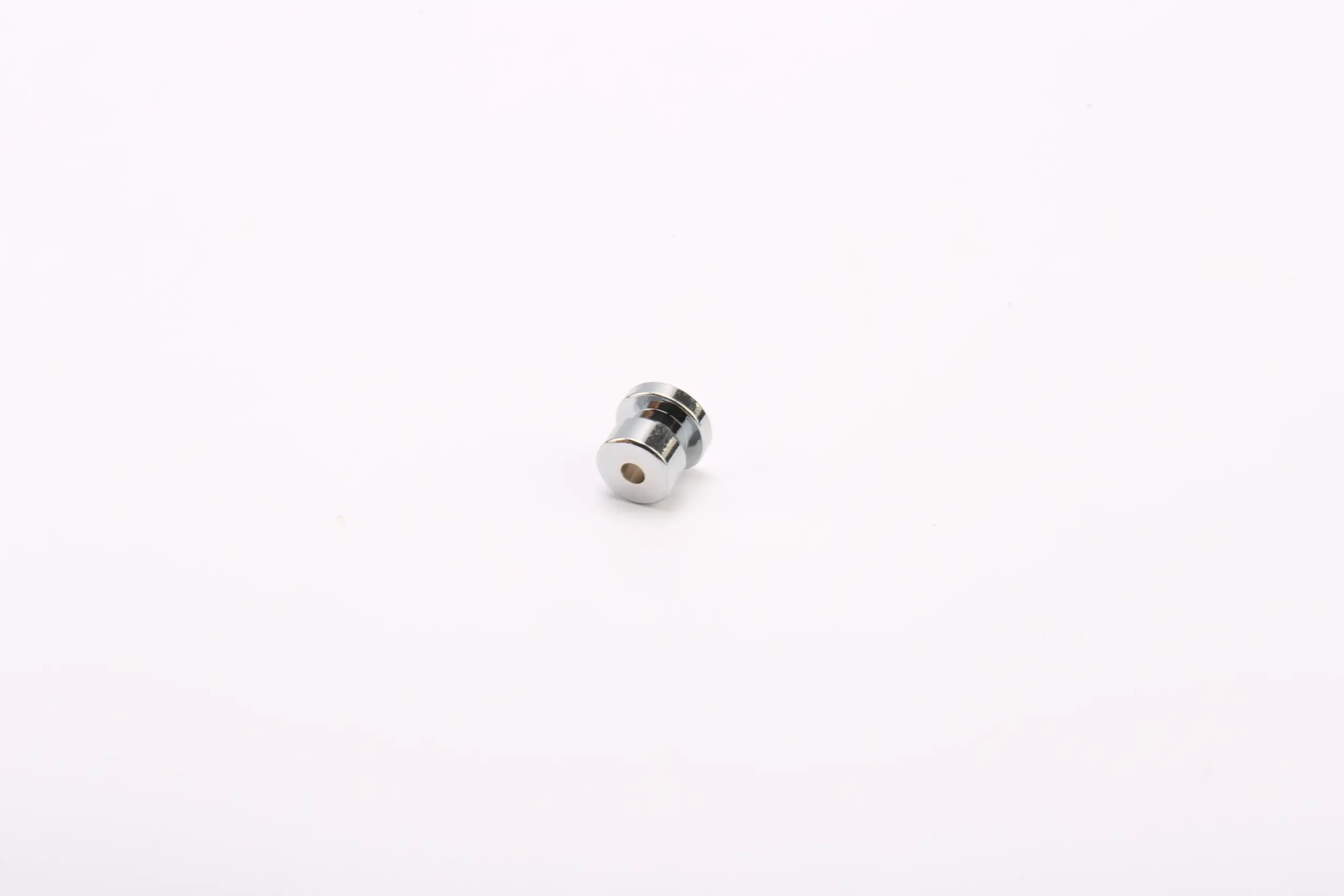
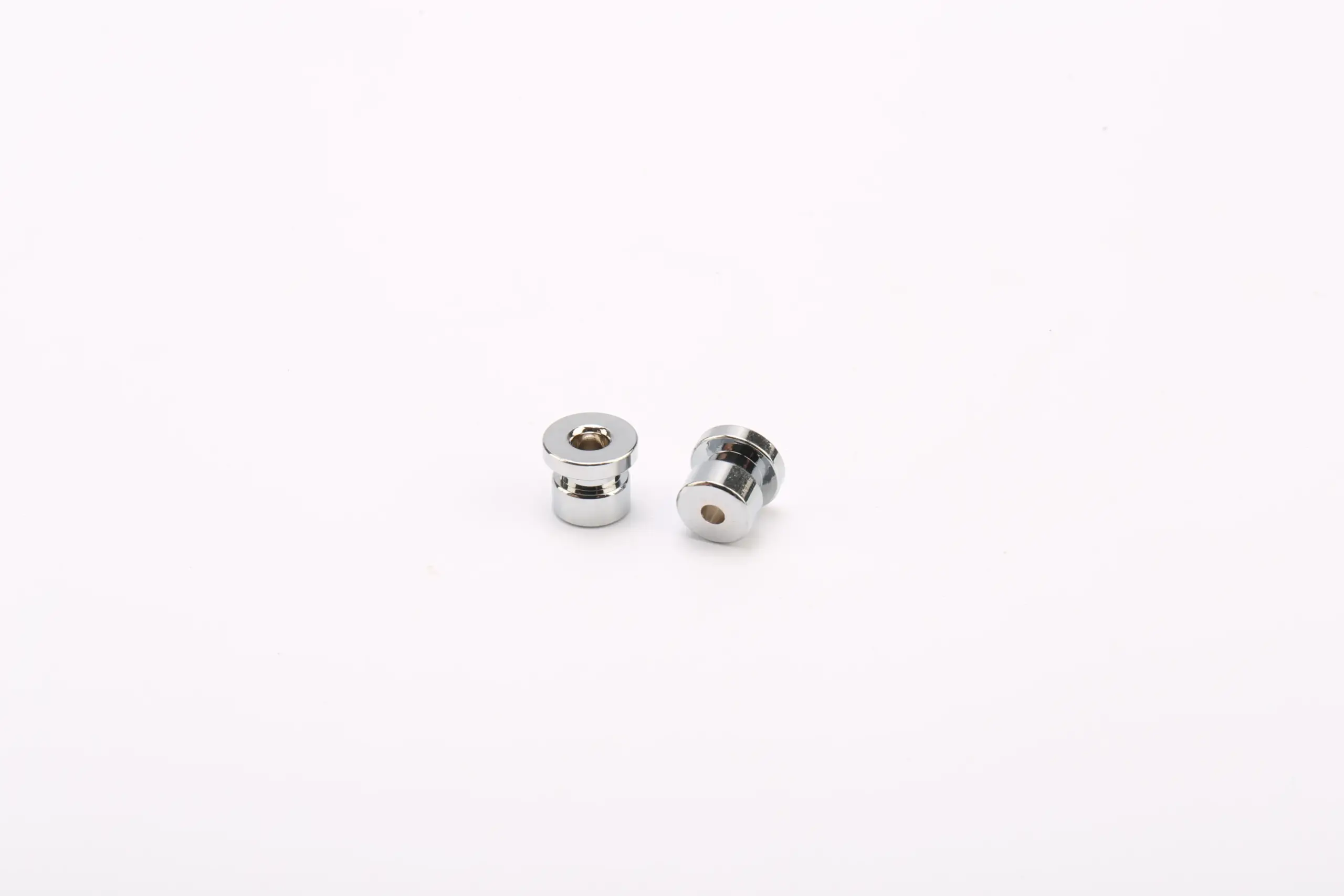
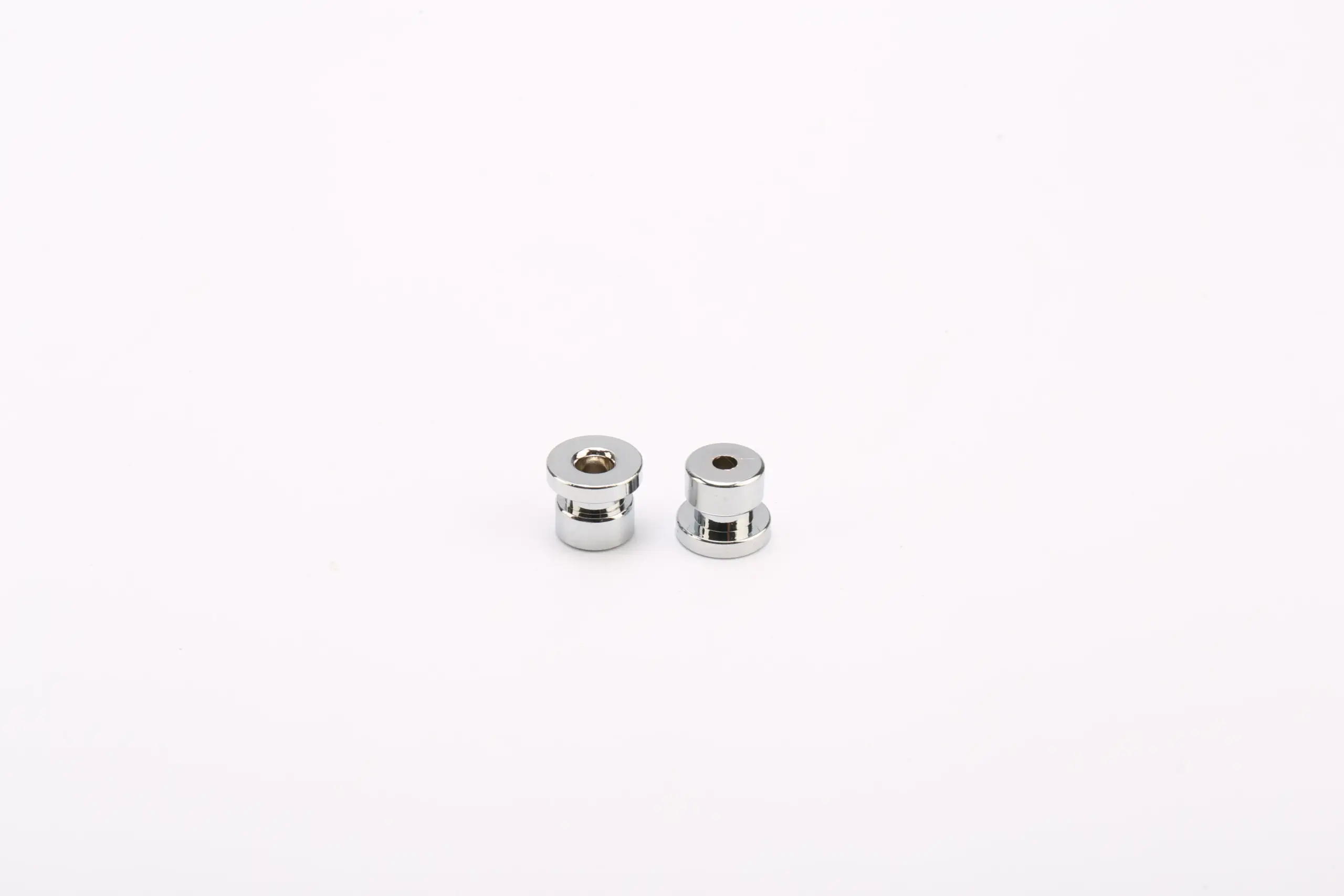
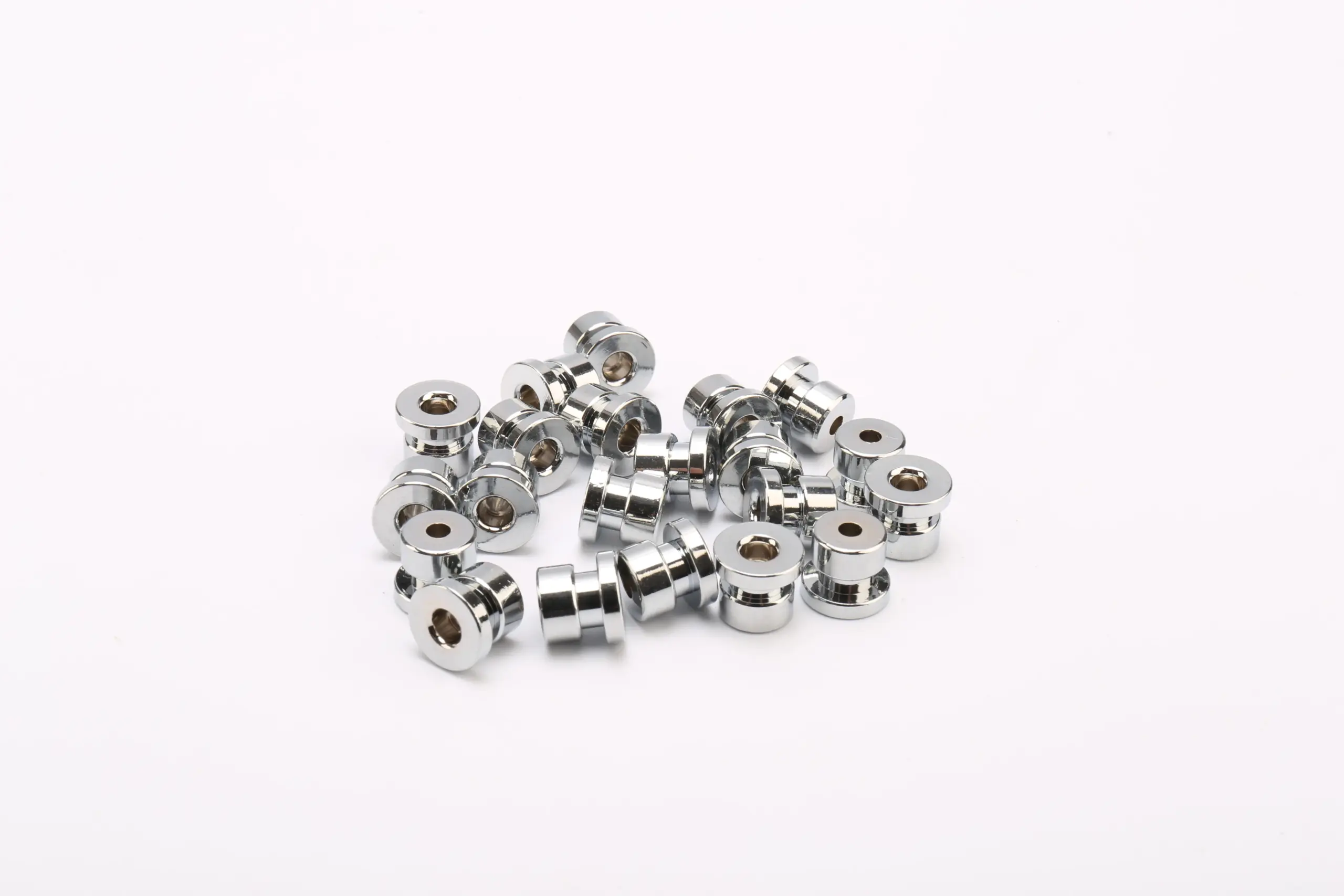
Hardware spare parts are replacement or production components for lock, door and equipment assemblies. The gallery shows small silver-colored pieces with bores, steps and external features, but the page does not identify one fixed part. The drawing or sample should define the exact component, its fit and the surfaces that must be inspected.
A replacement part needs an interface
A spare part is only useful if it fits the assembly it is intended to replace. Start with the mating parts: the shaft, hole, spring, clip or panel that the component touches. The outside diameter, bore, length and end form should be measured from the actual assembly, not estimated from the product photo.
The gallery shows small cylindrical pieces with different proportions. Some appear to have an internal bore and others a stepped outside form. Those differences matter, so confirm which geometry belongs to the required spare part. A part that looks similar in a photograph may not fit the same hole or perform the same retention function.
Lock, door and equipment uses
A spare part should not be selected only by outside appearance. The material, hardness and finish can affect wear and fit. Confirm the original specification or provide a sample with the critical dimensions marked.
What the gallery does not show
The photographs do not provide a scale, tolerance or material certificate. They also do not show whether a bore is through or blind, or whether a step is intended as a stop. Ask for a dimensioned drawing or a measured sample. If the part is plated, confirm that the coating is present on the functional surfaces.
Small hardware parts can be mixed during storage. Keep the approved sample labeled and compare the production lot by both geometry and appearance. If the part is visible after assembly, define the acceptable scratches and color variation.
How to specify a hardware spare part
- Identify the assembly, mating parts and the function of the spare component.
- Provide a drawing or measured sample with bores, steps and end forms.
- State the material, finish, wear requirement and allowable surface condition.
- Agree the inspection method, packing, quantity and any traceability requirement.
Inspection and replacement trial
Inspect the bore, step and outside diameter against the drawing. Check for burrs that could affect insertion or retention. Confirm that the part is straight and that the ends are deburred. If the component is supplied in bulk, sample several pieces and look for mixed sizes or damaged surfaces.
Install the part in the actual assembly and check the function it controls. Confirm that it seats, retains or moves as intended. If the original part is available, compare the critical dimensions and the fit rather than only the overall appearance. Record the approved replacement specification.
FAQ
Can a spare part be matched by appearance?
No. Appearance is not enough for a replacement component. Measure the mating features and confirm the material and finish.
What if the original drawing is unavailable?
A sample can be measured and documented. Mark the critical dimensions and agree the allowable variation before production.
Should the part be lubricated before assembly?
Follow the assembly requirements for the specific mechanism. Do not assume that a lubricant is compatible with the material or finish.
Browse the hardware spare parts category, or compare stainless steel hardware accessories and stainless steel small parts.