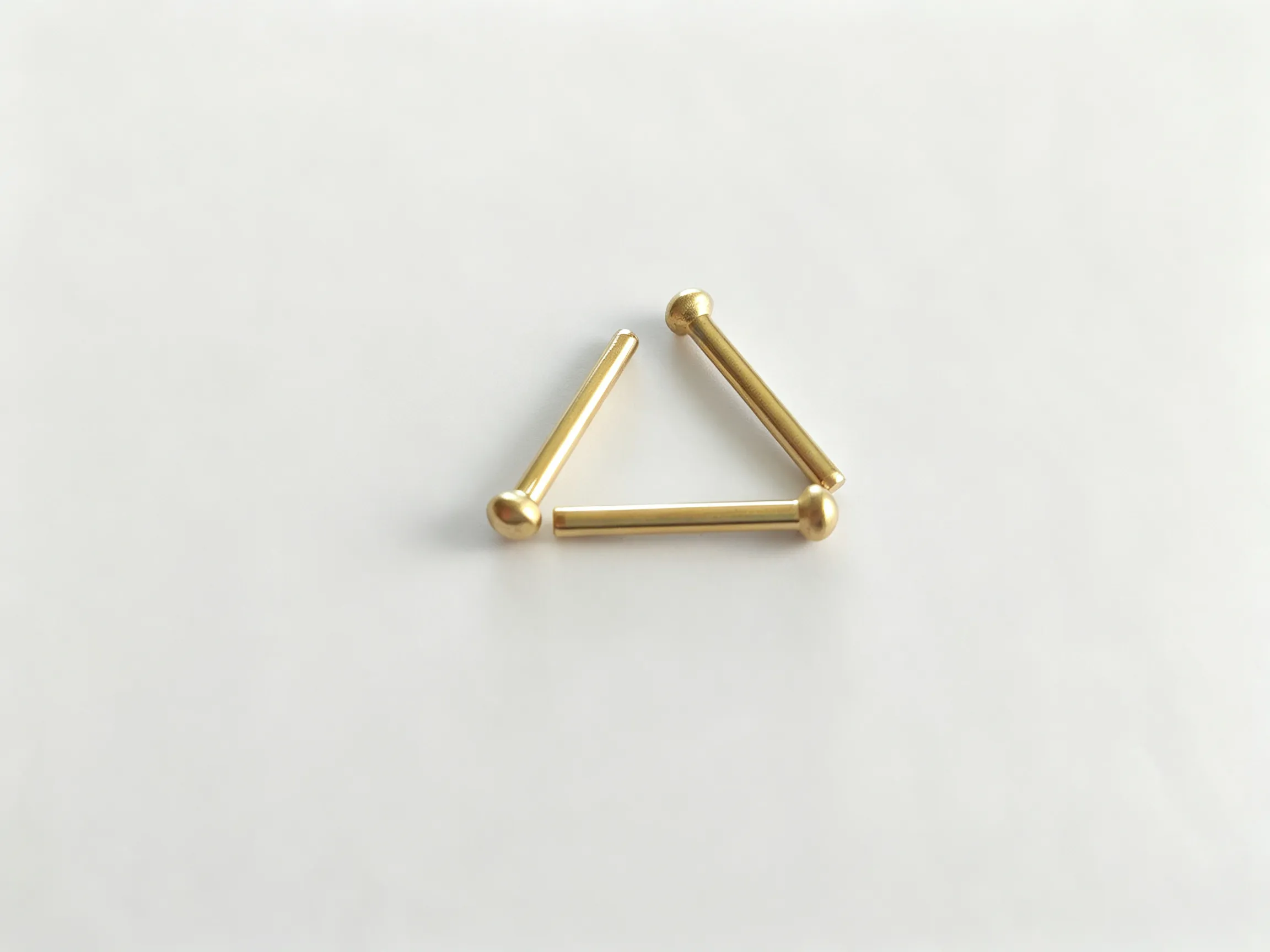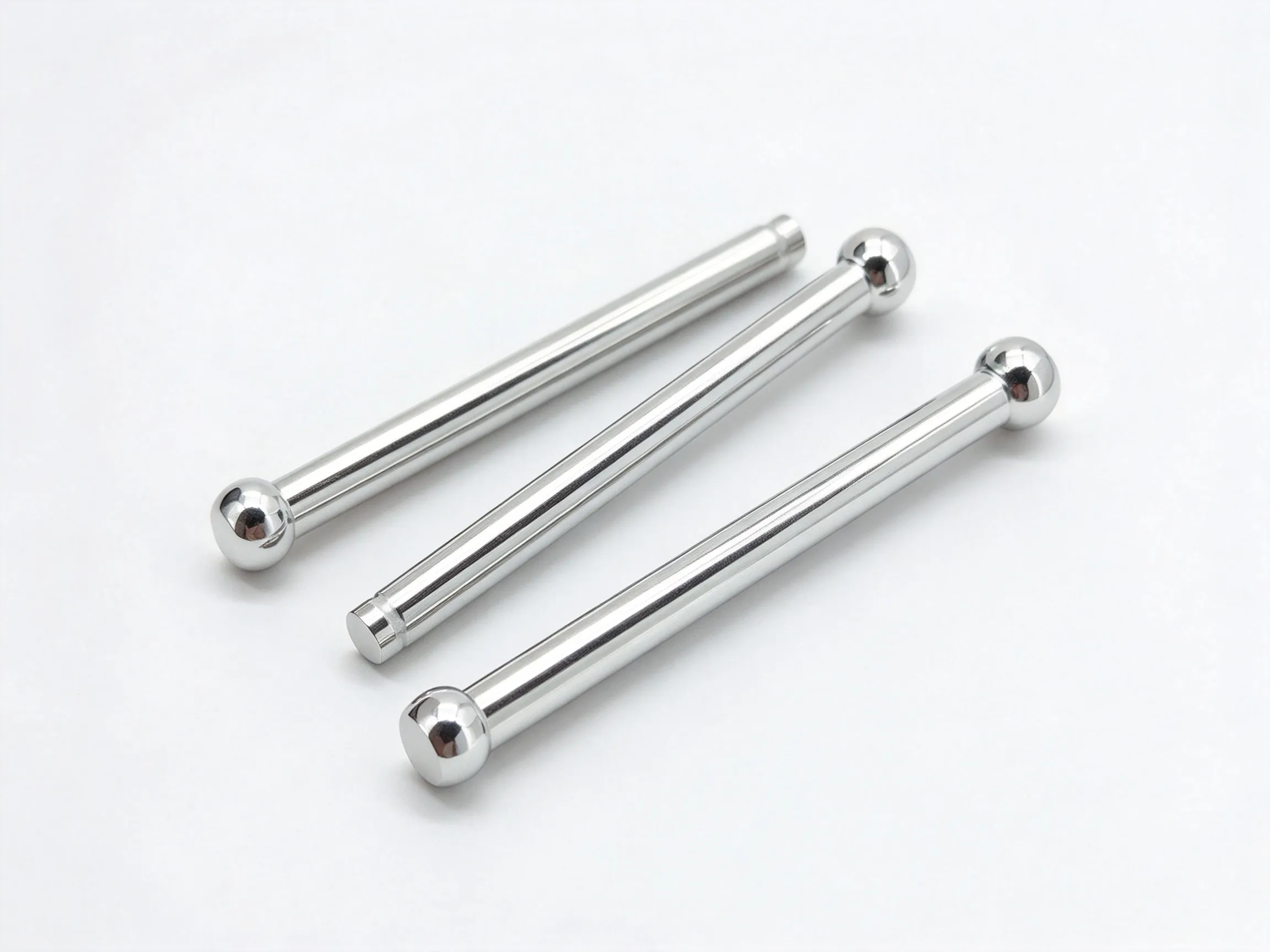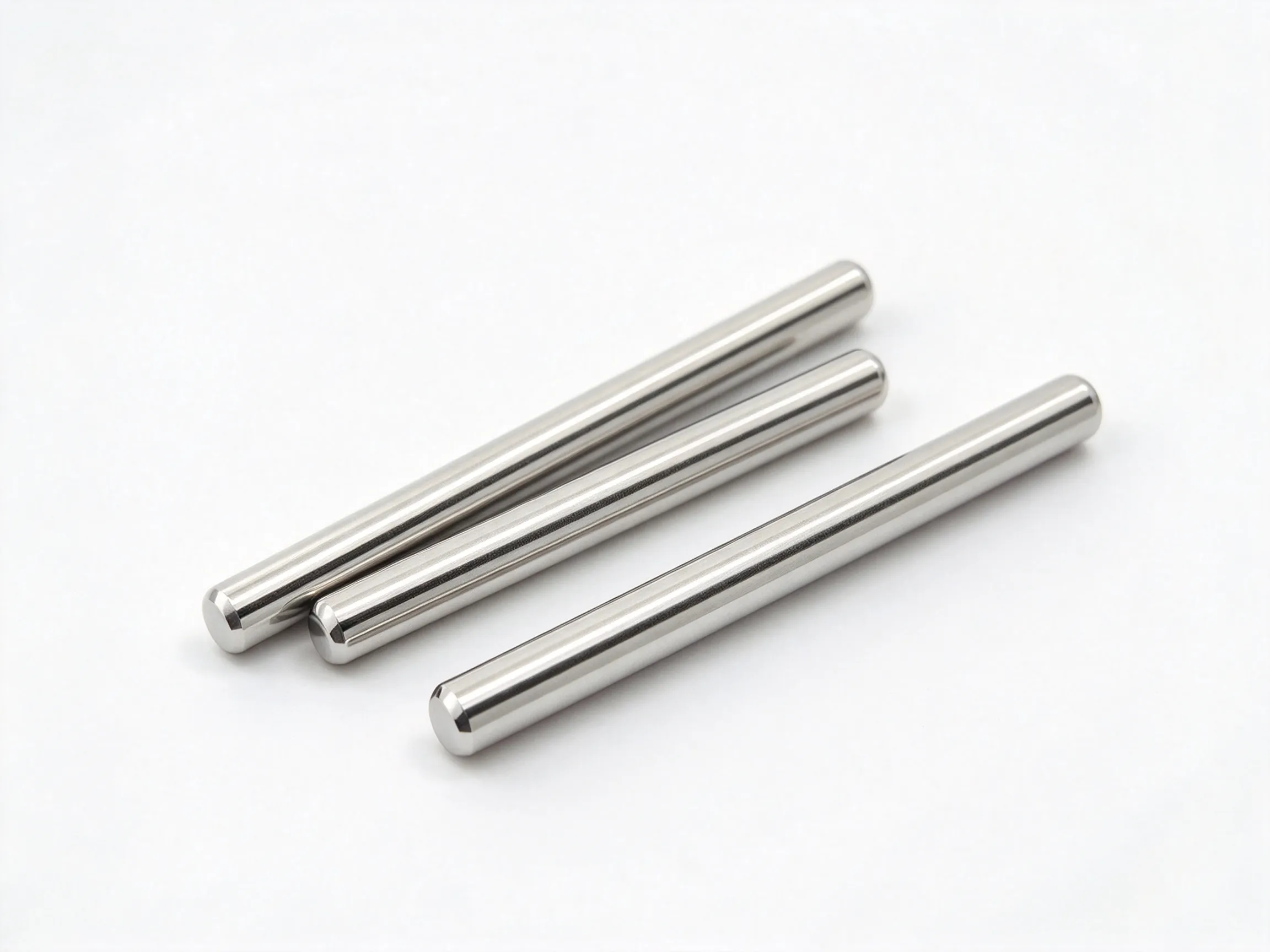
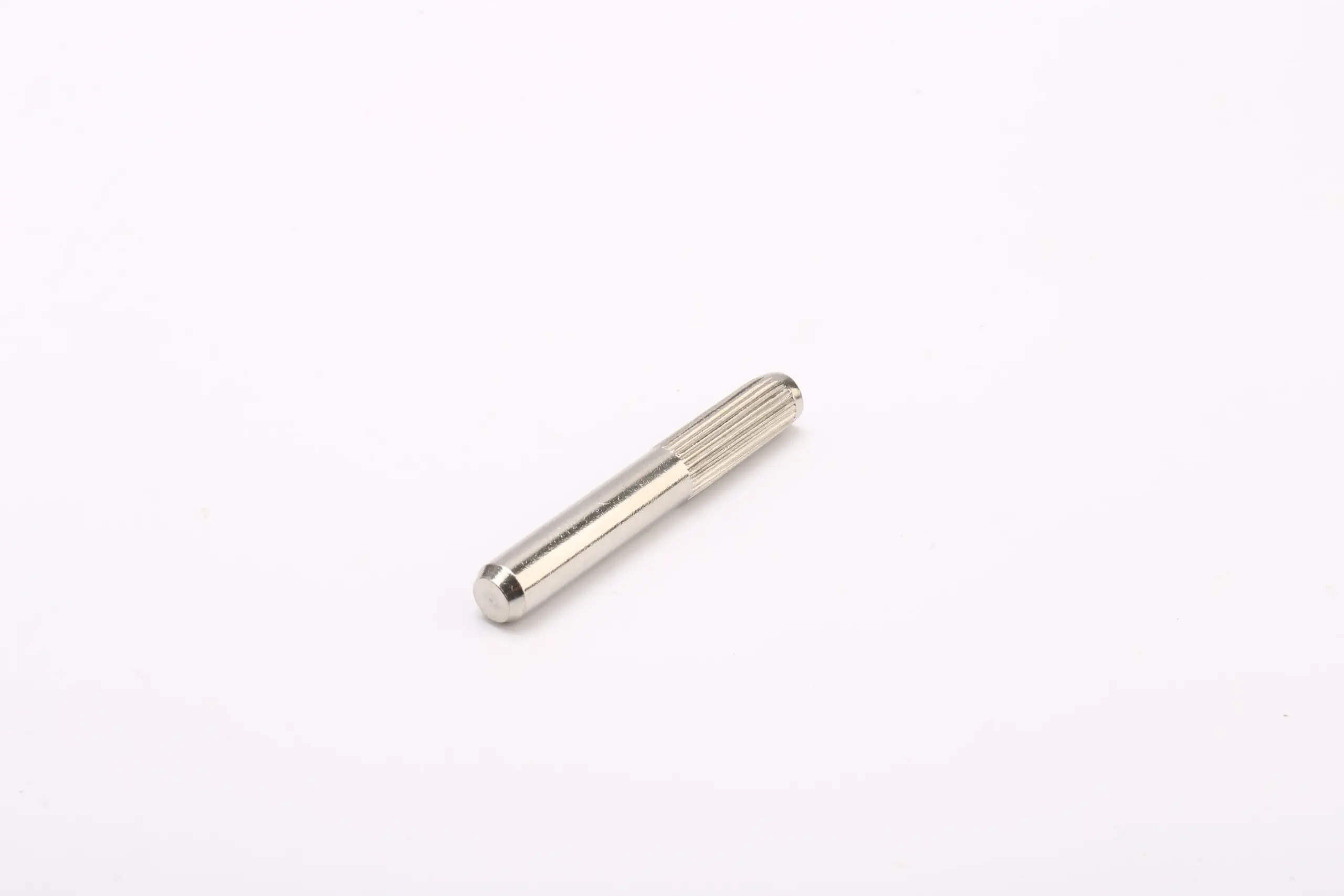
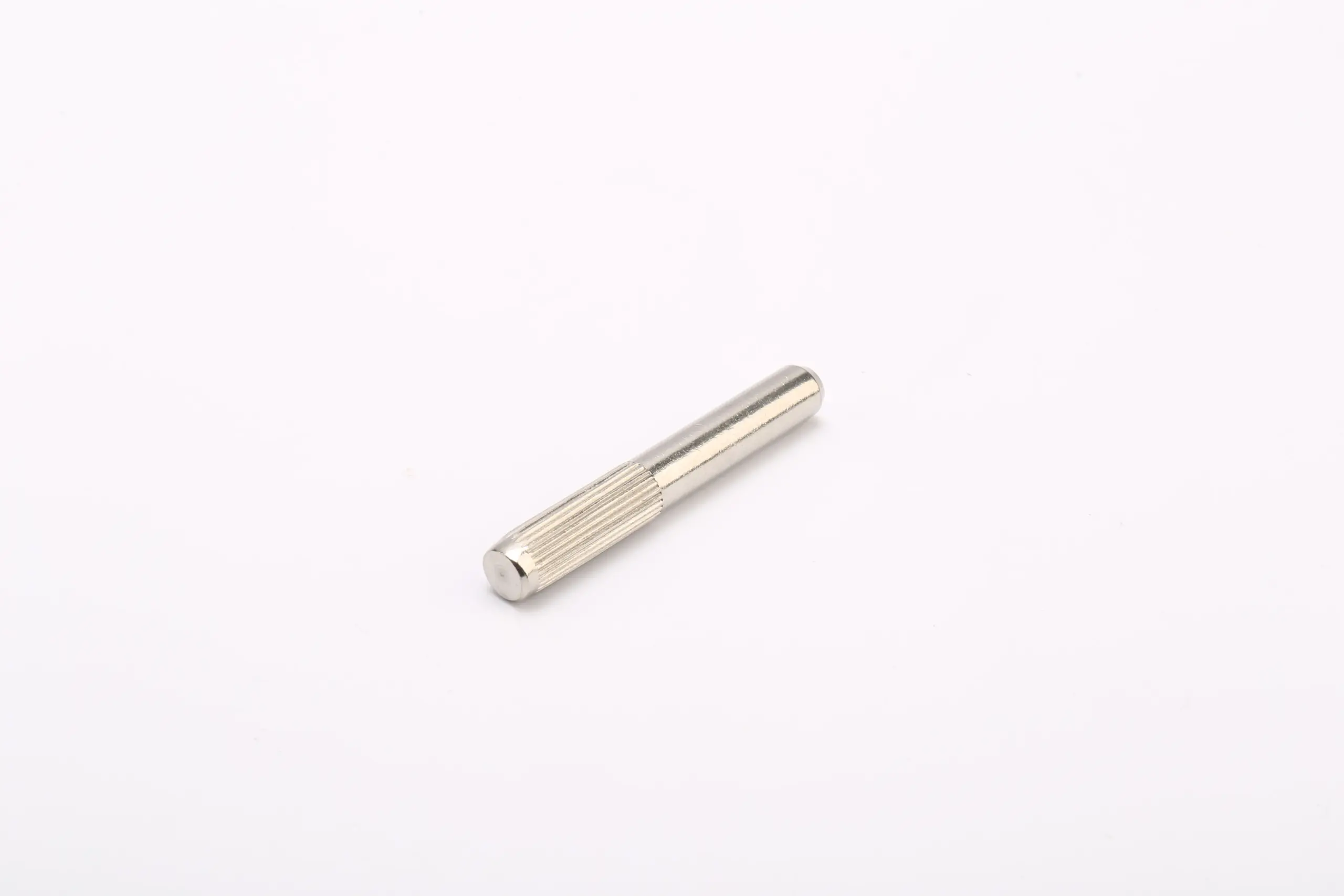
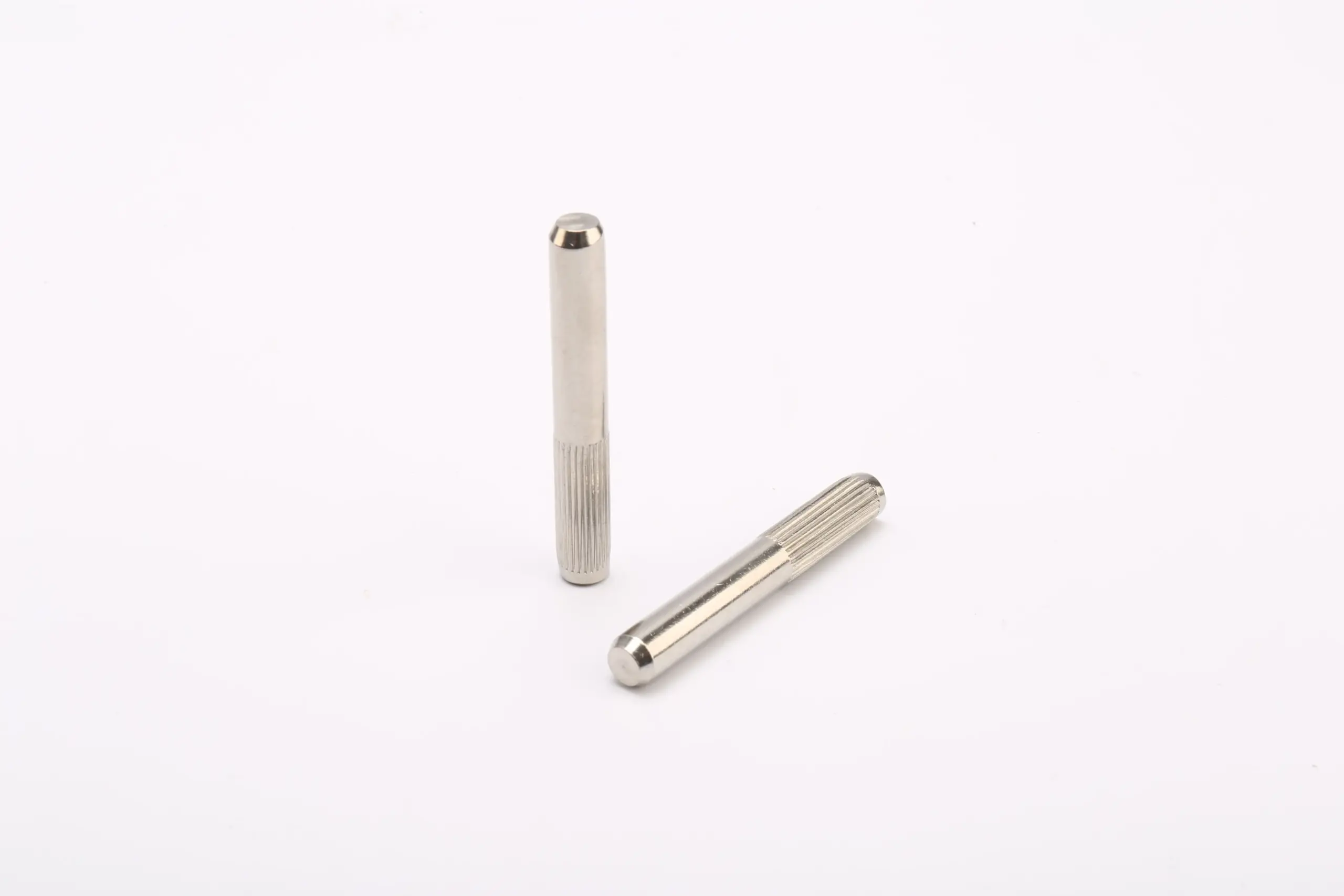
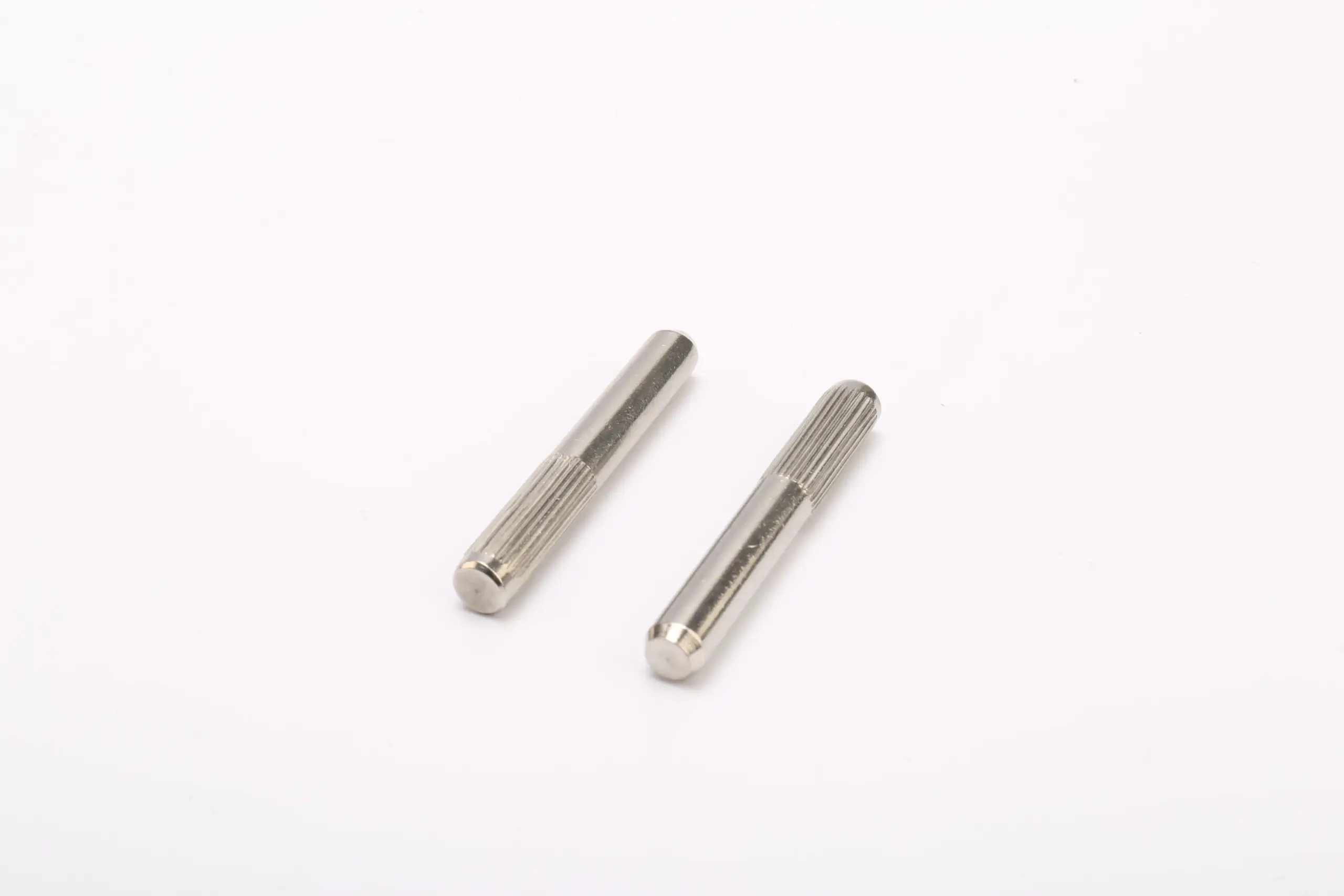
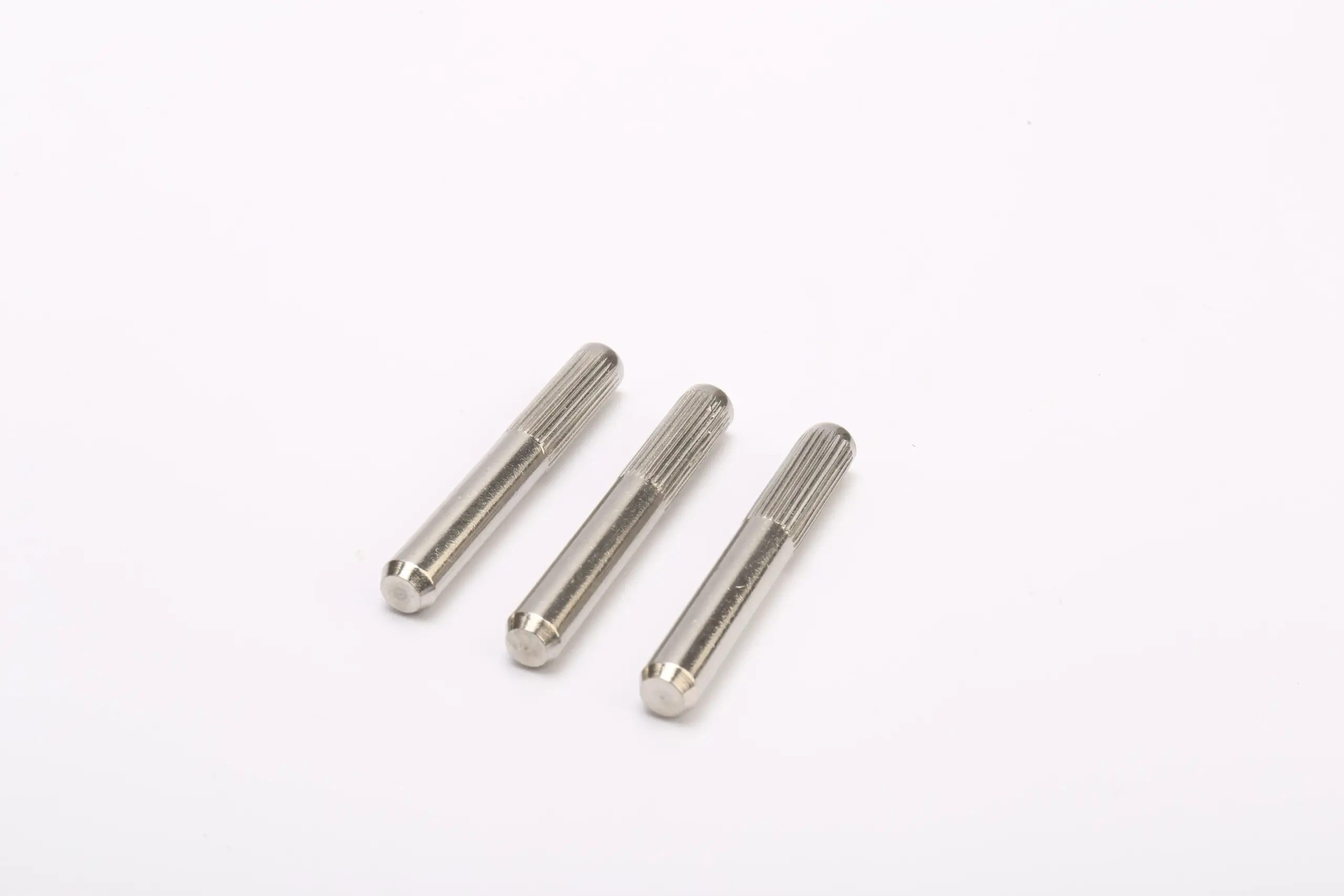
A single-head straight knurled cylindrical pin has one enlarged head and a straight-knurled section on the cylindrical body. The head provides a stop or contact surface, while the knurl gives a defined grip or engagement band; both features need to be located from the same datum.
Single head and knurled body
The part combines a head at one end with a straight knurl along part of the shank. The head may seat against a plate or provide a pull point, but that function should be confirmed. The knurl should not be assumed to extend to the head unless the drawing shows it; a plain transition can be important for seating.
Grip, location and small mechanisms
These pins can be considered for compact fixtures, adjustment hardware, small linkages and equipment where a headed pin is easier to handle. Check the head clearance and the direction of insertion. If the pin is pulled or rotated by hand, the knurled area must remain accessible after assembly.
Knurl location and head transition
The distance from the head underside to the knurl, the band width and the end chamfer are functional dimensions. A sharp transition can create a burr or a stress concentration. Specify whether the knurl is straight or another pattern; the product title names a straight knurl, but the sample should still be confirmed.
Specification inputs
- Show the head diameter, thickness and underside form.
- Define the shank diameter, length and knurl band.
- Identify the mating hole, seating face and insertion direction.
- State material, finish, quantity and inspection requirements.
Fit and inspection
Inspect the head for distortion and the knurl for torn crests. Fit the pin in the mating hole and check that the head seats without rocking and that the knurled band does not damage the bore. Confirm the material and finish separately; the shape does not define hardness or load capacity.
Check the head and knurled band as one assembly feature. The head should seat without the knurl contacting the mating face, and the band should remain reachable if the pin is turned by hand. Confirm the insertion direction and the clearance around the head. If the pin is used as a pull point, review the transition for stress concentration and avoid sharp edges that could cut the operator or damage a tool.
FAQ
Is the head a load-bearing flange?
It can be a stop or contact face, but the load path must be confirmed from the assembly drawing.
Does the knurl run to the head?
That depends on the drawing. A plain transition may be required for seating.
Can the head profile be changed?
Yes, when the new profile and its function are specified.
Browse the stainless steel knurled pin category, or compare flat head grooved contact points and short stainless steel knurled pins.