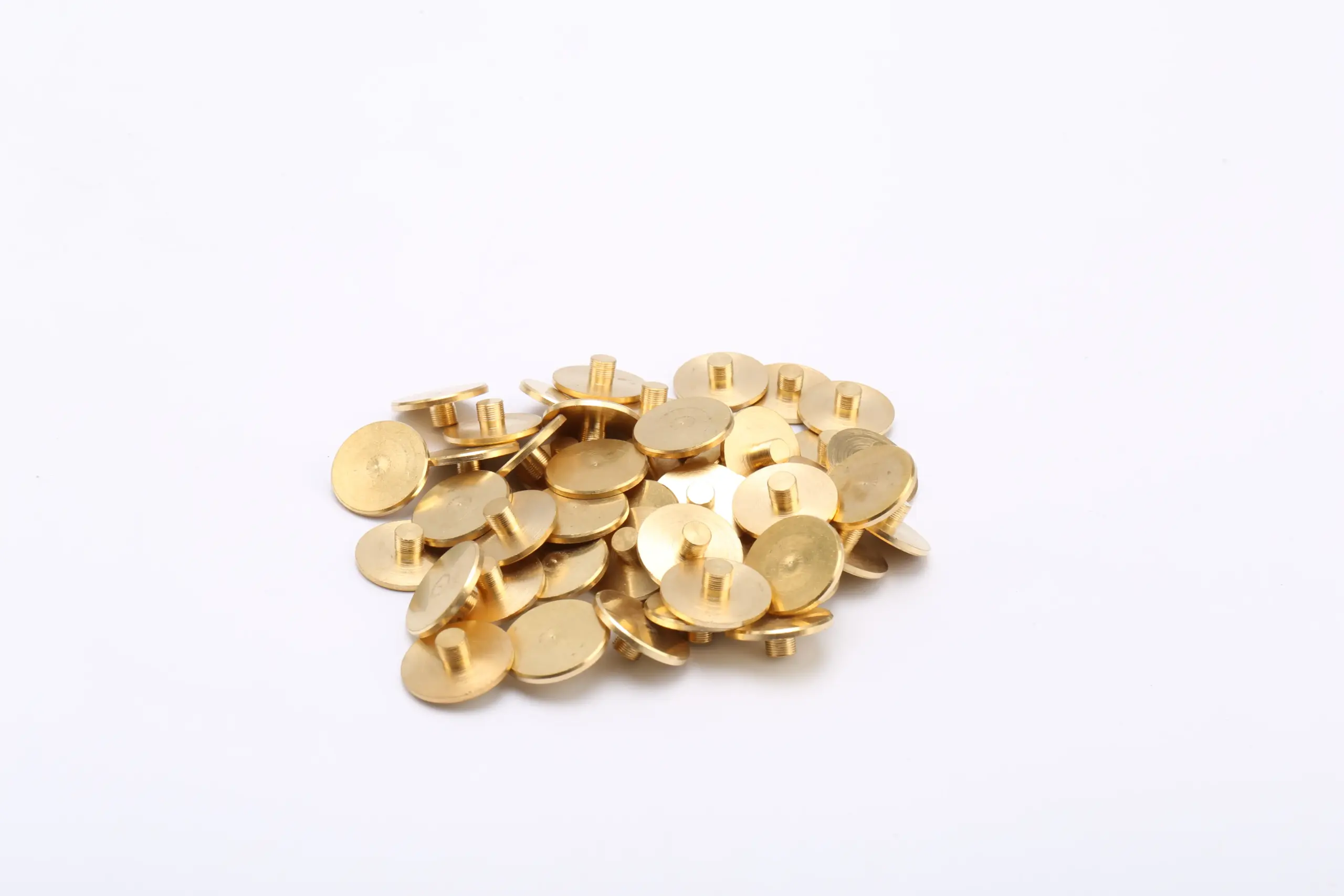
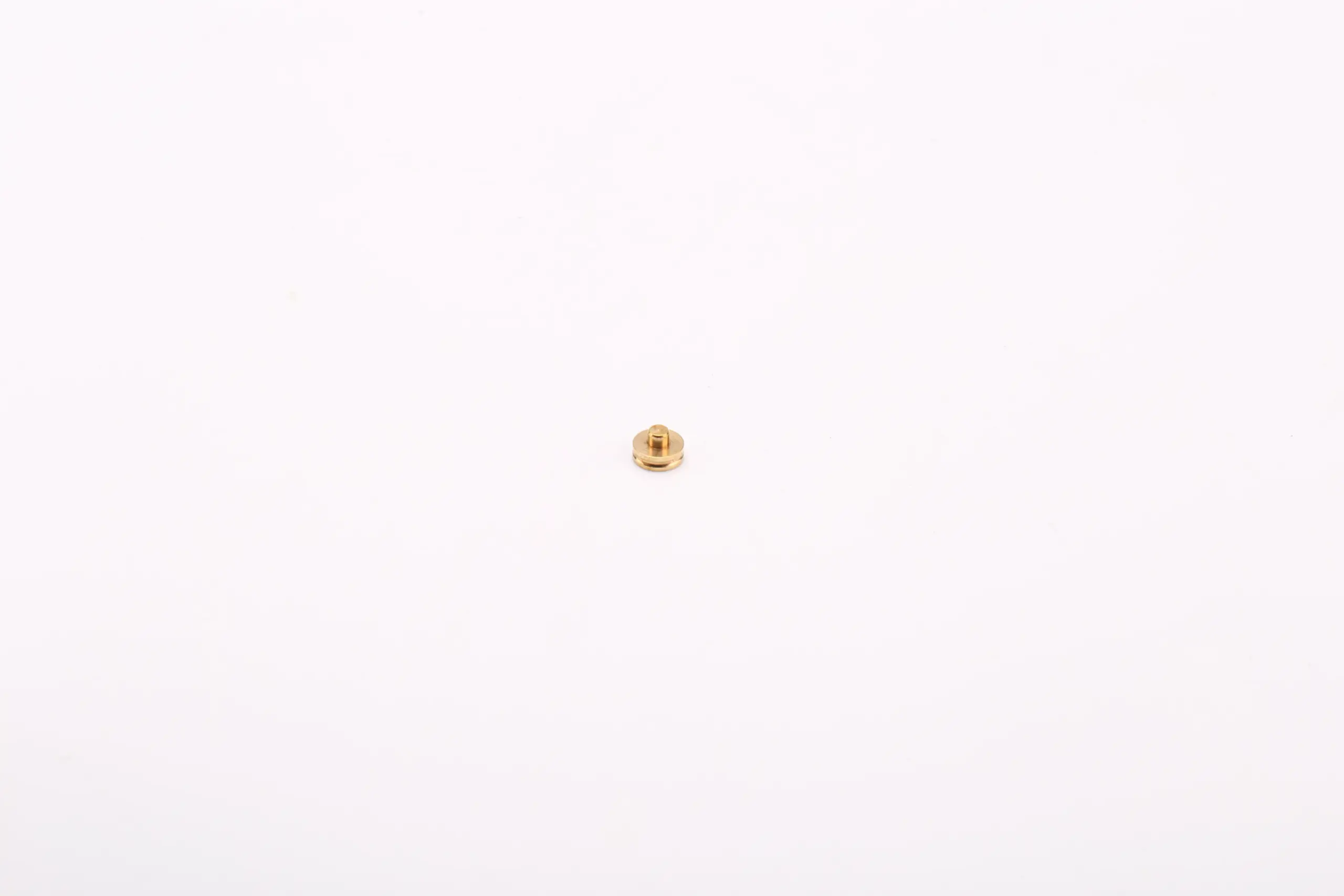
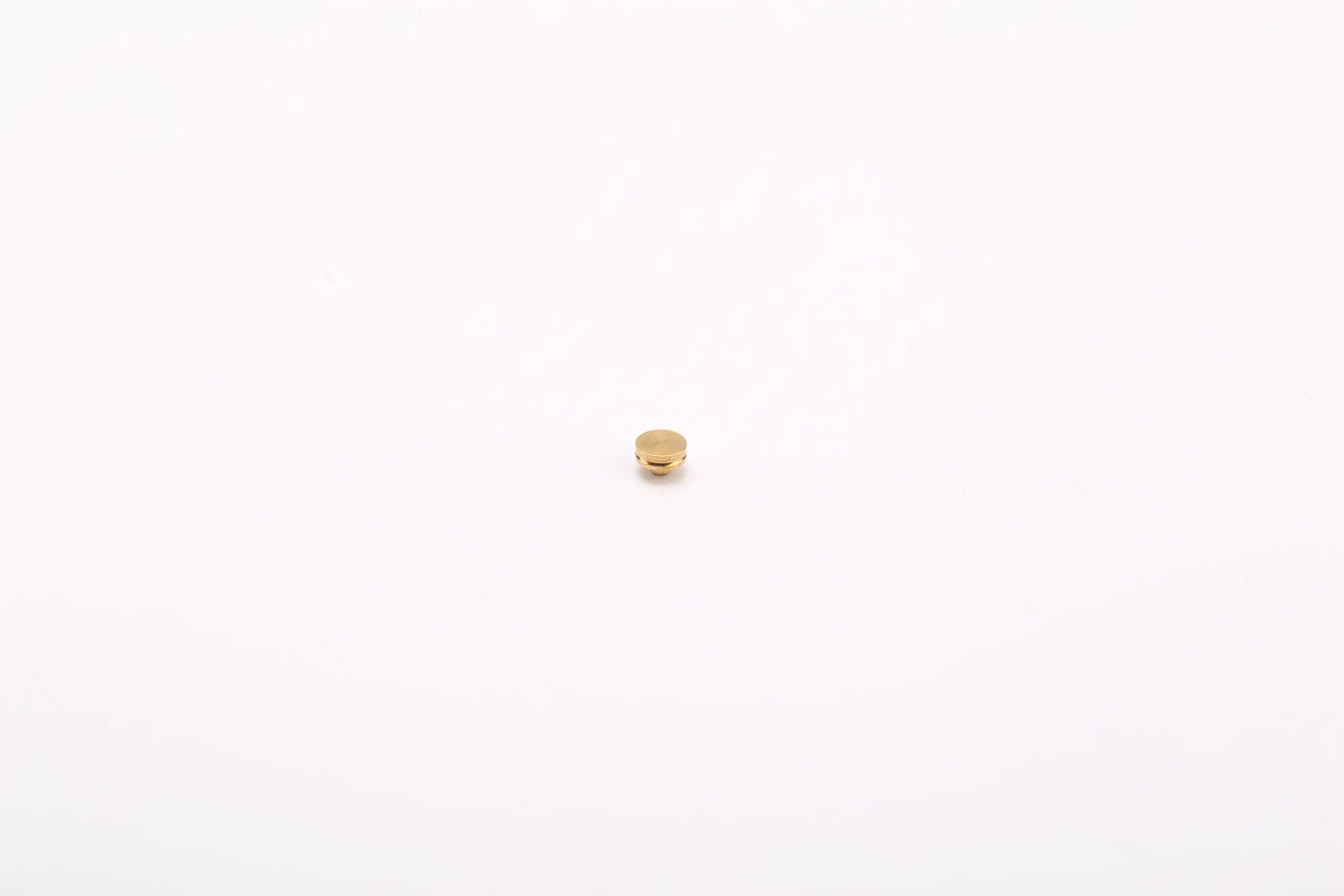
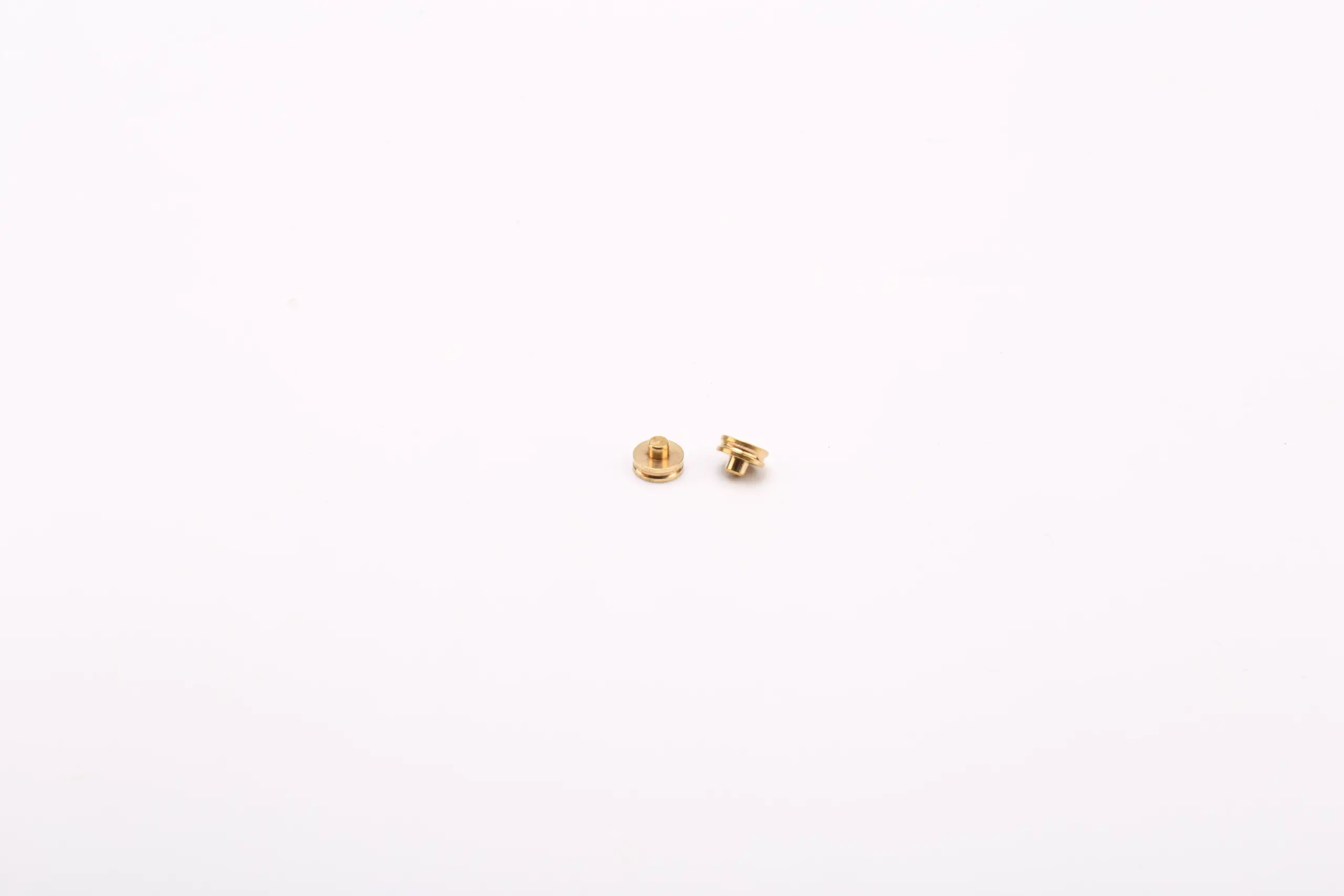
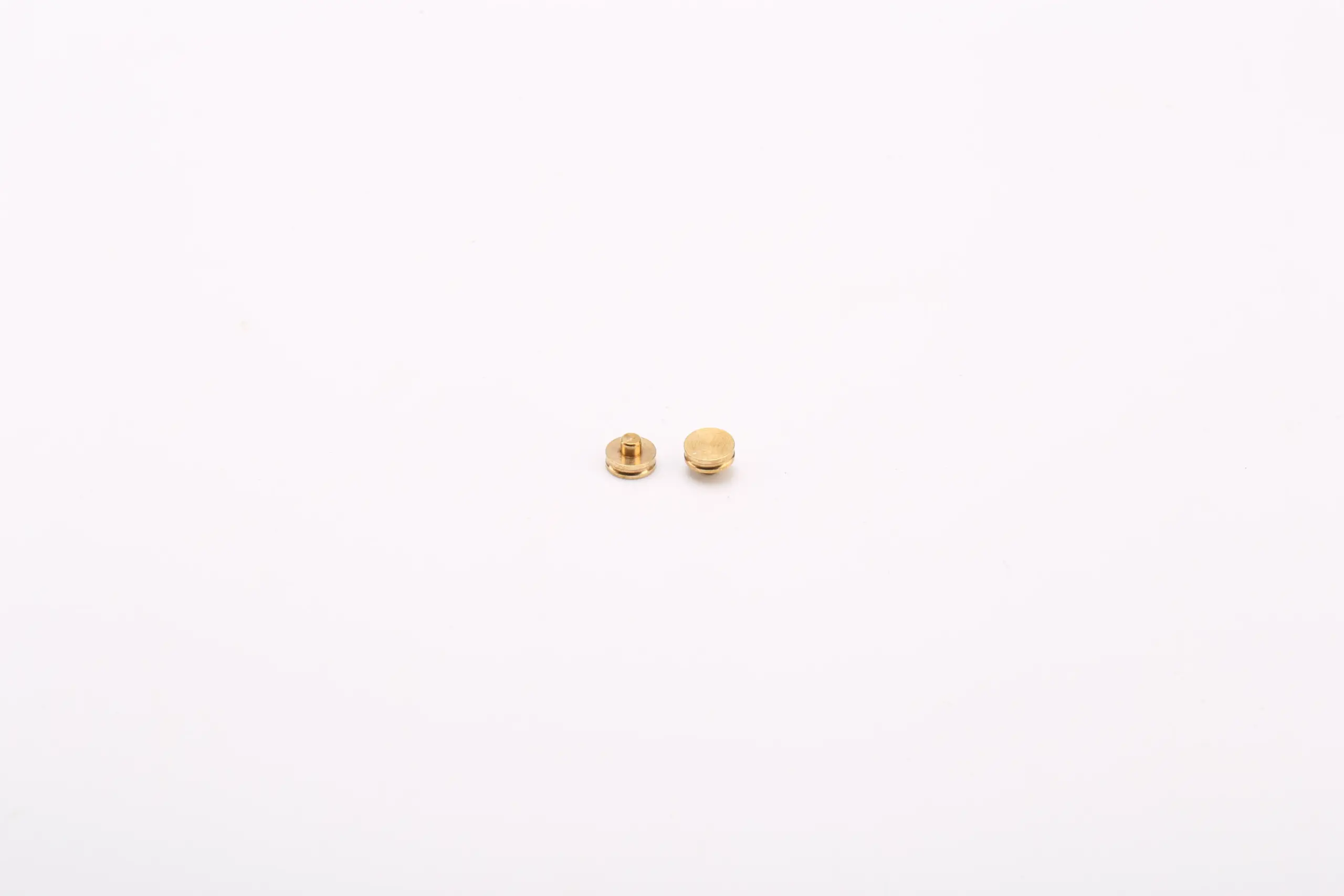
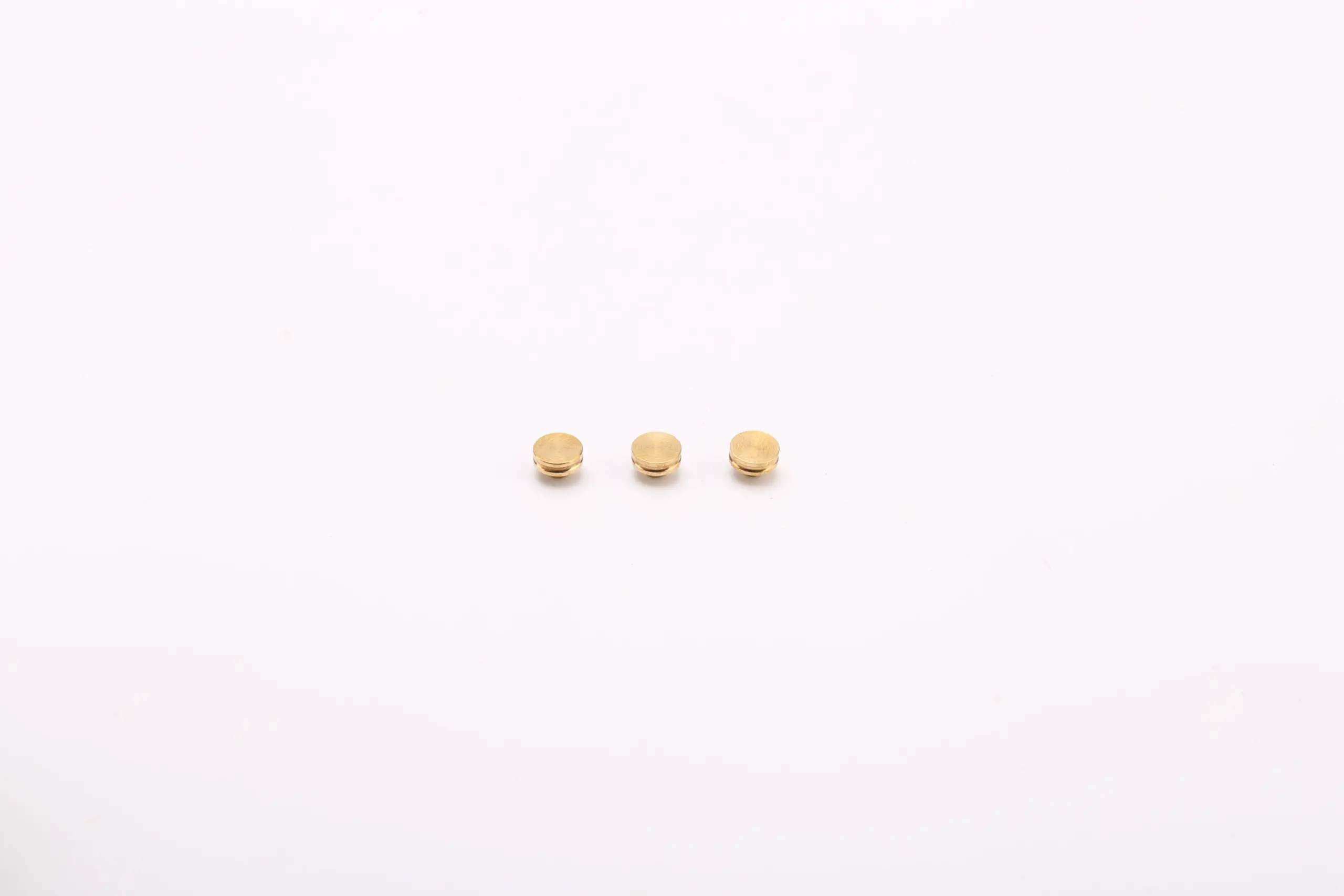
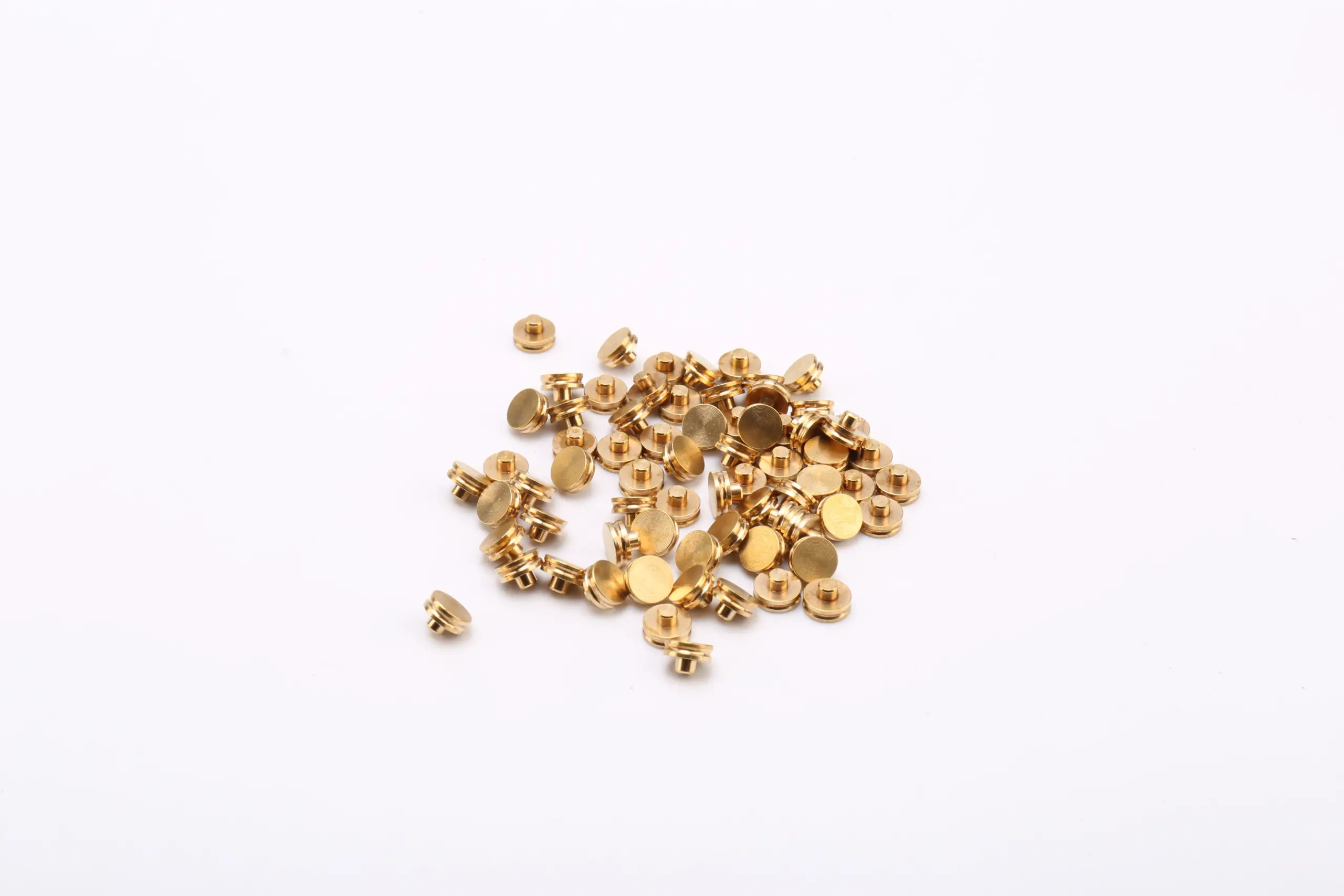
Flat-head grooved contact points have a low head with a groove or shaped feature on the contact face. The gallery shows small brass-colored parts with a visible face detail and a short shank. The groove should be treated as a functional feature to confirm on the drawing, not as a decorative mark inferred from a photograph.
The grooved face and the contact area
The head still provides the bearing area and the shank provides retention. Check that the groove does not leave a sharp edge that could damage the mating contact. If the groove is intended to locate a wire or a mating feature, show that feature and the required orientation.
Applications to assess
This contact point can be considered for switches, relays, terminals and compact electrical hardware where a profiled face is required. It may also be useful where the contact interface needs a defined recess or where a flat face would be unsuitable for the mating part. The application should identify the opposing contact, the direction of engagement and the cleaning or inspection method.
Do not choose the grooved version only because it appears different from a flat contact point. If the mating surface is flat, the groove may reduce the apparent contact area. Review the pair together and confirm the intended contact zone.
What the image does not measure
The brass color does not establish the alloy or surface treatment. The contact face may have a different finish from the shank. If the part is plated, check that the groove is not filled or rounded in a way that changes the intended profile.
How to specify a grooved contact point
- Show the head diameter, face profile and groove width, depth and position.
- Dimension the shank diameter, length and the carrier or terminal interface.
- State the material, surface treatment and the required condition of the groove.
- Provide the mating contact, orientation, installation method and inspection criteria.
Inspection and trial contact
Inspect the groove for burrs, chips, contamination and incomplete forming. Check that the raised edges are not sharp enough to scratch the mating part. Confirm the face profile with a profile gauge or a suitable optical method if the drawing requires a controlled groove.
Trial the point in the actual carrier and check the contact pattern. Verify that the groove is oriented as intended and that the mating contact does not sit only on one edge. After repeated operations, inspect both parts for abnormal wear. Keep the approved sample protected so the groove can be compared without handling damage.
FAQ
Is the groove visible on every sample?
The gallery shows a face feature, but lighting can make it more or less obvious. Confirm the drawing and inspect the actual lot rather than relying on a product photo.
Can the groove be omitted?
A plain contact point is a different geometry. If a groove is not required, select a flat-face product instead of assuming the grooved part can be substituted without review.
What is the best way to inspect the groove?
Use the method specified on the drawing, such as a profile check or a measured cross-section. A visual check alone may not reveal a shallow depth variation.
Browse the Contact Parts category, or compare brass contact points and flat brass contact points.