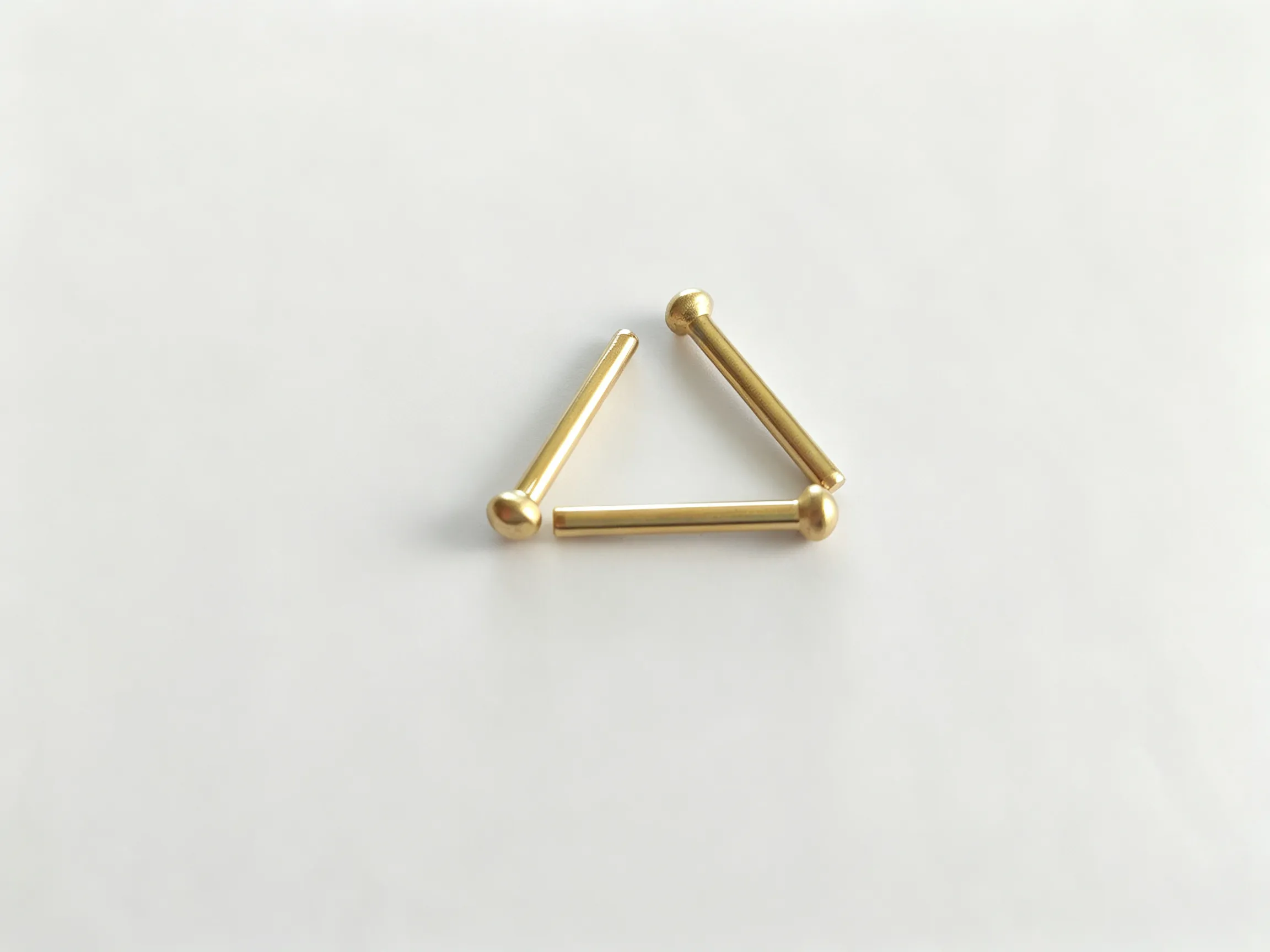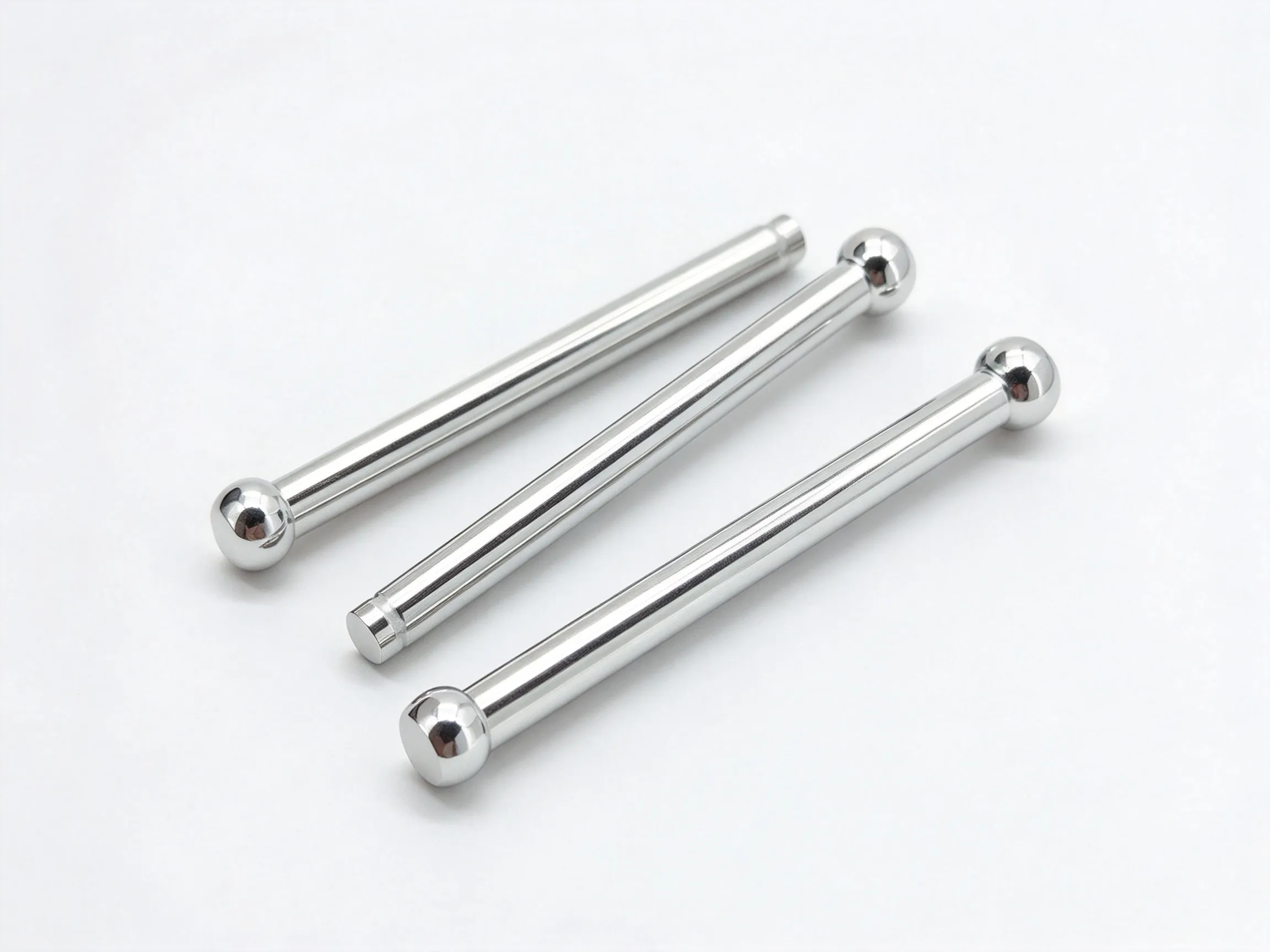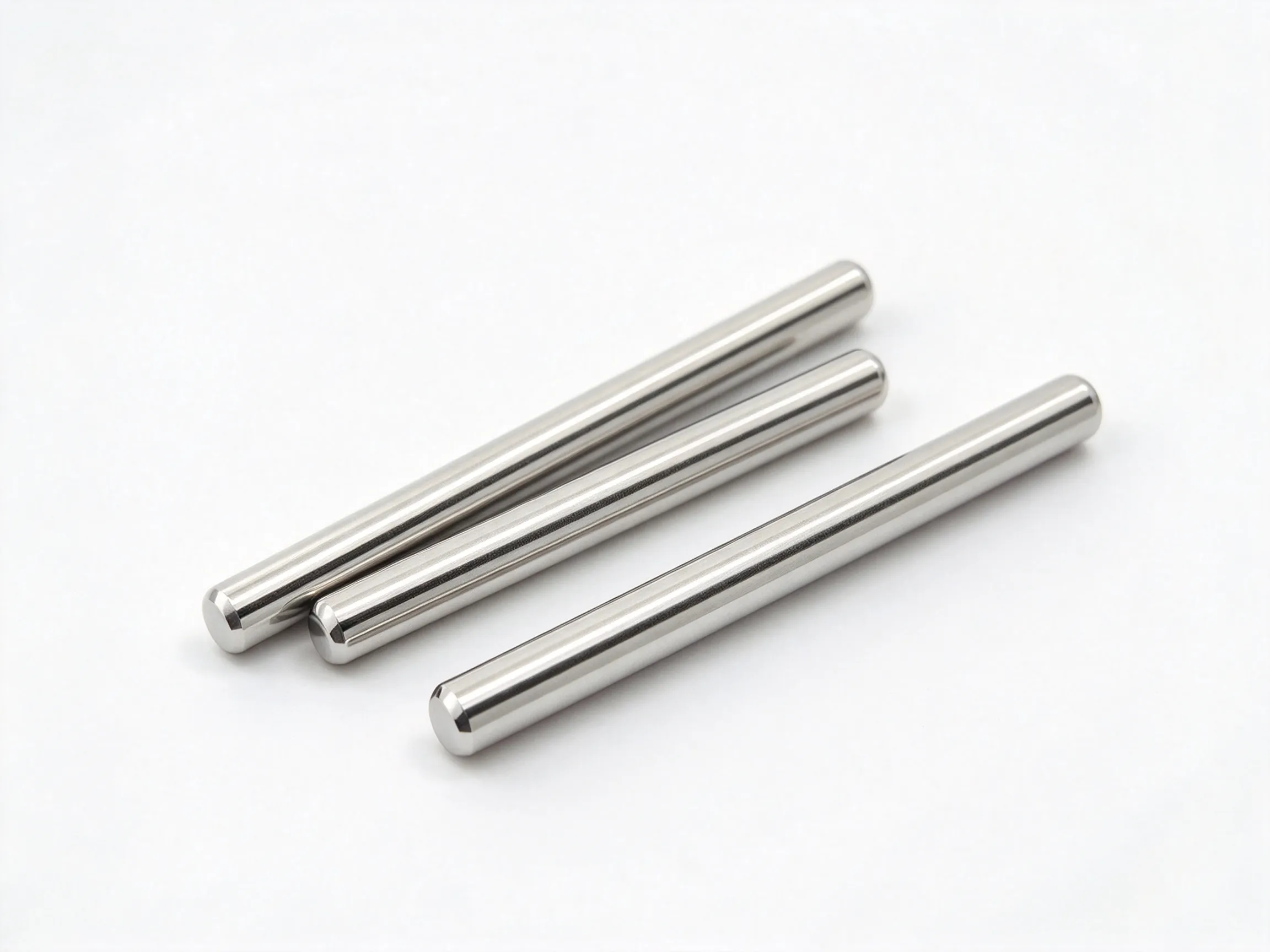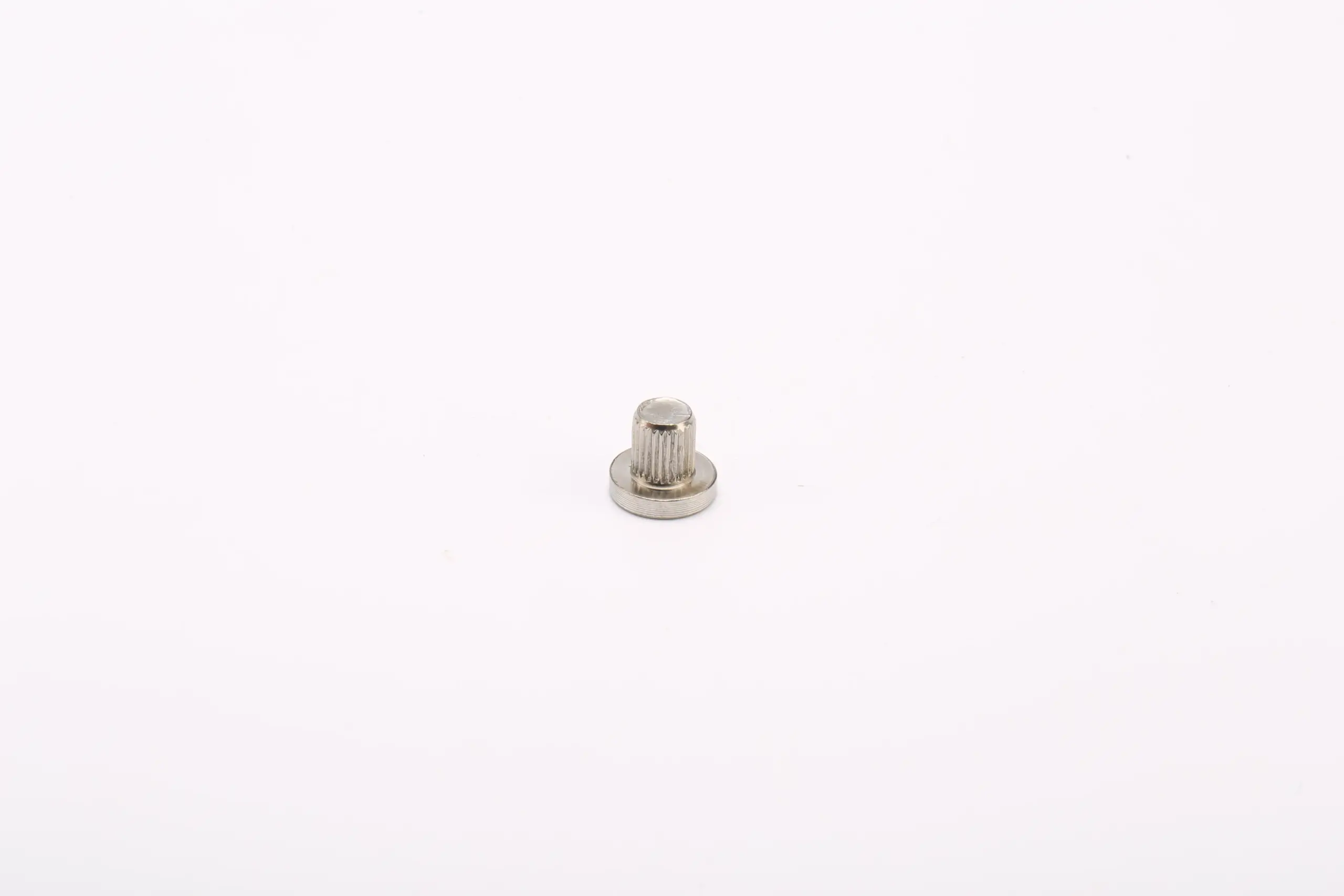
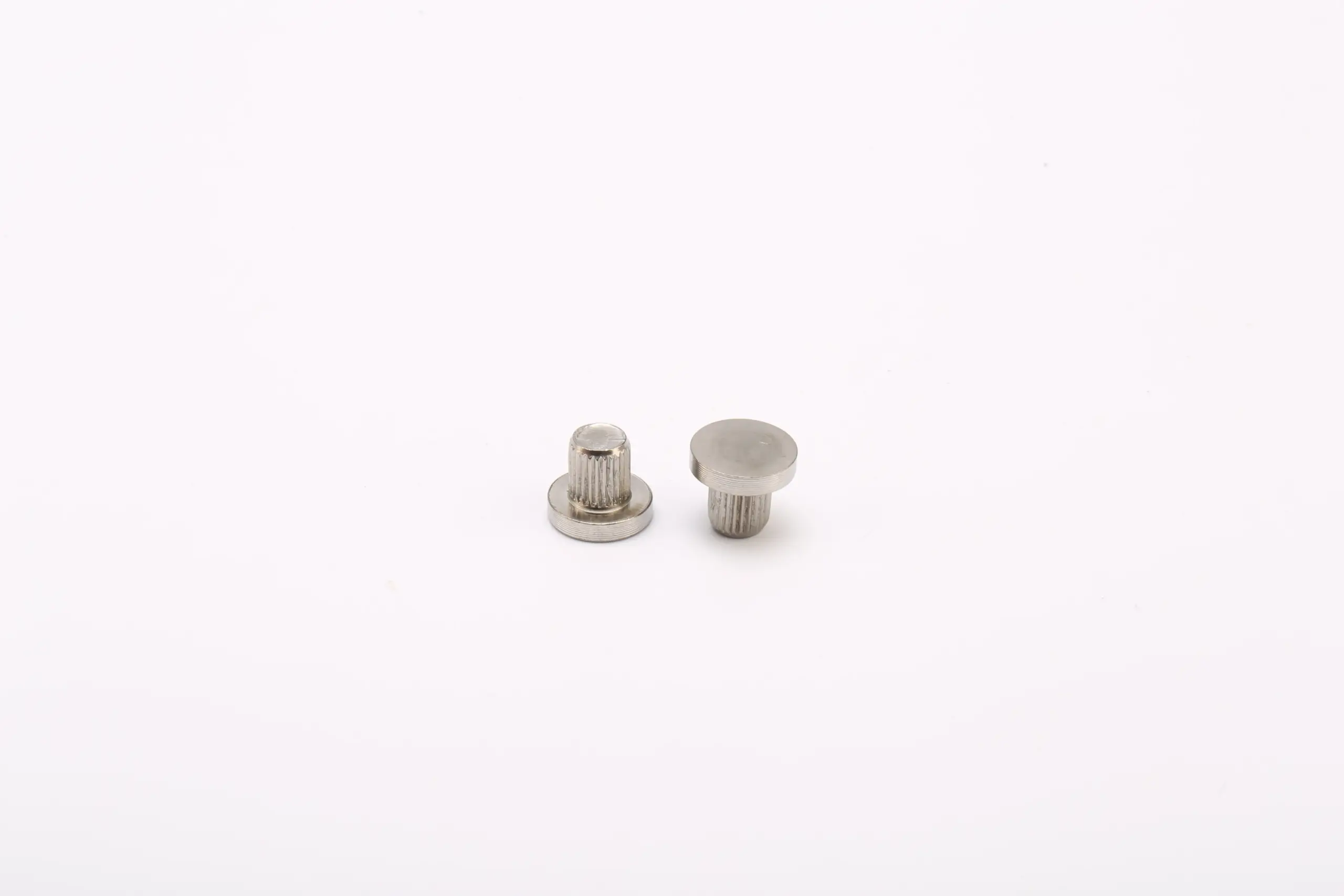
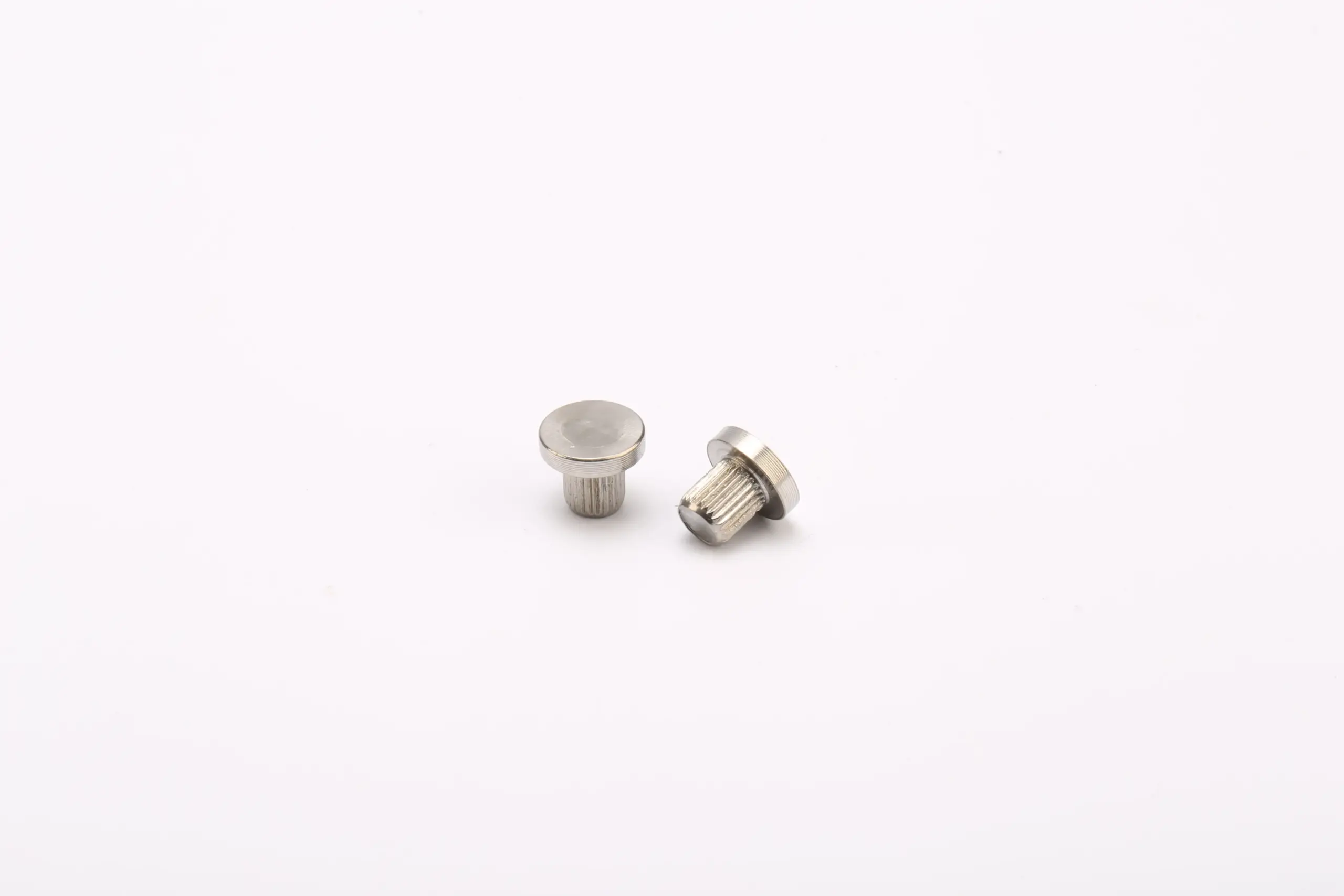
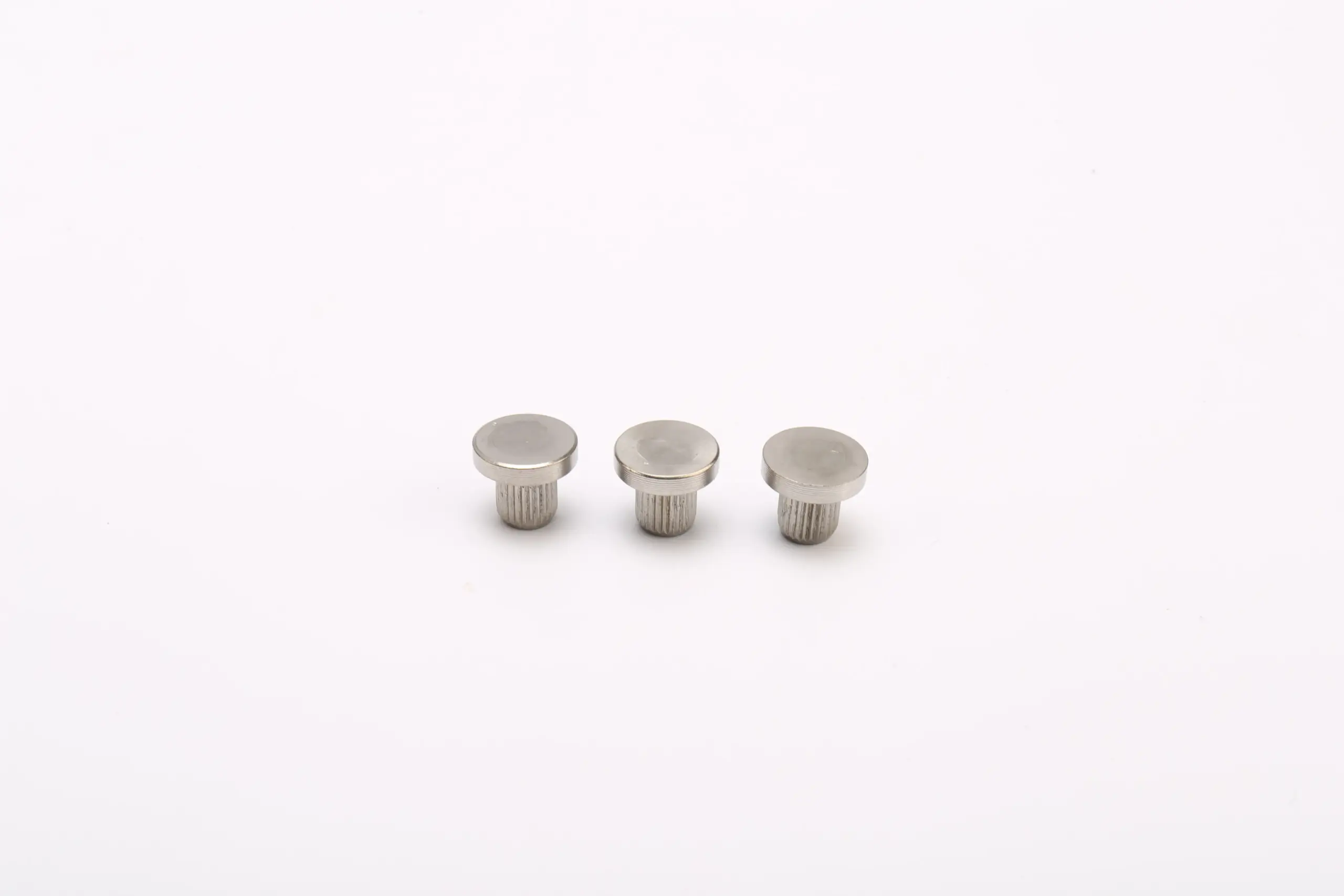
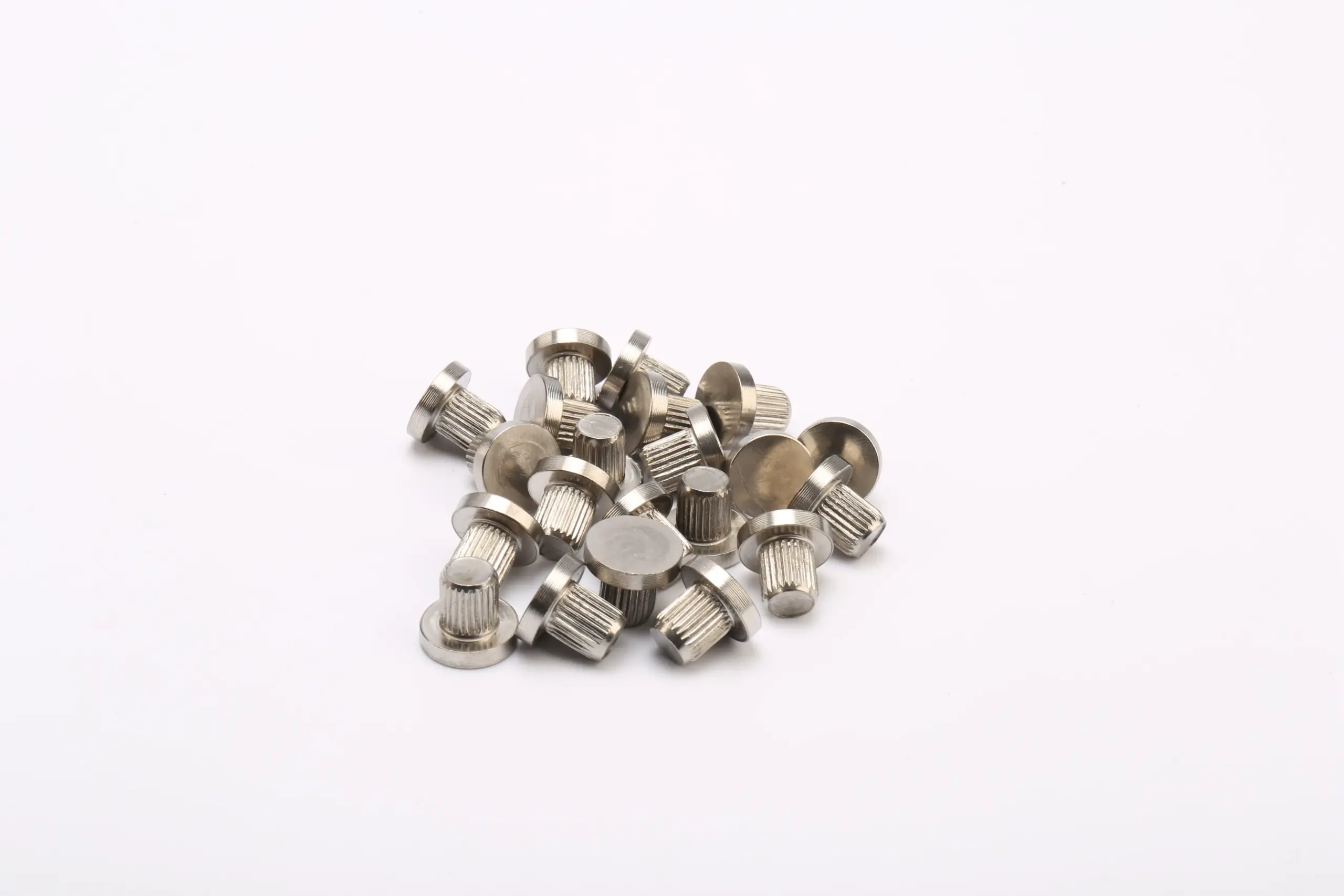
A customized hinge plug is a small body that fits into a hinge or furniture hardware assembly. The gallery shows a flat or slightly domed head over a ribbed or knurled shank, so the bore fit, head seating and installation method are the main points to define.
Plug body and head
The plug has a head that remains visible or seats against the hinge surface and a shank that enters the mating hole. The head may be flat, rounded or slightly chamfered. The shank can include a knurl, spline or groove to suit the installation. The drawing should distinguish the bearing face from the insertion end.
Hinge and furniture hardware use
Hinge plugs can cover an opening, locate a hinge component or provide a finished cap in door and furniture hardware. Check the hole diameter, depth and access behind the hinge. If the plug is pressed in, the installation tool should not damage the visible head; if it is removable, the removal feature must be defined.
Knurl, spline and bore fit
A ribbed or knurled shank can provide grip in the mating hole, but the amount of interference must be specified. A smooth bore may require a different retention method. The head underside should be checked for flatness, and any radius should clear the hinge surface. Do not assume that the visible rib pattern is a thread.
Specification inputs
- Show the head profile, diameter and underside form.
- Dimension the shank, knurl or spline and insertion depth.
- Define the mating hole, material and installation method.
- State finish, quantity and visible-surface acceptance criteria.
Fit and finish inspection
Trial-fit the plug in the actual hinge or a representative bore. Check that the head seats evenly and that the shank does not split or polish the hole excessively. Inspect visible surfaces for scratches and the shank for burrs. Confirm the base material and finish separately, especially when the plug is exposed to handling or cleaning.
Confirm the hinge hole and the plug head in the actual hardware. The shank should enter without splitting the hole, and the head should sit evenly without rocking. If the plug is visible, check the finish before installation and protect the head from tool marks. Review whether the plug is intended to stay permanently or be removed for service; that decision affects the fit, access and acceptable deformation.
FAQ
Is the ribbed shank a thread?
No. It appears to be a grip or installation feature. Any thread must be specified explicitly.
Can the plug be removed after installation?
Only if the design includes a removal method. The fit and access should be reviewed before installation.
What is the critical fit?
The shank-to-hole fit and the head seating face are usually the most important functional checks.
Browse the Custom Parts category, or compare customized door lock pins and utility knife accessories.