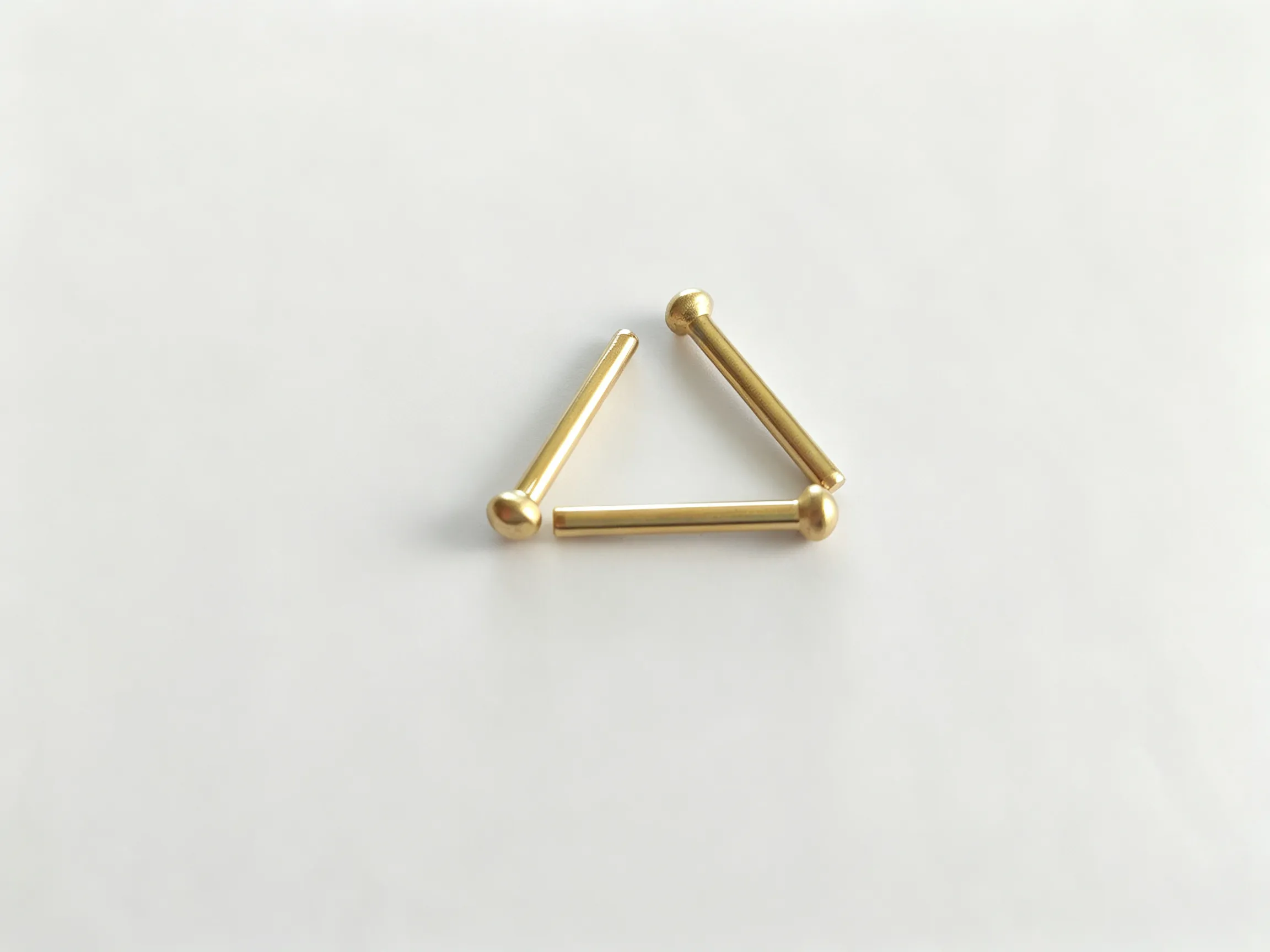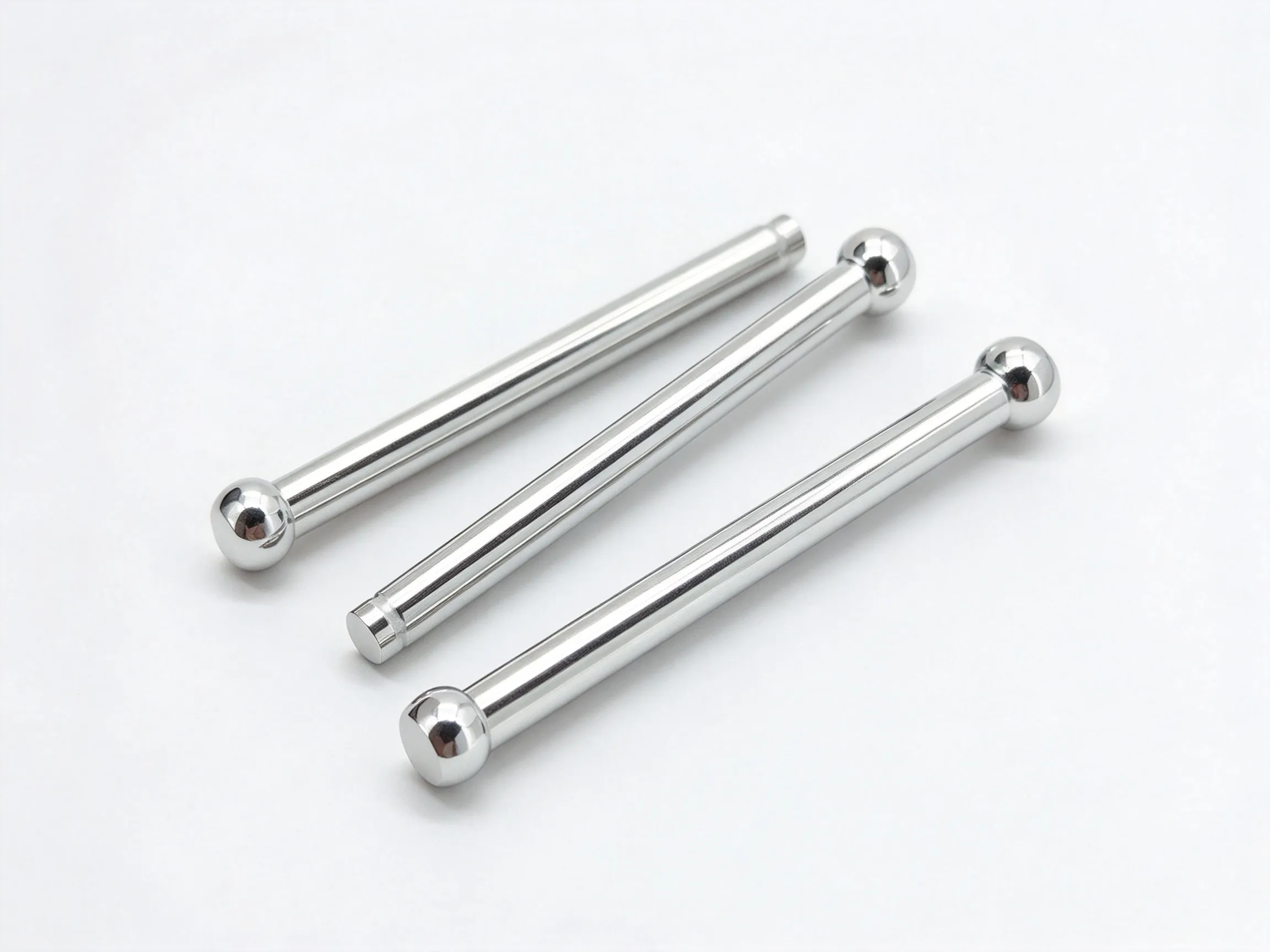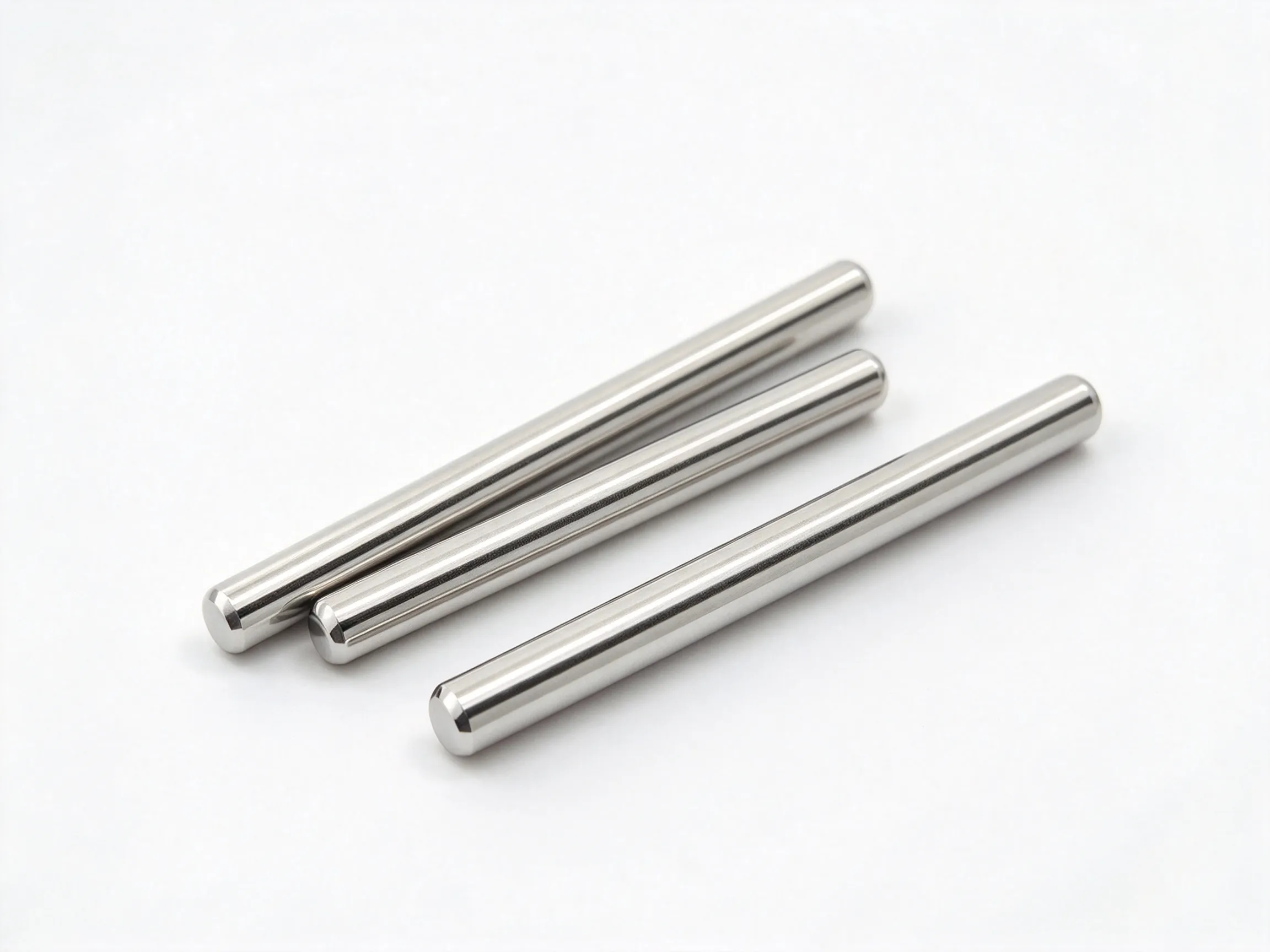
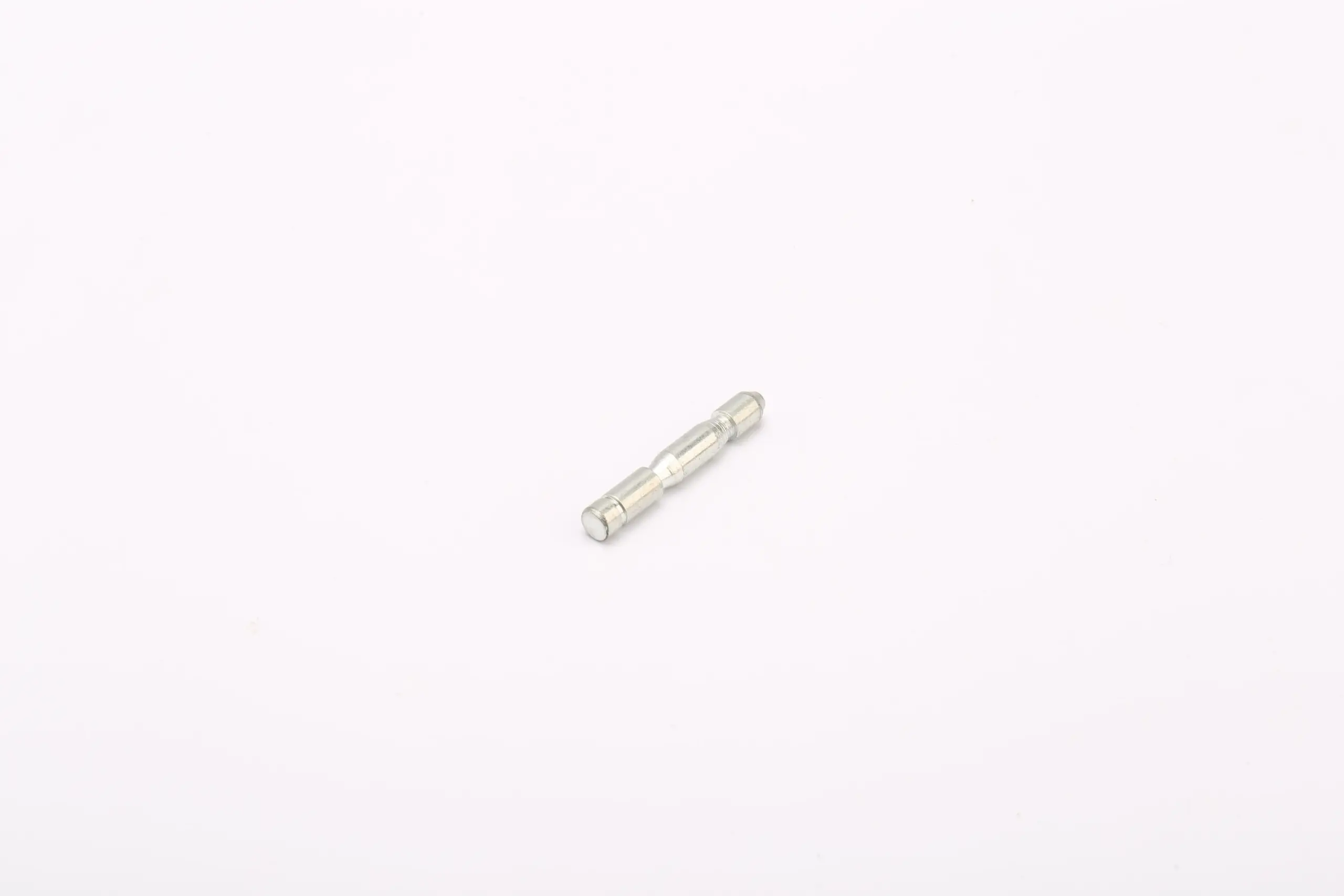
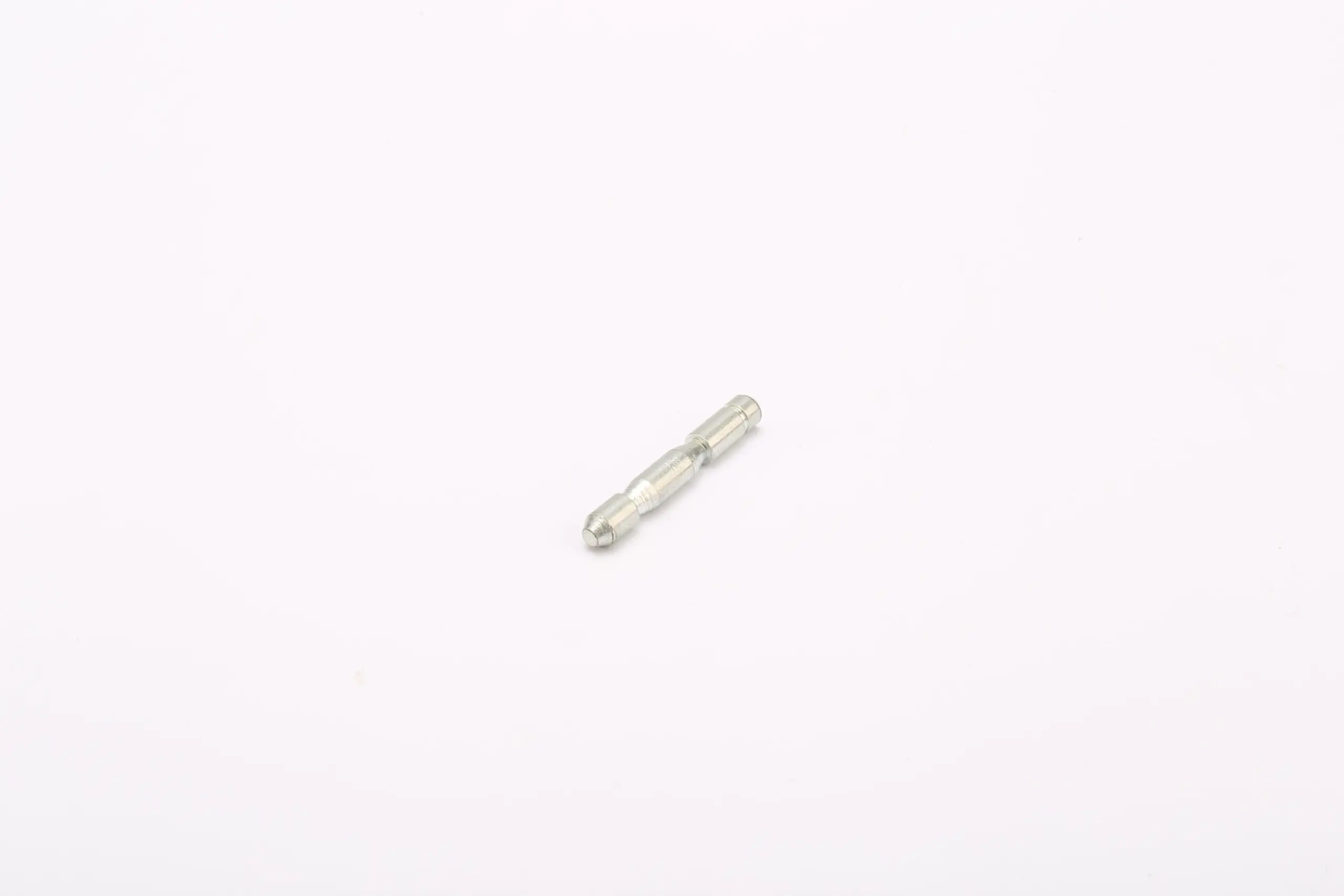
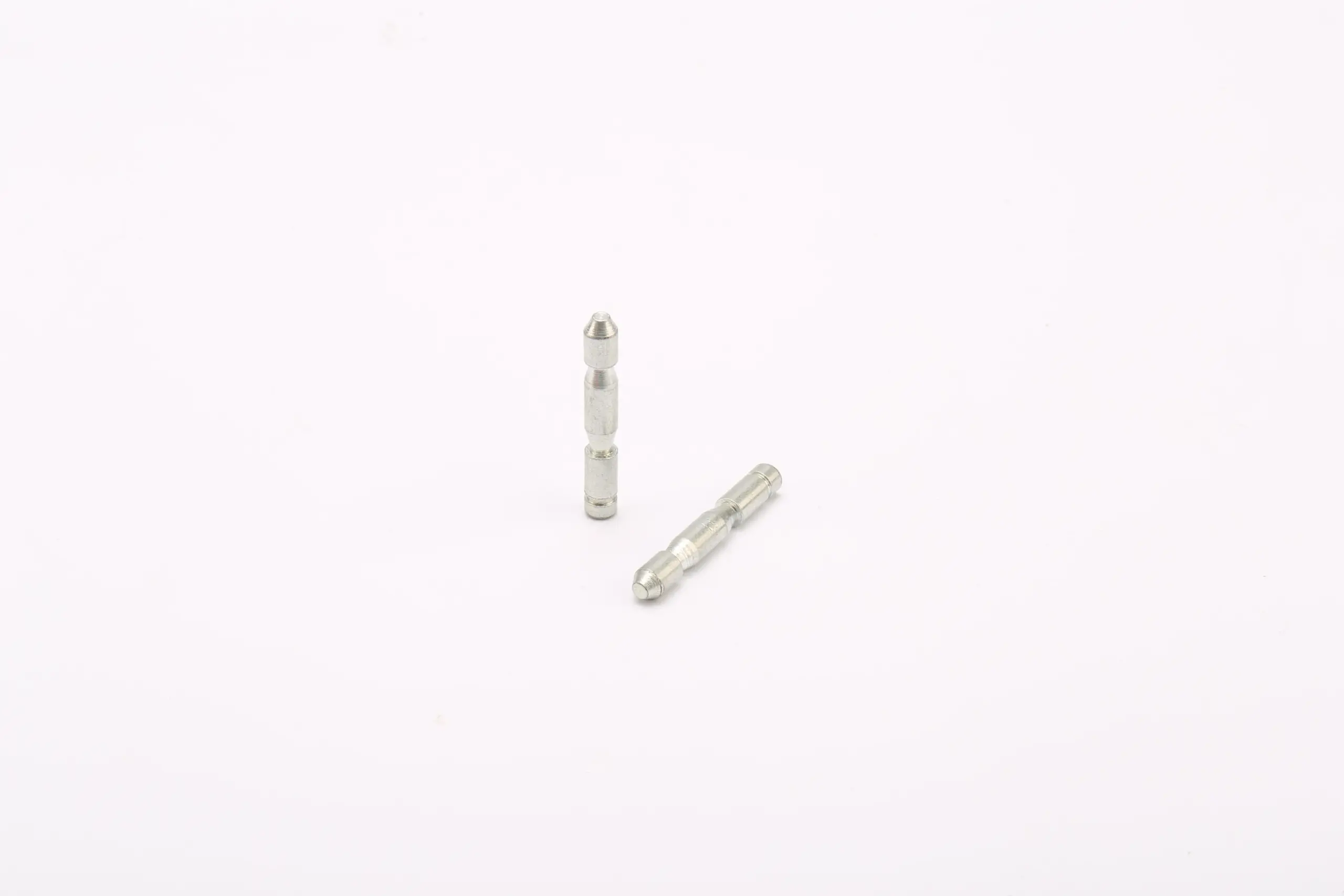
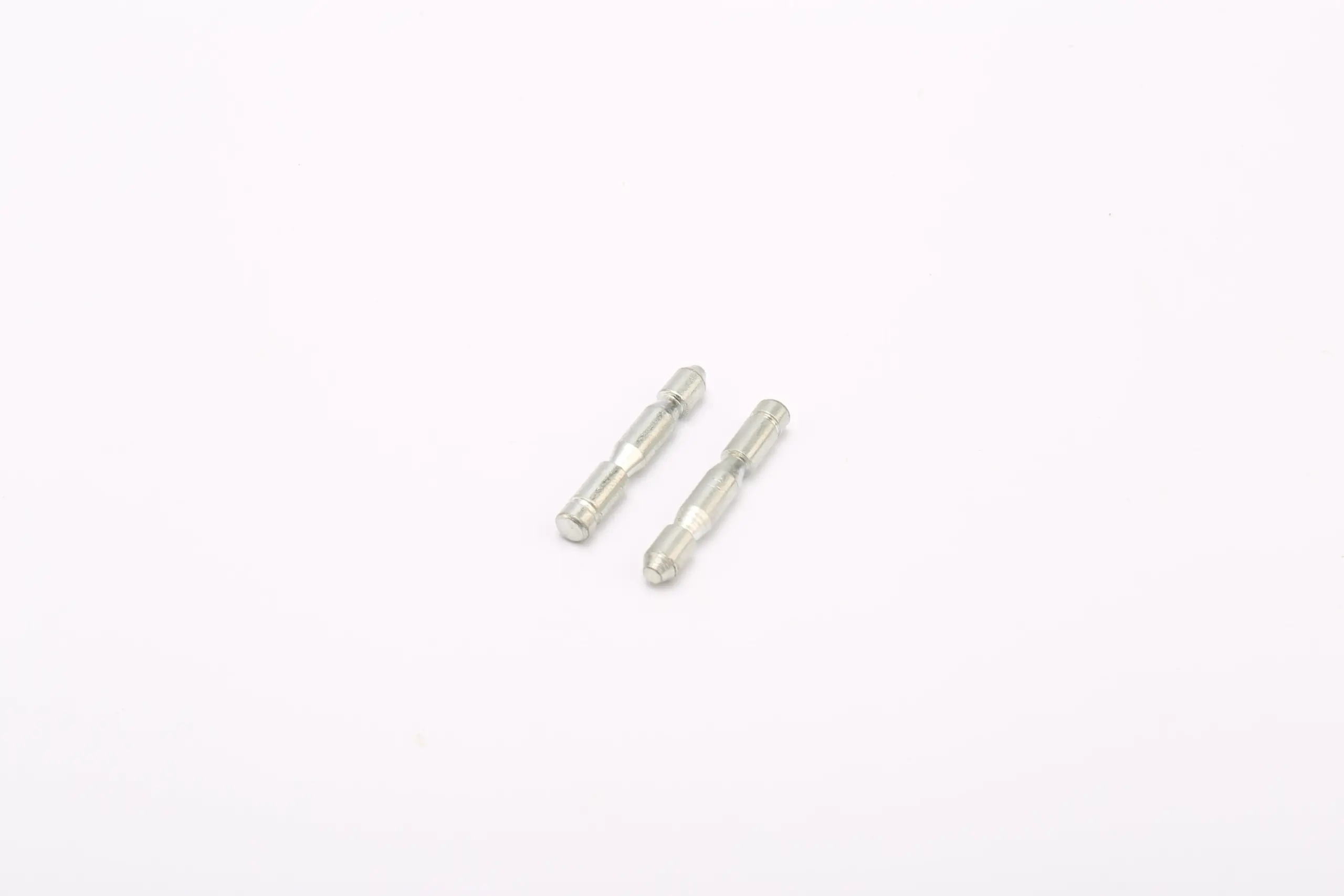
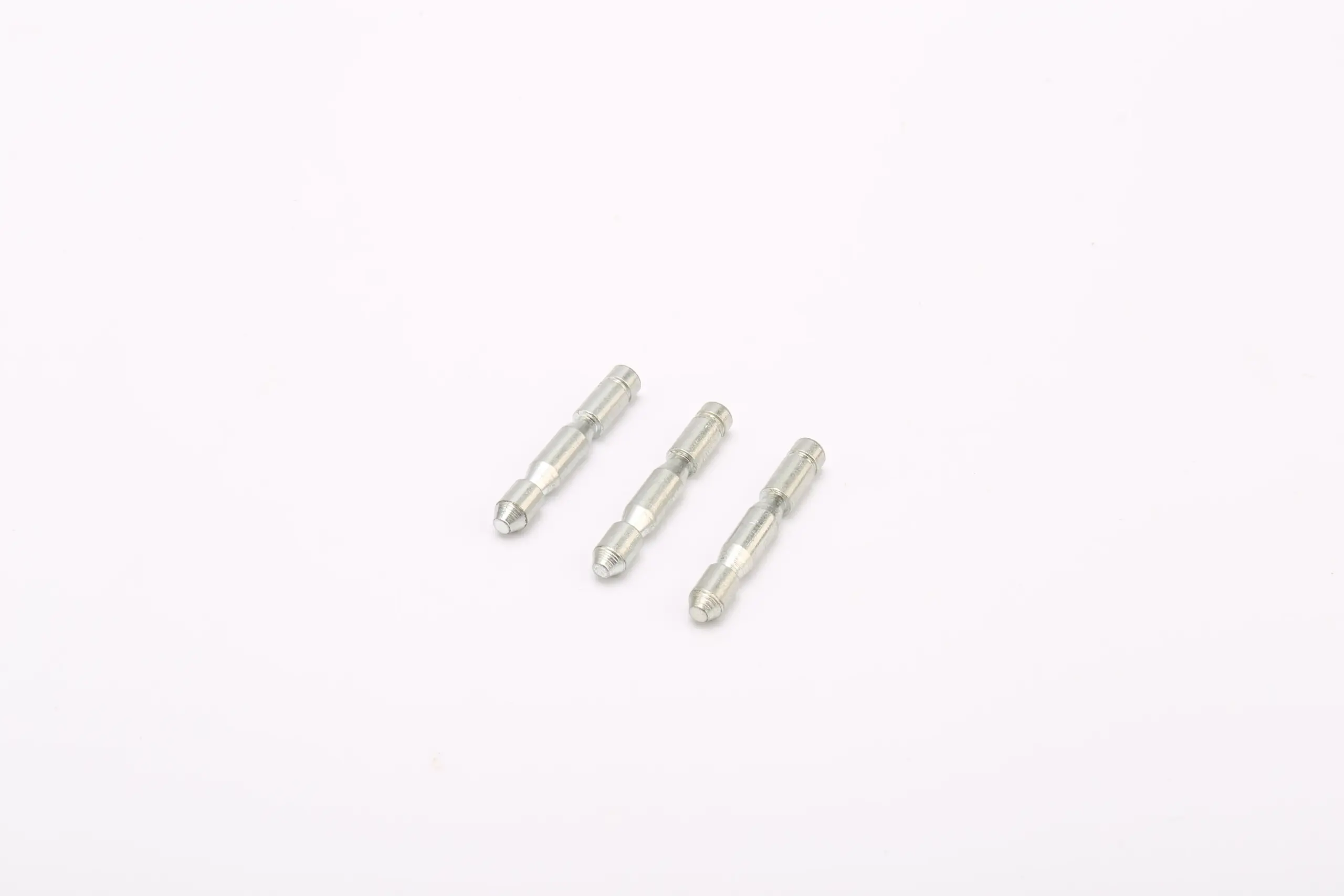
A customized door lock pin is a small shaped pin used inside a lock or door hardware mechanism. The gallery shows a slender body with multiple grooves and a distinct end form, so the pin should be defined by its linkage surfaces and its position in the lock assembly.
Shaped lock pin and multiple features
The pin may have a head, a narrow neck, grooves and a plain bearing section. Each feature can interact with a lever, spring, cam or housing. The drawing should identify the order of the features and the surfaces that must remain free of burrs. A groove may be a locating feature or a clearance relief, but its purpose must be confirmed.
Lock mechanism and door hardware use
Door lock pins can be considered for latch, handle and internal linkage assemblies where a standard pin will not provide the required retention or motion. Check the housing clearance, the direction of movement and the access for assembly. A pin that fits the hole may still interfere with a spring or adjacent lever through the full travel.
Steps, grooves and end form
The end form may engage a linkage or provide a stop. Dimension the end radius, groove positions and any shoulder that limits travel. Sharp transitions can wear or catch, while an oversized head may contact the lock case. Do not infer a security rating, shear strength or cycle life from the pin shape.
Specification inputs
- Provide a dimensioned drawing with a clear datum.
- Show the head, grooves, steps and end form.
- Identify the mating lever, spring or housing surfaces.
- State material, finish, quantity and inspection points.
Fit and motion inspection
Inspect the pin for burrs and straightness, then check it in the lock mechanism through the intended range of motion. Confirm that the pin does not bind, that the retaining feature engages and that the end form reaches its intended position. Material and finish should be specified separately from the geometry.
Check the pin through the lock mechanism rather than only in a gauge. Confirm that the end form engages its lever or cam, the grooves clear adjacent parts and the pin does not bind against the housing. Inspect the spring and retaining features for interference through the full travel. If the lock is serviced, make sure the pin can be removed without damaging the case or nearby components.
FAQ
Is the pin a standard lock replacement part?
No. It is a drawing-defined custom pin, so the lock model and dimensions must be confirmed.
Can the grooves be changed?
Yes, if their positions and functions are shown on the drawing.
What should be checked in the mechanism?
Check travel, clearance, retention and interference with springs or adjacent levers.
Browse the Custom Parts category, or compare customized hexagon socket screws and customized hinge plugs.