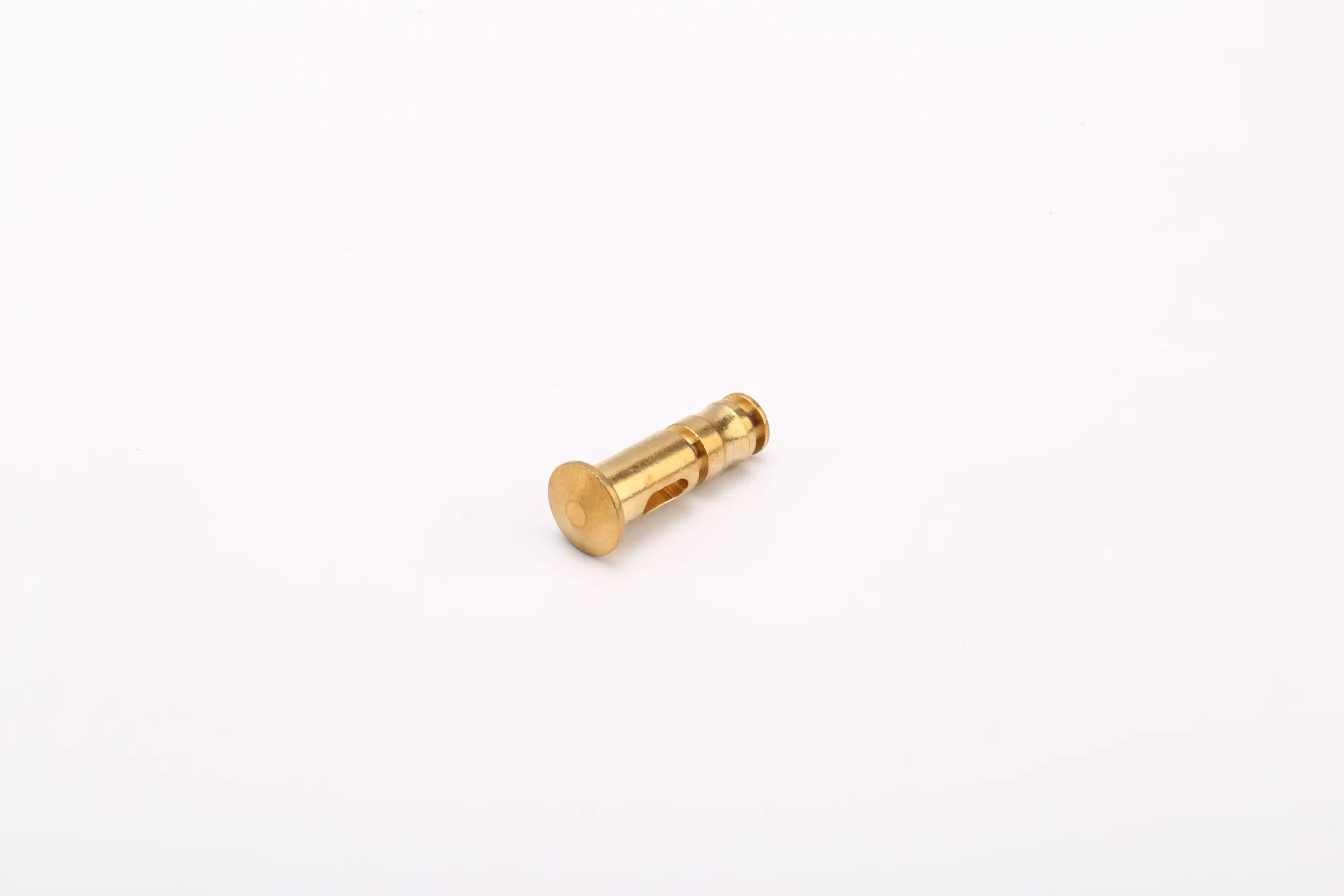
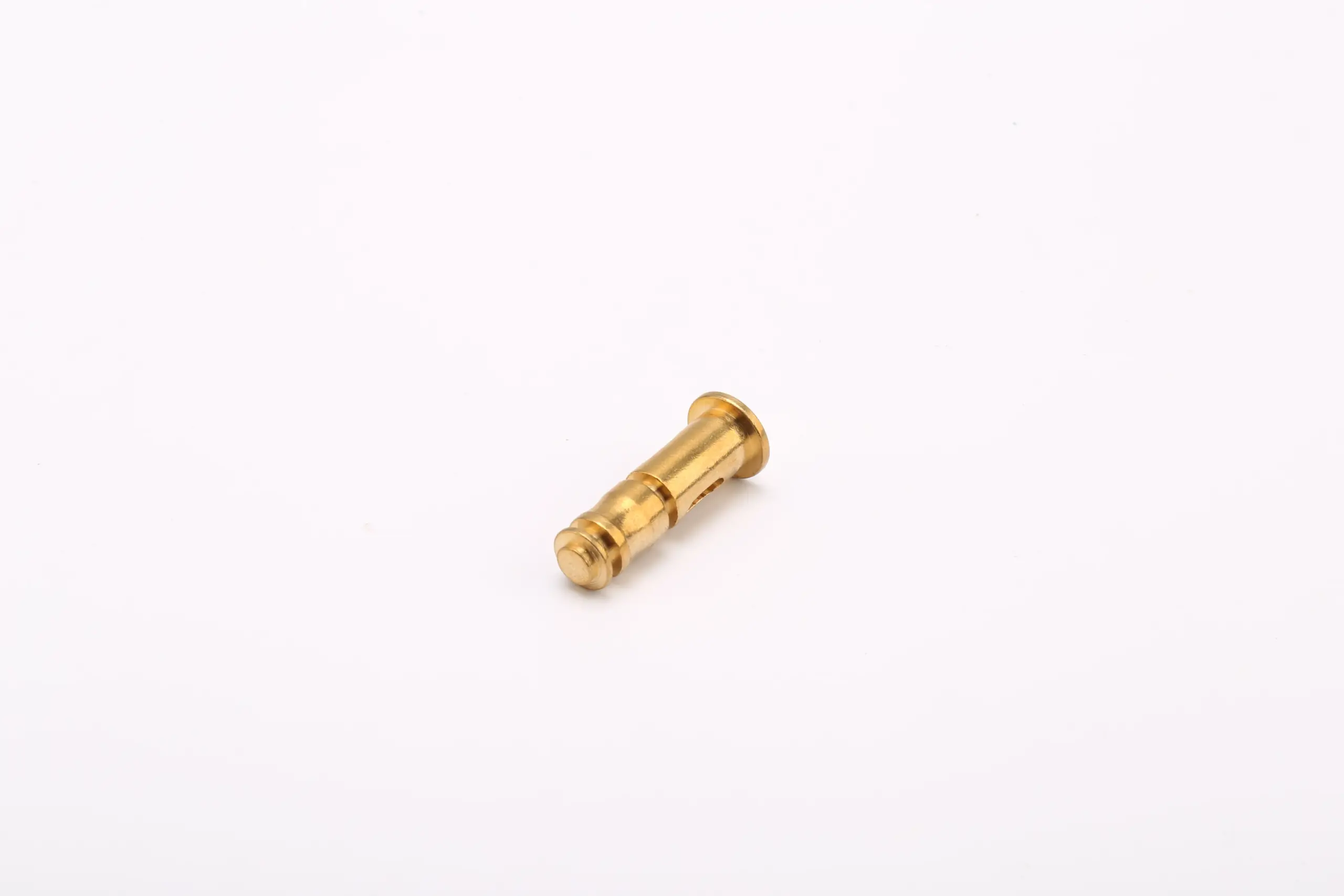
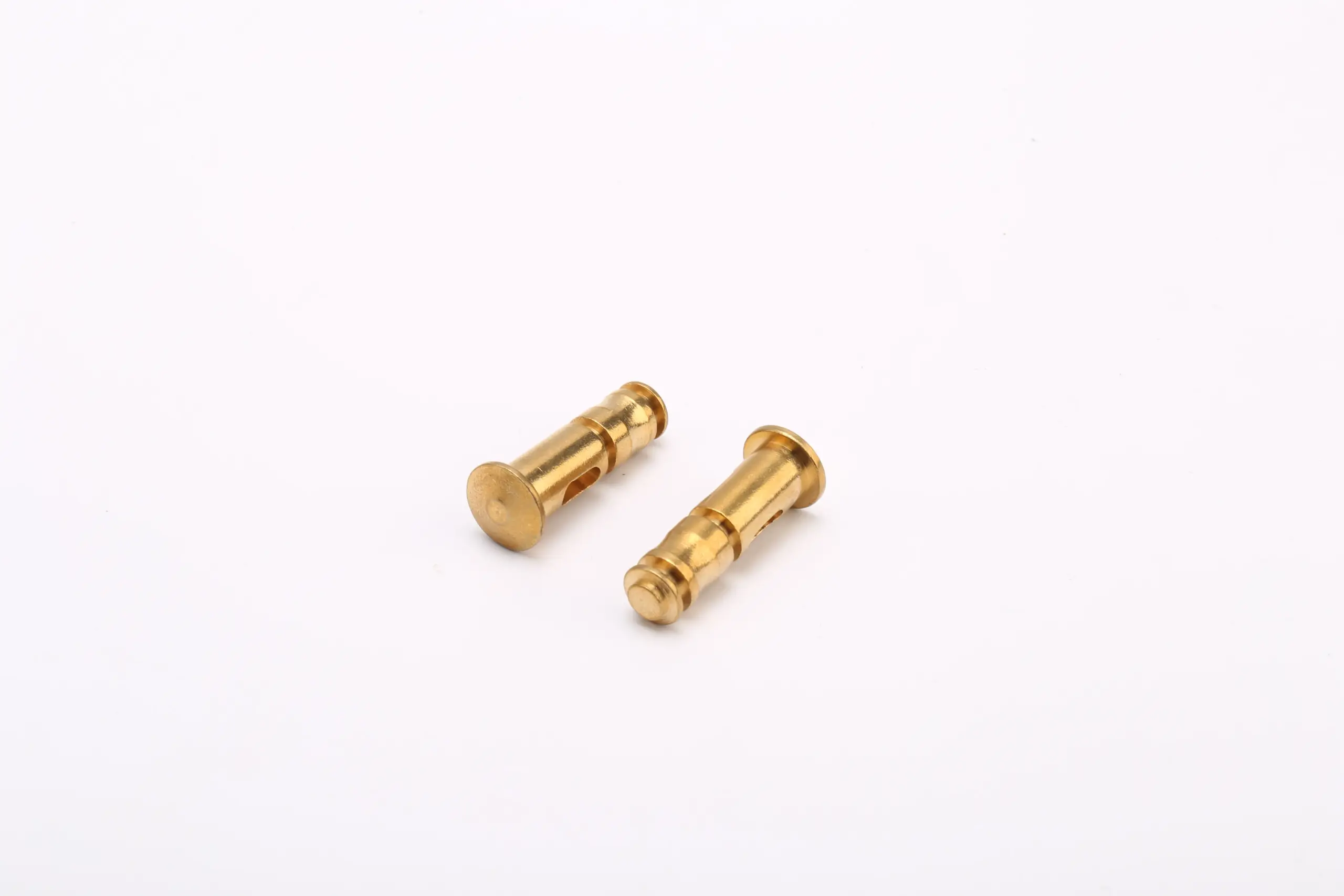
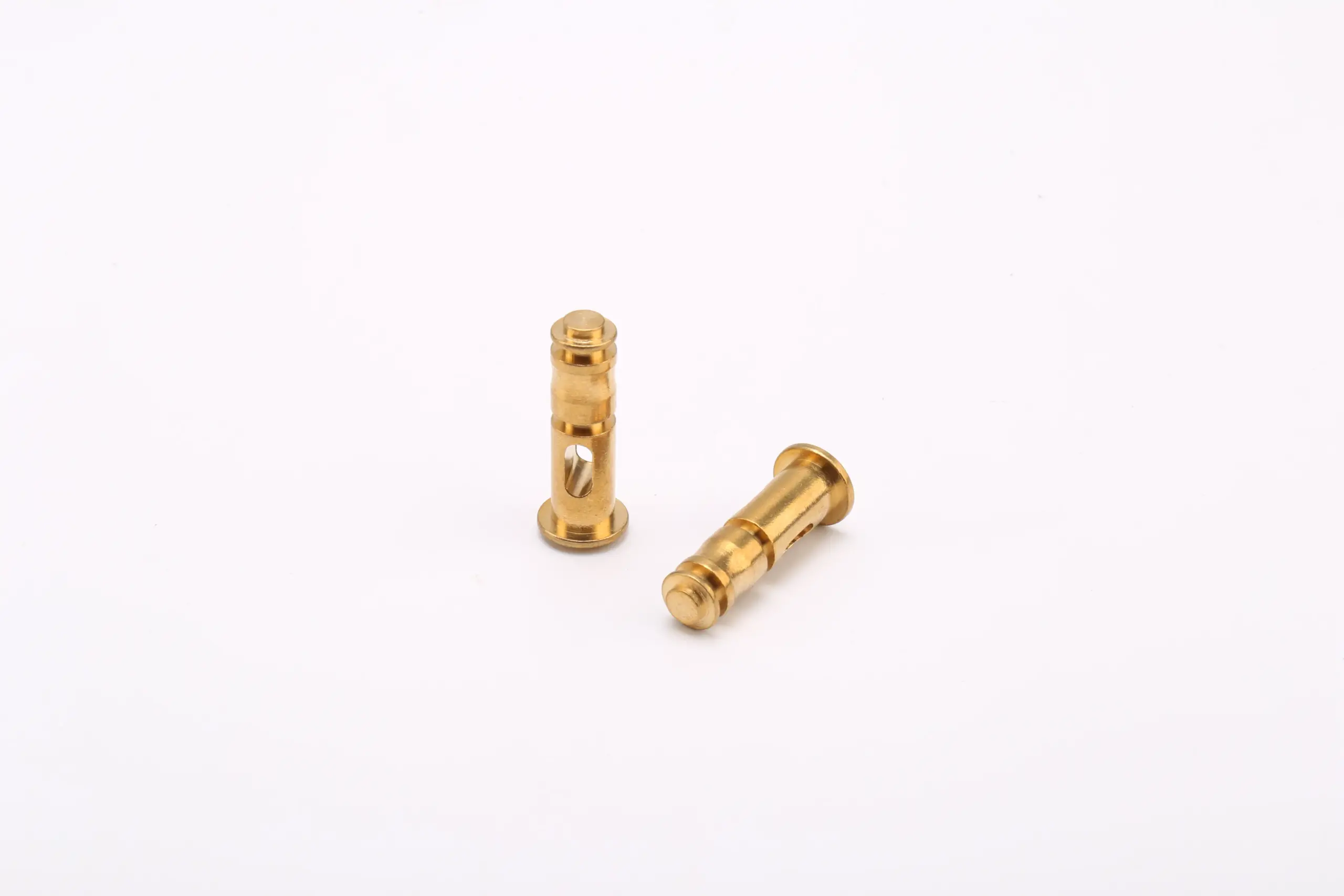
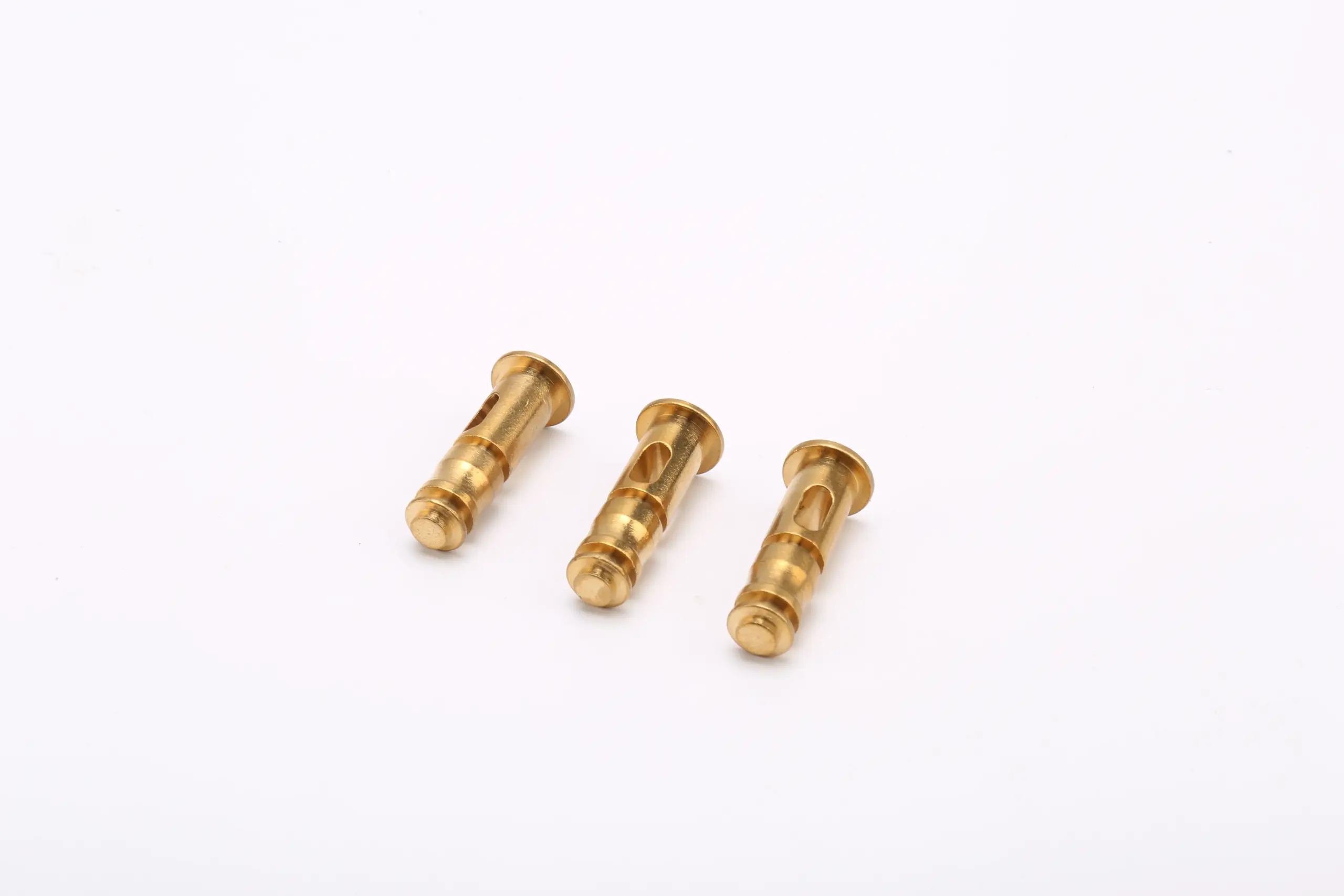
Brass custom-made irregular parts in this group are small headed pins with a compound shank of grooves, steps and short plain bands. The brass body and warm finish are visible, but the drawing must establish which shoulders locate, which grooves clear, and which surfaces carry the head.
Brass body and compound profile
The part is not a simple screw or pin. Its outside profile changes several times along the length, creating locating shoulders and narrow sections. Each change should be dimensioned from a stable datum. A photograph can show the order of features, but it cannot establish the tolerance or the purpose of a groove.
Small hardware and equipment use
These parts can be considered for compact equipment, instrument hardware, custom linkages and small assemblies where a standard pin will not provide the required head or step pattern. Check the mating hole and the available insertion clearance before selecting the body diameter. The head may be a stop, a contact face or a handling feature, depending on the design.
Head, grooves and transition radii
The head appears as a small flat or slightly rounded feature at one end. Grooves and narrow necks should be specified with width, position and radius. Sharp internal corners can affect forming and cleaning, while an undercut may be needed for a mating feature. Do not assign a retaining-ring function unless the drawing shows it.
Specification inputs
- Provide a dimensioned profile with a clear datum.
- Show head form, groove widths and step positions.
- Define the mating bore, insertion depth and seating face.
- State brass condition, finish, quantity and inspection points.
Finish and trial fit
Confirm the brass alloy or temper rather than assuming it from color. Check the head and groove edges for burrs and verify that the small features survive handling. Fit the sample into the mating part and inspect contact at the intended shoulder; a bright brass surface alone does not establish wear resistance or electrical performance.
Brass is easy to machine but the small grooves can retain chips and burrs if they are not cleaned. Review the groove roots and narrow necks under magnification, and confirm that the head does not have a sharp edge where it meets the body. If the part is plated or otherwise finished, check that the coating does not close a functional groove or alter the fit. Handle the samples carefully to avoid flattening thin features.
FAQ
Are the grooves for retaining rings?
Not unless the drawing says so. They may provide clearance or another function and should be defined by the designer.
Is the brass grade fixed by the product title?
No. The alloy, temper and finish require separate confirmation.
Can the head shape be changed?
Yes, when the new profile and its functional surfaces are shown on the drawing or approved sample.
Browse the custom-made irregular parts category, or compare pan-head irregular parts and hex socket screws.