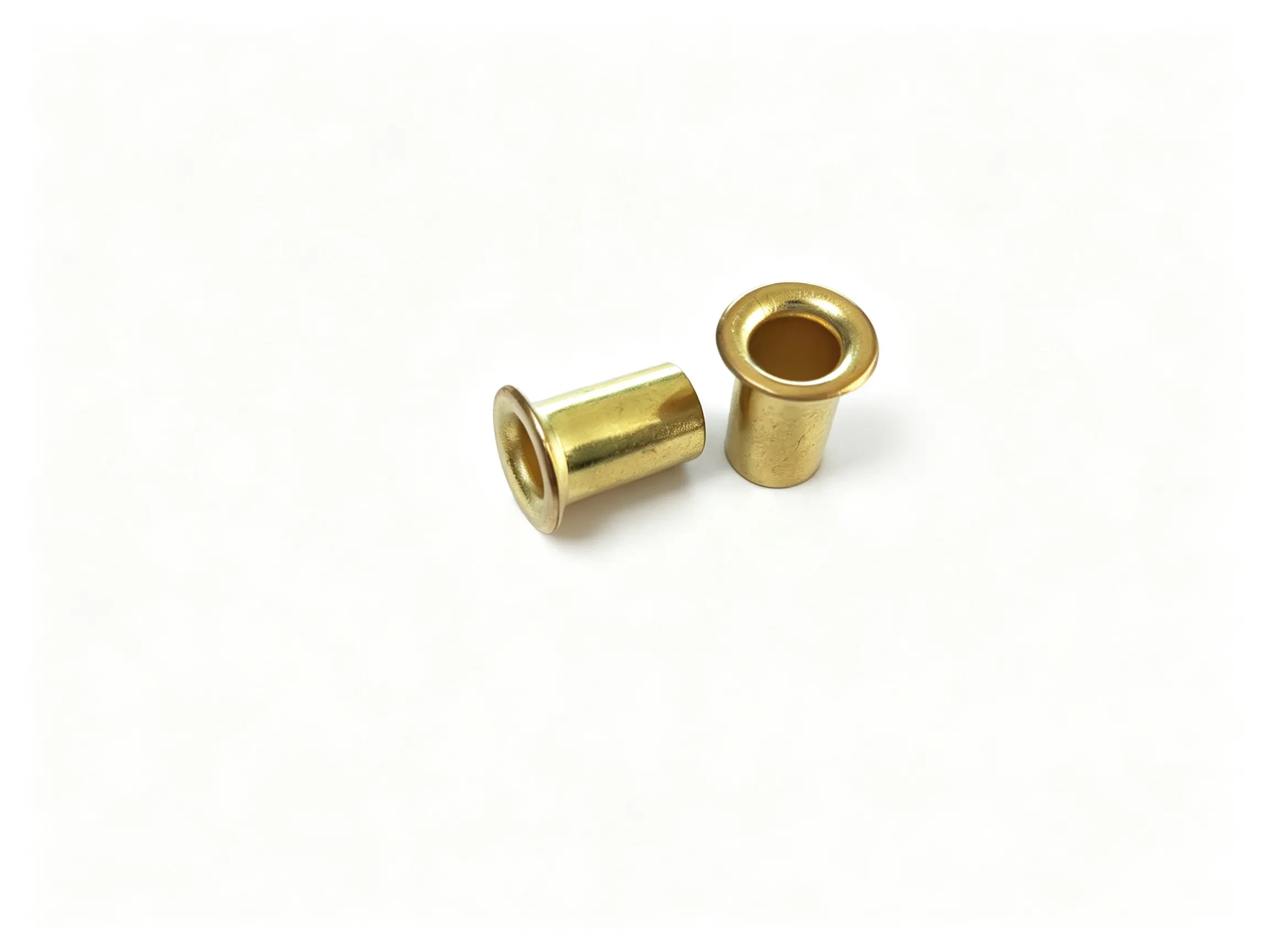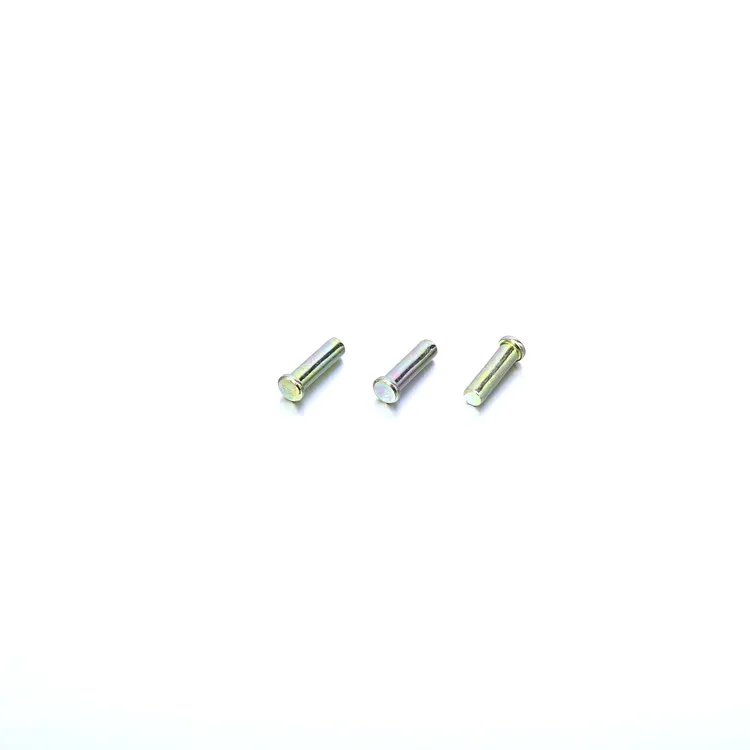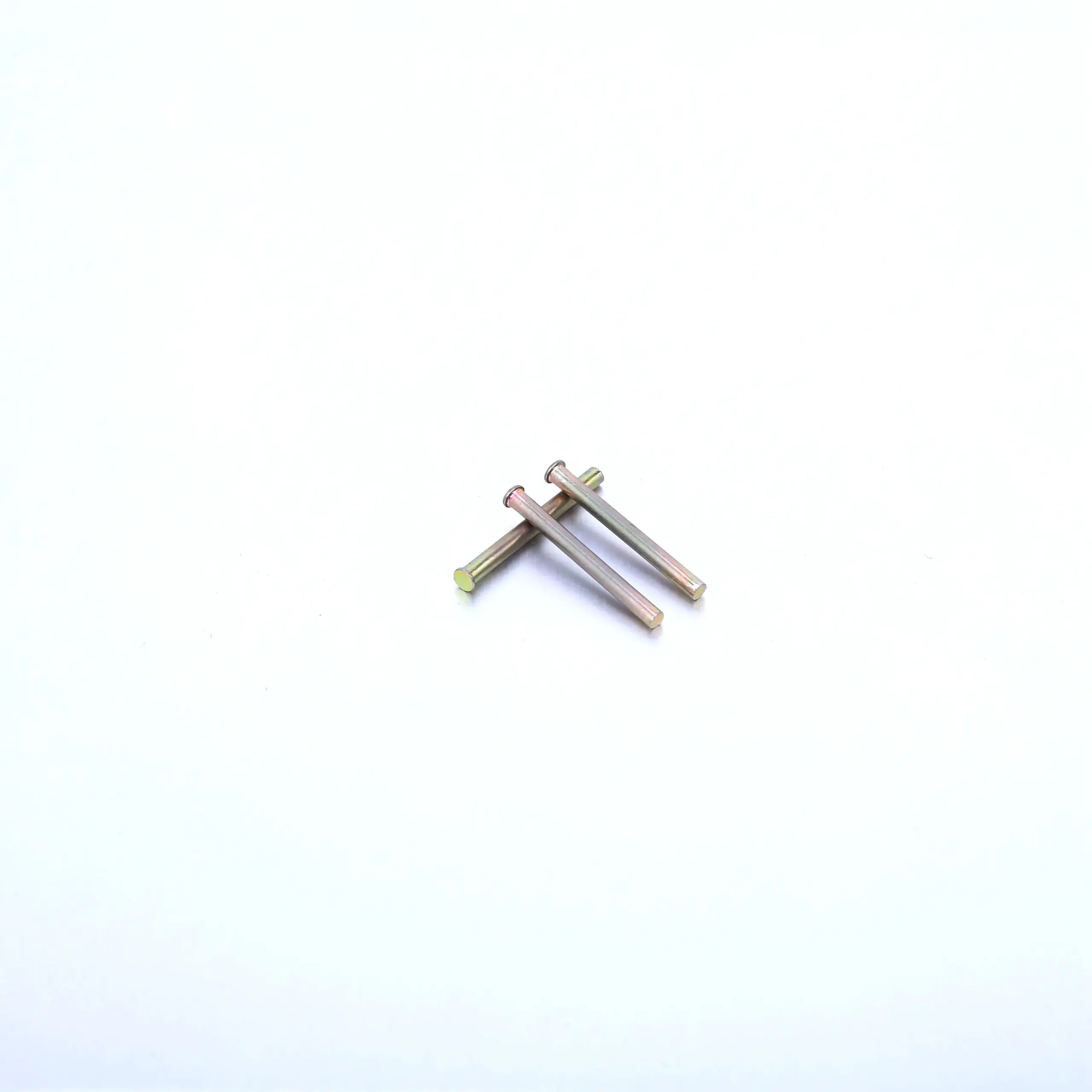


Chicago rivets, also known as binding posts or two-piece rivets, use a tubular post and a separate mating washer or cap. The two parts are assembled from opposite sides of the workpiece, creating a neat binding or pivot joint. The separate mating part is the defining feature: it allows the installed length, bearing surface and finished appearance to be controlled independently of a single flared rivet body.
Construction and working principle
A typical Chicago rivet consists of a headed post with a tubular shank and a matching washer, collar or cap. The post passes through the workpieces and the mating part is pressed, rolled or otherwise secured to retain the assembly. The resulting joint may clamp the parts firmly, or it may leave a controlled amount of movement for a pivot or binder.
The post diameter, shank length, mating-hole size and washer engagement must be considered together. A joint intended to bind samples or tags has different requirements from one intended to pivot under load, even when the two parts look similar.
Typical applications
Chicago rivets are used for sample books and swatches, tags and binders, small hinges, pivot joints, display hardware and other assemblies that need a clean two-sided finish. They are particularly useful when the assembled parts must be held together while still allowing a controlled pivoting or turning action.
Customization options
Review post diameter, post length, head profile, washer or cap style, material, finish and the required installed clearance. If the joint is decorative, the visible head and washer should be specified together. If the joint moves, provide the expected rotation, load and service life so the bearing area can be evaluated.
Material and finish selection
Select materials for the required strength, appearance and corrosion exposure. Brass and copper alloys can suit decorative or electrical hardware; stainless steel can be considered for corrosion-resistant assemblies; coated steel may be appropriate where the environment and finish system are compatible. The post and mating washer should be reviewed as a pair, especially when dissimilar materials or plated finishes are proposed.
How to specify a Chicago rivet
- Provide the post diameter, shank length and overall assembled thickness.
- Define the washer or cap style and the required installed clearance.
- State whether the joint is fixed, binding or intended to pivot.
- Confirm material and finish for both parts, plus quantity and packaging.
FAQ
What is the difference between a Chicago rivet and a tubular rivet?
A Chicago rivet uses a separate mating washer or cap, while a tubular rivet is normally a single-piece hollow rivet. The separate component in a Chicago rivet gives the designer more control over the finished binding or pivot joint.
Can a Chicago rivet be opened again?
Some binding-post designs are intended for repeated opening and closing, while others are permanent. The required serviceability must be stated in the RFQ; do not assume that every Chicago rivet is removable.
What should be included in the drawing?
Show the post, head, washer or cap, installed length, mating-hole size and the intended clearance. A sample of the assembled book, tag or pivot will help confirm the correct post length and retention method.
Browse the Chicago rivets and binding posts category, or review idler wheel male and female pins for another two-part assembly approach.