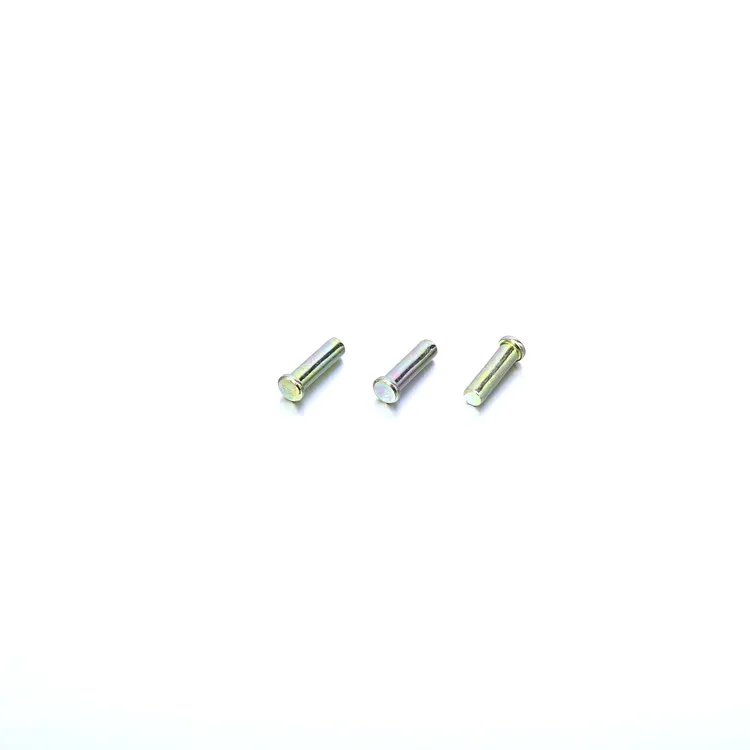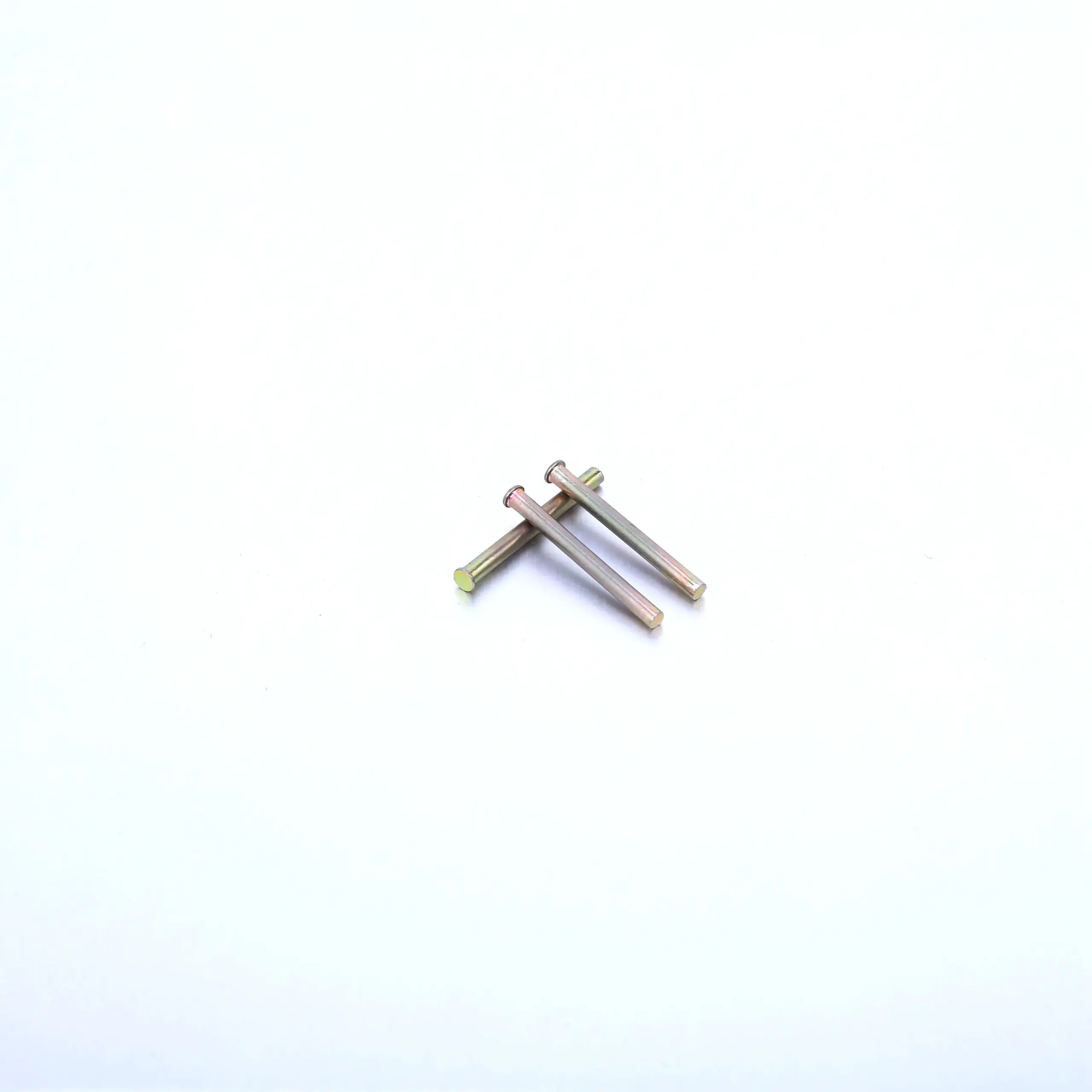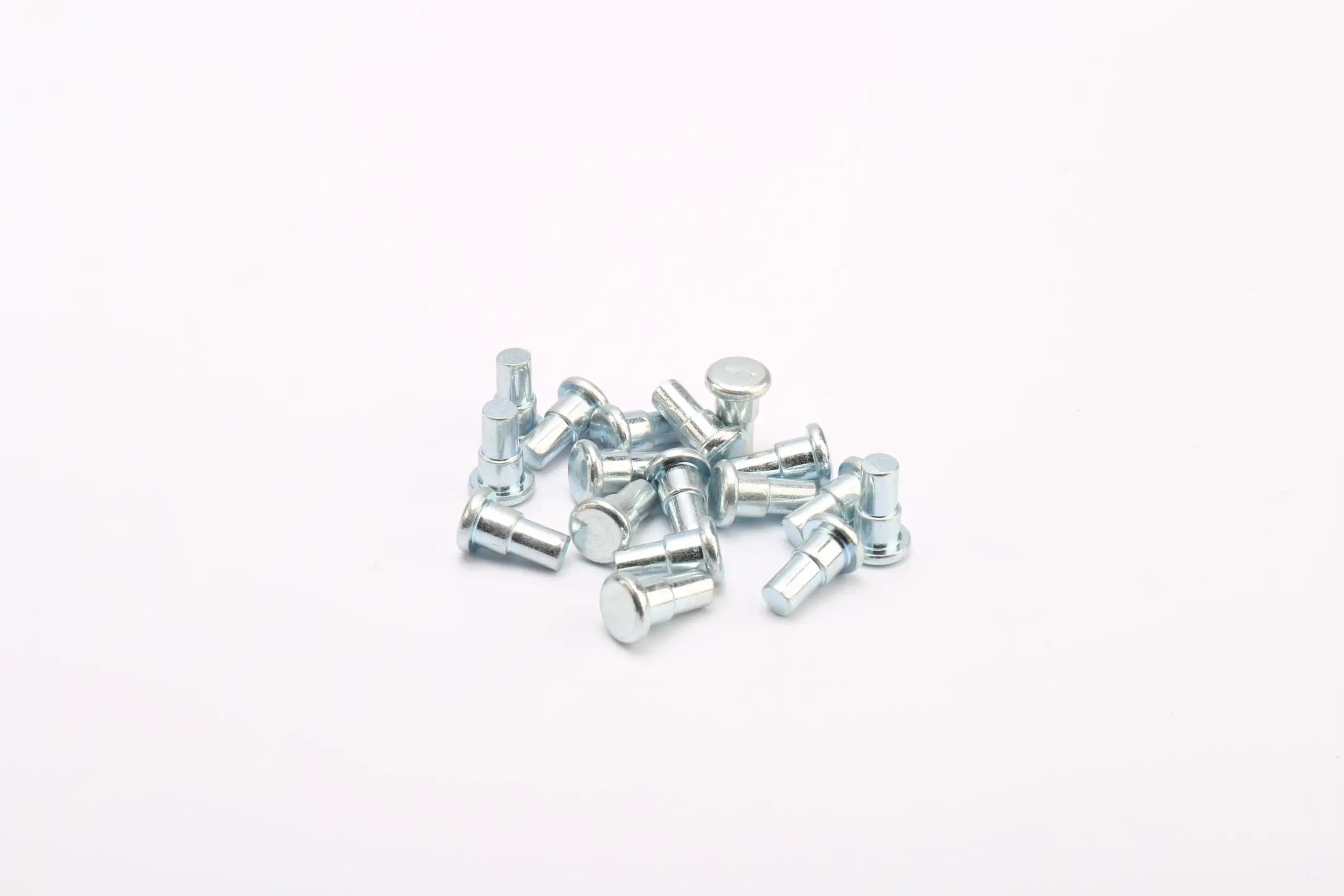
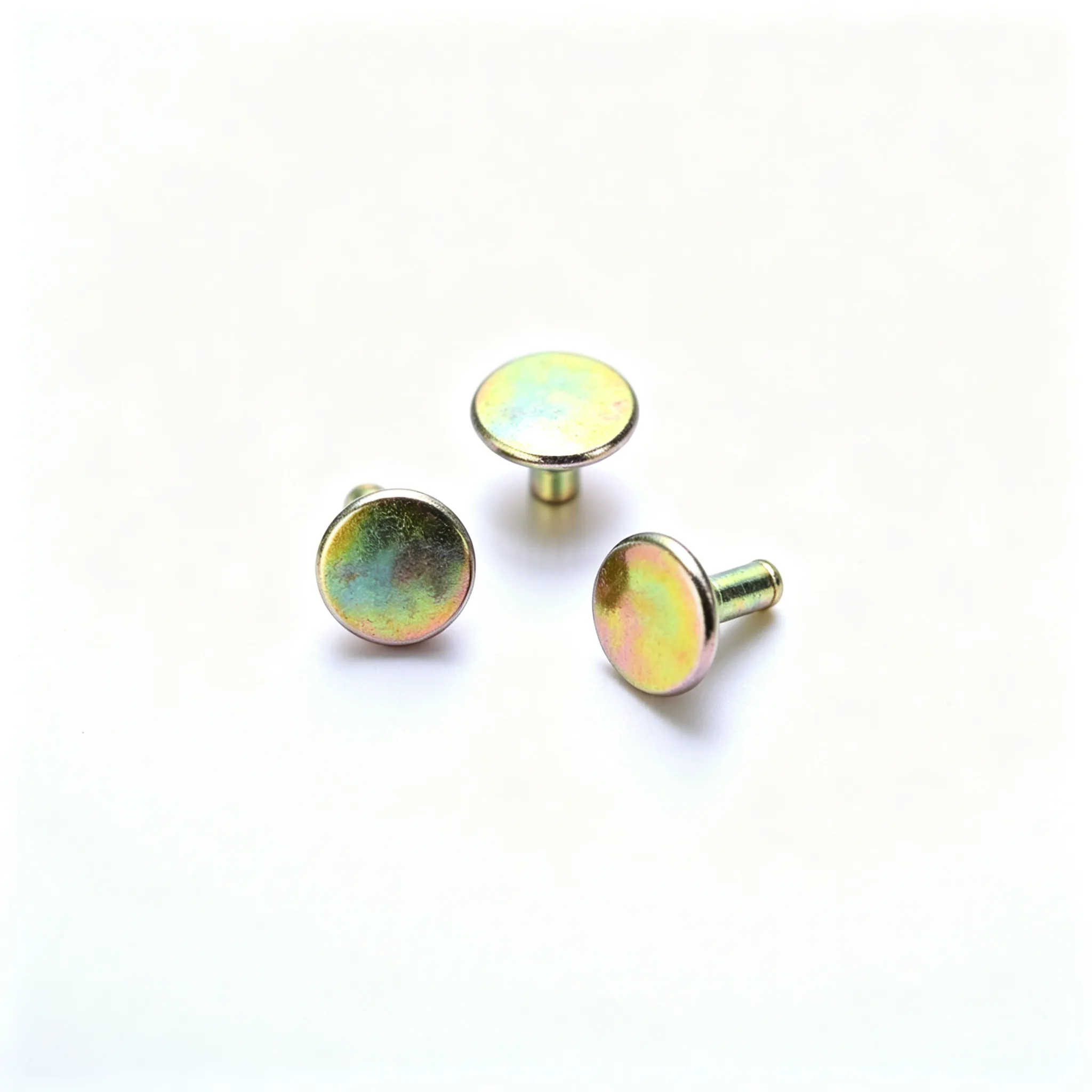
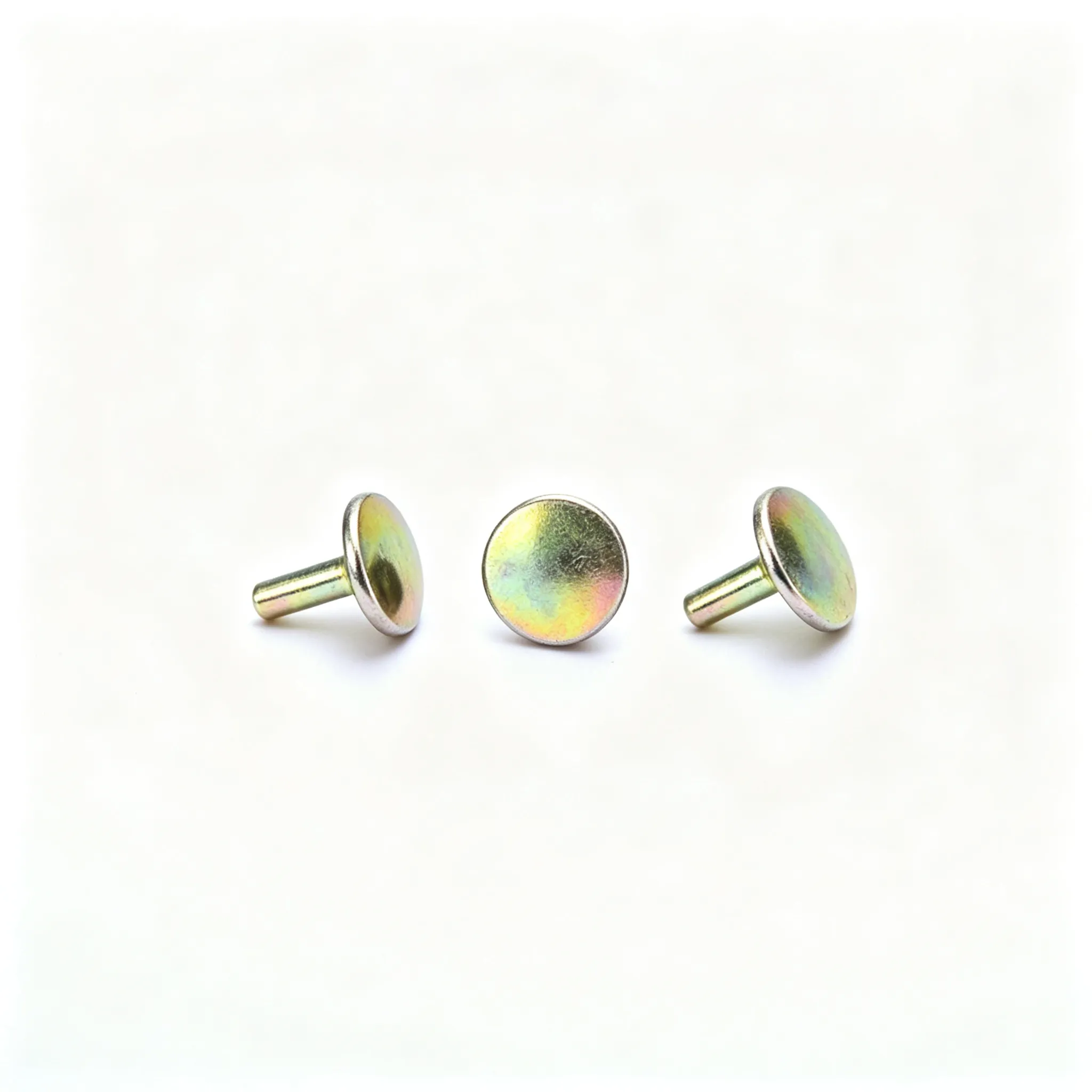
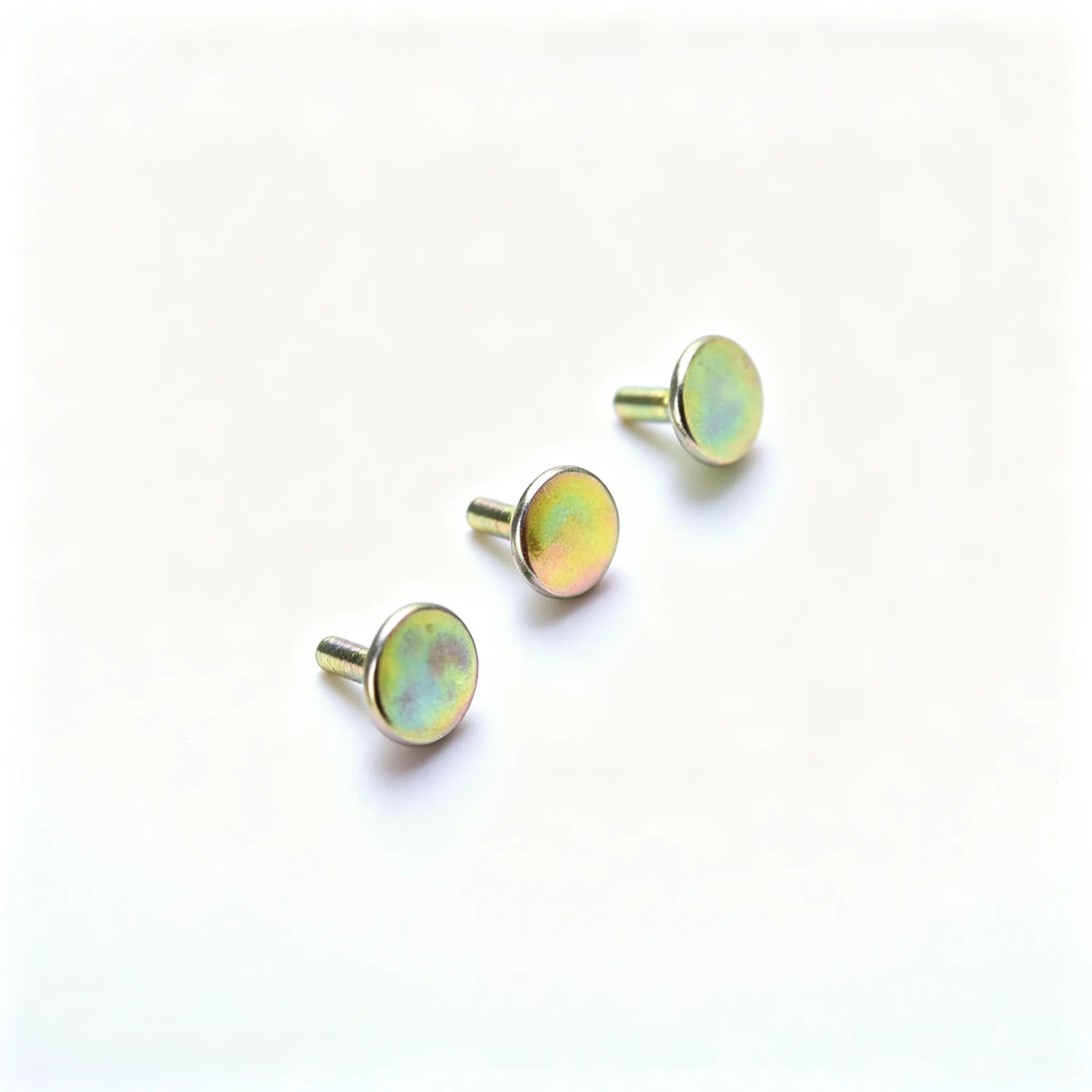
Flat-head stepped rivets combine a low-profile bearing head with a shank that changes diameter below the head. The gallery shows a flat top, a short locating step and a smaller body, with a bright zinc-like finish on the examples. The step is the feature to specify carefully: it can locate a plate or establish spacing, but its function cannot be inferred from the photograph alone.
What the step does in an assembly
A step can also create a shoulder that stops the rivet at a fixed depth. If that is the intended function, the drawing should show which face seats and which diameter controls the position. Without those references, two parts with similar outlines may behave differently in the same hole.
Flat-head stepped rivets in use
These rivets can be considered for visible panels, electrical hardware, small hinges, spacers, nameplates and assemblies that need a low head with a locating shoulder. They may be useful when a separate washer or spacer would complicate the build. The application should identify the surfaces that must clamp and the surfaces that should remain free.
The gallery includes several angles and a group view, but it does not establish the step diameter, step length or the hole fit. Confirm those dimensions against the mating part. If the rivet is intended to pivot, check the clearance around the stepped section rather than assuming that the shoulder will provide free movement.
Finish and appearance
The examples show a reflective, slightly iridescent finish that may be described as zinc plating, but the image does not establish coating type, thickness or color consistency. The visible color can change with lighting and handling. If the head will remain visible, define the acceptable color range and specify whether the step and underside have the same finish requirement.
Do not use the photograph to confirm corrosion performance. The base material, coating process and service exposure need to be stated separately. For a close-fitting step, check the finished dimensions because plating can affect the fit of a small locating diameter.
How to specify a flat-head stepped rivet
- Show the head diameter, head height and the required top-face profile.
- Dimension the step diameter, step length, body diameter and overall length.
- State the plate thickness, hole fit, seating face and any required clearance.
- Provide the material, finish, installation method, inspection criteria and quantity.
Checks before production
During trial assembly, verify that the step enters the intended hole without forcing and that the head seats on the correct surface. Check the joint after setting for cracks, distortion or a loose fit. Keep a dimensioned sample so production can compare both the visible head and the functional step.
FAQ
Is the step a locating shoulder or a spacer?
It can serve either function, but the drawing must define which. The photograph alone does not show the intended seating face or the required fit.
Can the finish be matched to another visible part?
A finish can be specified as a requirement, but the image is not a color standard. Provide an approved sample or a measured appearance requirement if color consistency matters.
What should be measured on the step?
Measure the step diameter, step length, transition radius and concentricity relative to the body and head. Also confirm the finished dimensions after plating.
Browse the Rivets category, or compare flat-head rivets and blue-white zinc-plated step rivets.