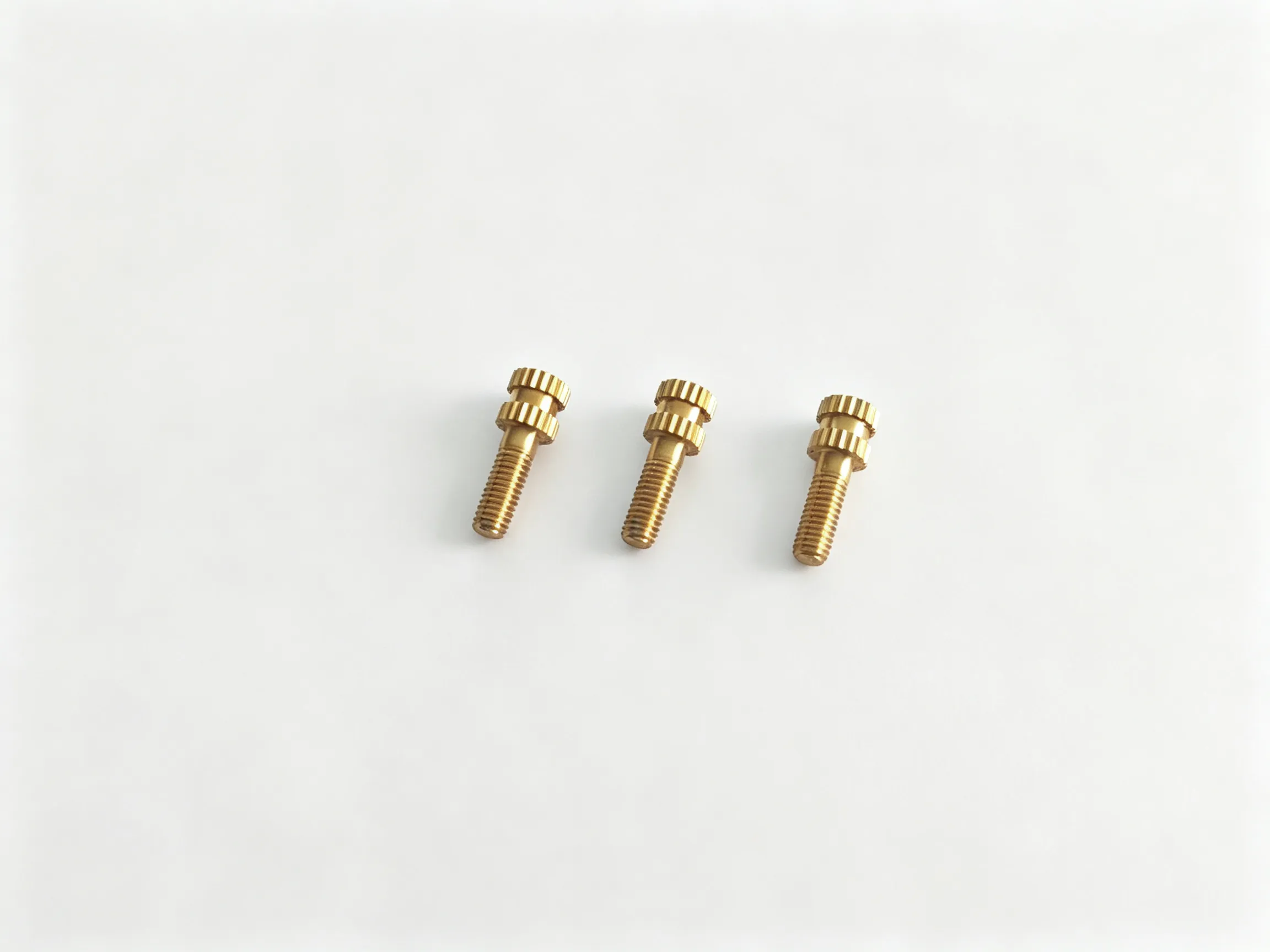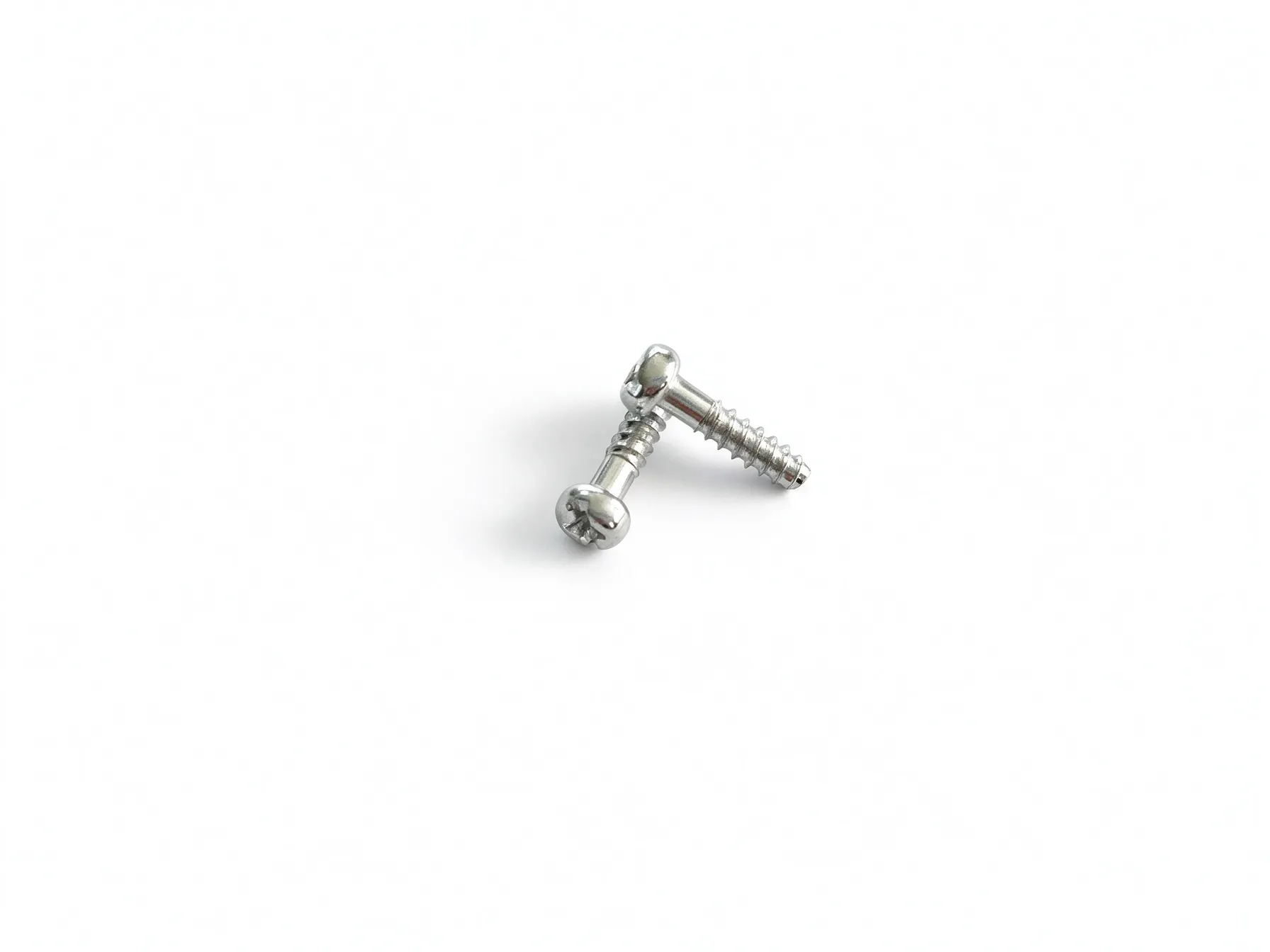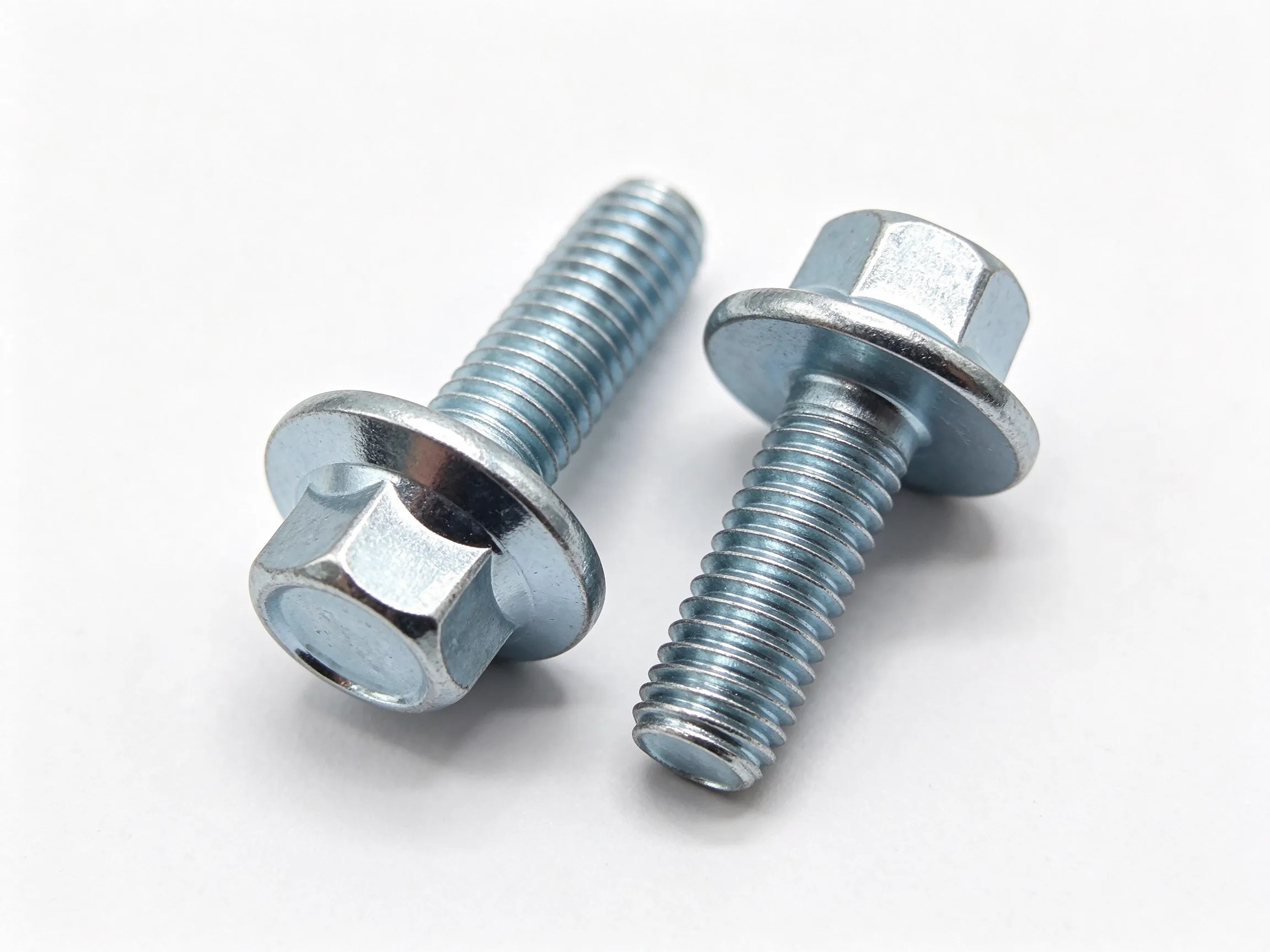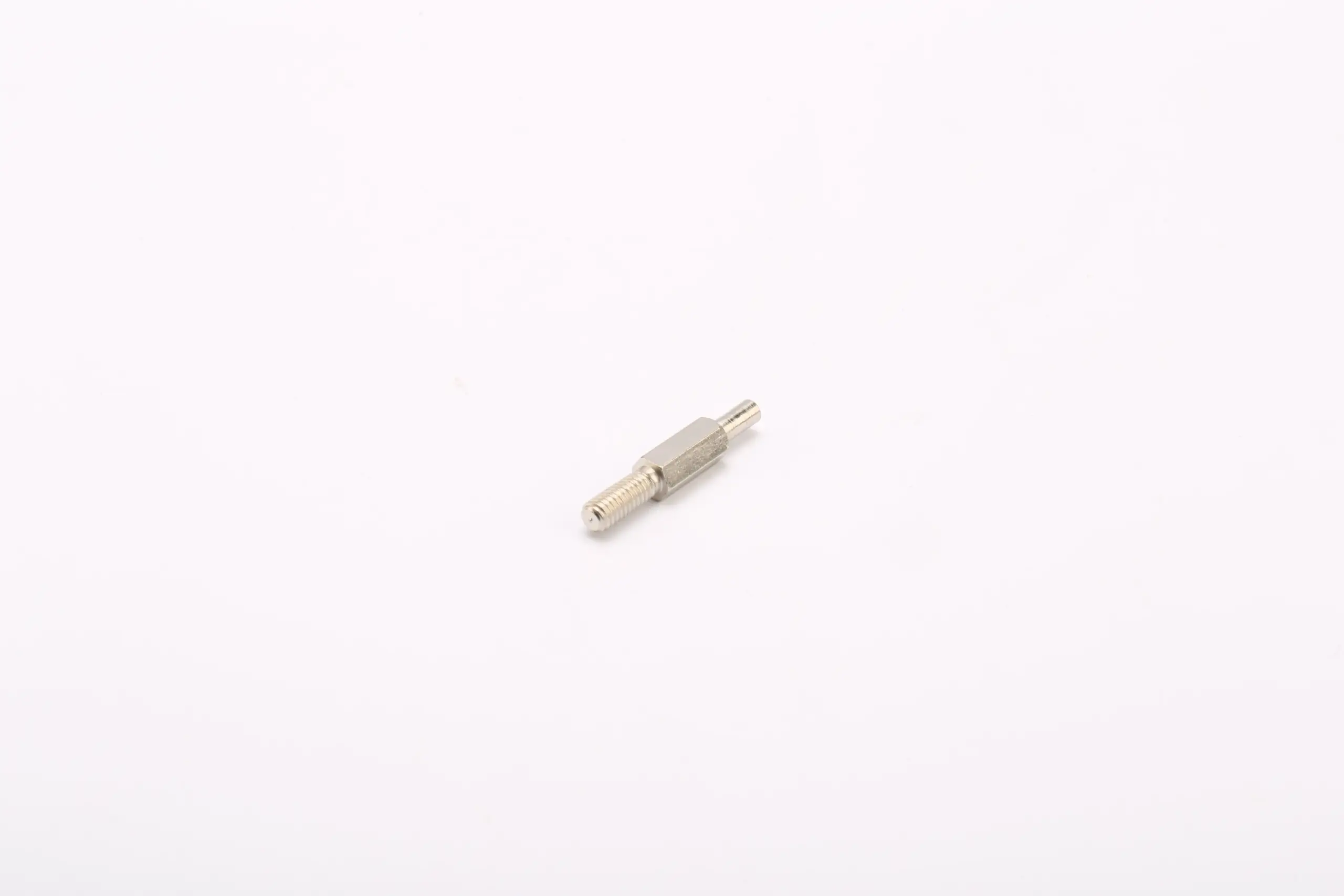
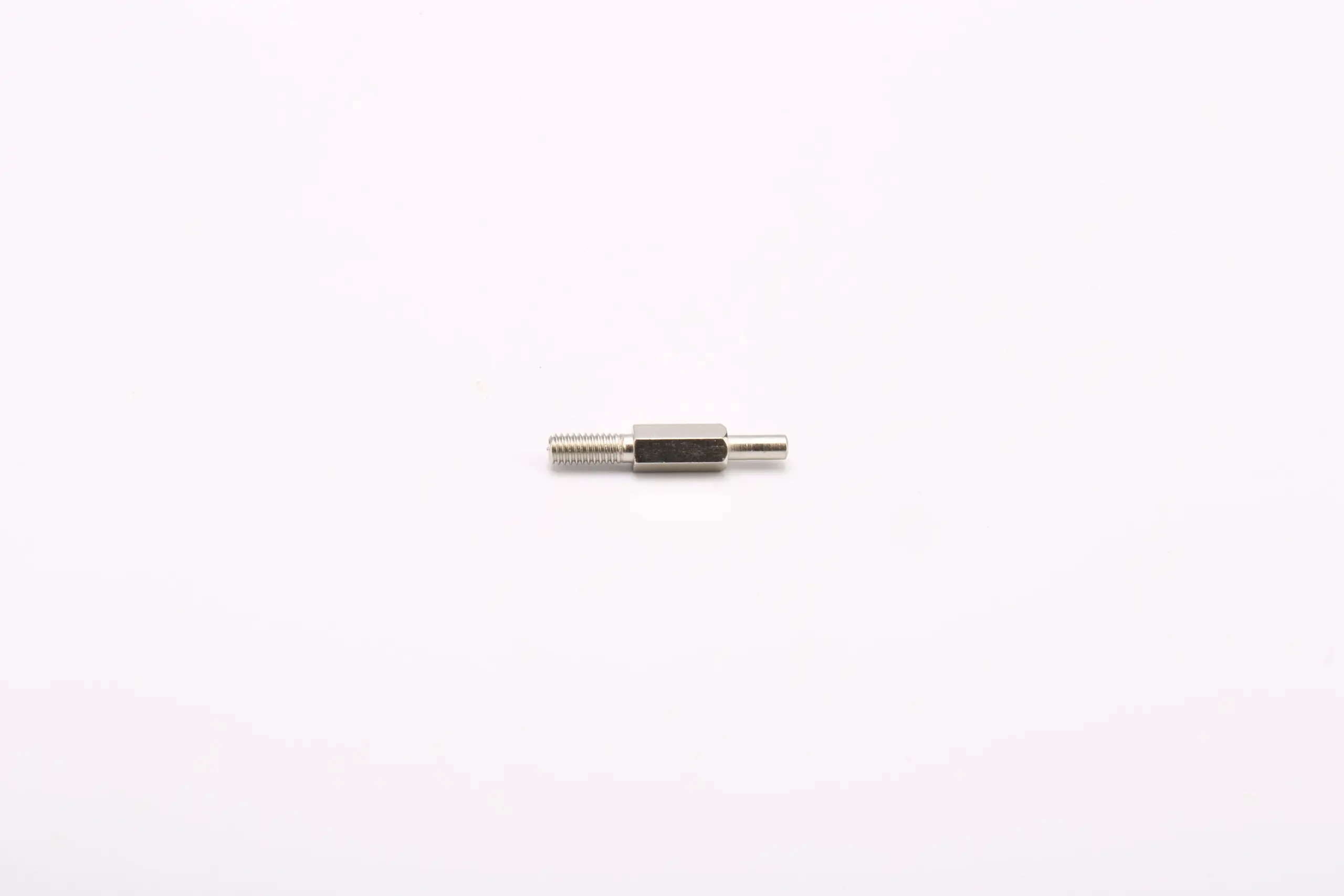
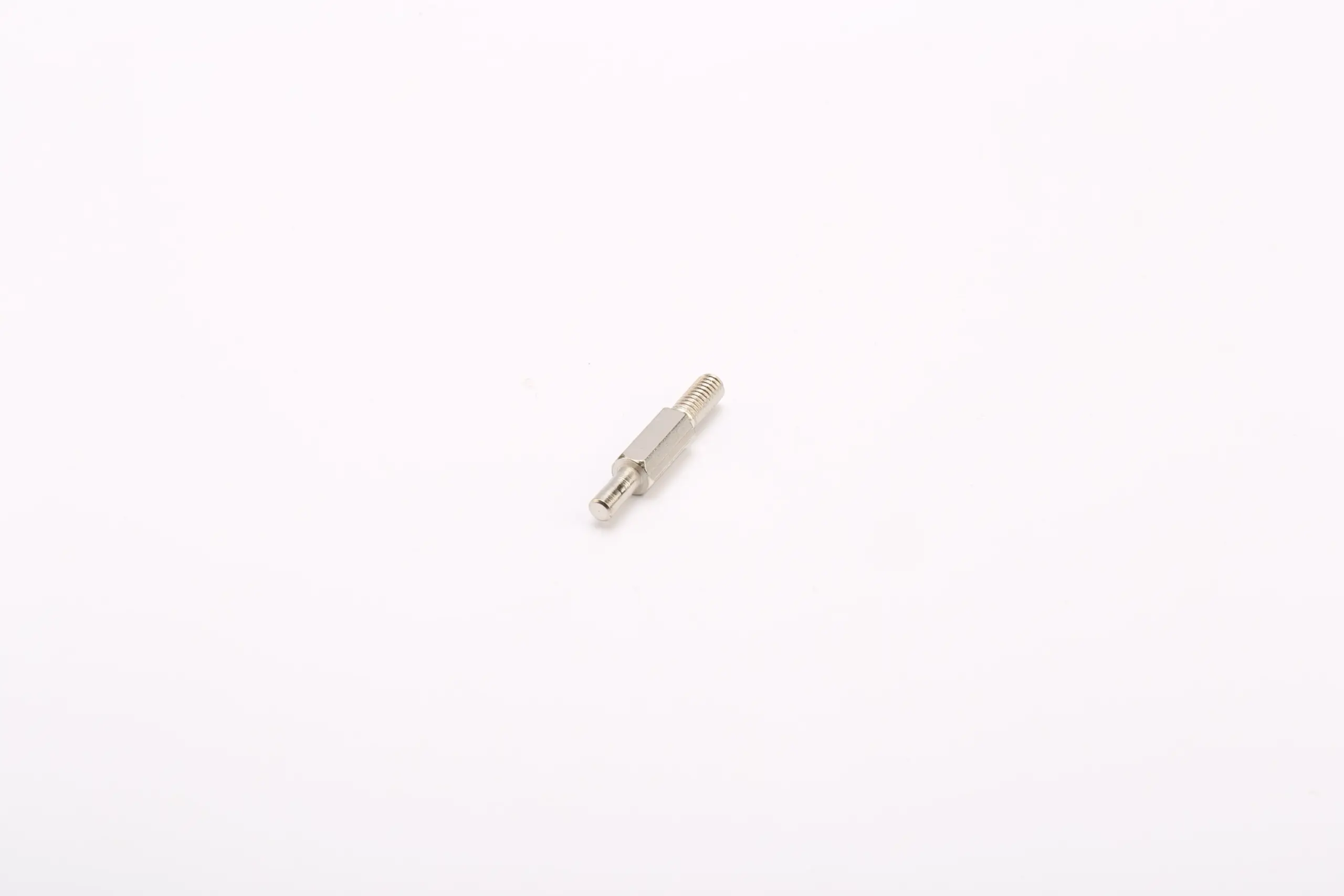
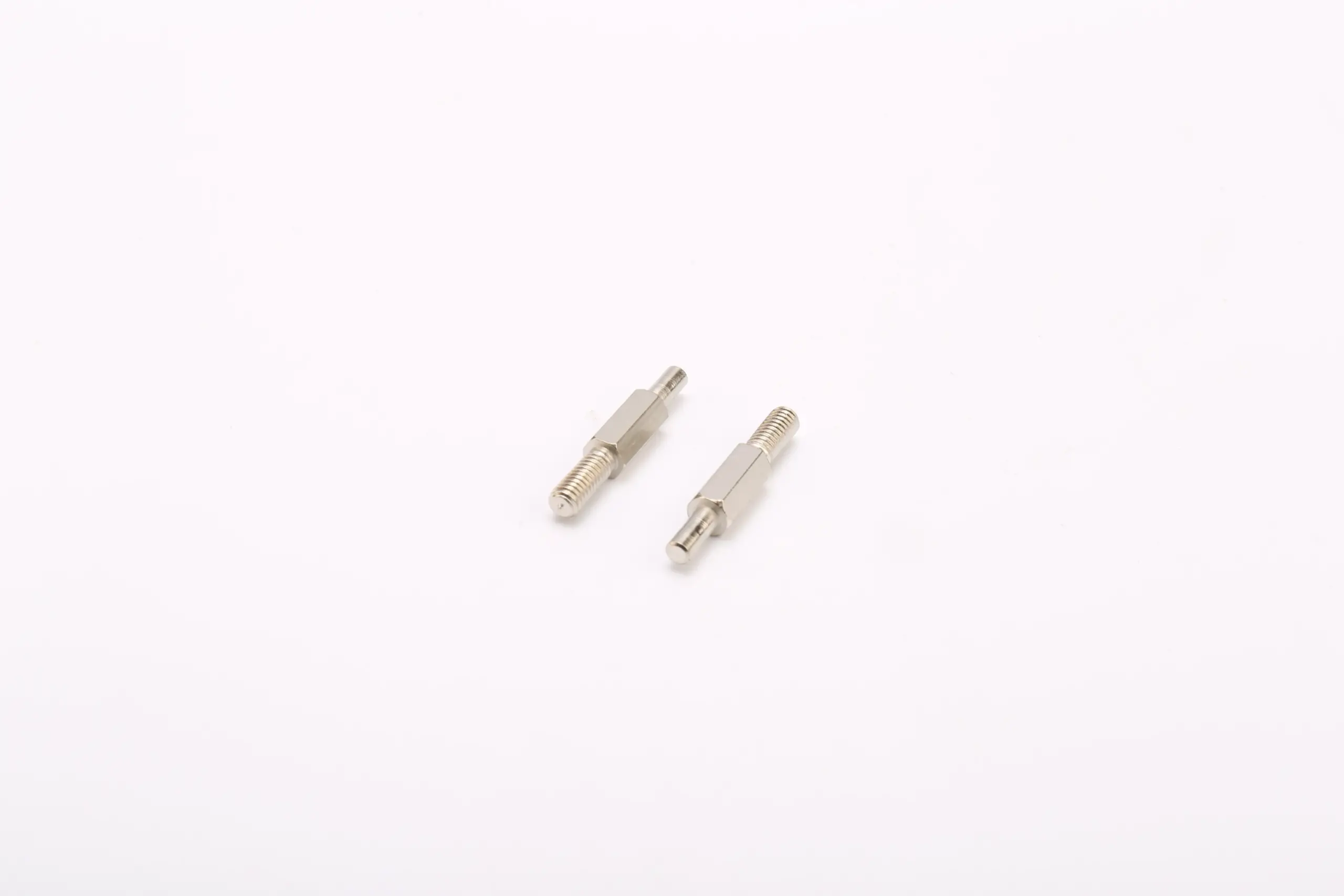
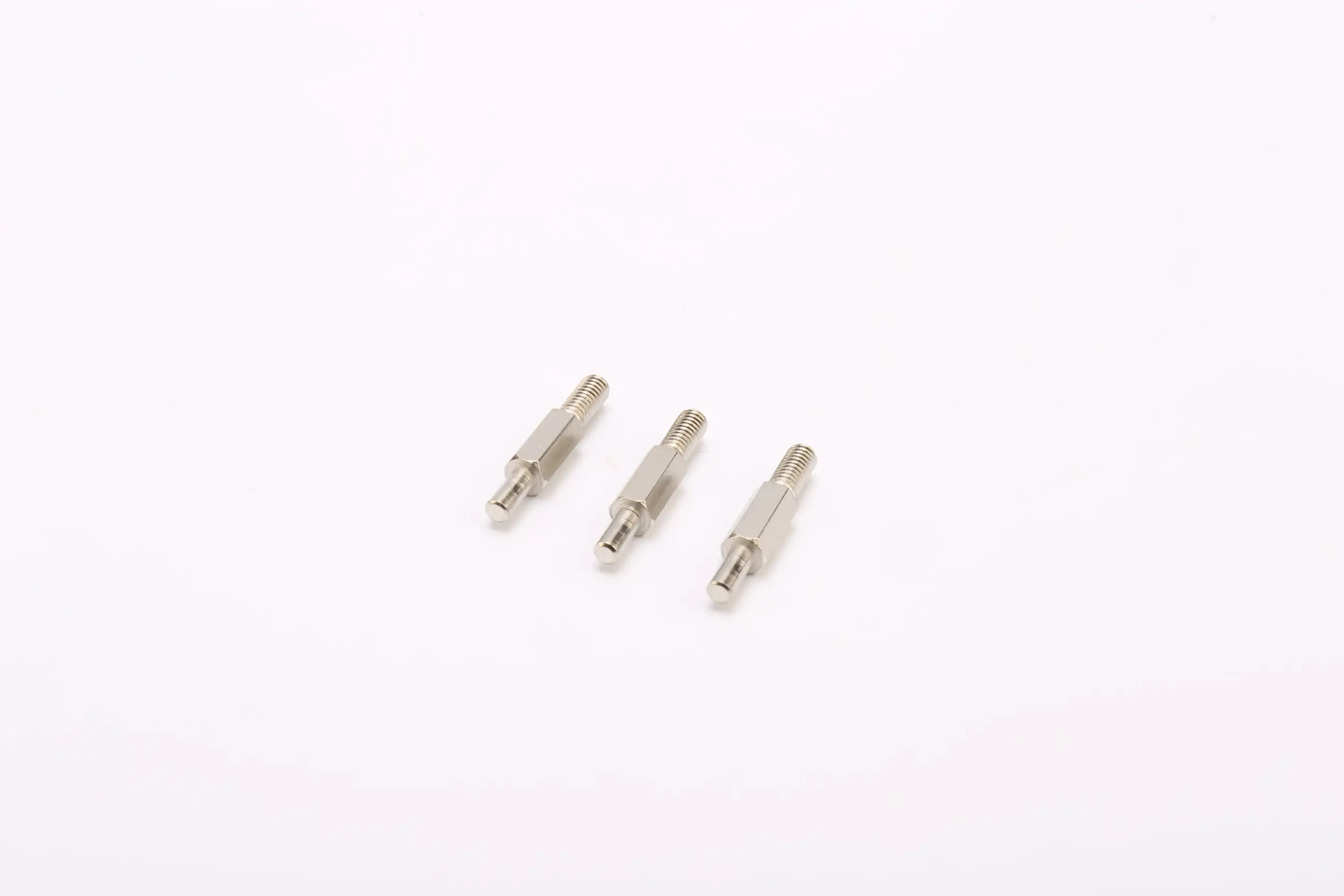
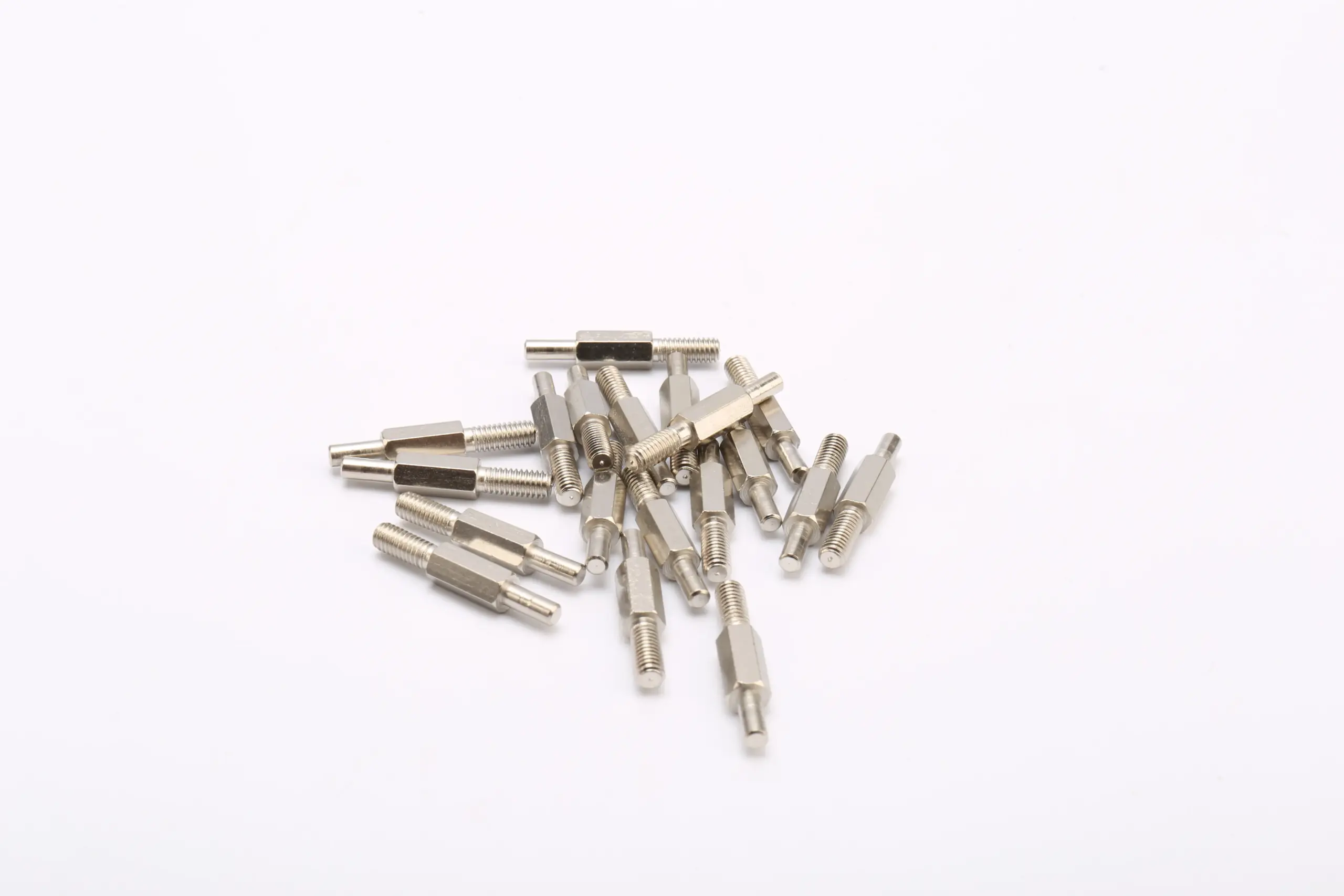
Hex-head stepped locating screws combine a hexagonal wrenching section, a threaded section and a smooth locating end. The photographs show the wrenching section between the thread and the locating end, allowing the part to be turned without using the locating surface as the tool contact. The drawing should establish which shoulder seats and how the smooth end fits the mating component.
Construction and working principle
The thread secures the part in a tapped component or nut. The smooth end enters a mating hole or provides a locating surface. The intervening step establishes an axial reference when the design calls for shoulder seating. Specify the relative positions of these features: two screws with the same overall length and thread can locate differently if the shoulder positions differ.
A locating function also requires a defined relationship between the thread axis and the smooth section. State the relevant datum and alignment requirements on the drawing. A stepped appearance alone does not establish precision-dowel performance.
Typical applications
This construction can be considered for removable locators, fixture components, guide assemblies, adjustable stops and equipment hardware. The threaded portion provides attachment, while the smooth end can engage a separate component. Explain whether the end is intended to enter a hole, contact a surface or guide movement. Each arrangement needs different clearance and seating checks.
Hexagonal wrenching section and locating end
The wrenching section needs sufficient access for the selected spanner. Its width, axial length and surrounding clearance should be considered alongside the locating geometry. Tool access can be restricted once nearby components are installed. If angular orientation matters, identify how it will be set and retained; tightening a threaded part does not automatically leave its hexagon in a chosen position.
How to specify a stepped locating screw
- Provide a drawing identifying the thread, hexagon and locating end.
- Dimension every shoulder, seating face, diameter and functional length.
- State the mating-hole fit, thread engagement and required alignment.
- Include wrench access, material, finish, quantity and inspection requirements.
Material, finish and installation checks
Choose the material and finish for the contact load, wear and service environment. Specify the final condition of the locating surface after coating or other treatment. In a sample assembly, check that the thread does not bottom before the specified seating face makes contact. Confirm that the locating end enters without binding and that the wrench can be removed after tightening.
Where repeated removal is required, inspect both the screw and the mating hole after trial use. The installation method should preserve the locating surface and avoid marking it with gripping tools.
FAQ
Is a locating screw interchangeable with a dowel pin?
Not automatically. Their retention methods and fit requirements differ. Specify the locating accuracy and service access before choosing between them.
Does the hexagonal section have to sit at the end?
No. These photographs show a central wrenching section. Its position and the functional seating face should be identified on the part drawing.
What information is needed for a quotation?
Send the drawing or sample, locating and thread dimensions, mating-part details, tool-access requirement, material, finish and quantity.
See the Screws category, or compare short step screws and step positioning pins.