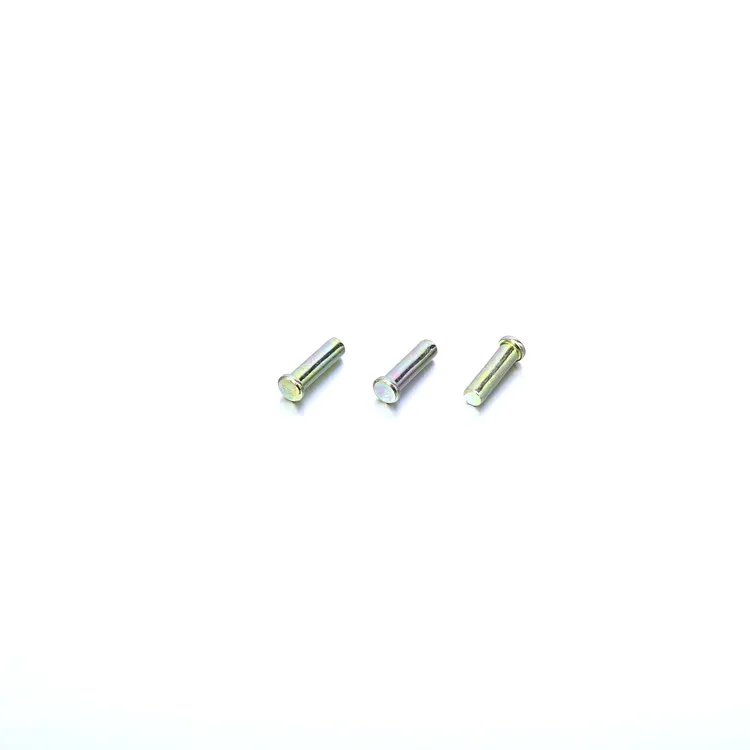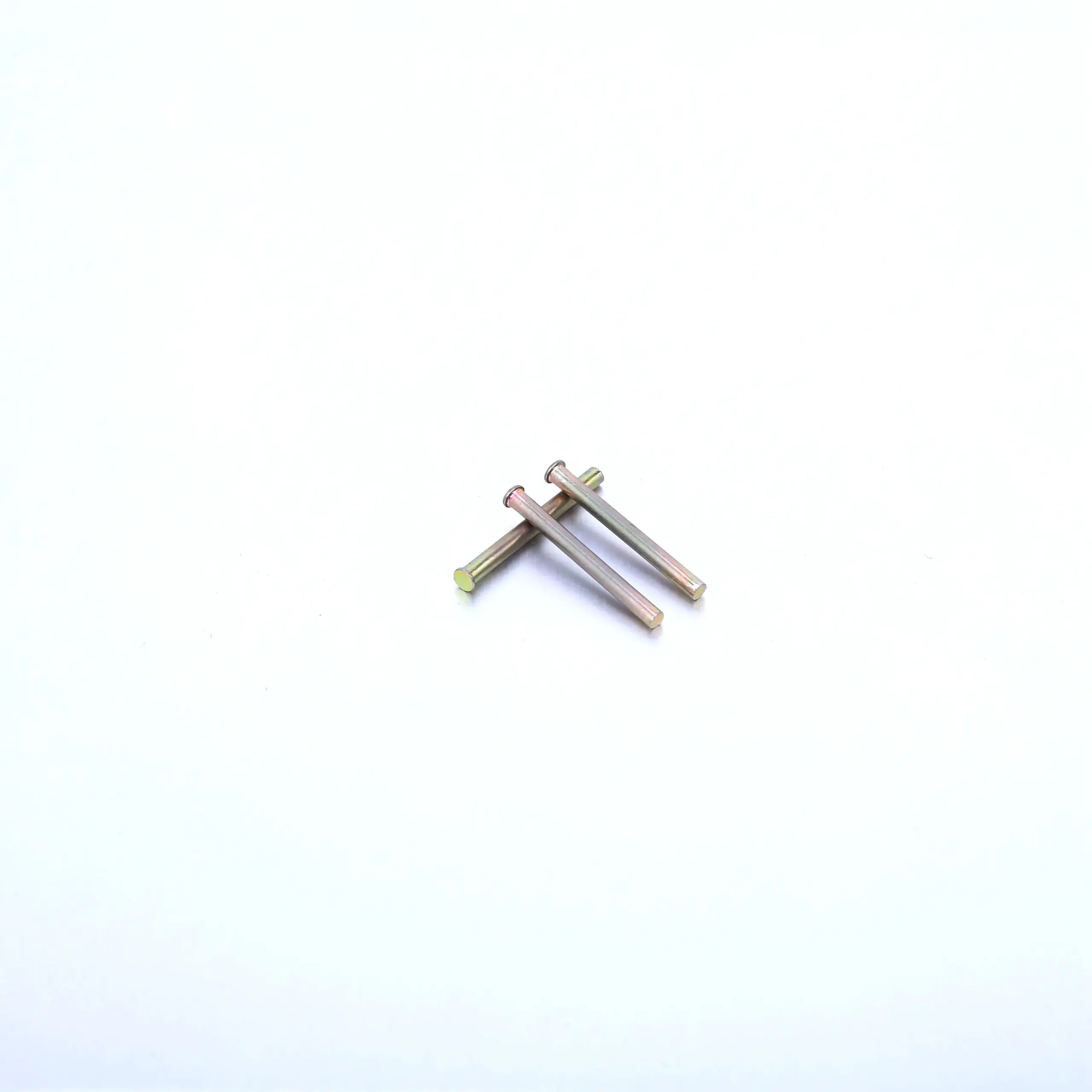
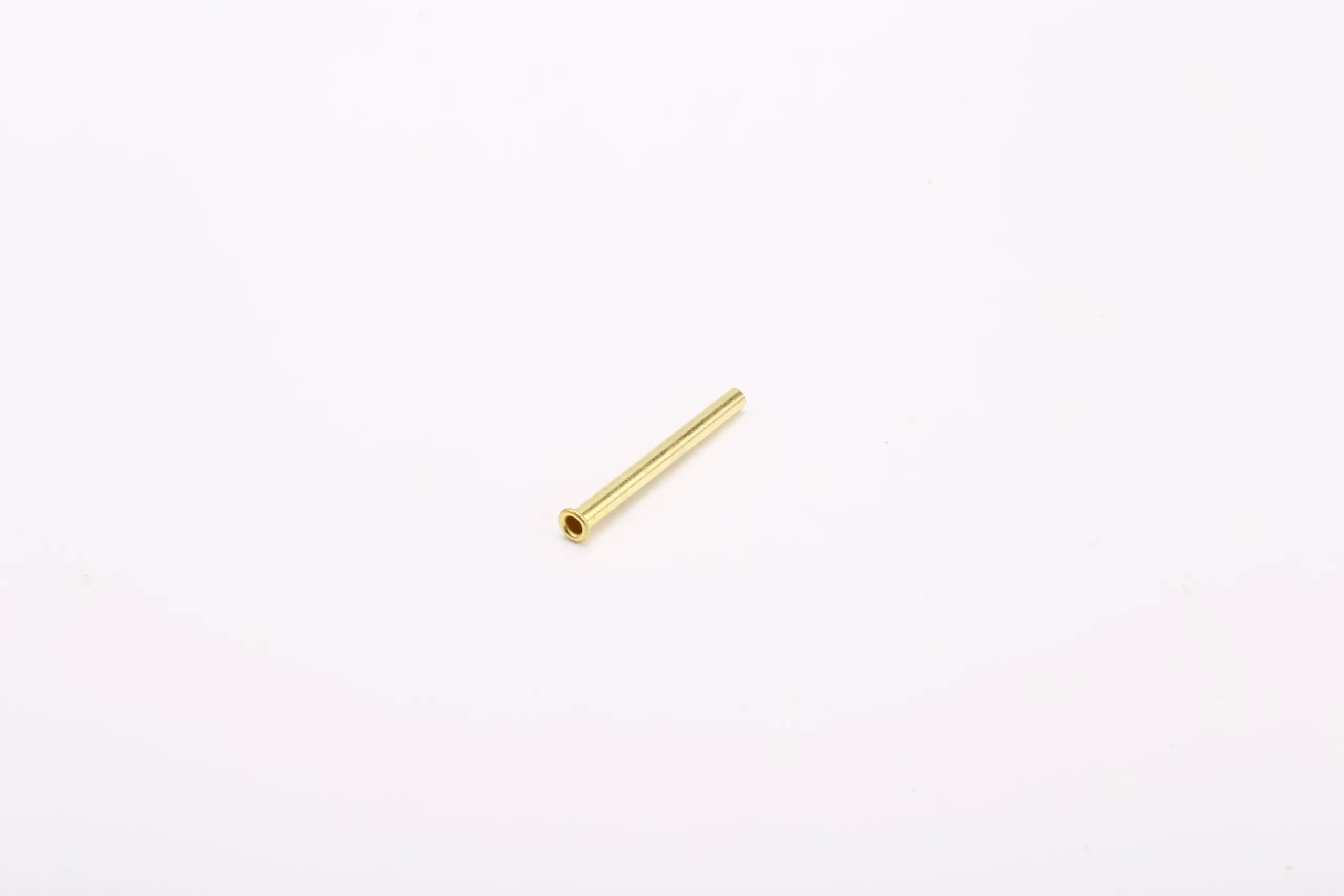
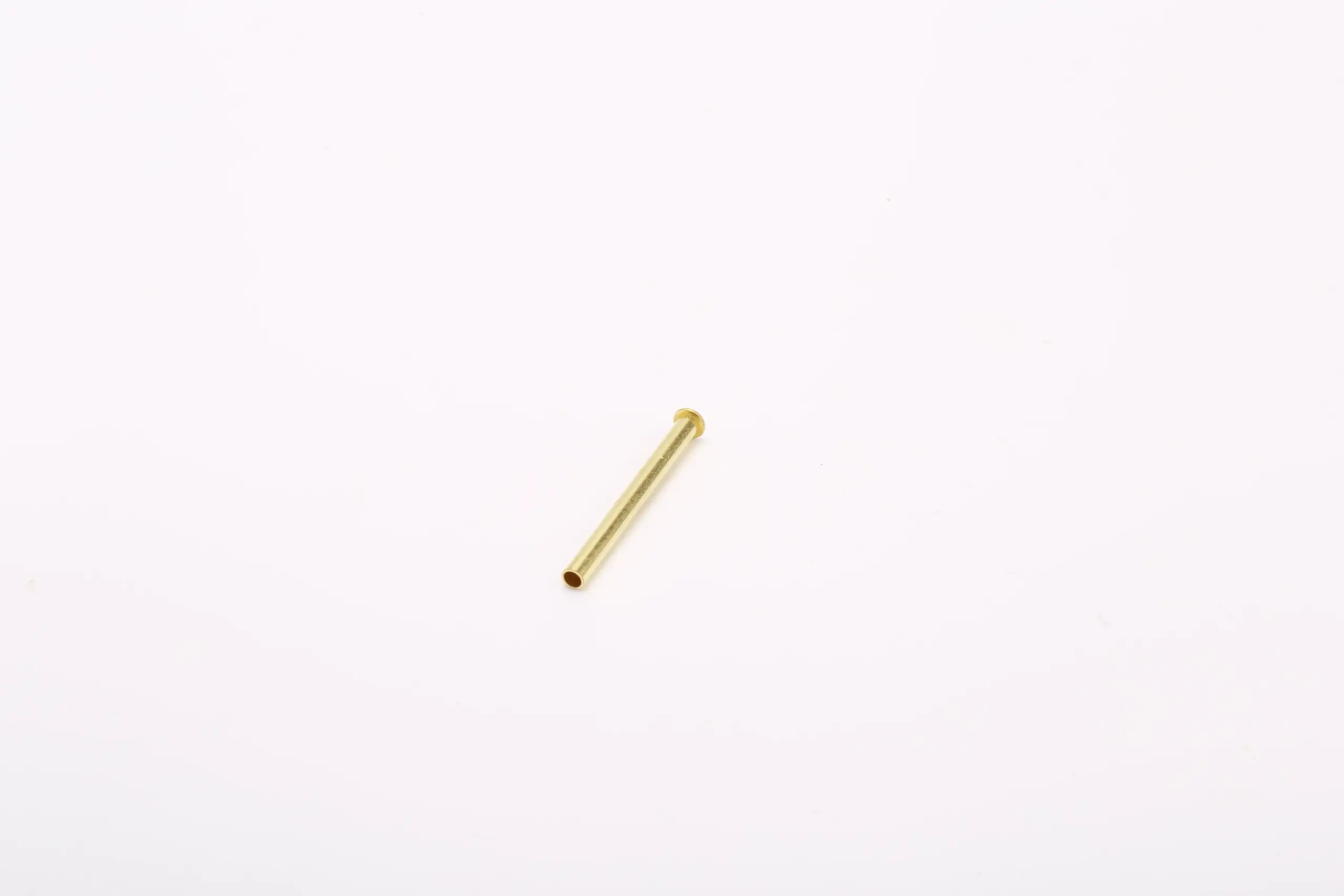
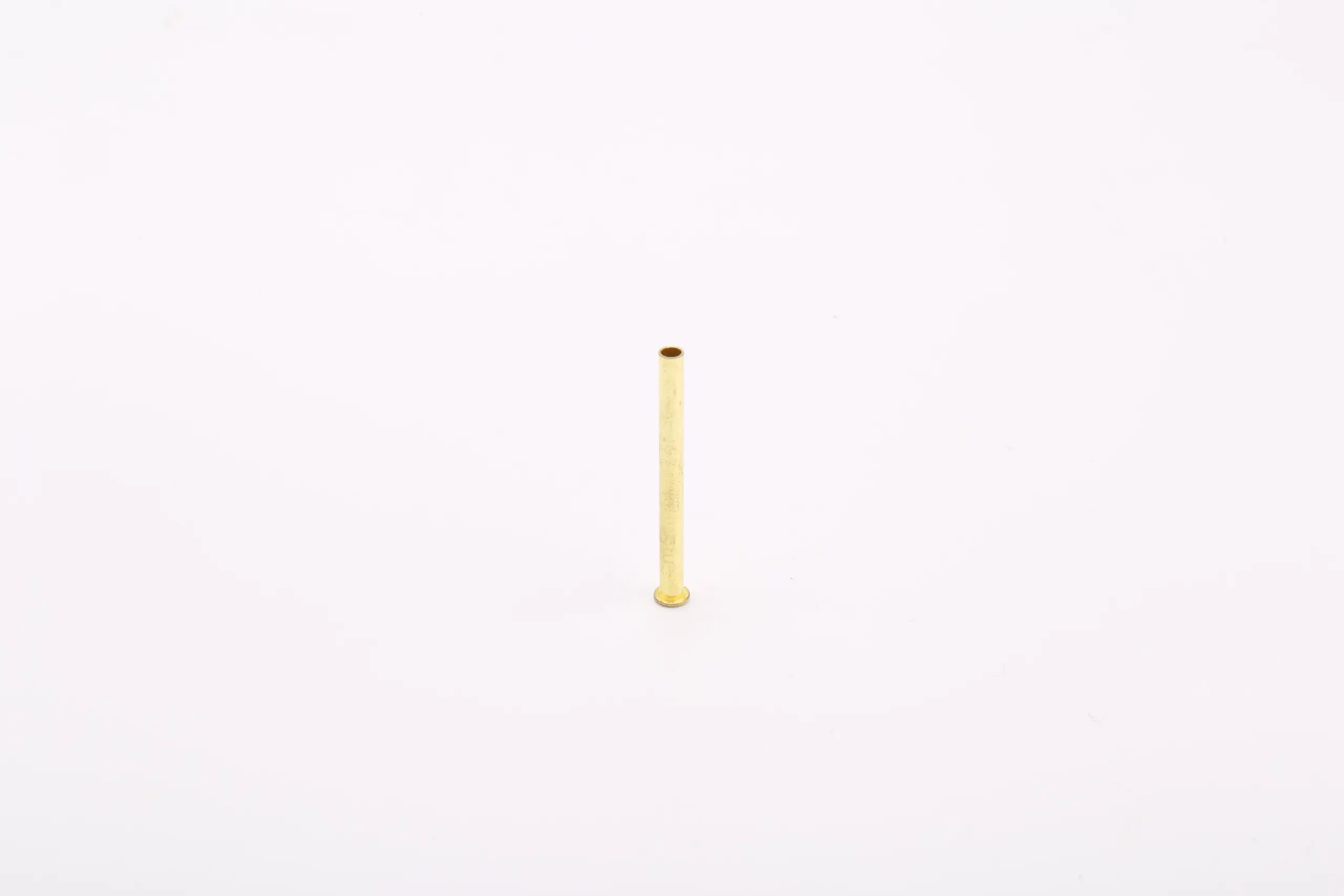
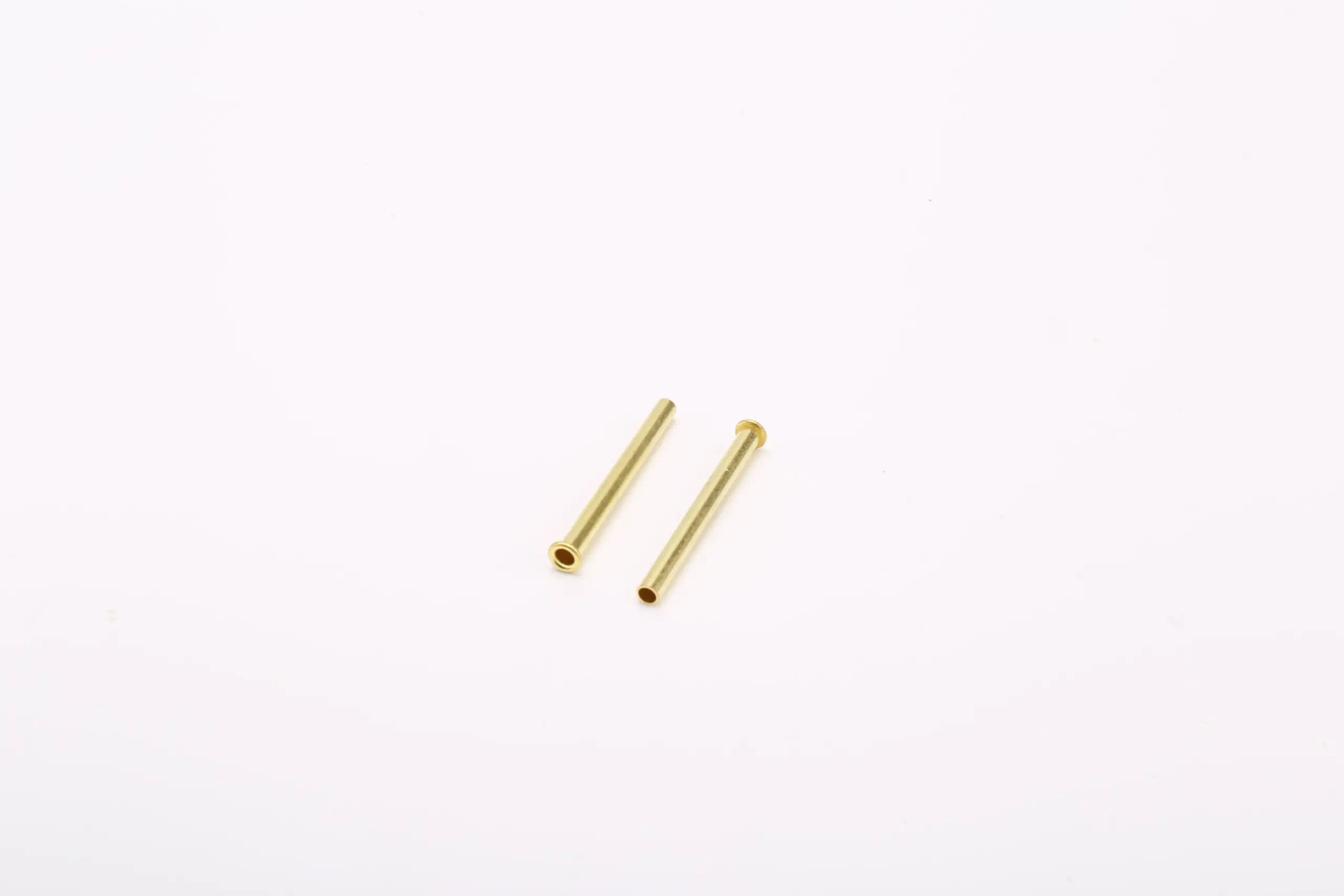
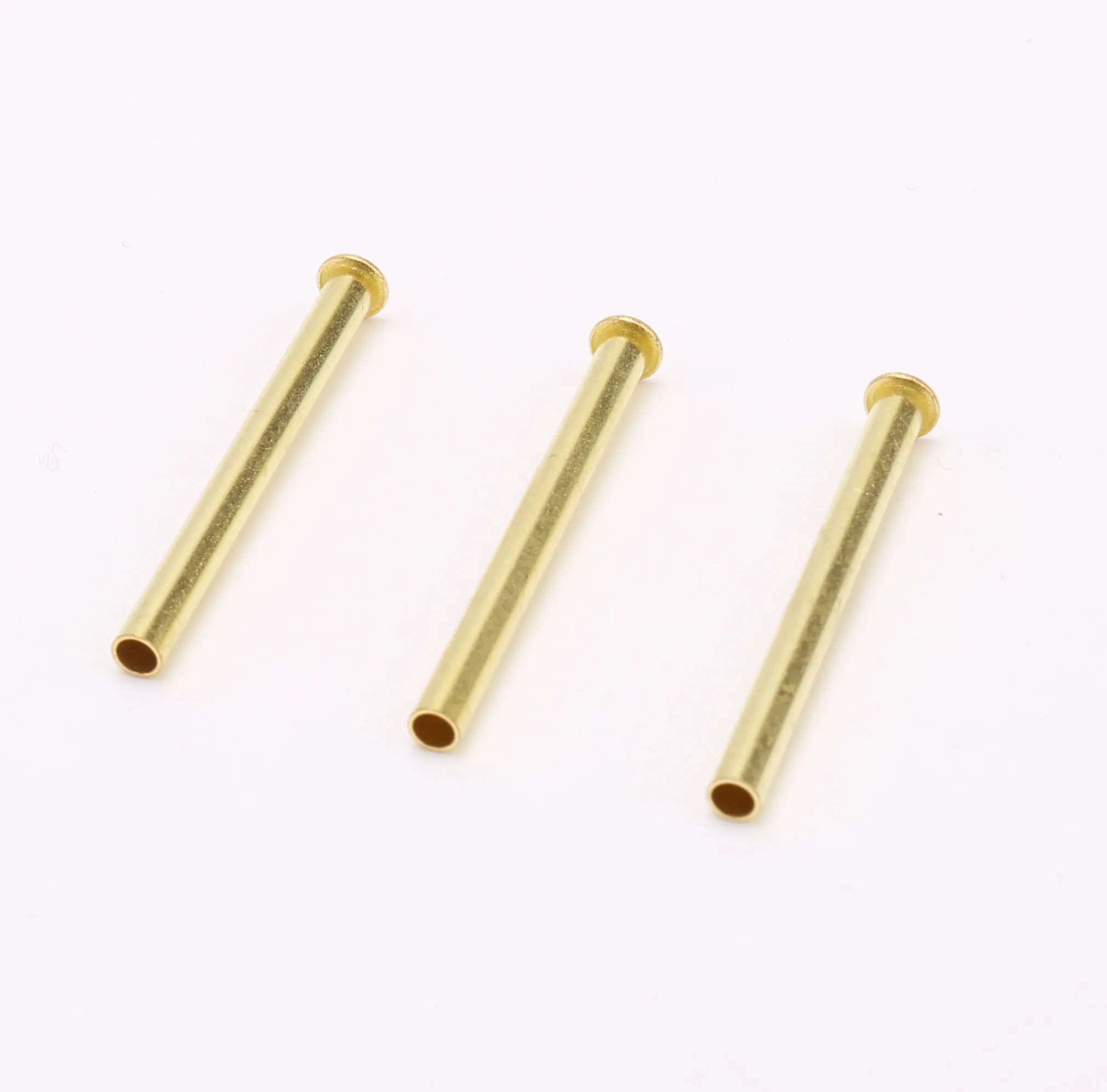
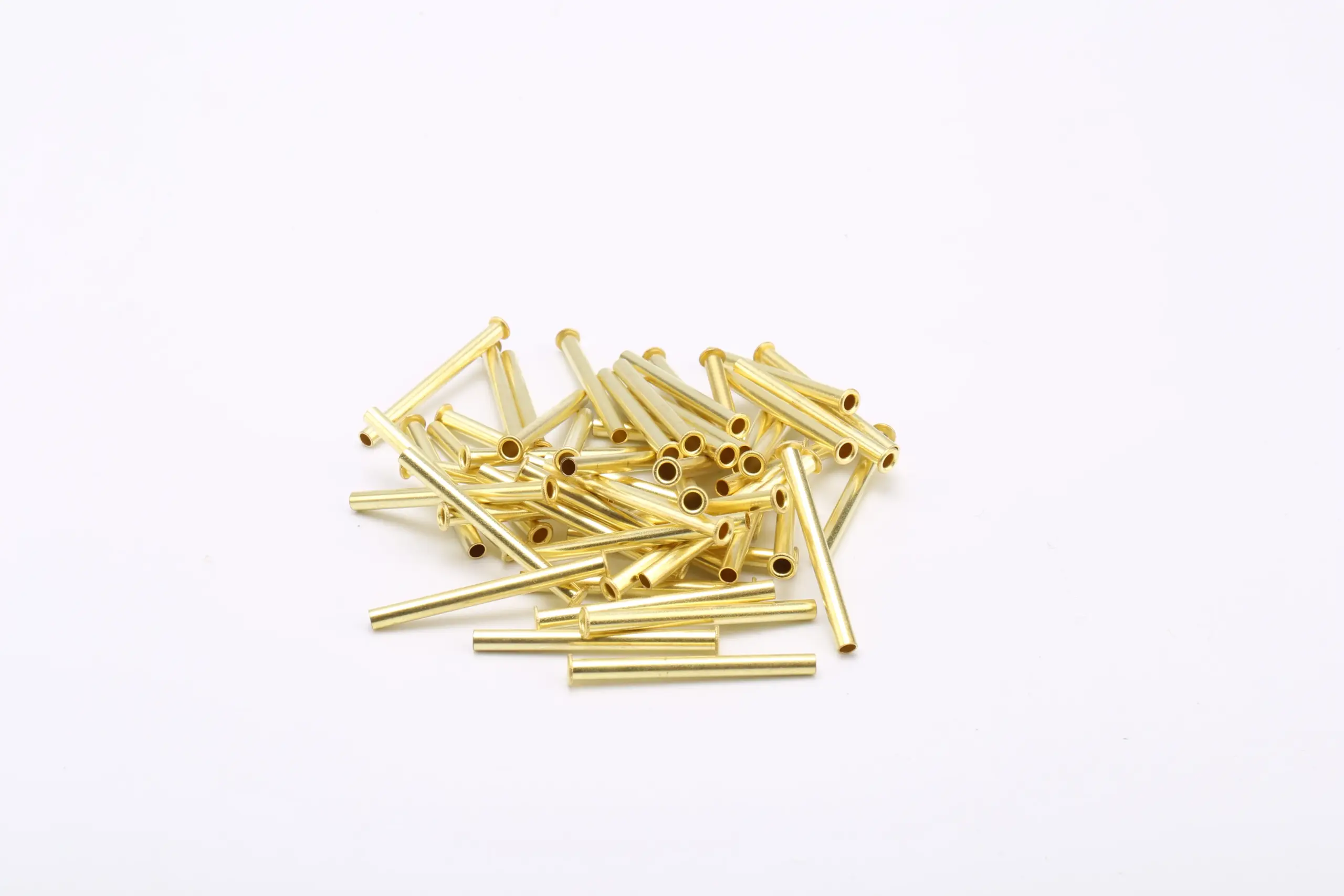
Hollow fine rivets use a slim tubular body and a formed head to create a lightweight fastener, eyelet or small pivot. The open bore is the defining feature: unlike a semi-tubular rivet, the fine hollow rivet is not simply a solid shank with a short setting cavity. The bore can remain open after installation when the joint requires a passage, a fine bearing surface or a low-profile hollow center.
Construction and working principle
A hollow fine rivet generally consists of a head and a thin-walled tube. The wall thickness, bore diameter, outside diameter and installed length determine how the part behaves during forming and in service. Depending on the design, the end may be rolled, flared or otherwise formed to retain the workpiece. The wall must be thick enough for the required set without cracking, but a heavier wall changes the available bore and the bearing area.
Typical applications
Hollow fine rivets can be considered for eyelets, tags, labels, small electrical parts, instrument assemblies, lightweight hinges and fine pivot or passage applications. They are often useful where a solid rivet would close a hole that must remain open or add unnecessary material. The suitability of an open bore for wiring, fluid passage or movement must be confirmed with the full assembly design.
Hollow fine versus semi-tubular
A hollow fine rivet has an open tubular body, while a semi-tubular rivet has a short hollow tail and a solid supporting section. The two types can look similar in a small photograph but behave differently when set. If the joint needs a through-passage, specify the bore clearly. If the joint mainly needs clamping, review whether a semi-tubular design is more appropriate.
Forming and bore control
Thin-wall parts are sensitive to tool alignment, burrs and excessive forming force. The setting tool should support the head and control the end form without collapsing the bore more than allowed. State whether the bore must remain round, clear and free of sharp edges after setting. For a pivot, define the mating pin diameter and required clearance; for a wire passage, state the wire size and any insulation or bend requirement.
How to specify a hollow fine rivet
- Provide the head profile, outside diameter, bore diameter and wall thickness.
- State the installed length, end form and required bore condition.
- Explain whether the bore is for appearance, passage or pivoting.
- Confirm material, finish, quantity and any fine-part handling requirement.
FAQ
Is a hollow fine rivet the same as an eyelet?
An eyelet is one common form of hollow rivet, but the terms are not always interchangeable. Define the head, tube dimensions, end form and intended function on the drawing.
Can the bore be closed during setting?
Some forming methods reduce the bore, while others are intended to leave it open. State the required finished bore rather than assuming the unset dimension will remain unchanged.
What information is needed for a quotation?
Send the drawing or sample, bore and wall details, stack or mating-part dimensions, material, finish and expected quantity.
Browse the Rivets category, or compare tubular rivets and copper hollow rivets.