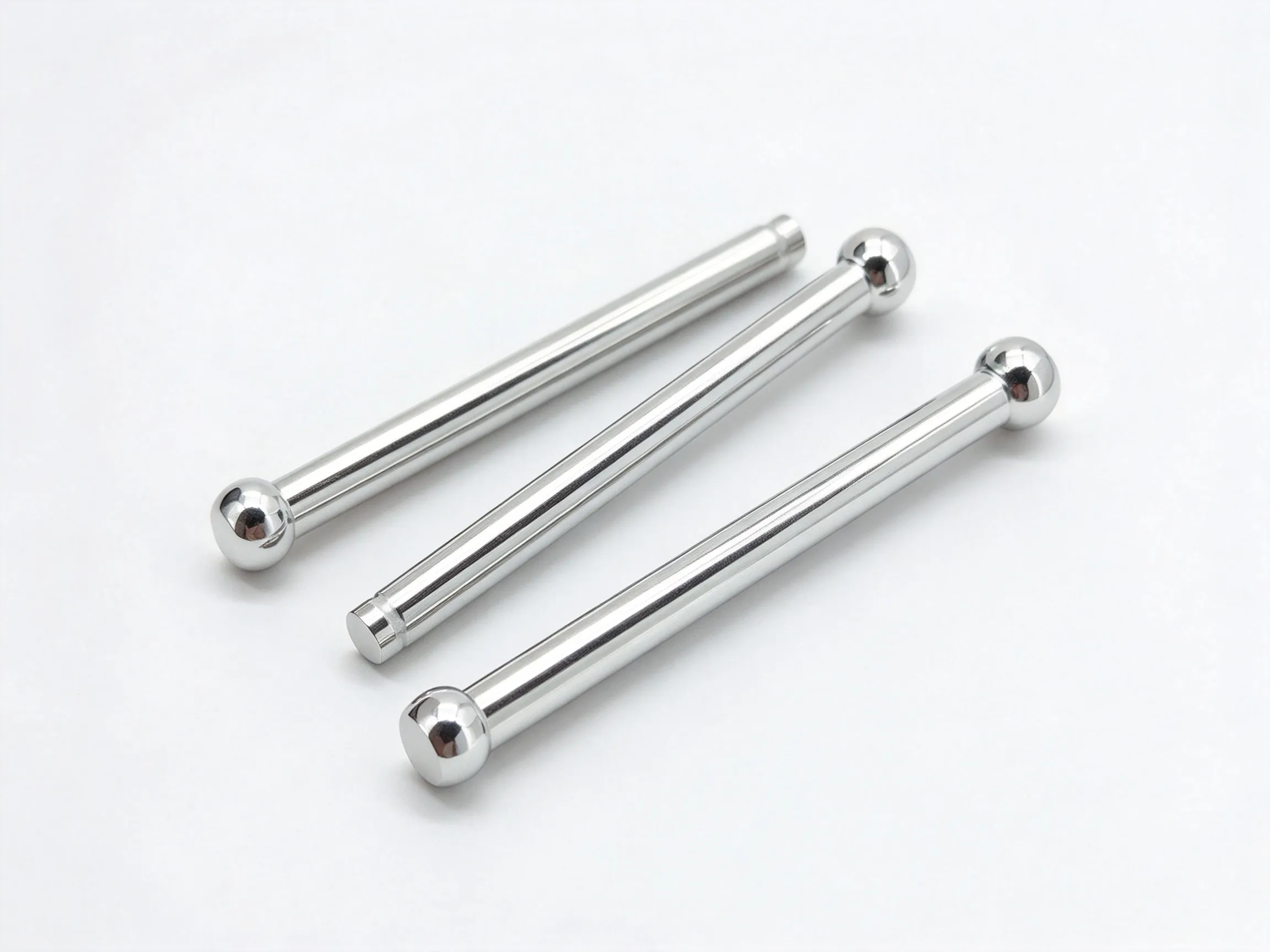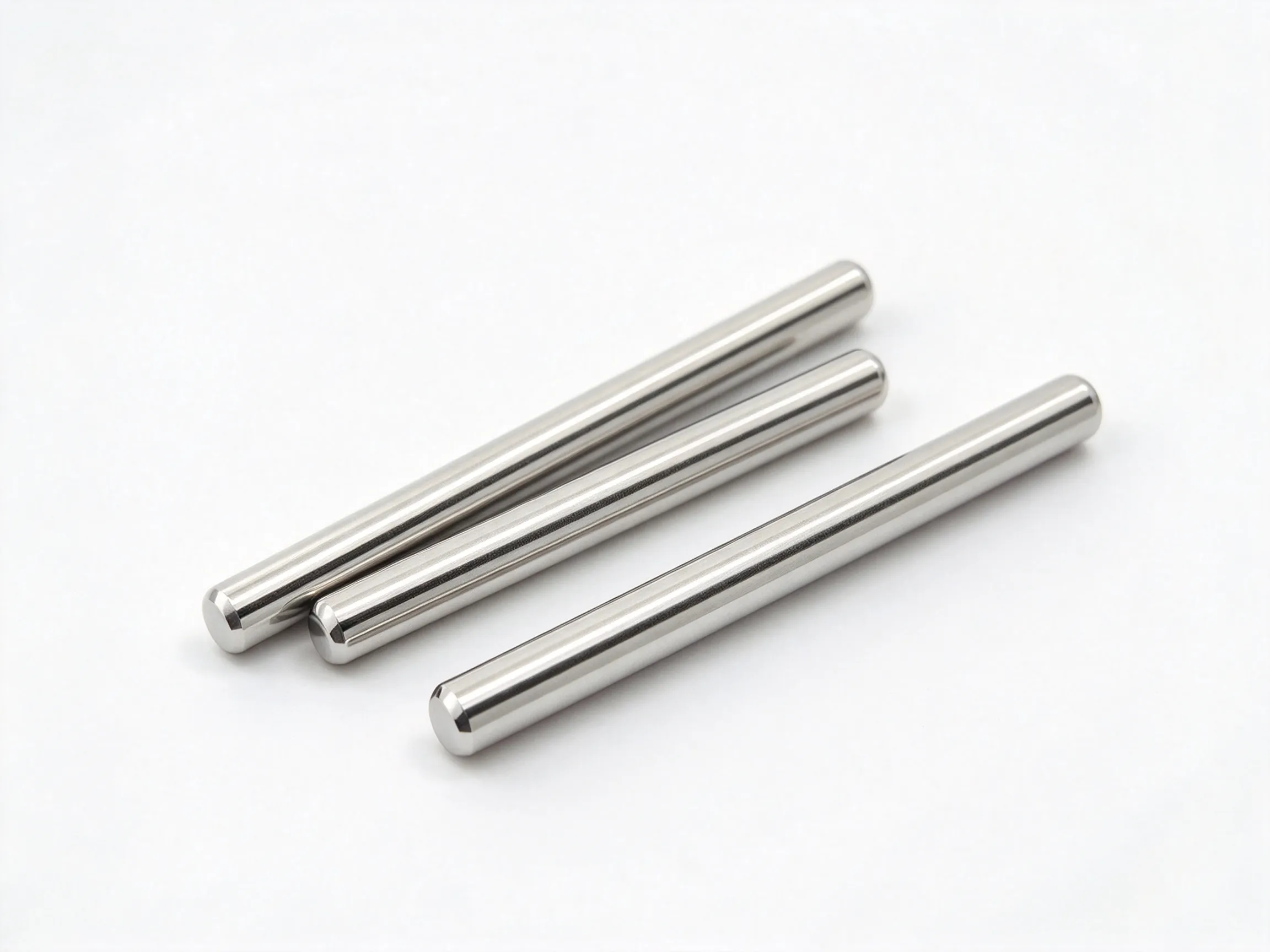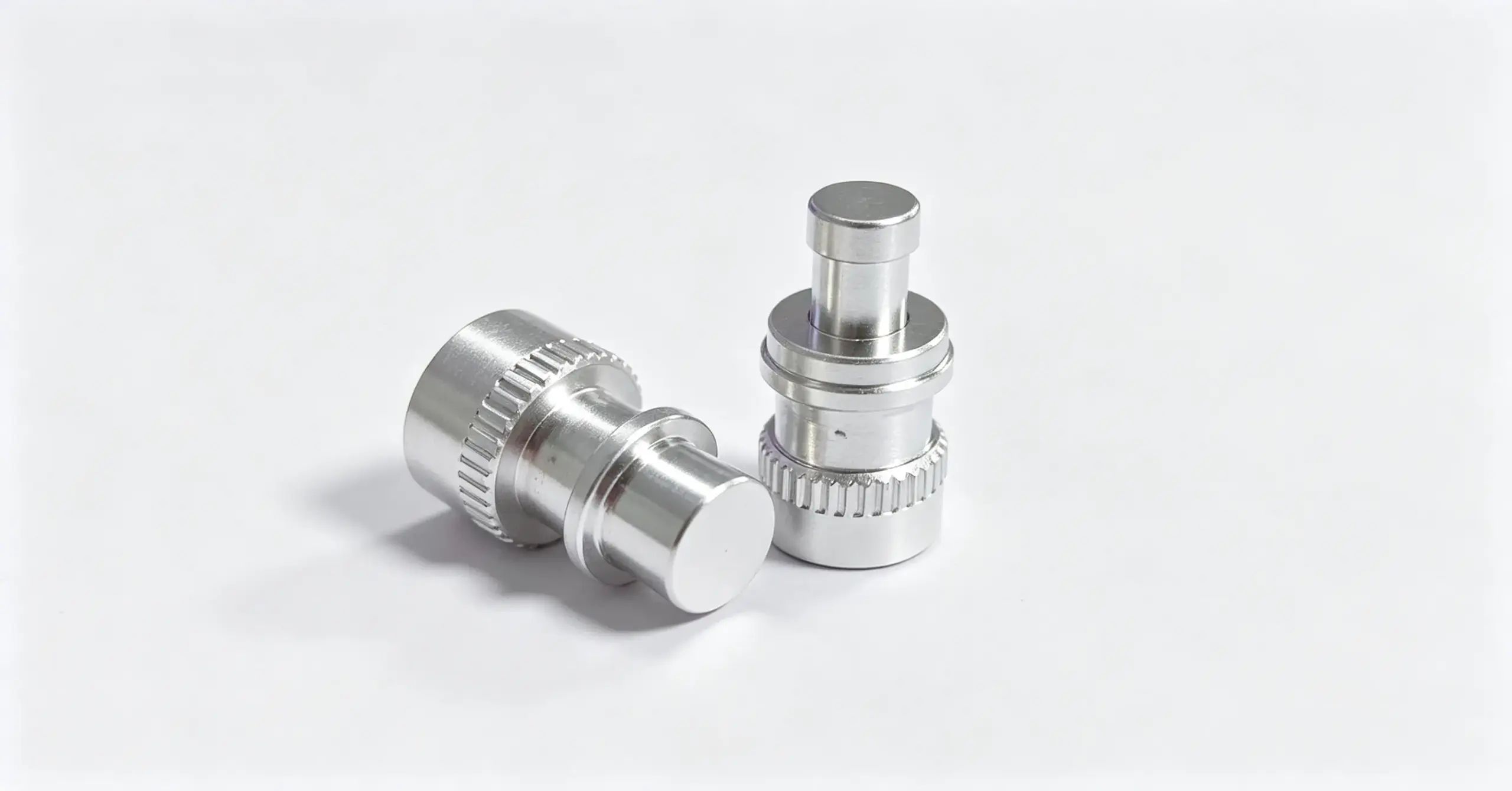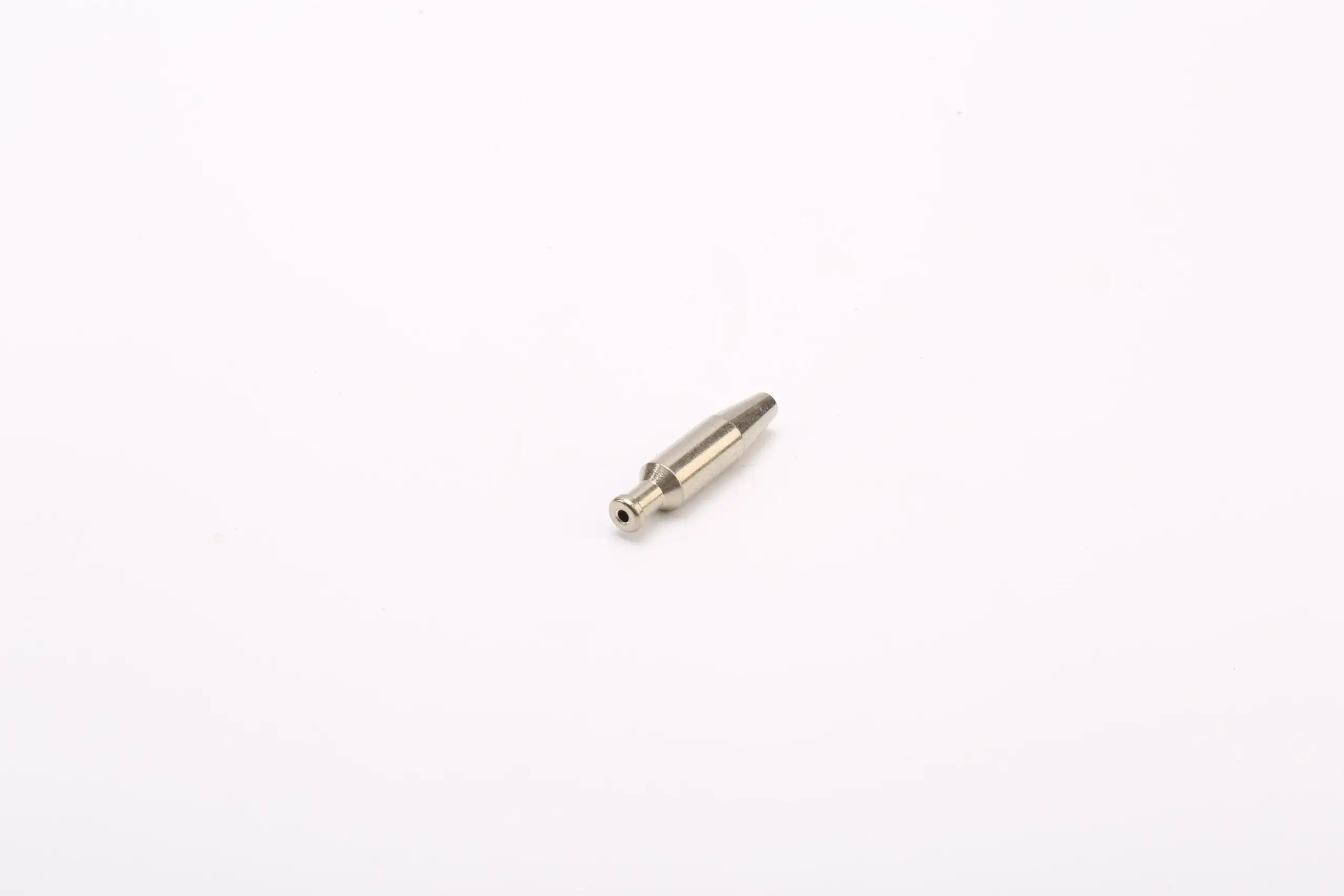
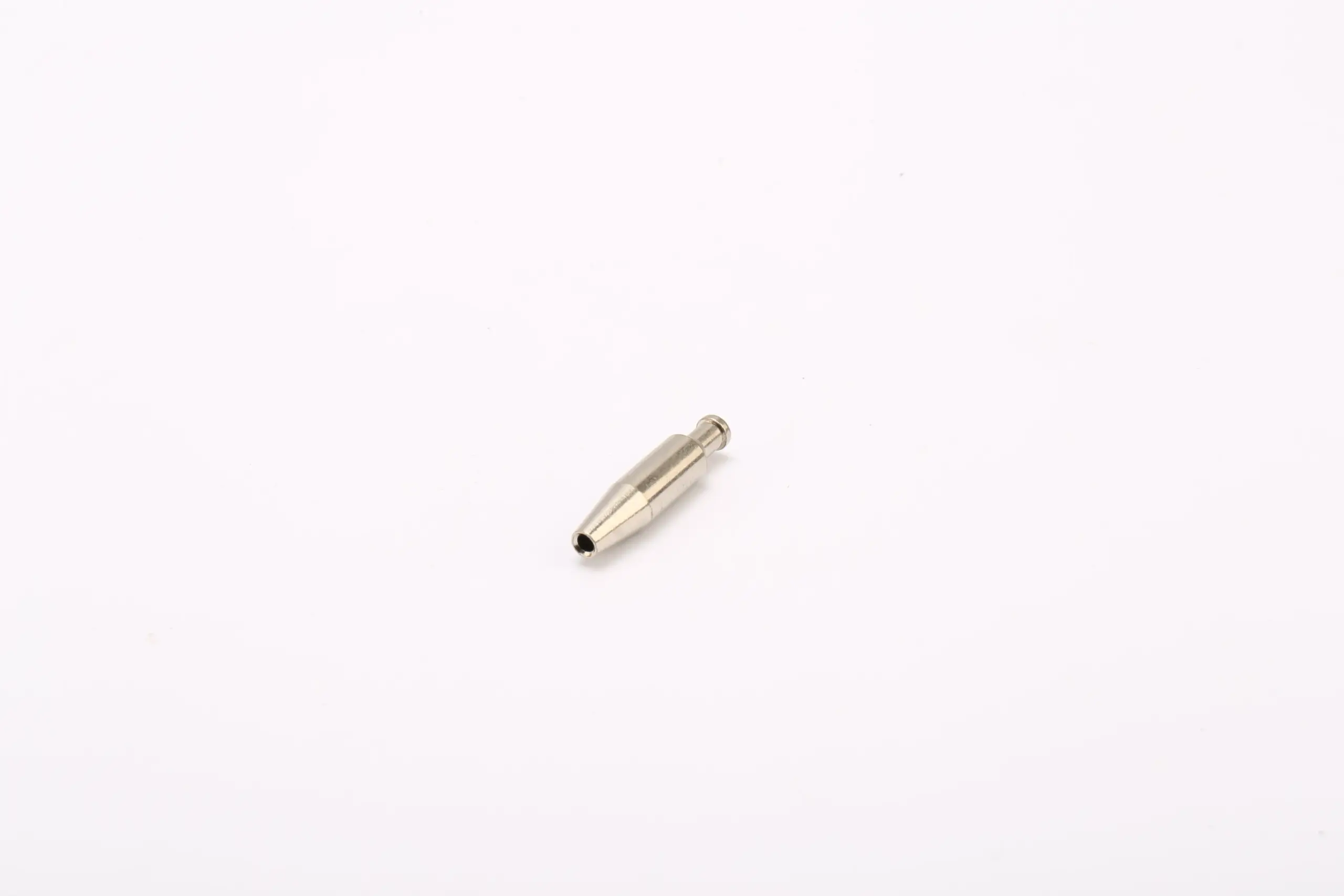
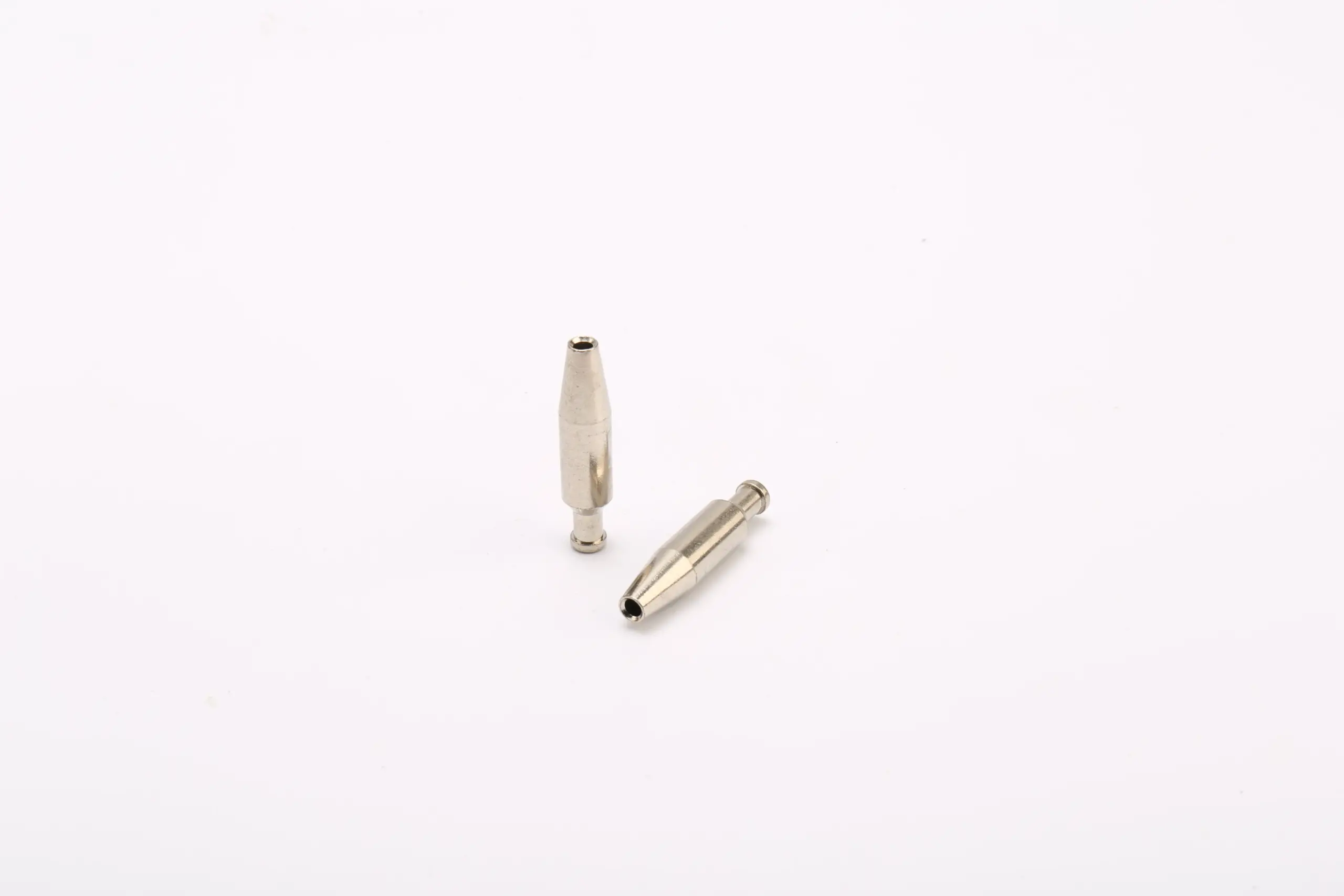
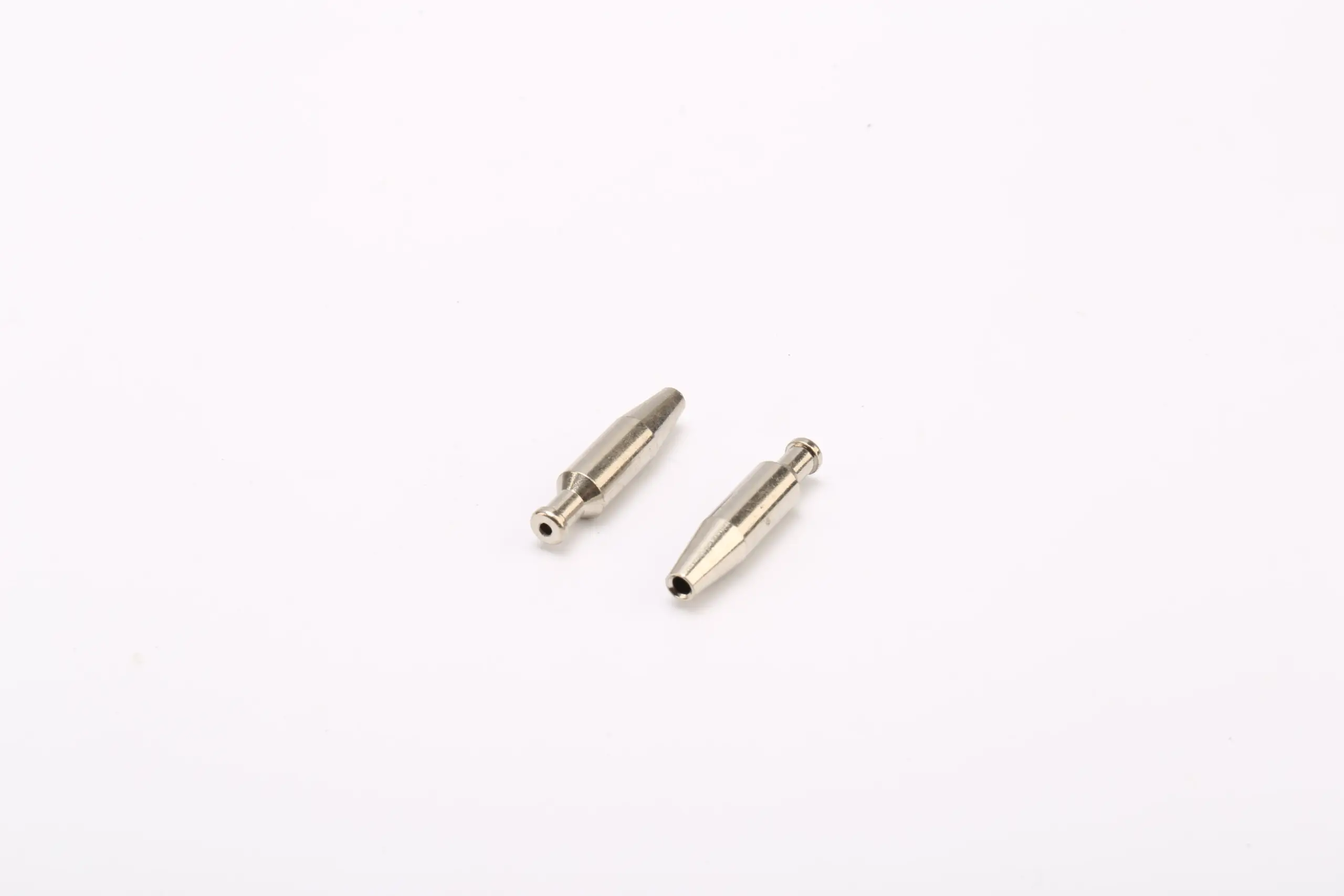
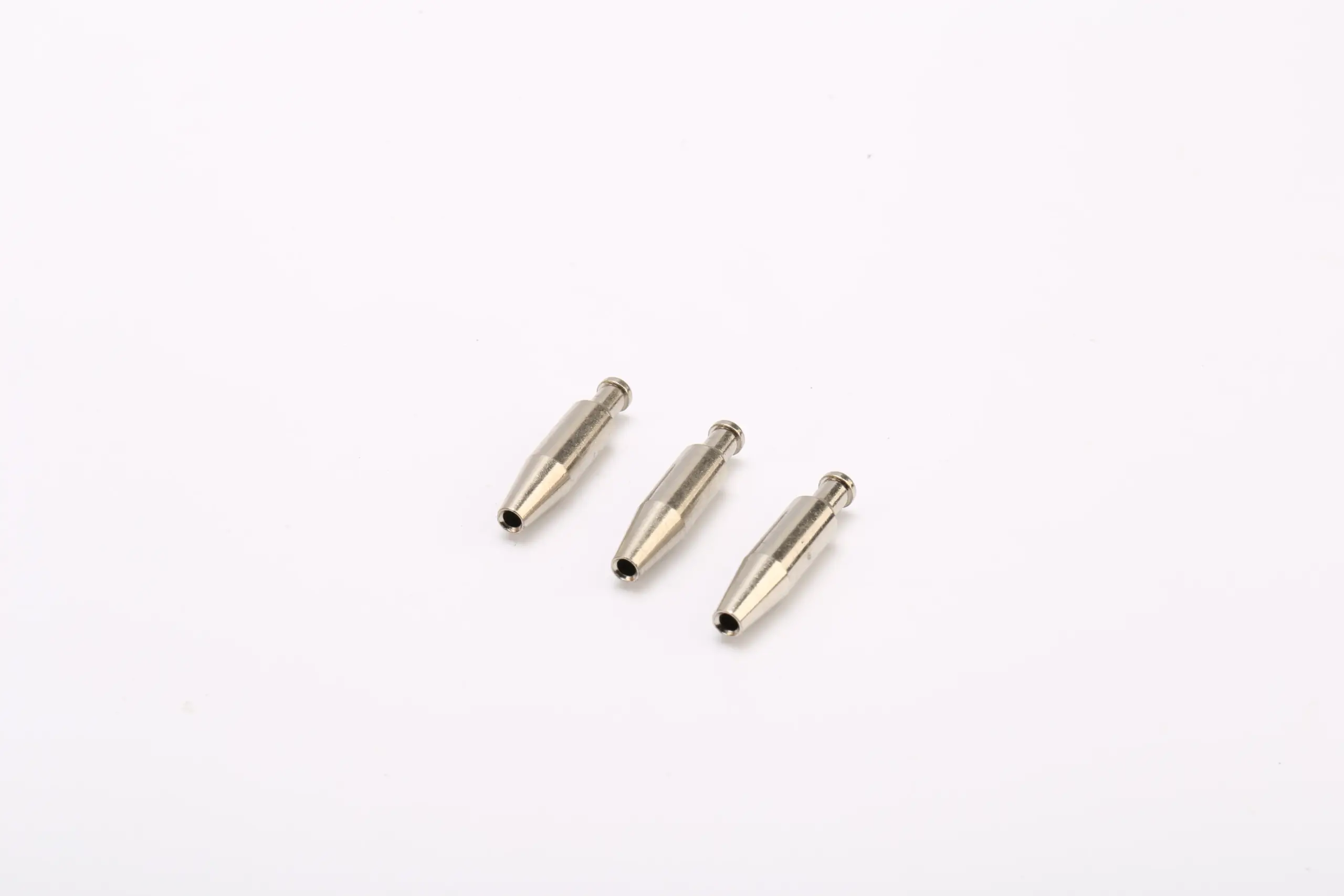
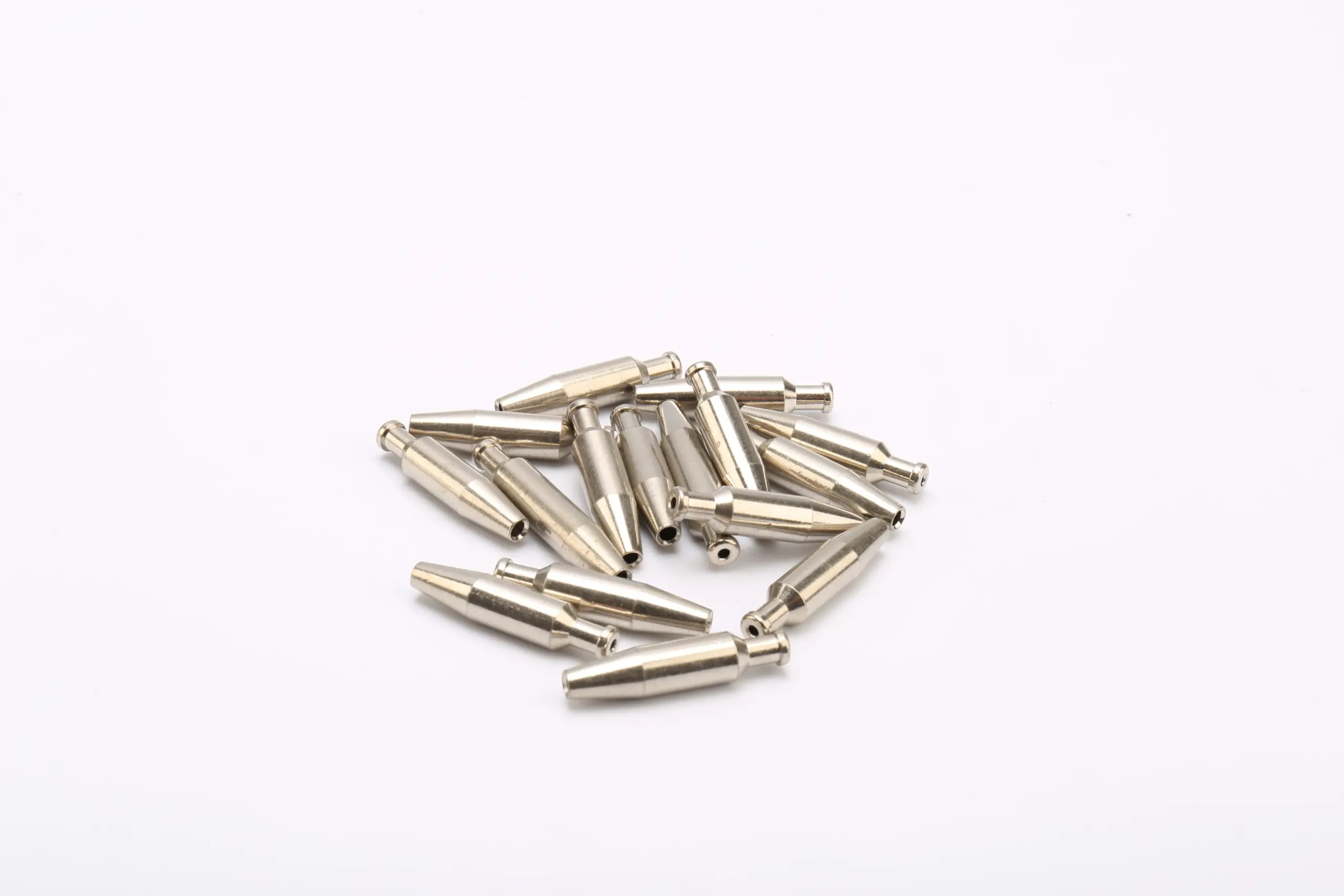
Fishing accessories in this context are small metal components made for tackle and equipment assemblies. The gallery shows compact pin-like and fitting-like parts with heads, collars and tapered or stepped ends. The page does not identify a single lure, weight or terminal tackle item, so the drawing or sample should define the actual component and its function.
A component family, not a single tackle item
The visible parts could serve as small connectors, pins, fittings or decorative hardware within a fishing assembly. The photographs show several shapes, but they do not establish the intended use of each one. Start with the mating line, hook, swivel, body or handle, and define how the component is attached and loaded.
If the part is exposed to water, salt, bait or cleaning agents, state that environment in the inquiry. The material and finish should be selected for the actual exposure. A shiny surface alone is not evidence of a particular alloy or coating.
Fit and handling in tackle assemblies
The gallery shows parts with pointed or tapered ends. Confirm whether those ends are functional guides, retention features or simply the result of the manufacturing process. A sharp point that is acceptable in one assembly may damage line or a mating surface in another.
What the image cannot prove
The photographs do not provide a scale, material certificate or corrosion specification. They also do not show the strength of the part or the condition of the opening. Use a drawing or measured sample for the critical dimensions, and define the inspection method for the surfaces that contact line or a mating component.
If the parts are supplied in bulk, check for tangling, bent ends and surface damage. Small metal components can rub together during shipping. Specify a packing method that protects the functional surfaces and keeps similar sizes from mixing.
How to specify a fishing accessory
- Describe the tackle assembly and the function of the metal component.
- Show the opening, pin, collar, taper or step and the overall dimensions.
- State the line or mating feature, movement, load direction and installation method.
- Provide the material, finish, exposure conditions, packing and quantity.
Inspection and trial assembly
Inspect the opening and contact surfaces for burrs, sharp edges and deformation. Check the overall shape against the drawing and confirm that the finish covers the functional areas. If the part is intended to move, verify that the movement is not restricted by a burr or an oversized collar.
Trial the component with the actual line, hook, swivel or body. Confirm that it assembles without damage and behaves as intended. Check the surfaces after the trial for scratches or wear. Keep the approved sample and the assembly notes for the next order.
FAQ
Is this a lure, weight or hook?
The page is a fishing-accessories category and the gallery shows small metal components. The exact tackle item is not established by the title or photograph.
Can the part be used in saltwater?
Do not assume saltwater suitability from the appearance. Provide the exposure conditions so the material and finish can be reviewed.
What should be included in an RFQ?
Send the drawing or sample, mating tackle components, dimensions, material, finish, quantity and any line or load requirements.
Browse the Custom Parts category, or compare customized hardware parts and customized irregular parts.