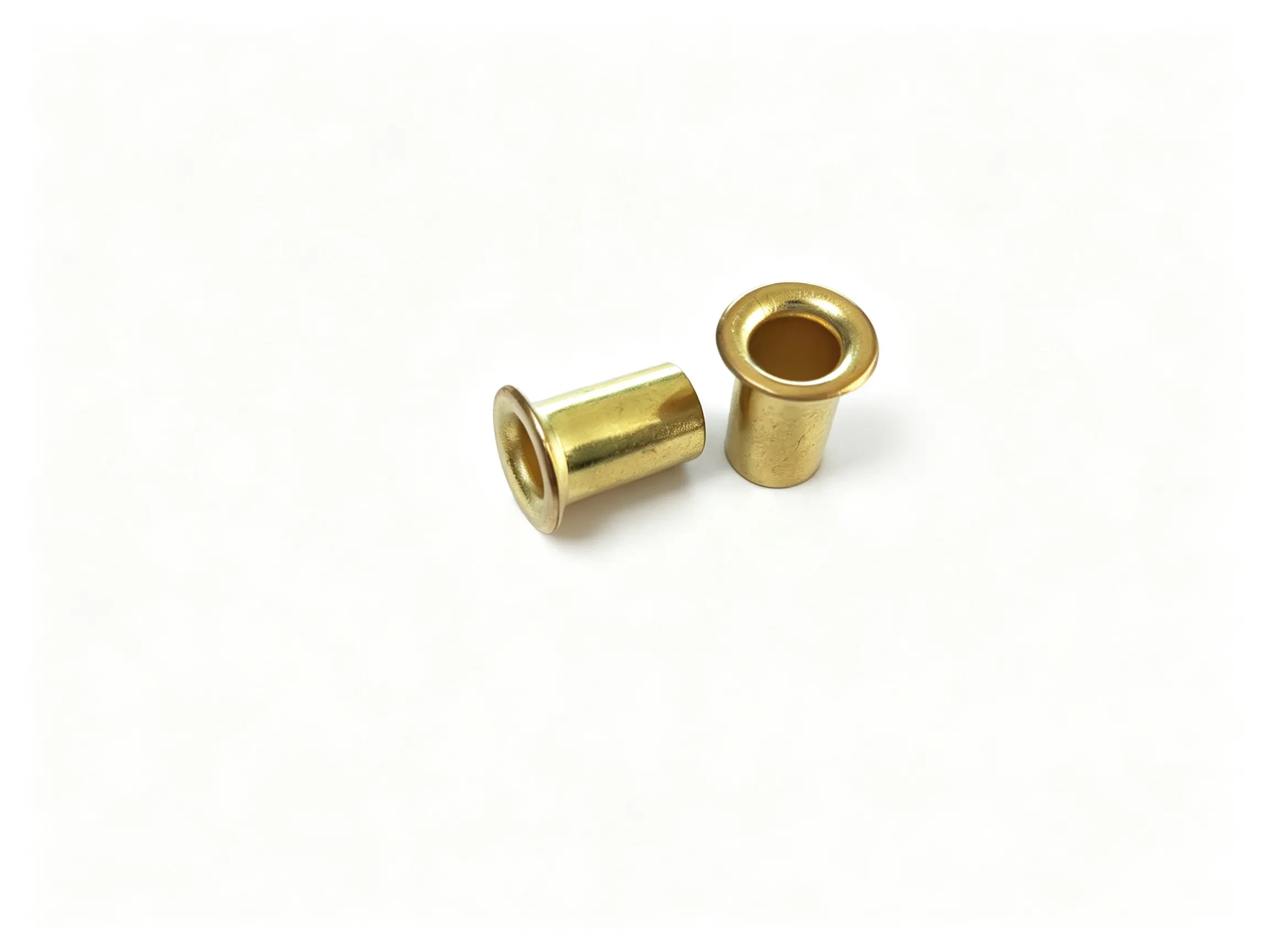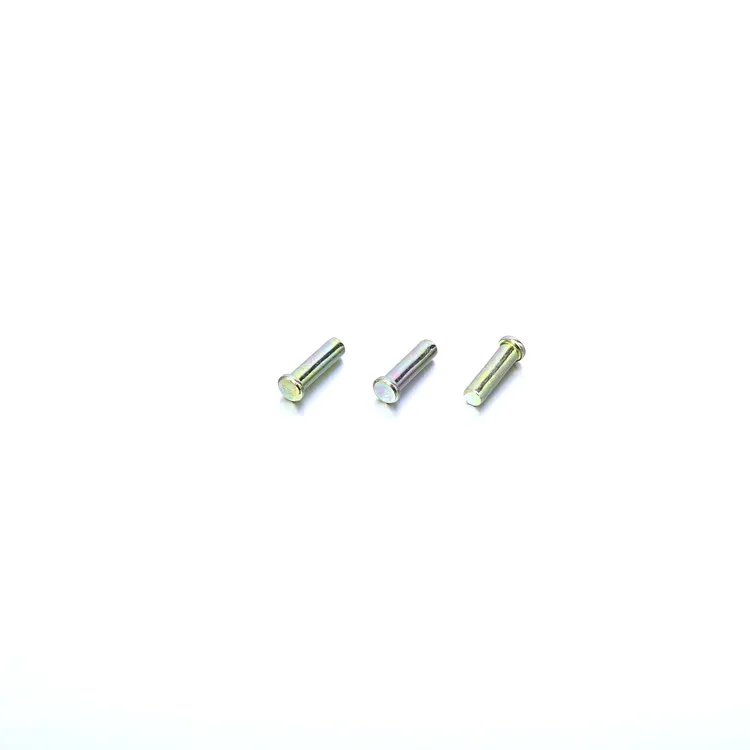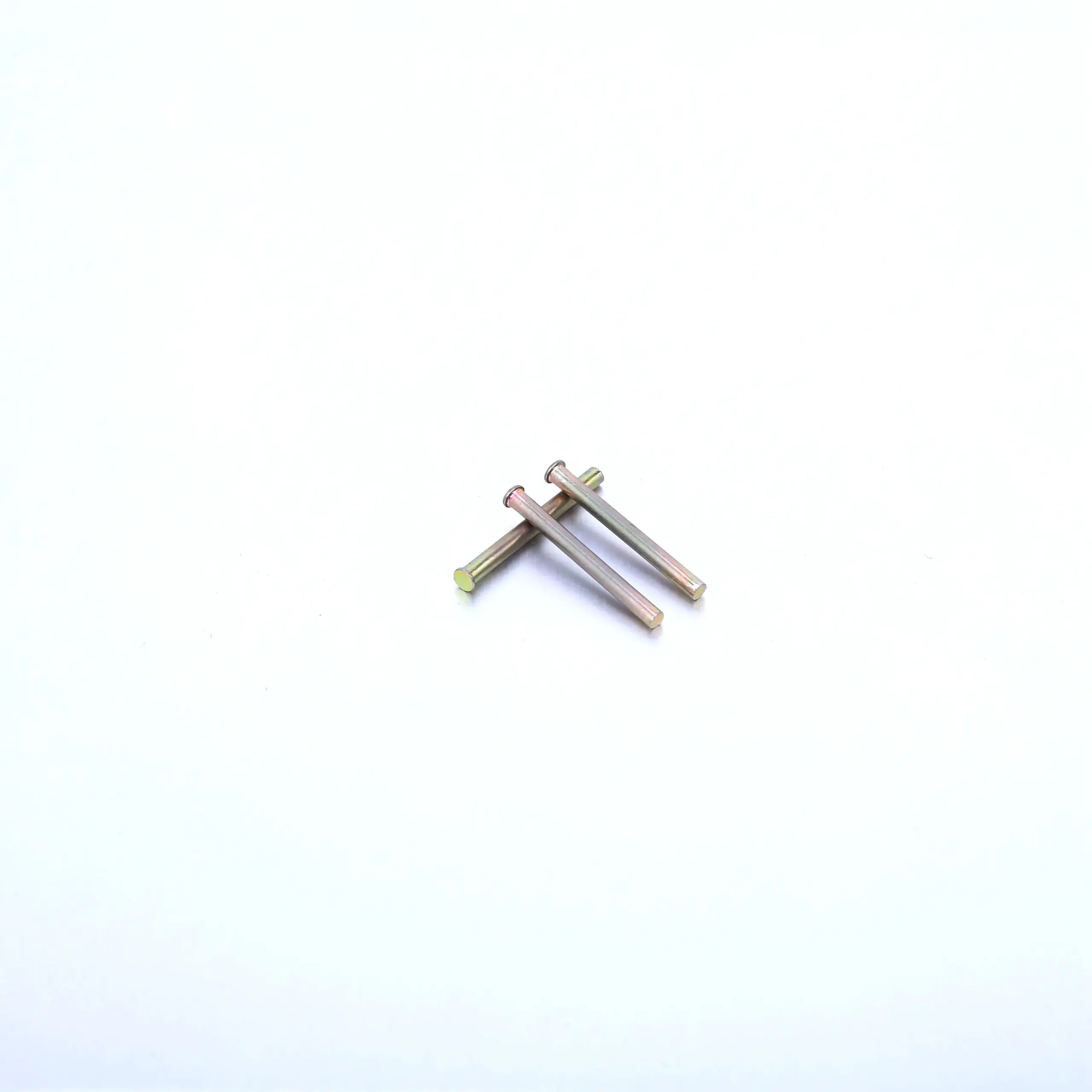


Pan-head tubular step rivets combine a rounded pan head with a stepped, hollow shank. The step establishes a locating shoulder or spacing position, while the open body keeps the rivet lighter than a solid stepped part. This is a construction for assemblies that need both a defined seating plane and a controlled hollow center, not merely a decorative headed tube.
Construction and working principle
The part can be read as three functional zones: the pan head, the locating step and the hollow body. The step diameter and axial position determine how the mating plate or component seats. The bore, wall thickness and end form determine how the hollow section behaves during installation. These features must be specified together because a correct outside profile alone does not guarantee the intended internal clearance or joint depth.
A tubular rivet is normally formed at the end to retain the assembly, but the exact end form depends on the product design and tooling. The image shows an open stepped body; it should not be assumed that every part is supplied with the same pre-formed end. Review the drawing and installed condition before approving the joint.
Typical applications
Pan-head tubular step rivets can be considered for electrical components, small hinges, linkages, appliance hardware, panel spacers and compact mechanisms where a raised rounded head is acceptable. The locating step may position a plate, establish a repeatable gap or provide a bearing shoulder. The open center can be useful where a through-passage or hollow appearance is required.
Tubular step versus semi-tubular step
A tubular version maintains an open body, while a semi-tubular rivet has a short hollow setting tail and a solid supporting section. The choice affects the available bore, setting method and load path. If the bore must remain open after installation, say so explicitly. If the priority is a simple permanent clamp, a semi-tubular construction may be more suitable.
How to specify a pan-head tubular step rivet
- Provide the head diameter and height, plus both shank diameters and the step position.
- State the bore diameter, wall thickness, overall length and required end form.
- Define the mating hole sizes, stack thickness and installed clearance.
- Confirm material, finish, quantity and whether the bore must remain open.
Material, finish and installation checks
Confirm the base material and finish at the same time as the step geometry. A bright appearance does not define the substrate, corrosion performance or forming behavior. Before production, check the pan-head seating, step contact, bore condition and formed end on a sample joint made from the intended workpiece materials. For a moving or current-carrying assembly, state that function explicitly so the bearing surface and finish can be reviewed together.
FAQ
Is the stepped section the same as the rivet head?
No. The head is the bearing feature on the accessible side. The step is an additional diameter change along the shank and must be specified separately.
Can the hollow body be used as a pivot?
It can be reviewed for a pivot application, but the bore, wall thickness, bearing area, mating pin and required movement must all be stated. Do not assume an open body automatically provides a suitable bearing.
What information is needed for a quotation?
Send the drawing or sample, head and step dimensions, bore details, stack or mating-part data, material, finish and expected quantity.
Browse the step rivets category, or compare silver step rivets and step hollow rivets.