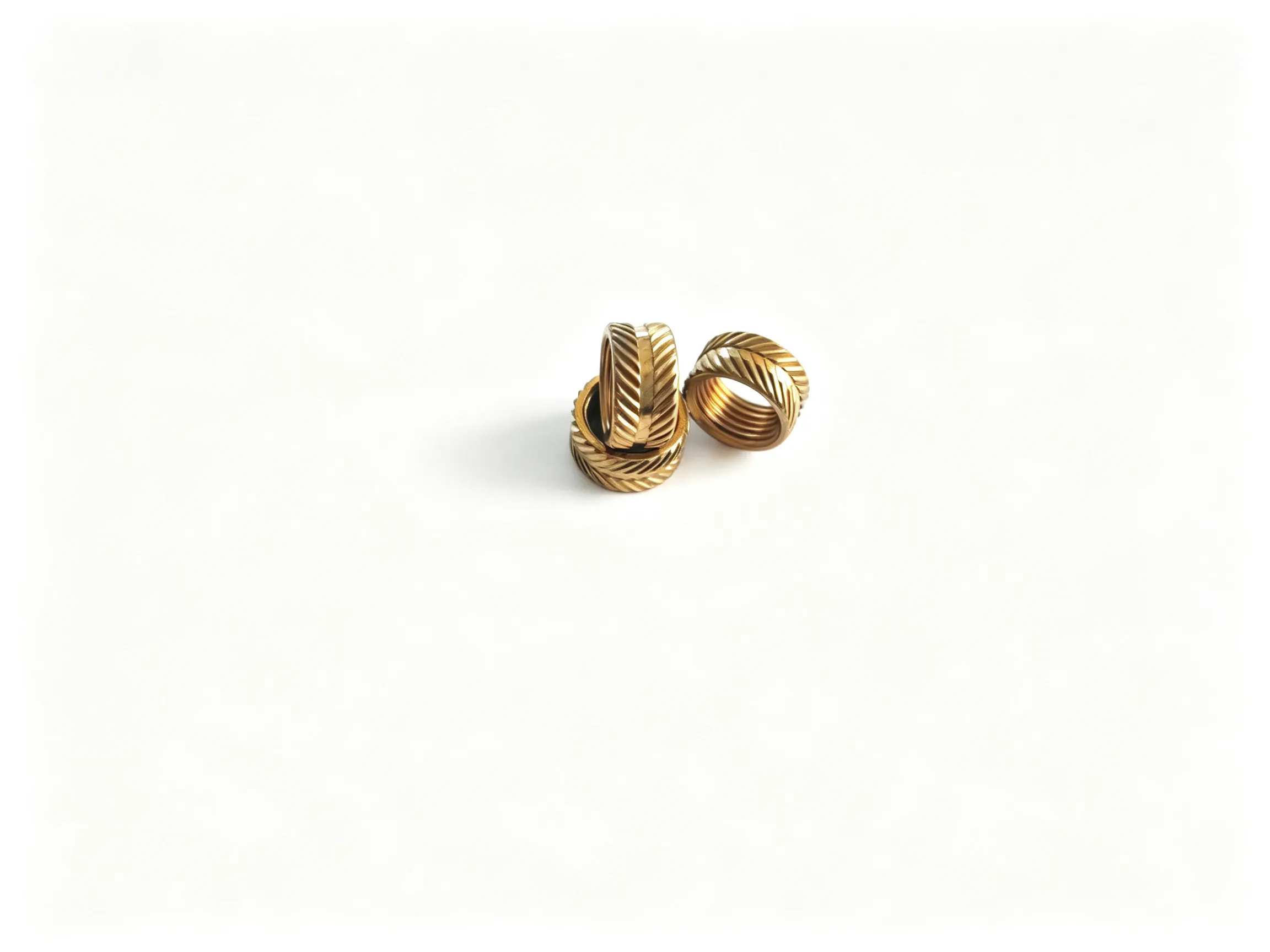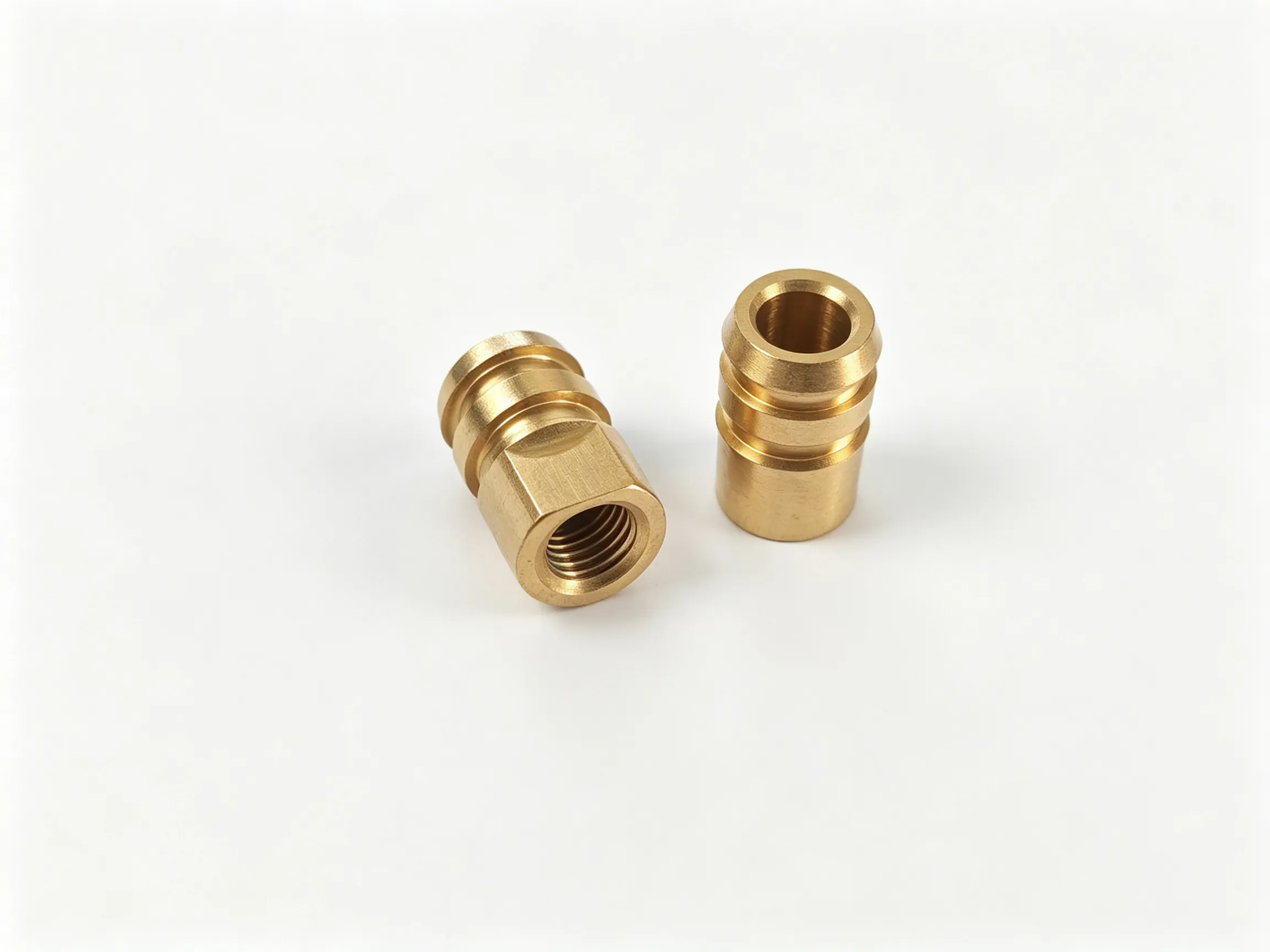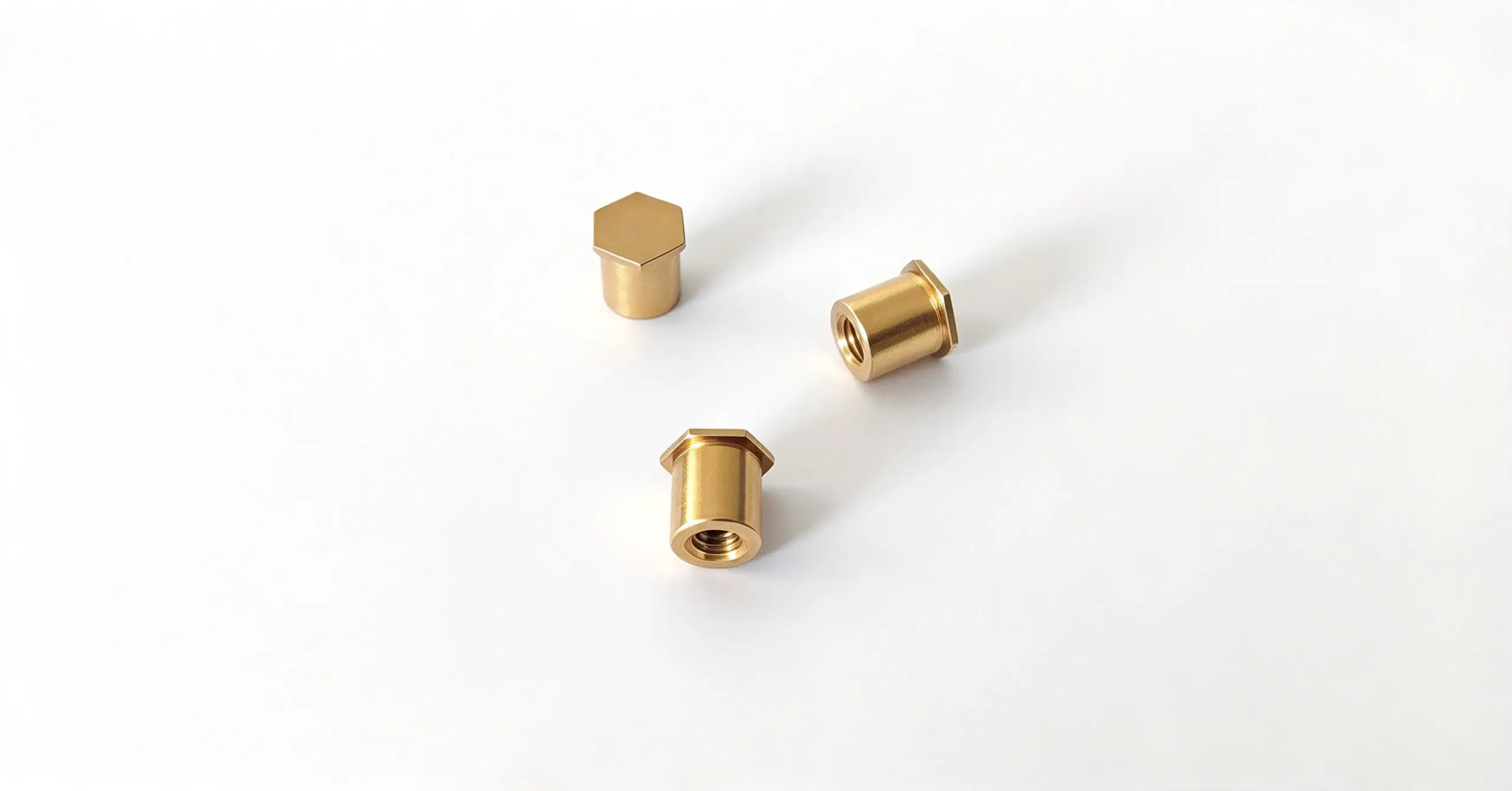
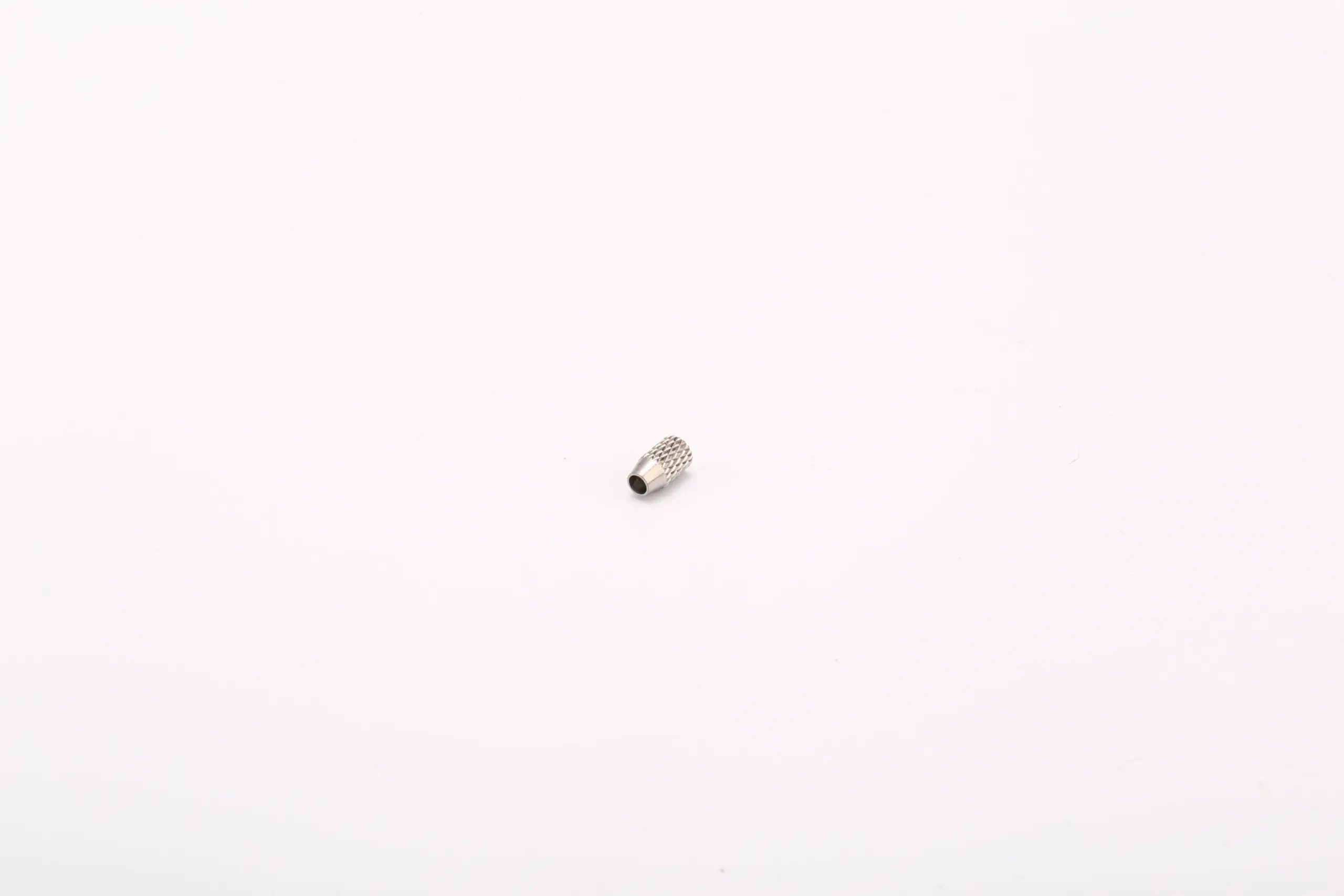
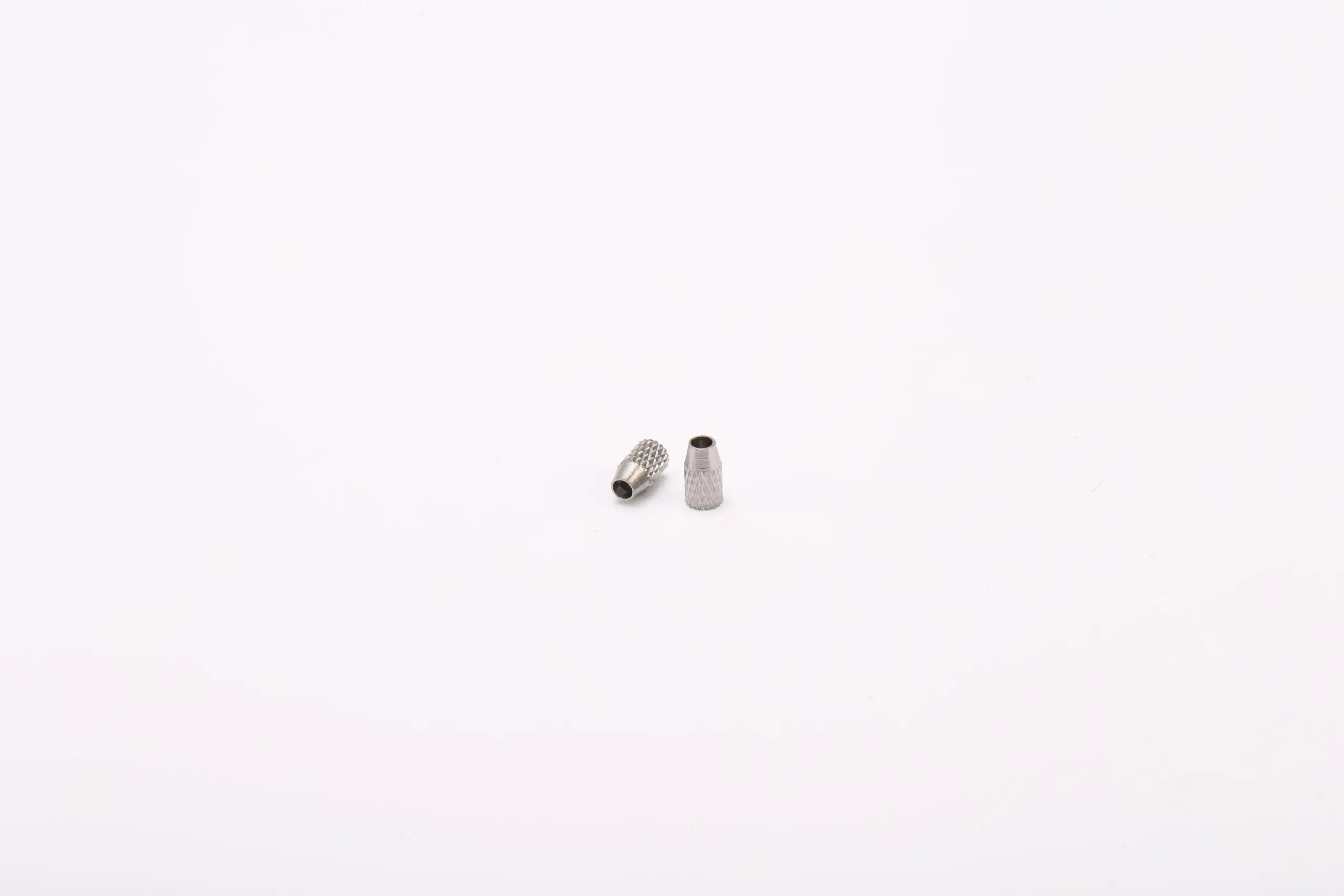
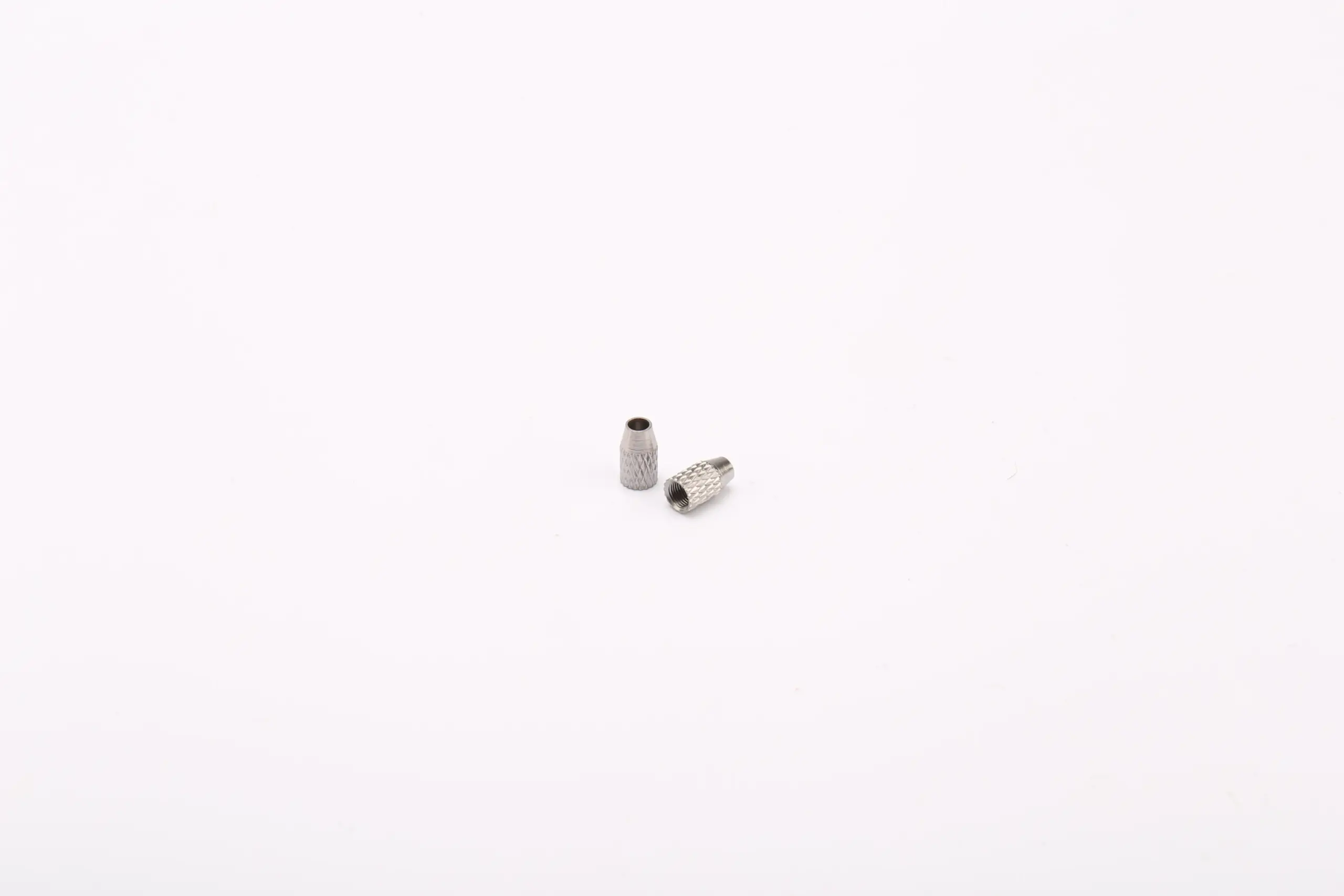
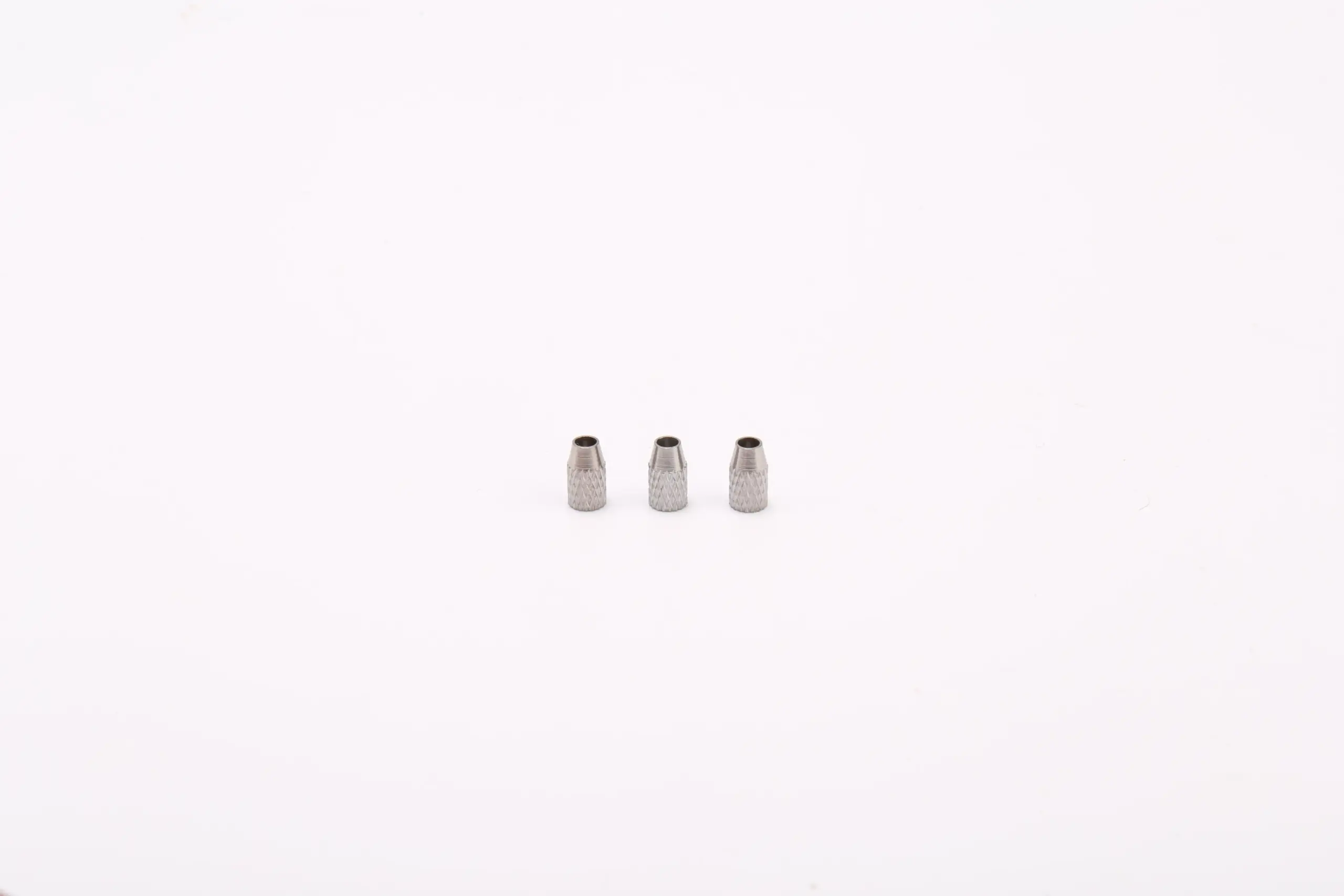
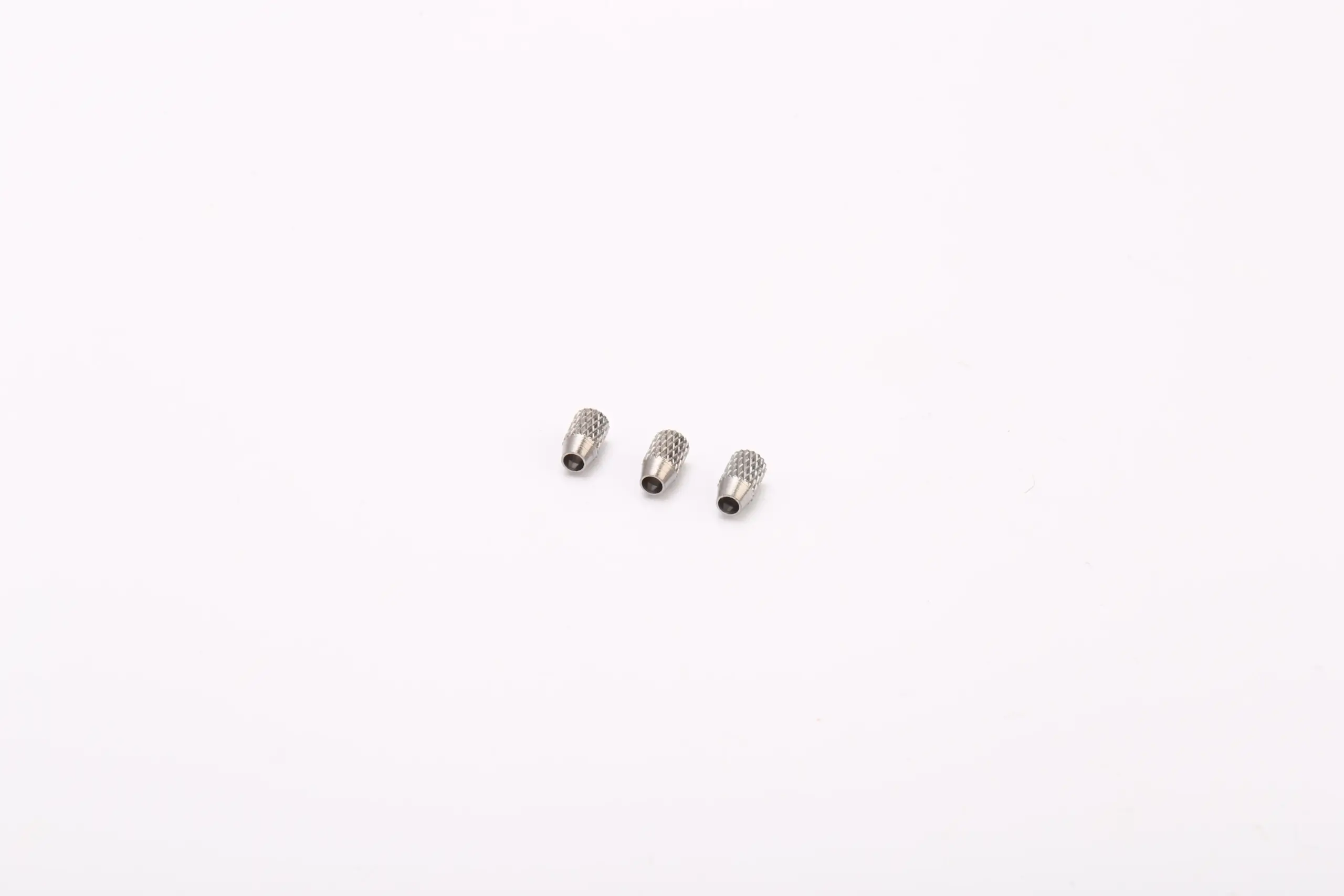
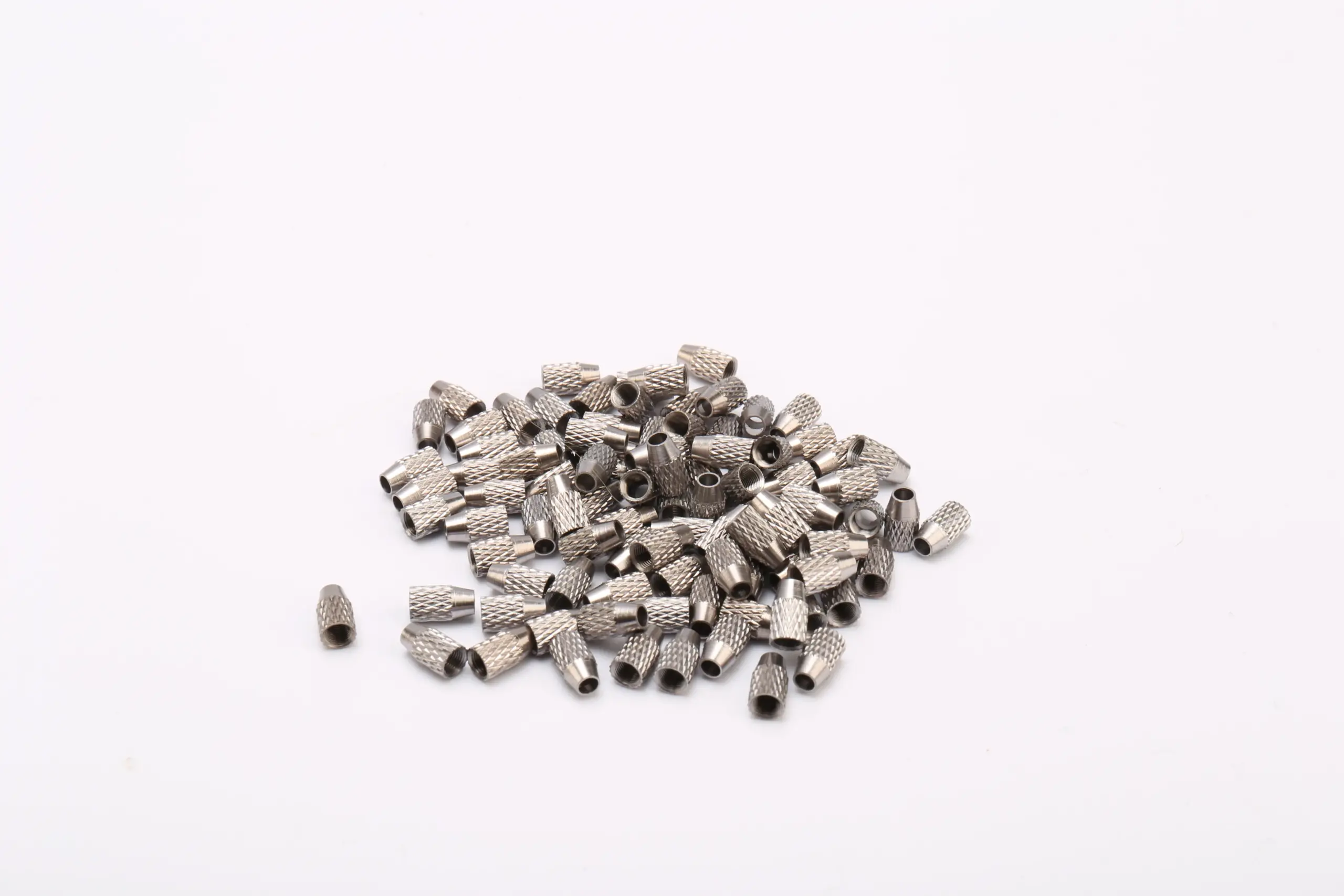
Textured knurled nuts use a small patterned outside surface to improve finger contact without adding a large wrenching head. The gallery shows compact silver-toned parts with a repeated texture and a central threaded opening. Their size makes handling and tool clearance especially important: a pattern that looks adequate in a close-up may be difficult to grip on the actual assembly.
Texture, knurl and visual finish
The word textured can cover several surface patterns. Confirm whether the drawing calls for a straight knurl, a diamond pattern, a series of grooves or another texture. The pattern depth and edge condition affect both grip and appearance. A very shallow texture may not provide much finger purchase, while a sharp pattern can mark adjacent parts or create handling concerns.
Grip versus tool access
These nuts are often selected for small adjustments where a wrench would be awkward. Check the available finger space around the full diameter, not just one side. If a tool is required for final seating, confirm that it can engage the body without crushing the texture. A protective sleeve or a smooth driving feature may be needed when the cosmetic surface must remain intact.
Thread and low-profile seating
Inspect the thread entry, usable depth and the flat seating area around the bore. The textured band should not prevent the nut from sitting square against its mating surface. For a thin panel, review the bearing area and consider whether a washer is needed. The nut should start by hand and turn freely before any final tightening step; resistance can indicate a damaged thread or insufficient clearance.
Finish and handling
The silver appearance should be confirmed as a material or finish requirement rather than assumed from the photo. Ask how the texture is cleaned and whether the finish is expected to remain visible. During packing, separate the parts so that the pattern does not rub against other hardware. If the nut is used on a moving adjustment, check for loosening and define the retention method separately.
Inspection before approval
- Confirm the texture type, depth and coverage.
- Measure the thread, outside diameter and overall height.
- Check the seating face and any interference with the mating part.
- Review finish, burrs, cleaning and packing protection.
Assemble the sample with the intended tool or by hand, then inspect the texture and the thread after several adjustment cycles.
FAQ
Is textured the same as diamond knurled?
Not necessarily. The texture type should be shown or named on the drawing so the supplier and inspector use the same reference.
Can a textured nut be used where a wrench is needed?
It can be reviewed for that use, but the tool must engage the body without damaging the texture. Confirm the installation method first.
How do I check the thread after coating?
Verify that the thread starts freely and that the coating has not blocked the entry or reduced the usable depth.
Browse the knurled nuts category, or compare the standard knurled nuts page and copper knurled nuts.