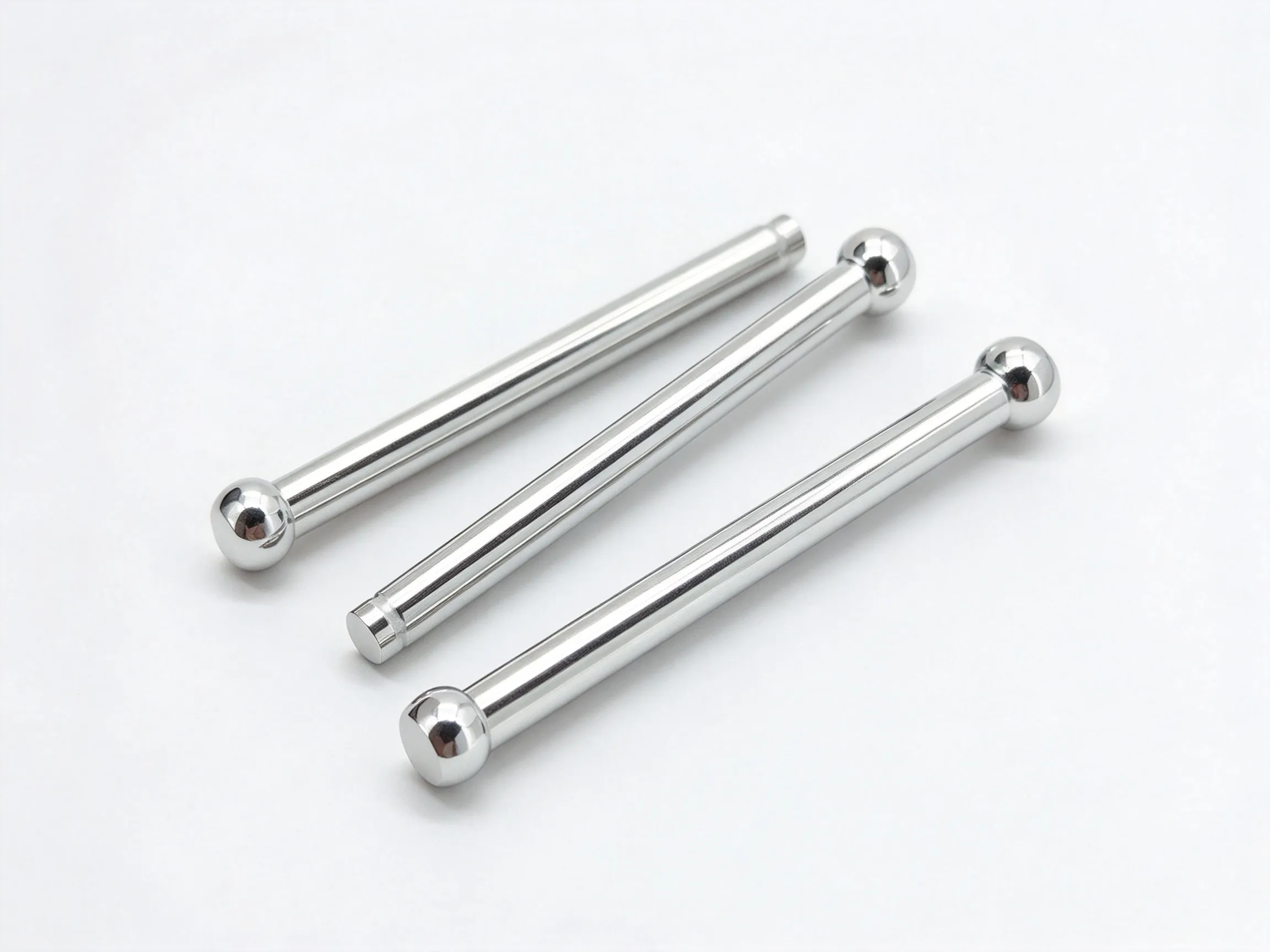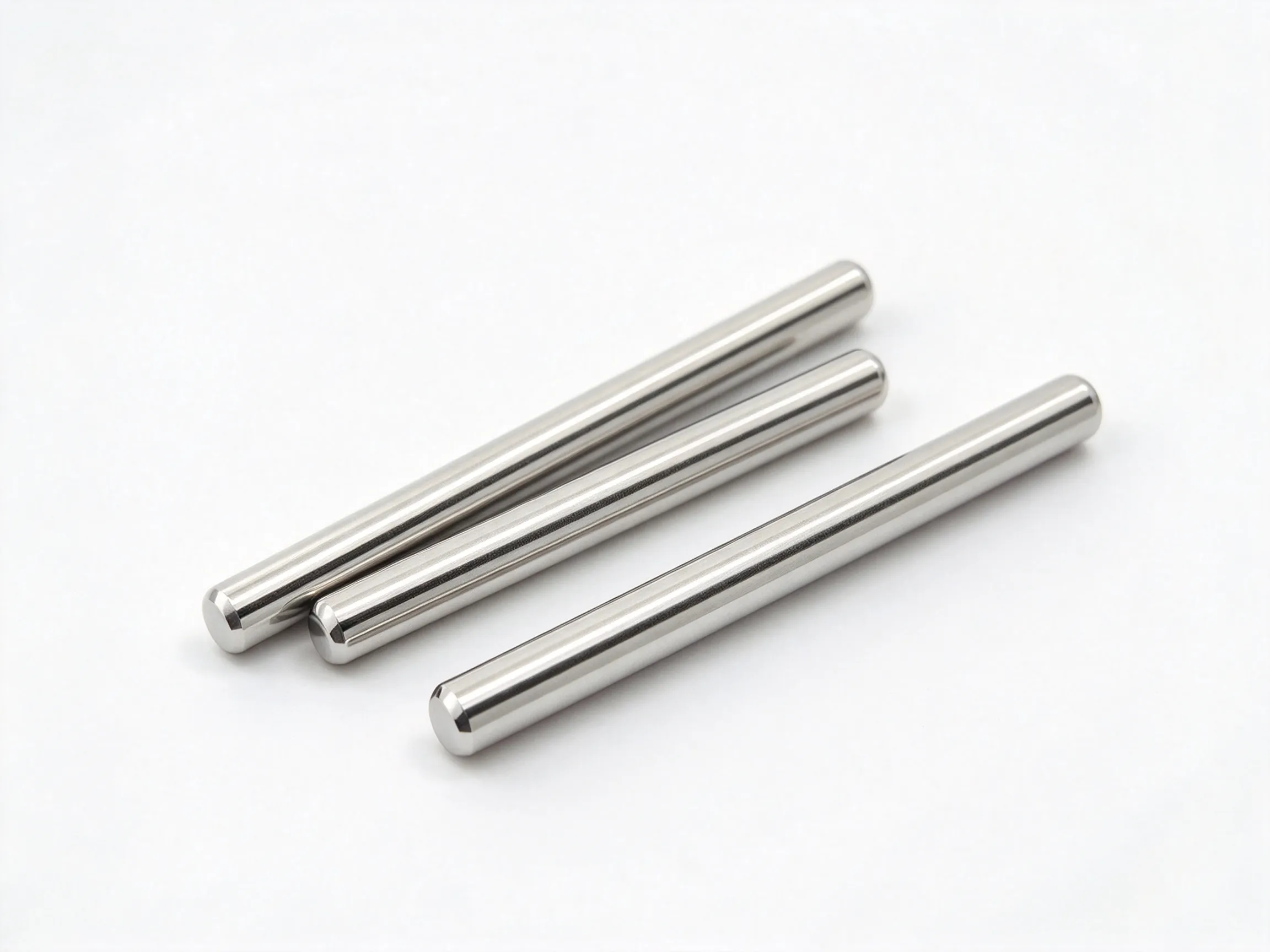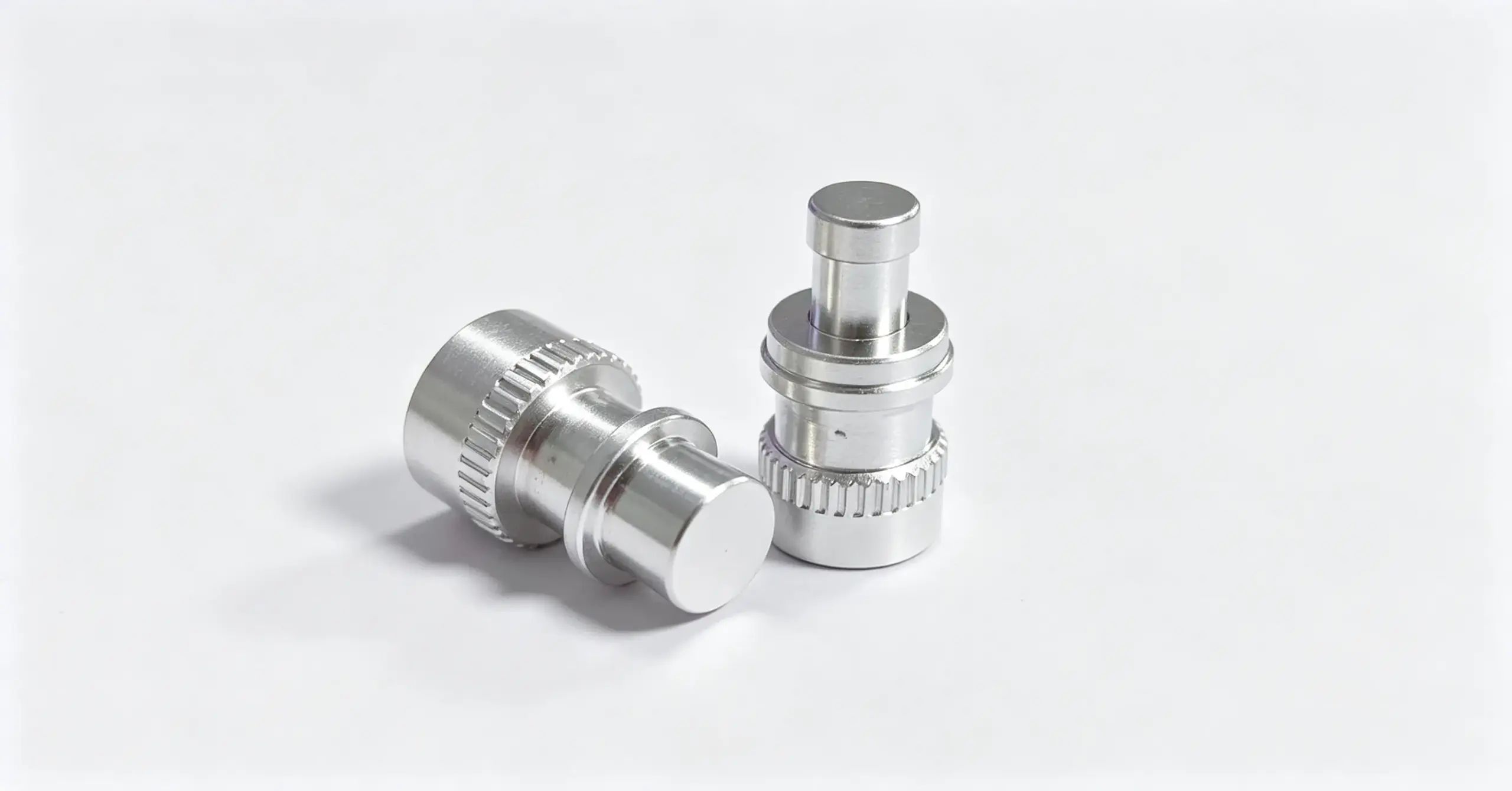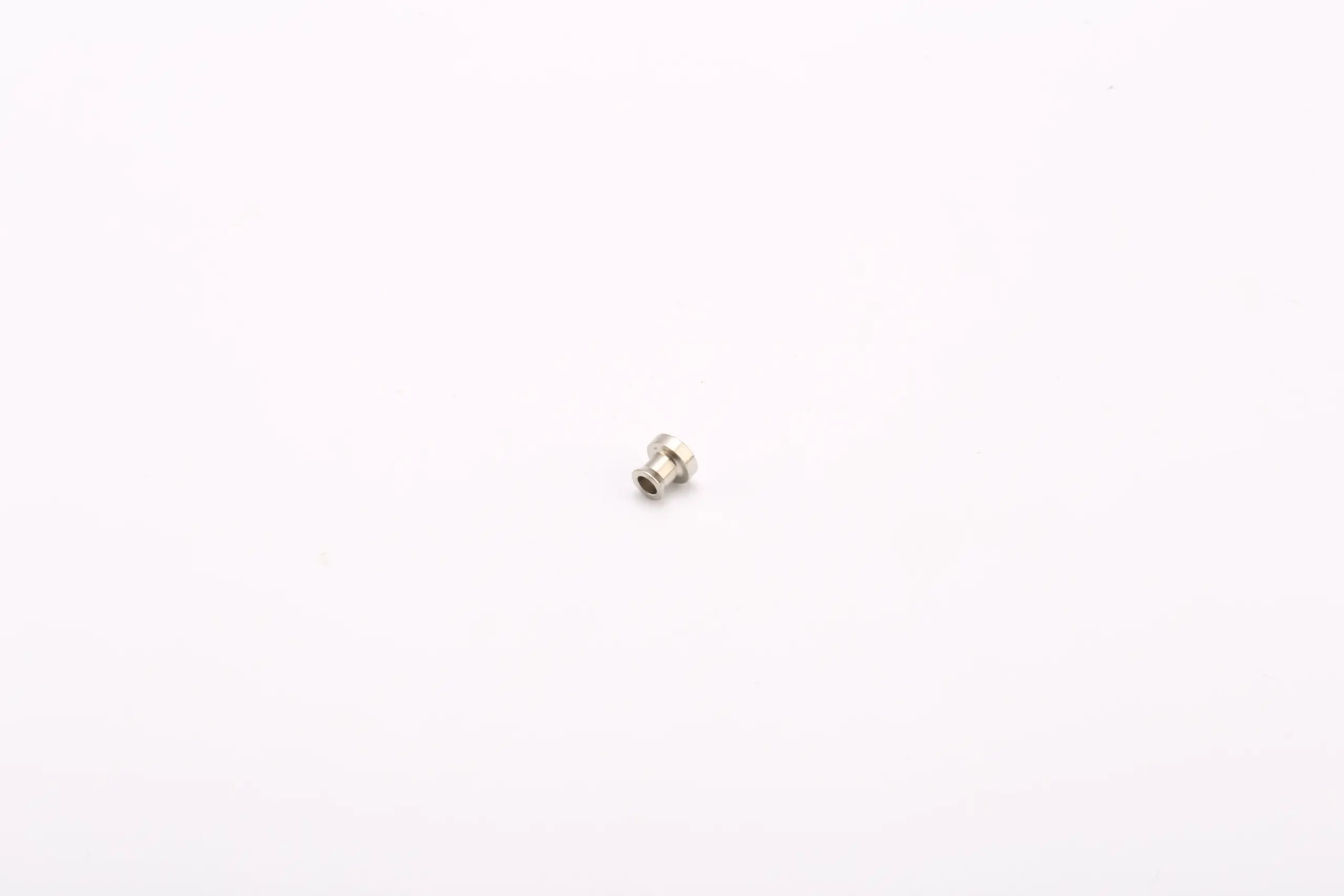
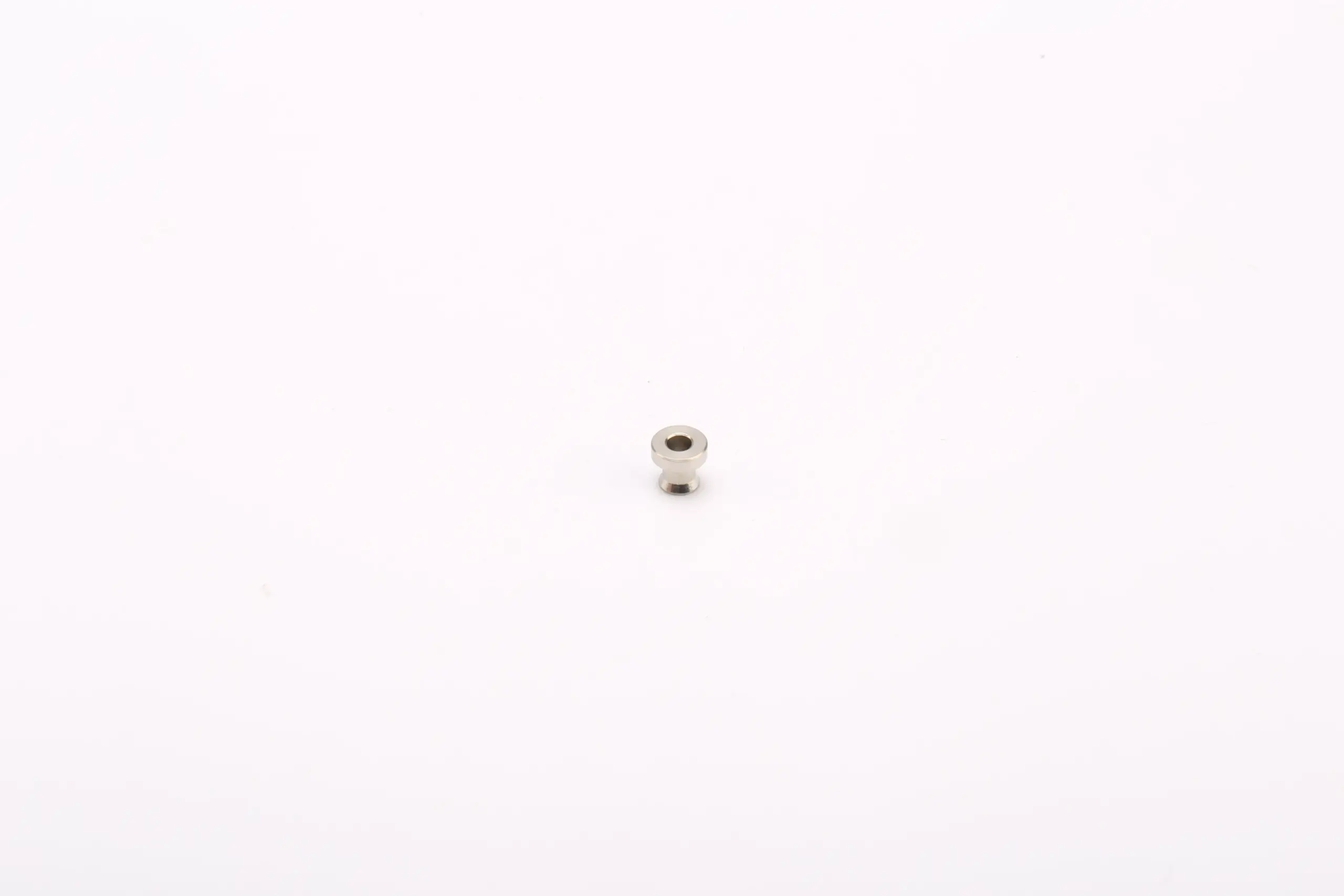
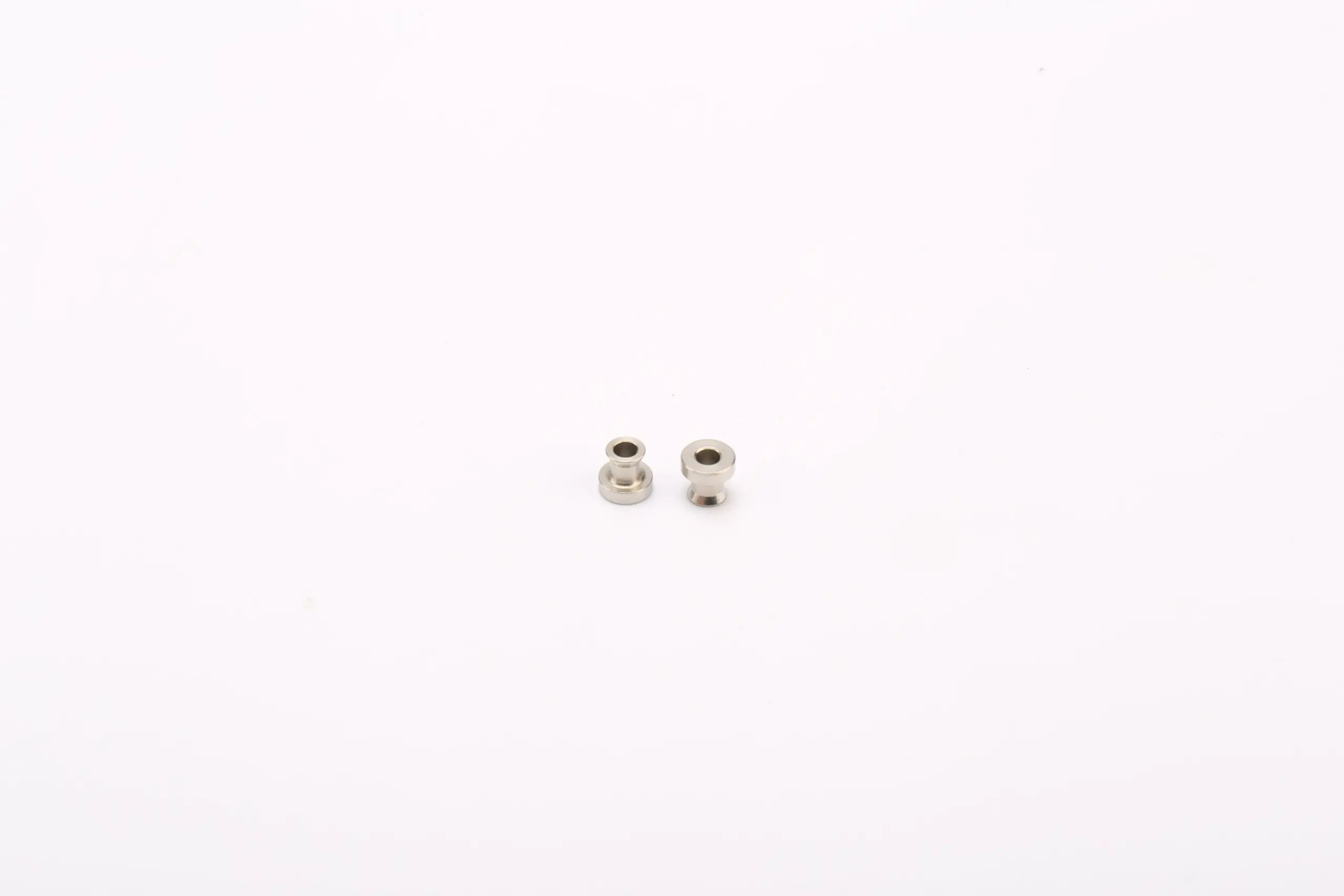
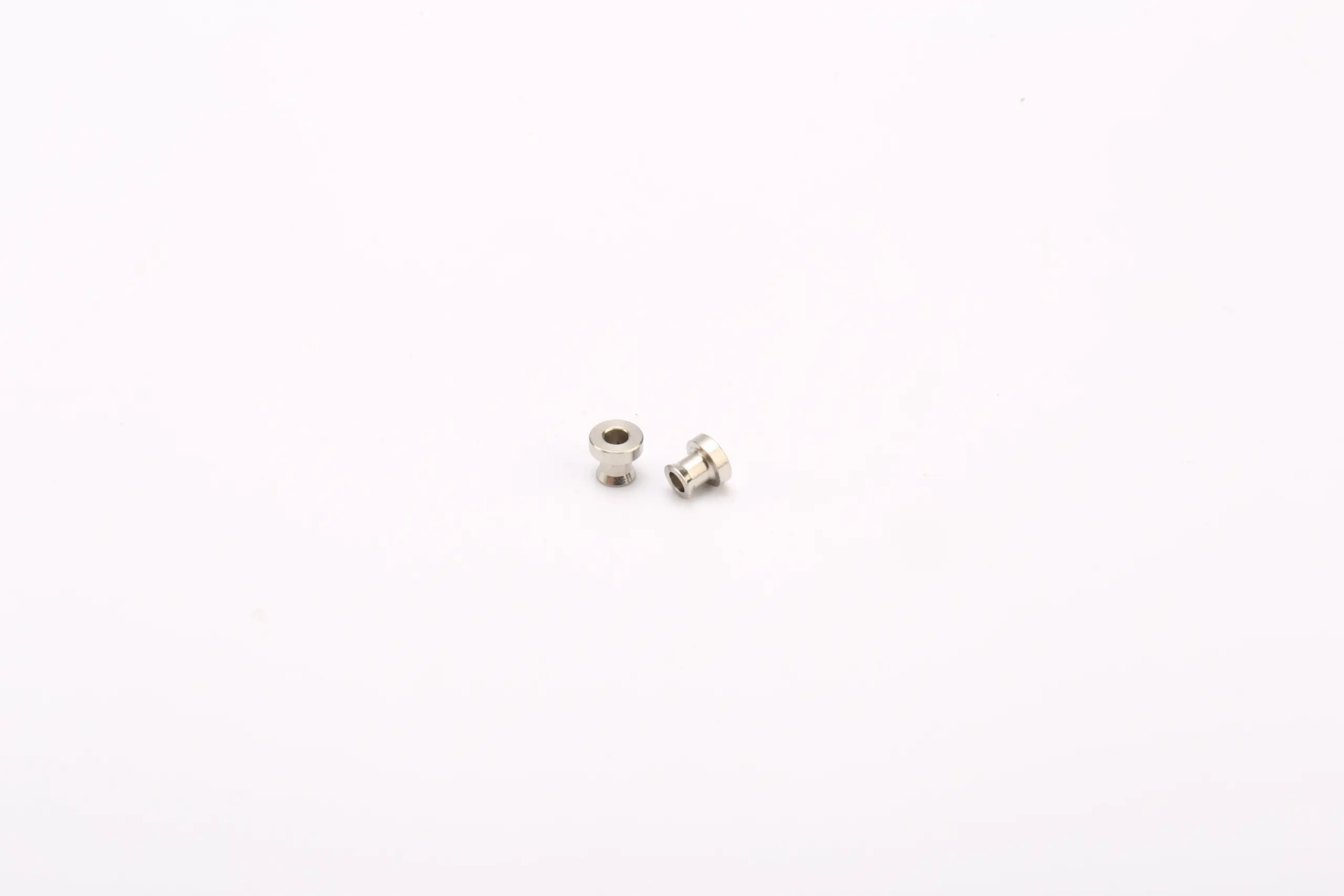
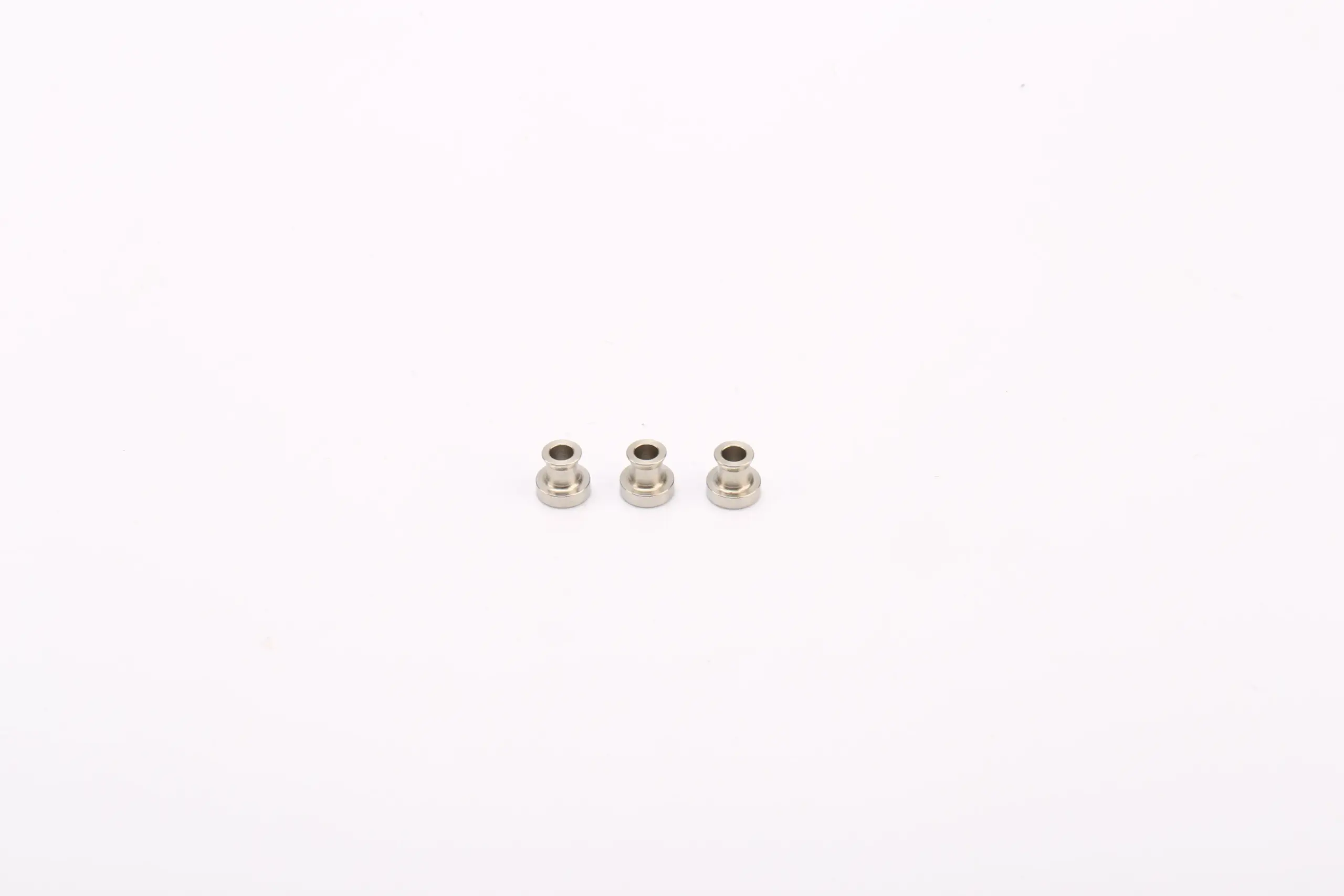
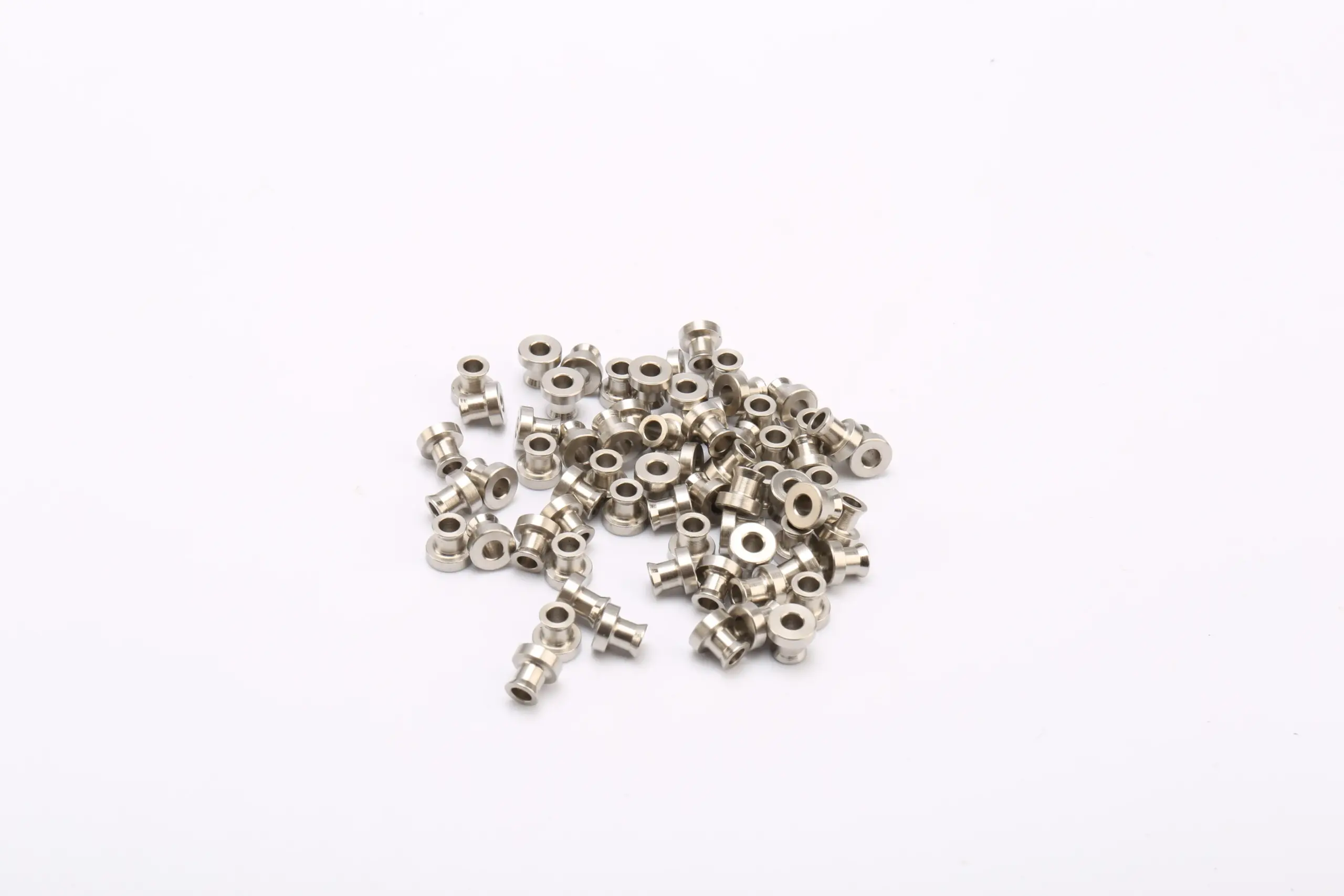
A stainless steel widget is a drawing-defined small component rather than a standard fastener family. The gallery shows a tiny flanged or stepped body with a central opening, so the functional definition comes from the seat, bore and outside profile shown in the sample.
Widget as a drawing-defined part
The word widget does not define a standard shape. For this item, the visible form is a small cylindrical body with a flange or step and a central hole. Each surface should be tied to a function: the flange may provide a seat, the outside diameter may locate the part, and the bore may clear a pin or allow passage.
Small-scale assembly and handling
Small parts are easily damaged by tweezers, automated feeders or an oversized mating pin. The drawing should identify burr-free edges, a practical chamfer and the surfaces that must remain clean. Handling and packaging requirements may matter as much as the nominal dimensions when the part is supplied in volume.
Flange, bore and seating face
A flange can stop the part at a panel or provide a bearing area, but it does not by itself set the installation force. The bore should be checked against the mating pin, and the flange face should be inspected for flatness and damage. If the part is pressed or staked, the deformation zone must be defined rather than inferred from the photo.
Specification inputs
- Show the outside profile, flange and every step.
- Define the bore, through length and end conditions.
- Identify the seating face and the mating component.
- State material, finish, quantity and inspection points.
Material, finish and inspection
Stainless steel is named by the title, but the grade and surface condition still require confirmation. Check the bore for burrs and the flange for distortion under magnification. Trial-fit the widget in the intended assembly and verify that it seats at the correct depth without crushing a thin wall or trapping debris.
Because the widget is small, agree on a handling and packaging method that prevents loss and edge damage. Review the central opening with the mating pin and confirm that the flange or step seats on the intended face. If the component is fed automatically, check the orientation feature and avoid sharp edges that can jam the feed track. The first sample should be inspected at magnification and assembled with the actual mating hardware.
FAQ
Is a widget a standard part number?
No. It is a drawing-defined custom component, so the geometry and inspection requirements must be supplied.
Can the central hole be a clearance bore?
It can be, but the mating pin diameter and required clearance must be stated.
What should be inspected on the first sample?
Check the bore, flange seat, outside profile, material and finish in the actual mating assembly.
Browse the Custom Parts category, or compare flat head screws with a hole and stainless steel pan head hex socket screws.