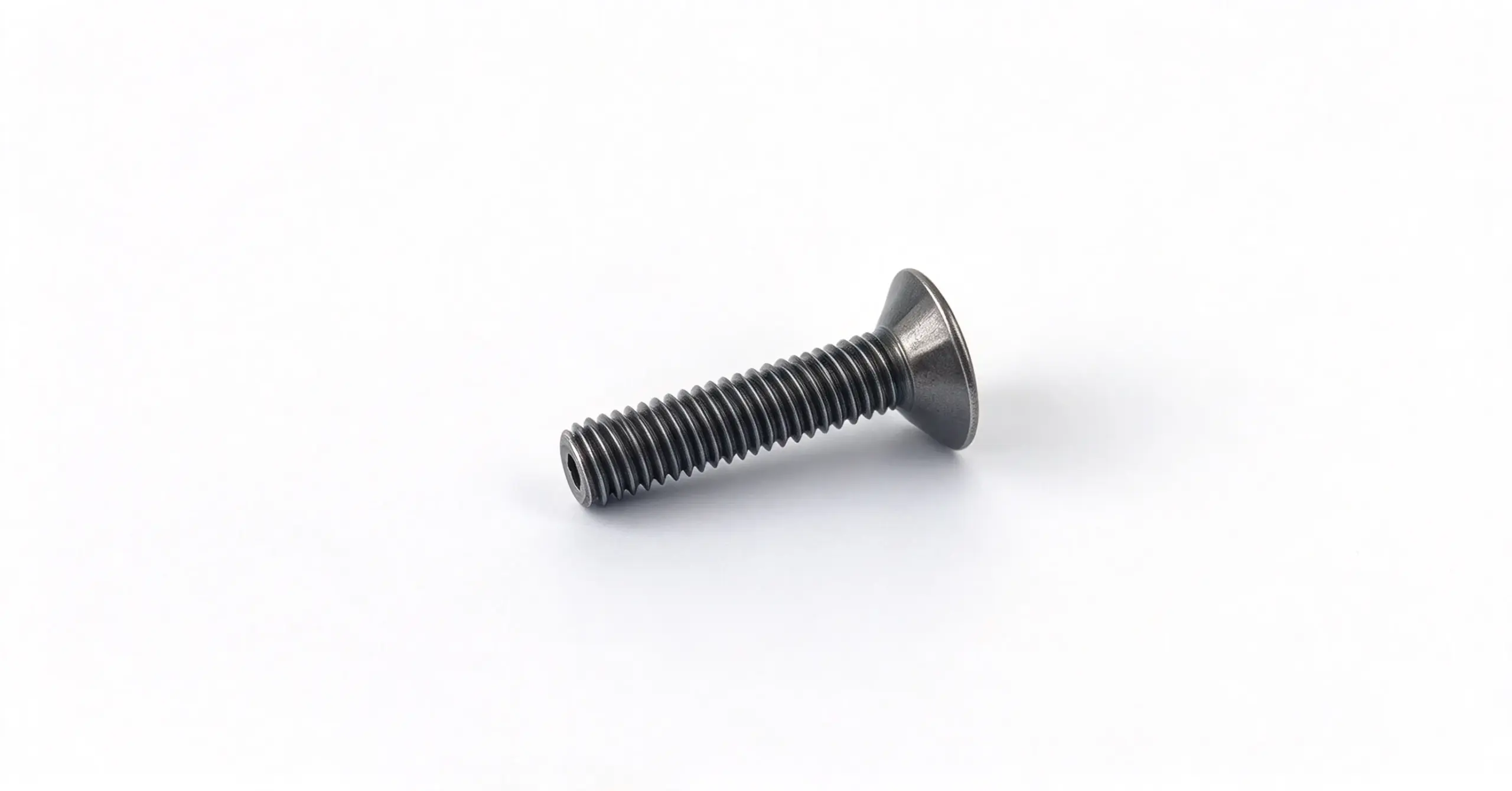
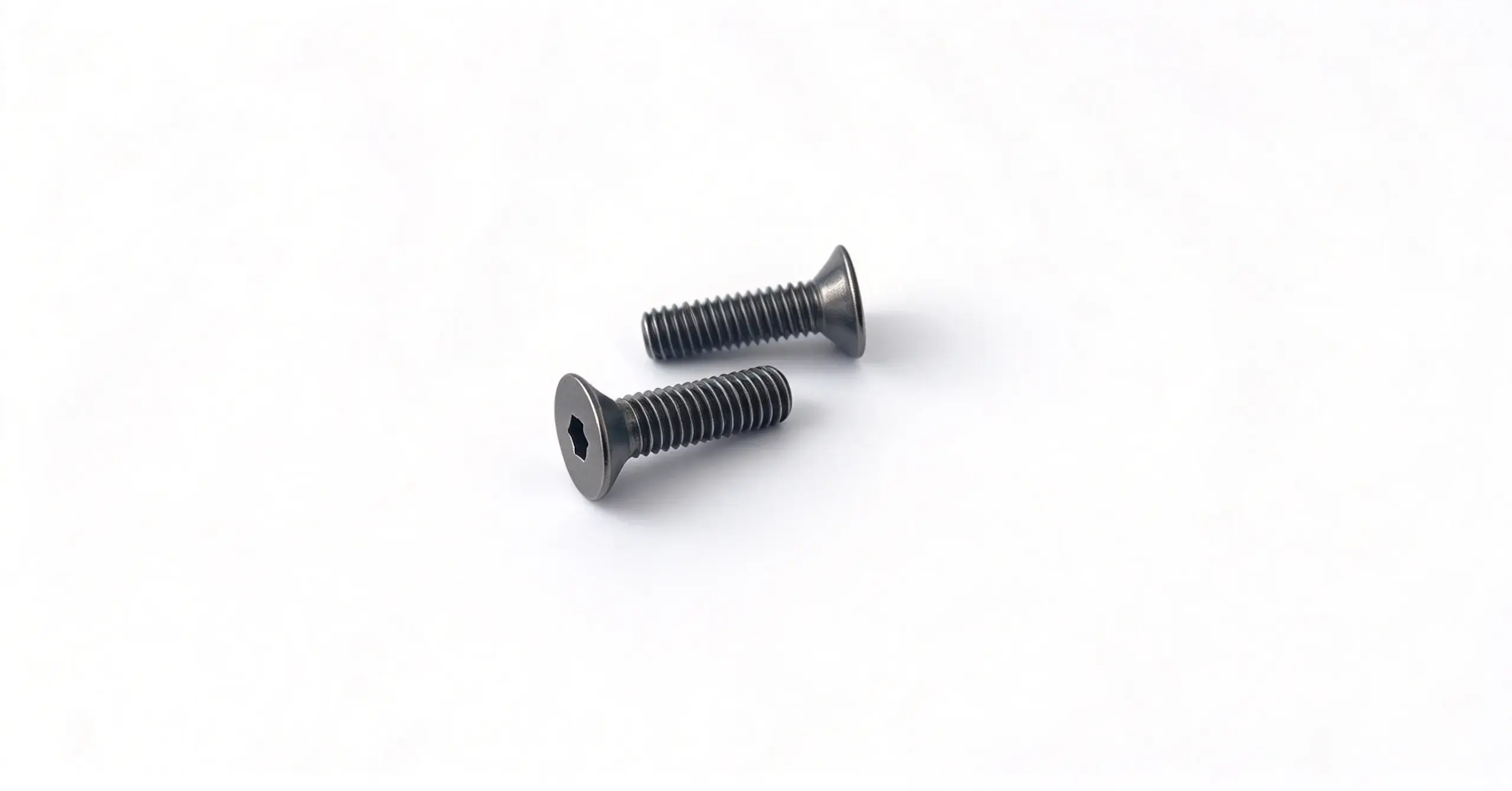
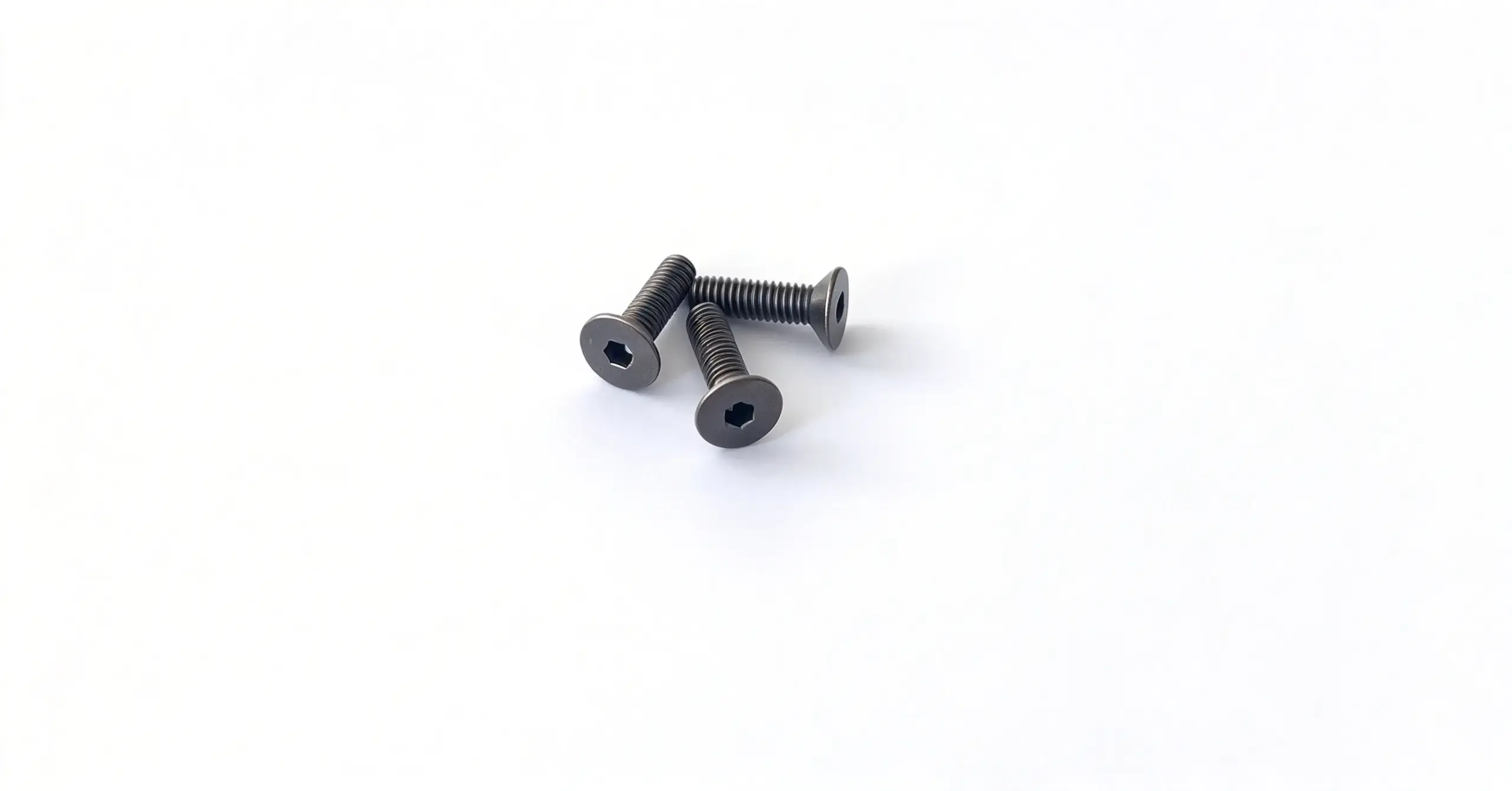
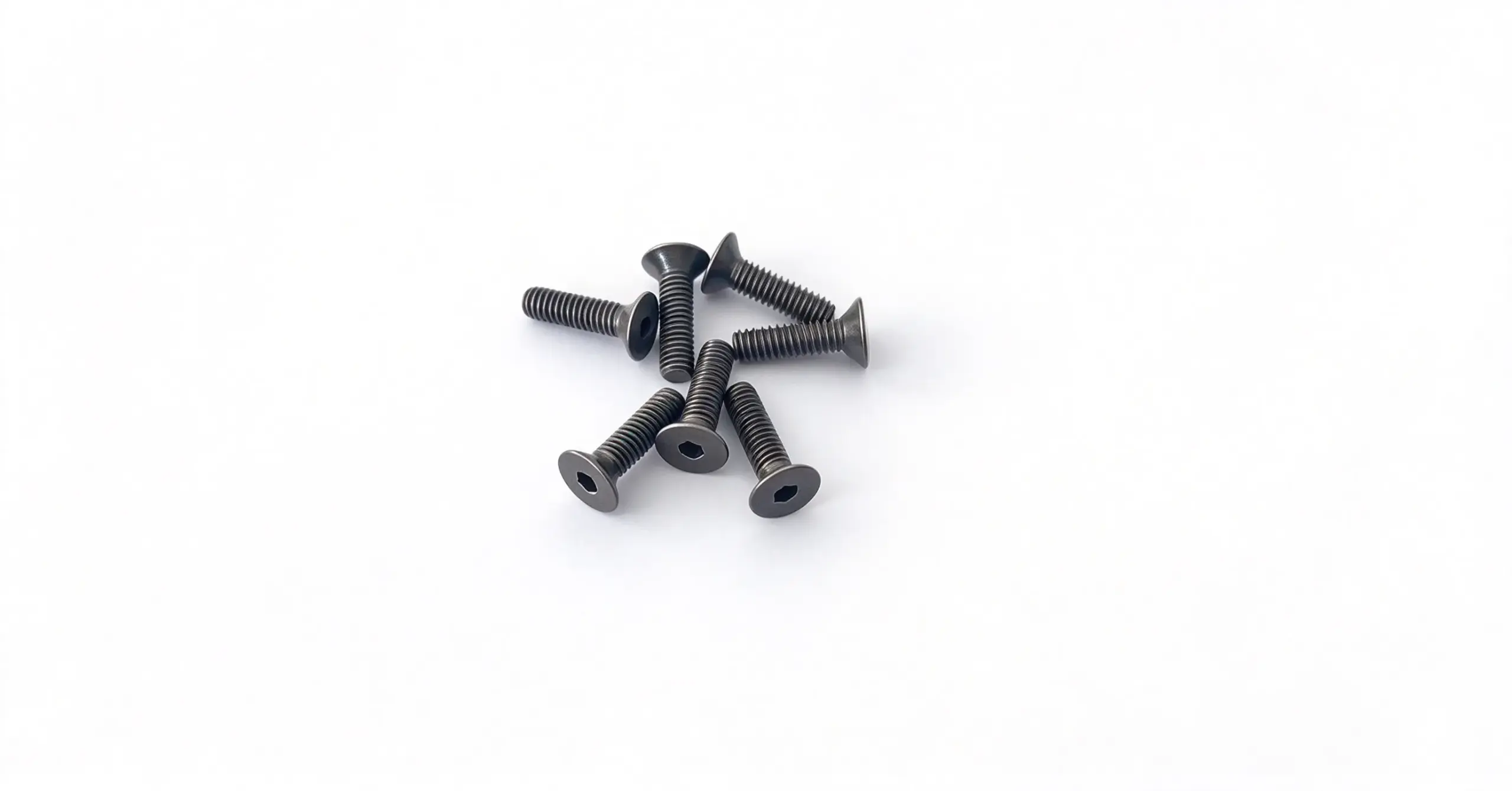
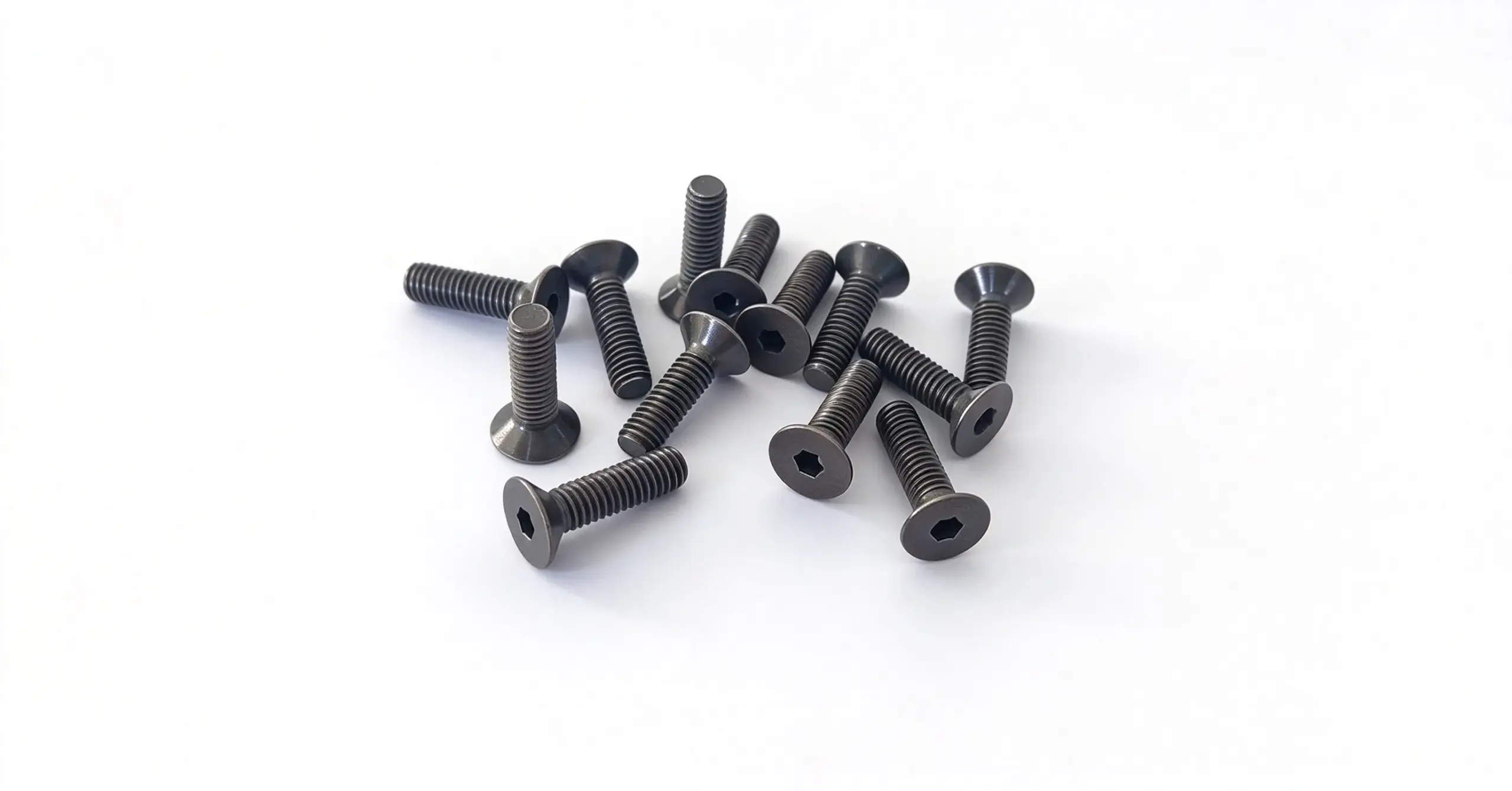
These custom hex socket countersunk head screws combine a recessed hexagonal drive, a conical underside to the head and a threaded shank. The gallery shows a dark surface appearance. The head is intended to work with a matching countersink so the assembly can achieve the specified seating position without a projecting cylindrical or pan head.
Countersunk seating and drive access
The head diameter, head height and countersink angle must be reviewed with the mating part. A screw will only sit at the required level when the countersink geometry, hole position and available material thickness are compatible. Do not select the receiving countersink from the photograph alone.
Provide the hex socket size and usable depth, together with the required tool access. A recessed drive needs enough engagement for assembly without the key fouling an adjacent wall or cover. The drawing should also define the transition beneath the head and the thread run-out where they affect seating.
Where this head style is considered
Countersunk screws can be considered for panels, covers, fixtures and hardware assemblies where the head position is part of the fit or clearance requirement. Their conical seating surface differs from the flat bearing surface of a cylindrical or pan head. Substitution therefore requires a check of the receiving hole and the joint design.
Check the material thickness around the countersink, the thread engagement in the mating component and the clearance beyond the screw end. If a cover must be removed for service, include access for the hex key and any restrictions on repeated assembly.
Drawing details for quotation
- Thread diameter, pitch, tolerance requirement and threaded length.
- Overall length and the measurement datum used for the countersunk head.
- Head diameter, height, seating angle and acceptable installed position.
- Hex socket size, depth and tool clearance.
- Material grade, mechanical requirements, finish, order quantity and inspection criteria.
If a product standard is required, provide its designation and revision with the drawing. The head shape alone does not establish compliance with a particular standard or strength class. YIWAN can review the complete specification before quoting a custom part.
Material and surface finish
The dark appearance in the photographs does not establish the coating process, base material or corrosion performance. Specify the required material, heat treatment where applicable and finish. Include any restrictions on coating thickness, thread fit, surface damage or contamination that matter to the assembly.
For an exposed head, agree the visual acceptance criteria alongside the dimensional checks. Protect the socket and threads during handling and packaging so that the approved sample remains usable for comparison.
Installation and sample checks
Trial the screw in the actual countersunk component and mating thread. Check that the head seats evenly, the screw does not bottom out and the hex key engages fully. Inspect the socket edges, thread entry, head seating surface and any burrs beneath the head.
Set the tightening method and torque through the joint design and an appropriate assembly trial. They cannot be determined from the photograph or dark finish. Confirm the final head position, surrounding clearance and removal access before approving the production sample.
Frequently asked questions
Is this interchangeable with a cylindrical-head socket screw?
The seating geometry differs. A countersunk head needs a compatible countersink, so the mating component must be checked before changing head styles.
Does the dark surface identify a particular coating?
No. The required coating and material grade should be stated in the inquiry and confirmed against the production specification.
What should be sent with a sample?
Include the mating component or its drawing, the required thread and head dimensions, material and finish requirements, quantity and the checks needed for sample approval.
Explore YIWAN custom screws or compare the cylindrical-head hex socket screw profile. Request a review of your drawing and assembly requirements.