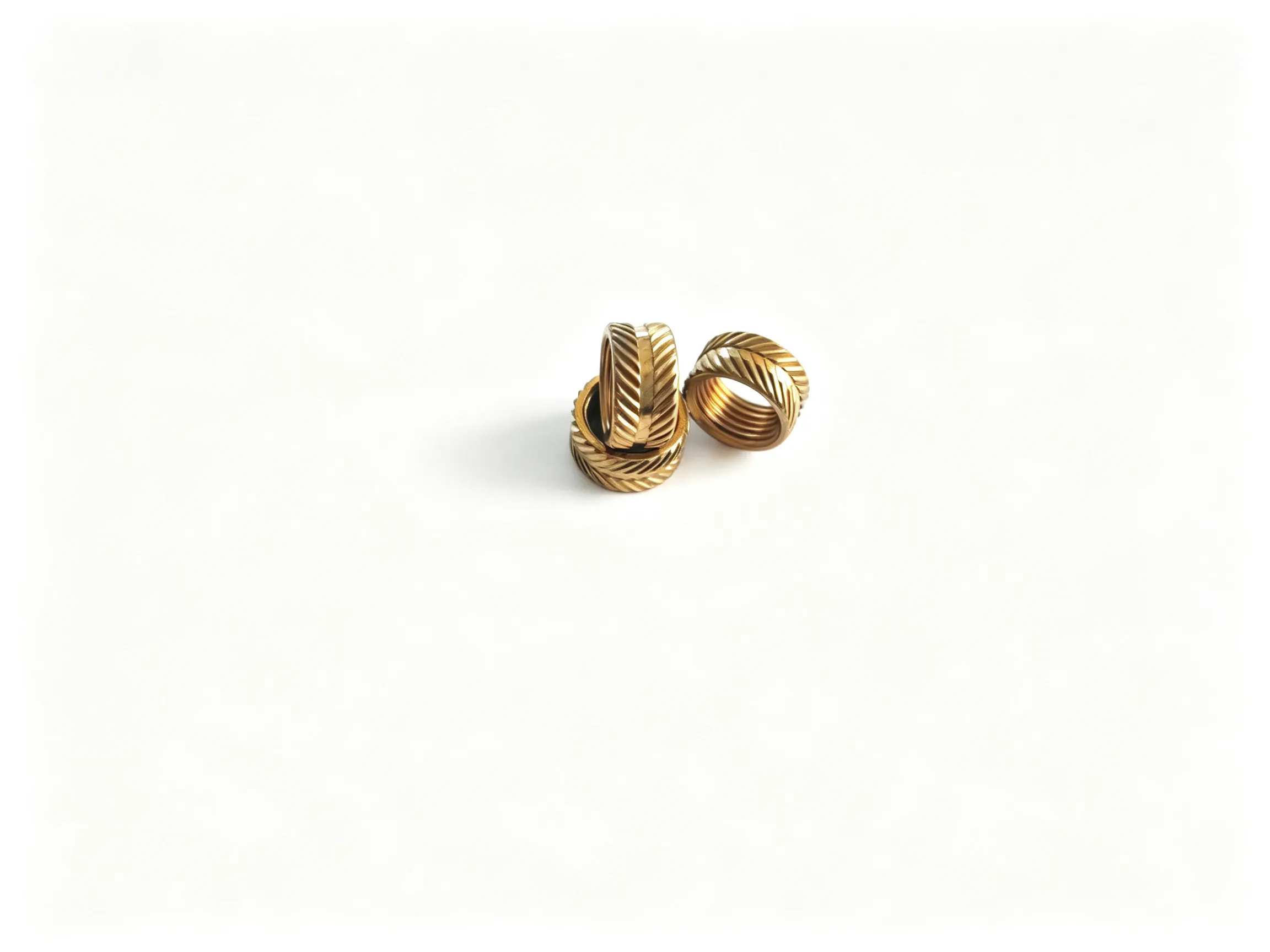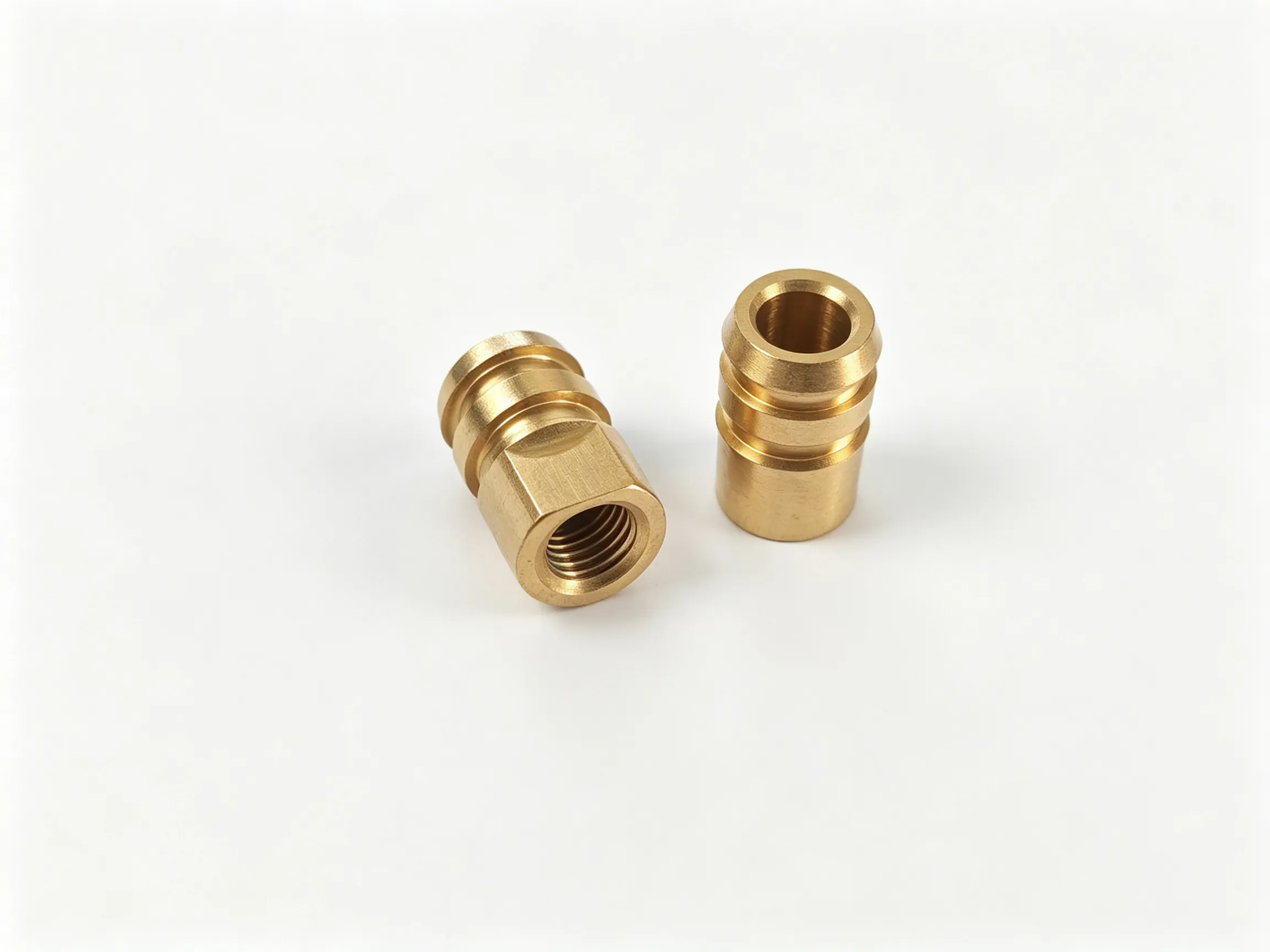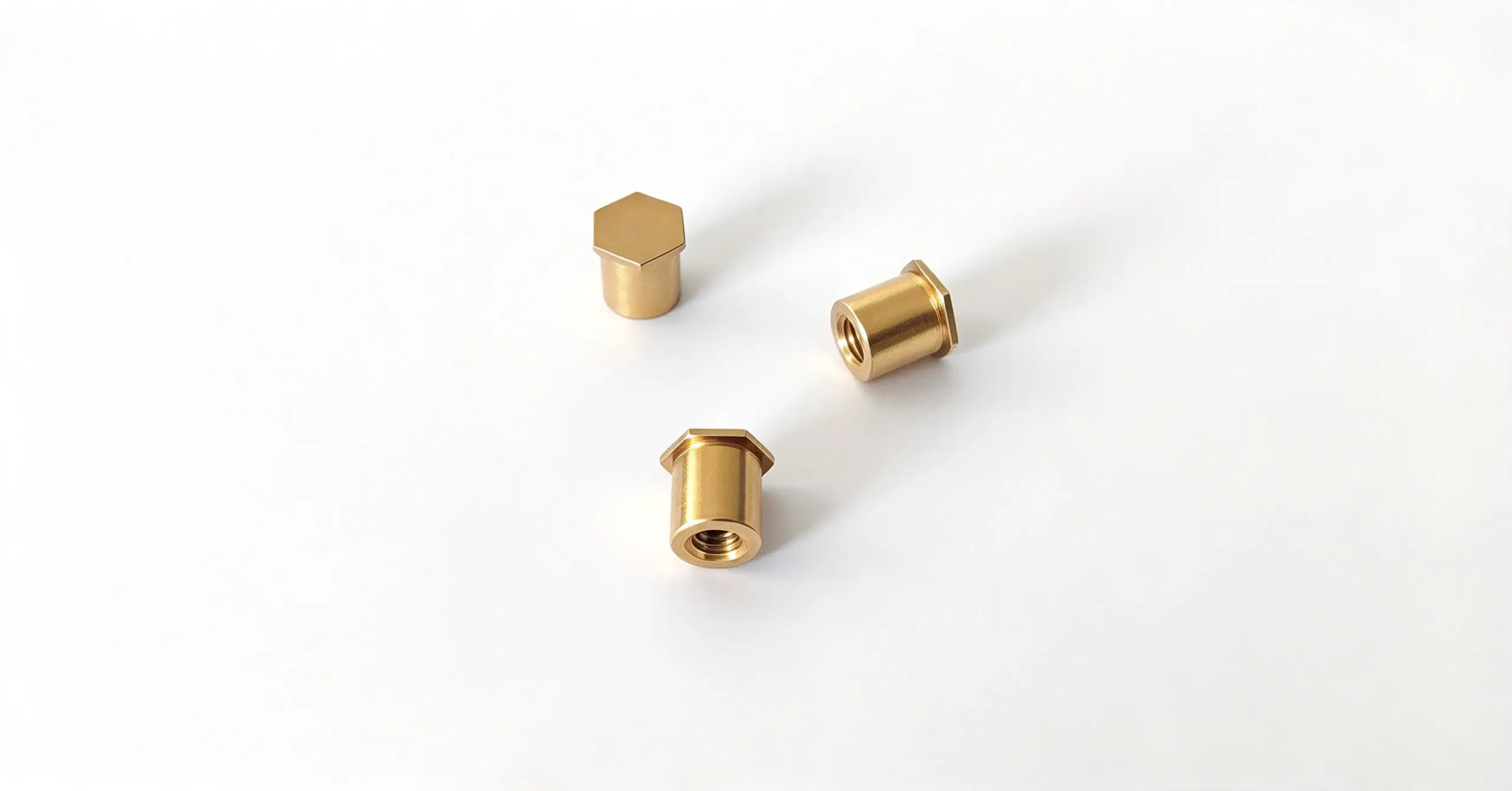


Copper embedded nuts are threaded inserts with a compact body and a copper-toned appearance. The gallery shows parts with a central bore and an external pattern that appears intended to engage the surrounding material. The copper reference should be clarified as a material or finish requirement before the part is specified for a visible or functional joint.
Copper tone and base material
A copper-colored surface can come from a copper alloy, a plating or another finish. Ask for the substrate and coating separately, especially when the part will be exposed to cleaning agents or repeated handling. The internal thread and the outer engagement surface may need different protection. Do not infer electrical conductivity or corrosion performance from the color alone.
Ribs, knurl and hole engagement
The outer pattern should be matched to the hole preparation and installation method. A ribbed or knurled body can create a mechanical key, but the surrounding material must be able to accept it without cracking. Check the body diameter, length and any flange or shoulder. A part that seats visually may still leave an incomplete thread or a weak interface if the hole is not prepared correctly.
Installation method and heat exposure
Confirm whether the nut is intended for molded-in, heat-set, press-in or another process. Heat-set and molded-in routes can expose the part and the surrounding material to different conditions, so the process specification matters. The supplier should know the panel material and the acceptable installed height. Do not use a generic installation temperature or time without validation.
Thread care and cleaning
Keep the bore free of chips and excess material during installation. After the nut is seated, check that a mating screw starts by hand and reaches the required engagement. For visible parts, define how the copper-toned surface will be cleaned and protected. Abrasive cleaning can change the appearance and may remove a thin finish, so the cleaning method should be agreed before production.
Inspection checklist
- Confirm the substrate and copper-toned finish.
- Define the thread, body profile and installed height.
- Provide the hole, material and installation method.
- Inspect seating, thread cleanliness and surface appearance.
Approve the sample in the final assembly material. Record the installation settings and the accepted appearance so later lots can be compared.
FAQ
Does copper color mean the nut is solid copper?
Not necessarily. Confirm the base material and finish if either matters to the application.
Can these nuts be heat-set?
The possibility must be confirmed for the specific design and panel material. Use the supplier-approved process rather than a generic setting.
What should be checked after installation?
Check the seat, surrounding material, internal thread and visible surface for damage or contamination.
Browse the copper embedded nuts category, or compare the general embedded nuts page and custom embedded nuts.