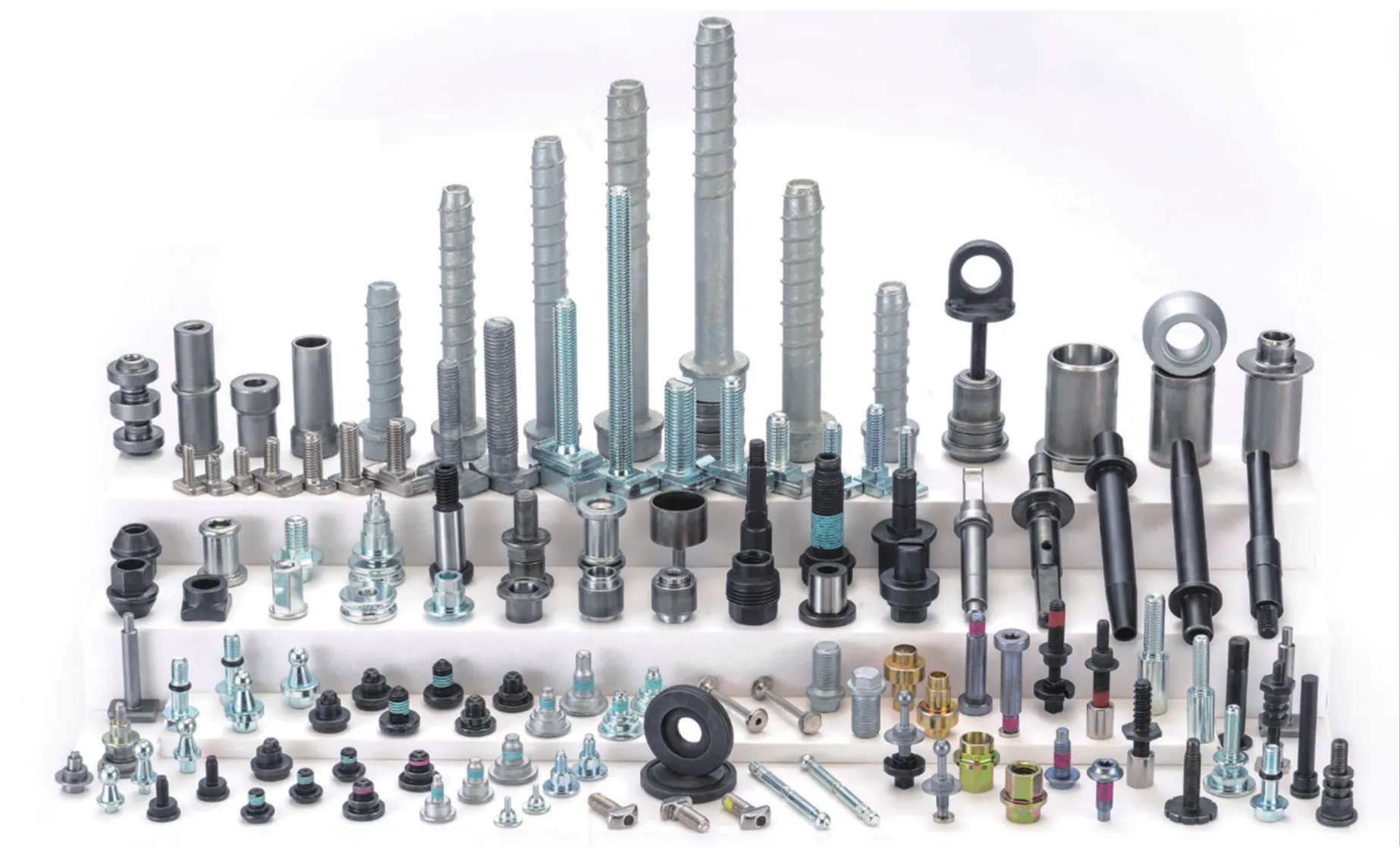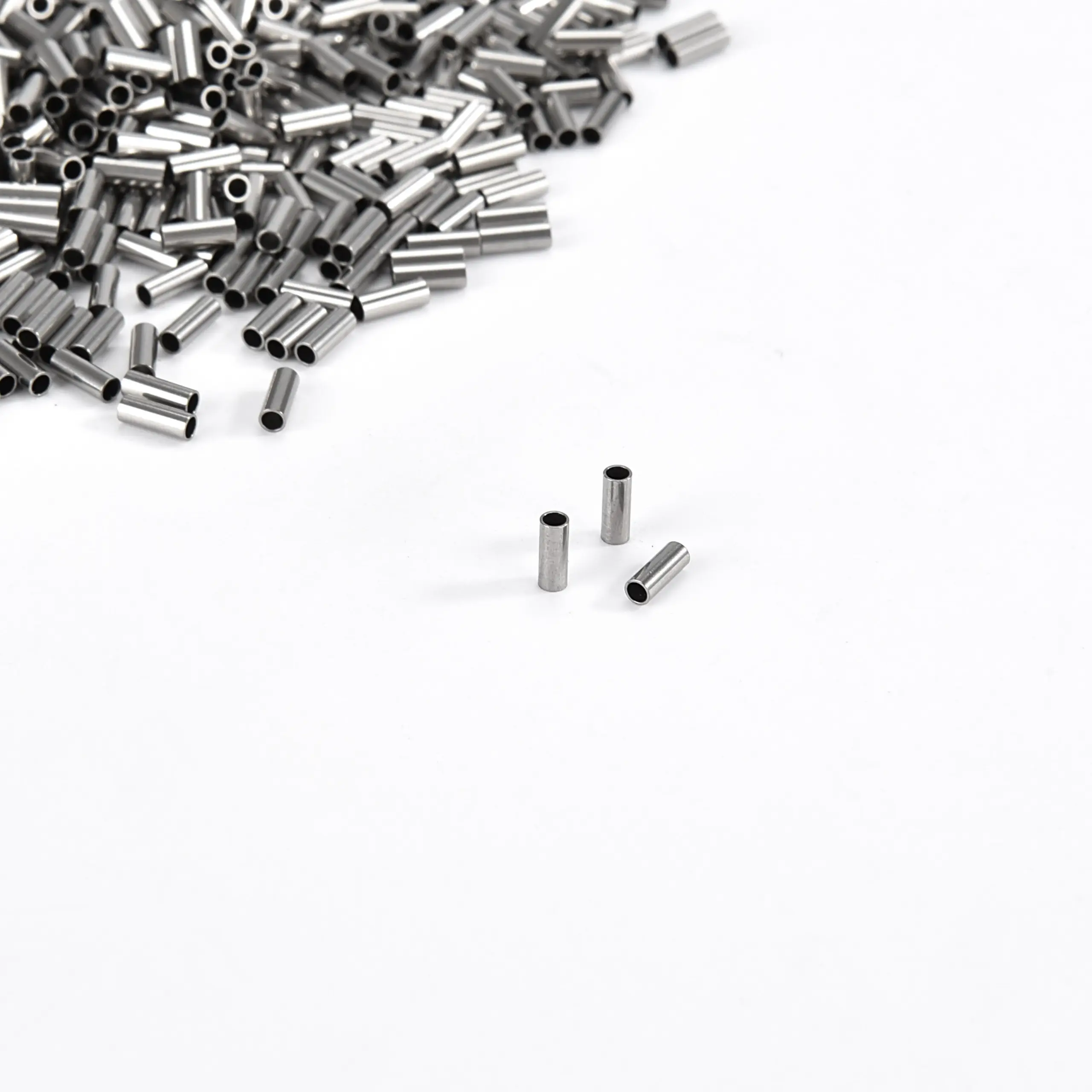
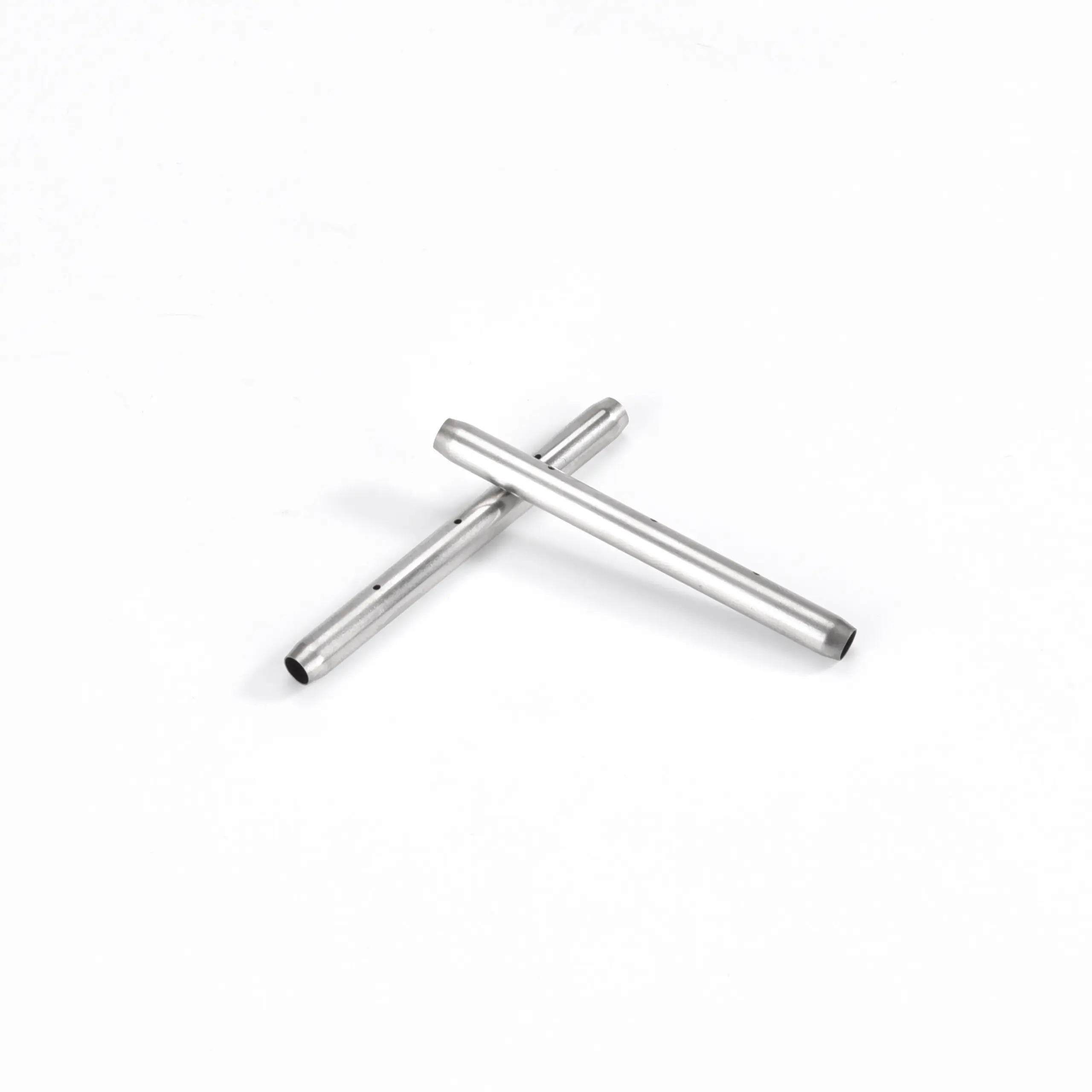
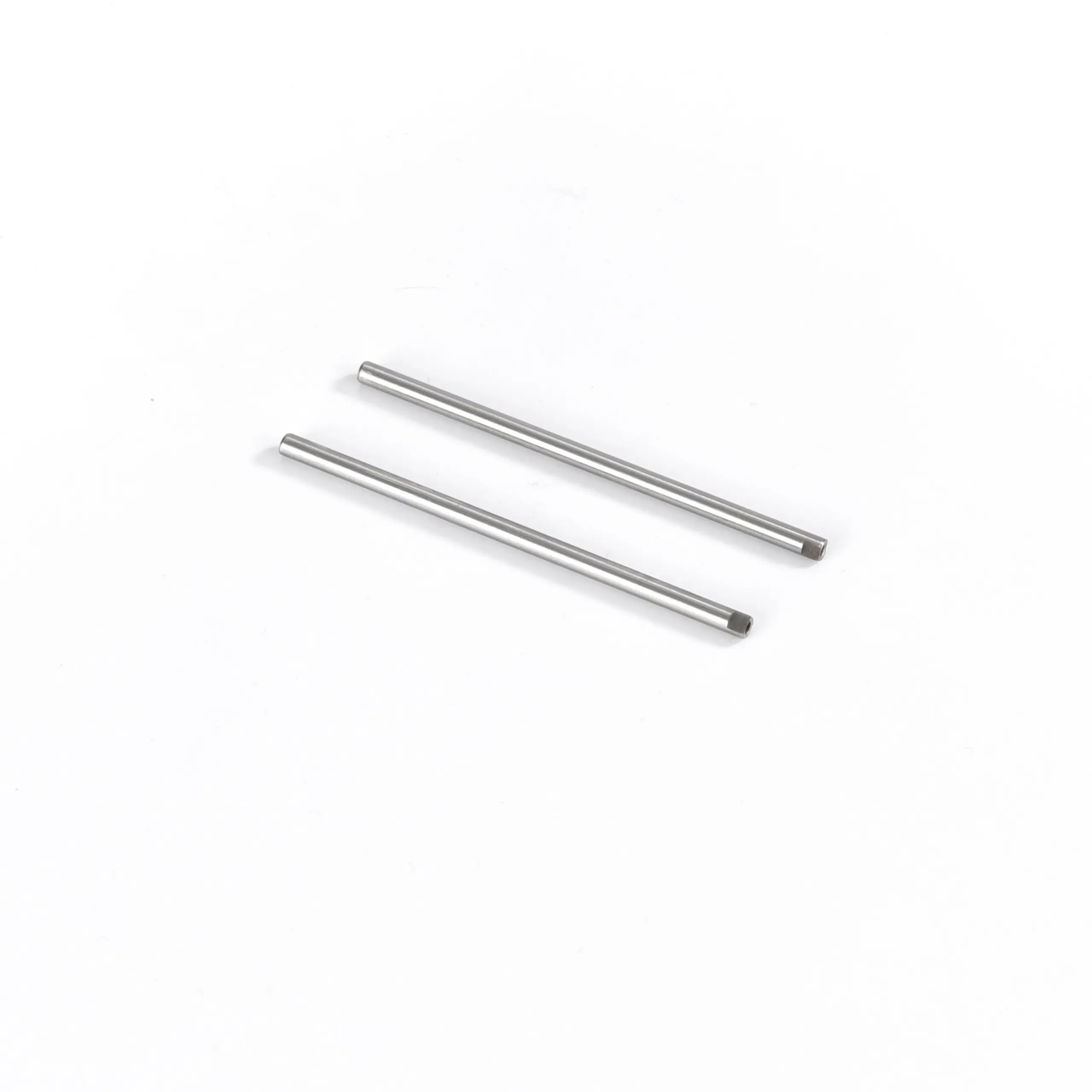
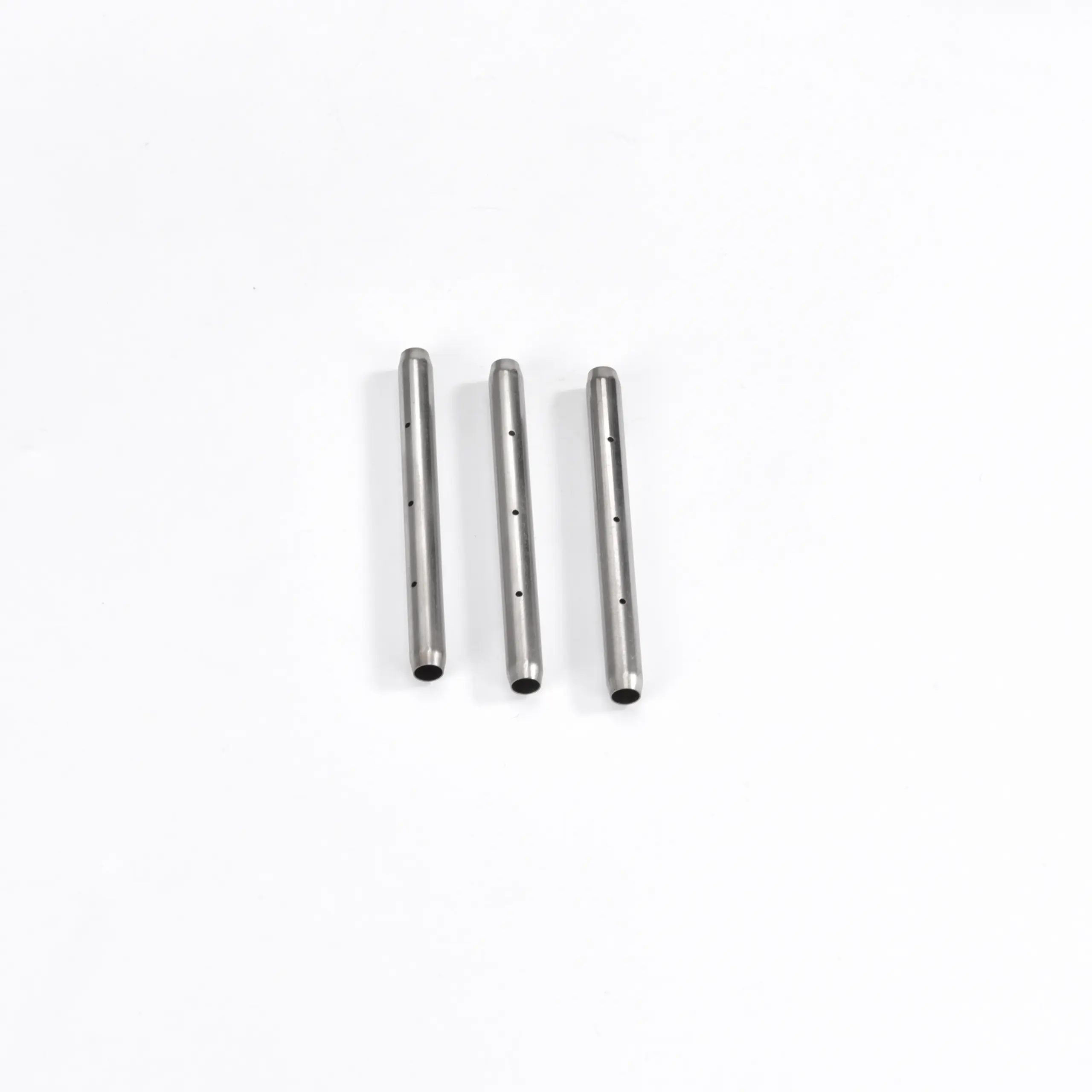
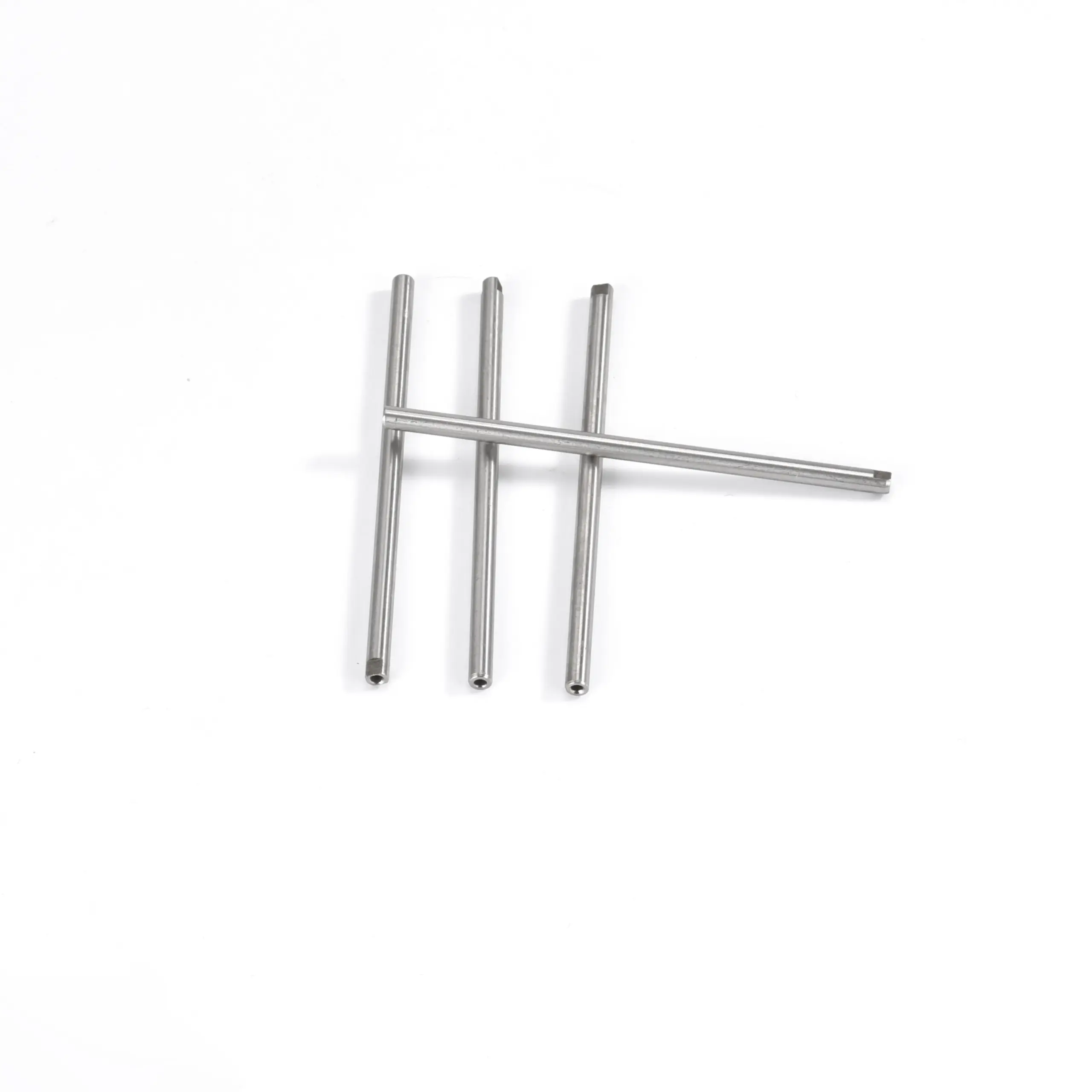
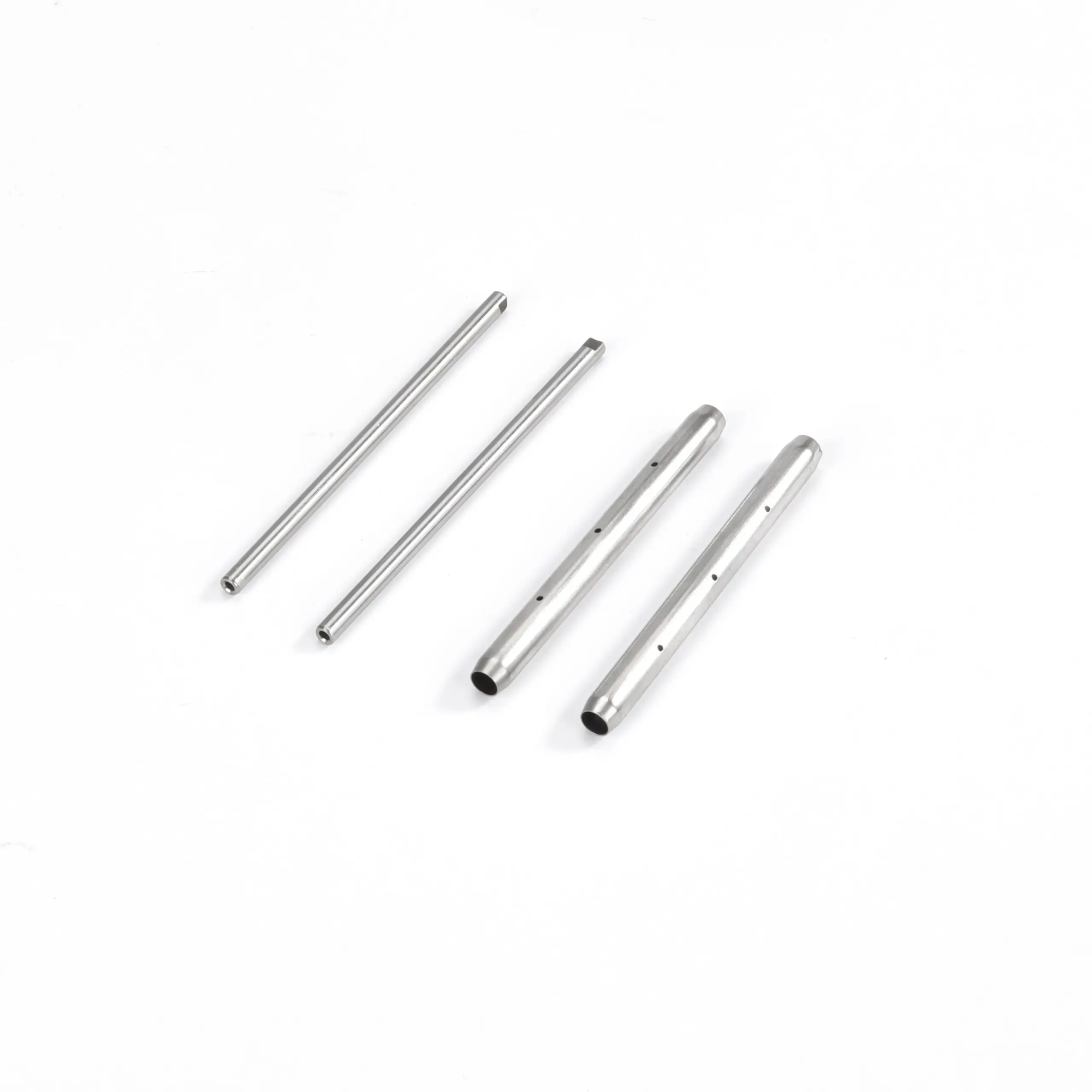
Long hollow pipe pins are open tubular parts with a narrow bore and an extended cylindrical body. The gallery shows long, thin tubes in single, paired and grouped views, with some examples revealing a chamfer or a small end feature. They are intended for hinge, pivot and tubular assembly work, but the bore, wall and end condition need to come from the drawing.
Bore, wall and length
The gallery shows several long examples, but it does not provide a reliable diameter or length. Do not scale dimensions from the image. The drawing should define the outside diameter, bore diameter, wall thickness, overall length and any end chamfer or radius.
Long pipe pins in assemblies
If the pin is a bearing surface, identify the mating shaft and the required movement. If it is a spacer, define the surfaces that clamp and the length that controls the gap. A hollow pin can perform either role, but the inspection criteria are different.
End condition and handling
The gallery suggests that some ends are chamfered or otherwise prepared. Confirm the exact end form because a sharp edge can damage a mating bore or make insertion difficult. The bore should be checked for burrs and debris, especially when the pin is long and difficult to inspect visually.
Long, thin parts are prone to bending during packing and handling. Ask how they will be supported and whether straightness will be inspected. If the pin is supplied in bulk, review the risk of tangled or nested parts and the method used to protect the ends.
How to specify a long hollow pipe pin
- Dimension the outside diameter, bore diameter, wall thickness and overall length.
- Show the end form, chamfer, radius and any required bore finish.
- State the mating shaft or pin, hole fit, load direction and retention method.
- Provide the material, surface treatment, straightness requirement and quantity.
Inspection and trial fit
Inspect the bore for burrs, scoring and obstruction. Check the outside diameter at several points along the length and verify straightness with the method appropriate to the drawing. Confirm that the ends are deburred and that the chamfer, if specified, is present on the correct side.
Trial the pin in the actual hinge or sleeve. Confirm that it enters without forcing and that the mating shaft moves or seats as intended. Check for rocking, end play and any contact that could wear the bore. If the pin is removable, verify that it can be withdrawn without damaging the surrounding parts.
FAQ
Is a hollow pipe pin the same as a tubular rivet?
No. A pipe pin is generally used as a pin, sleeve or pivot, while a tubular rivet is intended to be set or formed into a joint. Confirm the installation method before substituting one for the other.
Can the bore be used for a moving shaft?
It can be, but the bore size, straightness, surface finish and clearance must be specified for that bearing application.
How is straightness checked?
Use the method and limit stated on the drawing. A visual check is not enough for a long, thin pin that must pass through a close-fitting assembly.
Browse the pipe pin category, or compare short hollow pipe pins and copper hollow rivets.