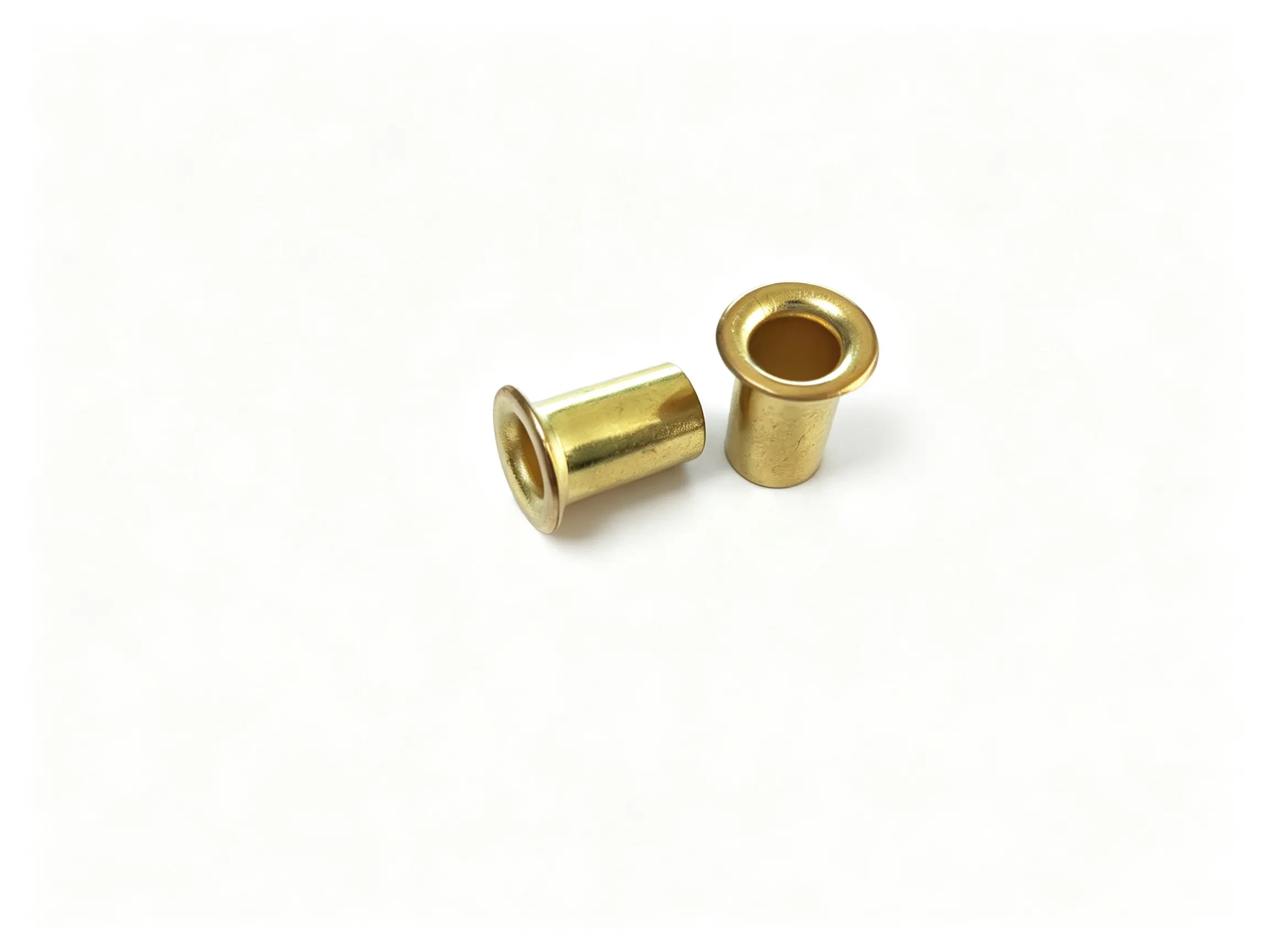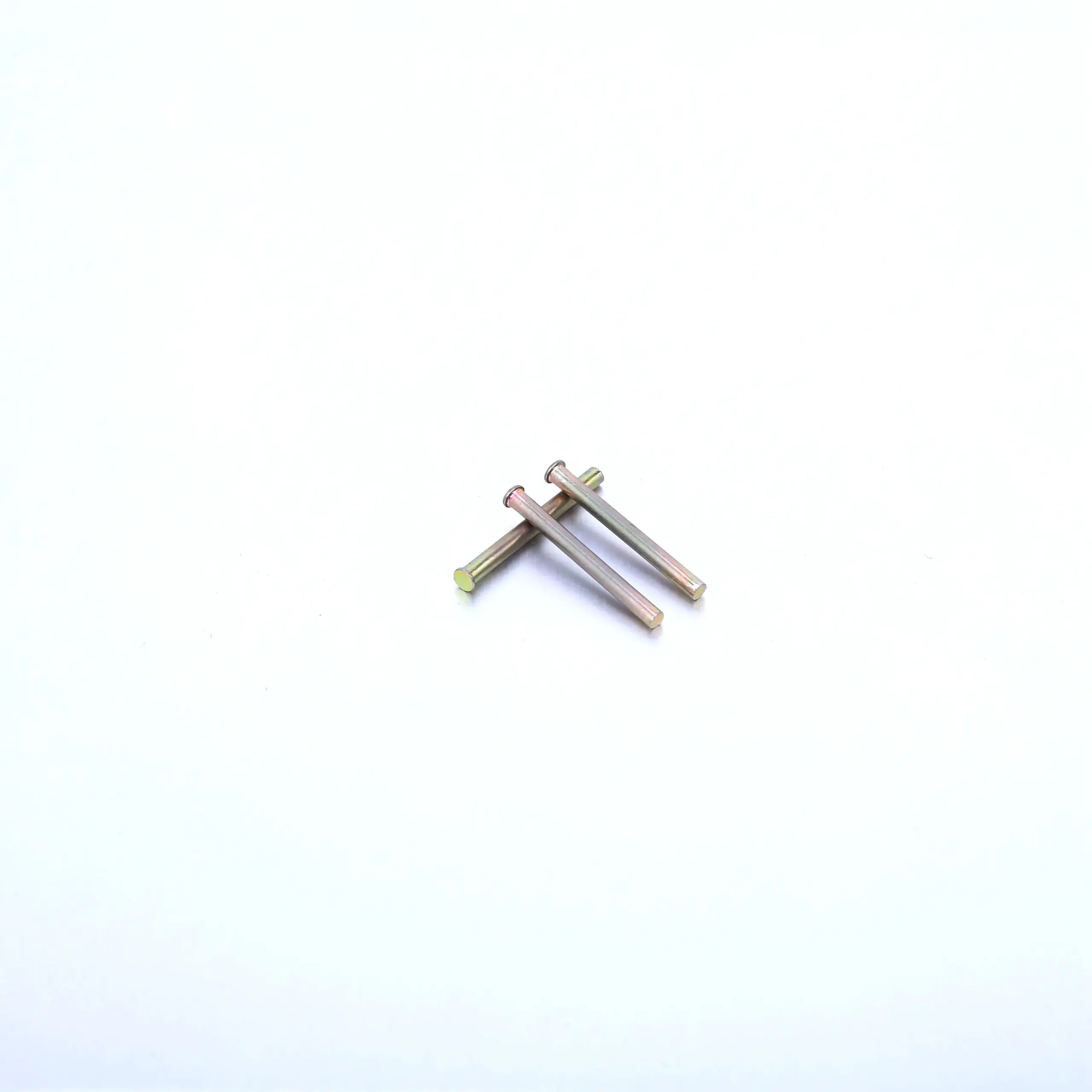


Copper step rivets combine a compact headed body with a stepped shank and a copper-toned finish. The gallery shows very small parts, with some views emphasizing the head and others showing the step and shank. The page is a useful introduction to the form, but the exact alloy, step dimensions and installation method still need to be established from the drawing or sample.
A small stepped body
The image does not provide a reliable scale. Do not estimate the step length from the relative size of the head. Use a dimensioned drawing and confirm the transition radius, because a small radius can interfere with a mating hole even when the nominal diameters are correct.
Possible applications
Copper step rivets can be considered for electrical hardware, switch parts, small hinges, decorative fasteners and compact assemblies that need a locating shoulder. The copper color may be important for appearance or for a conductive path, but those requirements should be stated separately. The surrounding materials and the service environment also need review.
If the rivet is used in a moving joint, confirm the clearance around the stepped section and the method used to retain the joined parts. A step can provide a bearing surface, but it does not by itself define the clearance or the wear life of the assembly.
Color, material and finish
The warm color suggests copper, but the photograph cannot confirm the alloy or whether a coating is present. The surface may change with handling, cleaning or exposure. Ask for the base material and finish, and state whether the visible head and the functional step have the same requirement.
Inspect the step after finishing. A coating can round an edge or reduce a clearance, and a polished surface can hide a small burr. If the rivet is part of an electrical contact, identify the contact surfaces and confirm that the selected finish is suitable for them.
How to specify a copper step rivet
- Dimension the head, step diameter, step length, body diameter and overall length.
- Show the seating face, the mating hole and the required plate thickness.
- State the copper alloy, finish and any electrical or appearance requirement.
- Provide the installation method, inspection criteria and order quantity.
Inspection and trial assembly
Check the head for dents and the step for burrs or an incomplete transition. Verify that the body is straight and that the step is concentric enough for the mating hole. If the parts are supplied in bulk, sample several areas to look for bent shanks or damaged heads.
Trial the rivet in the actual workpiece. Confirm that the step seats without forcing and that the head does not rock. After setting, inspect the joint for cracks, distortion and unwanted movement. If the part is visible, keep a protected approved sample for color and surface comparison.
FAQ
Is copper step rivet a standardized part?
The page describes a family rather than a single standard size. Dimensions, alloy and finish should be confirmed for the specific drawing.
Can the step be used to center the rivet?
It can act as a locating feature if the mating hole and step are designed together. Confirm the fit and the intended seating surface on the drawing.
What is the difference from a brass step rivet?
The named material and finish differ, while the visible geometry may be similar. Confirm the alloy and surface requirements rather than relying on color.
Browse the step rivet category, or compare brass step rivets and blue-white zinc-plated step rivets.