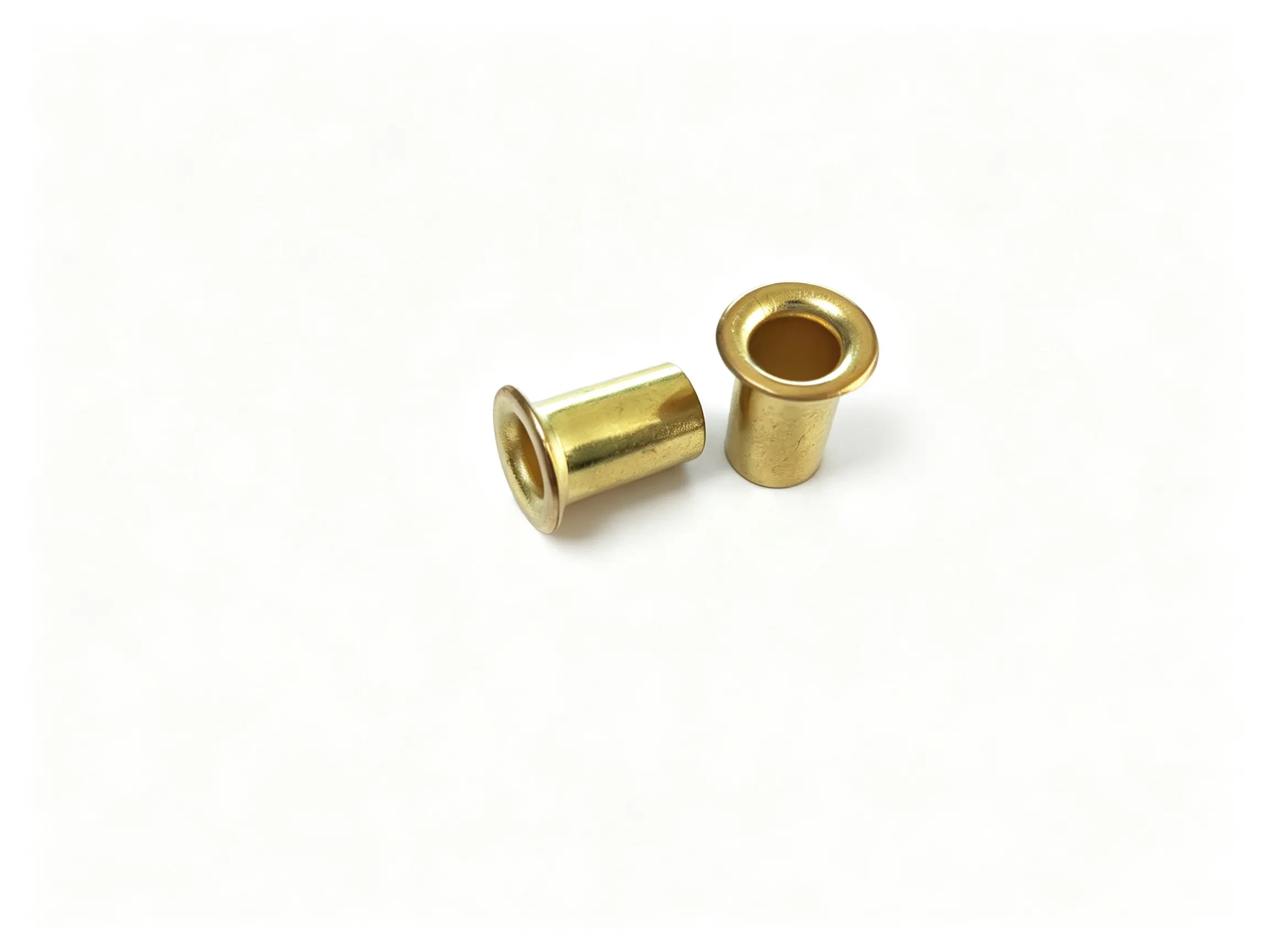
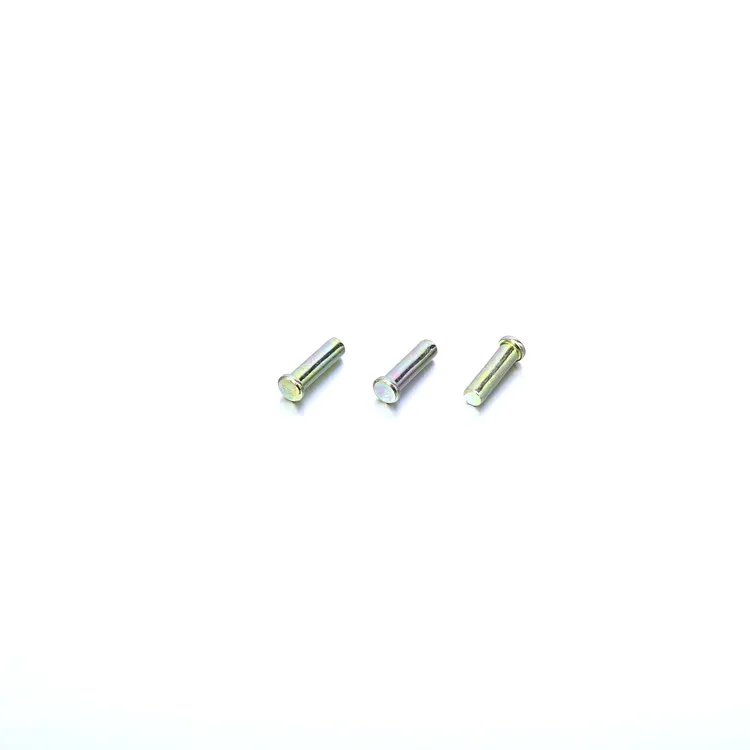
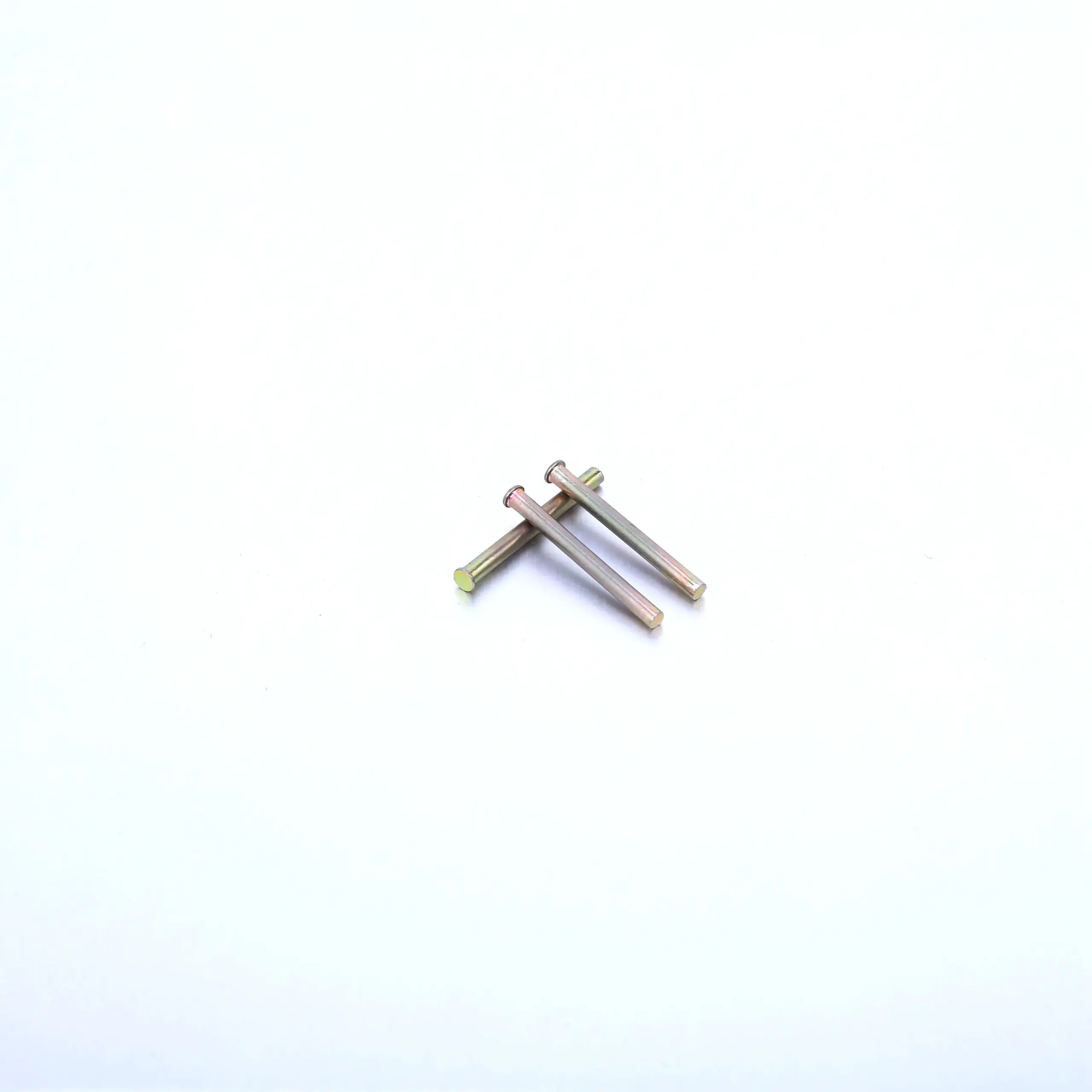
Brass step rivets have a headed end and a shank that changes diameter below the head. The gallery shows warm brass-colored parts with a short step, a compact body and several views of the head and shank. They are visually related to copper step rivets, so the material and finish should be confirmed from the drawing rather than inferred from the warm color alone.
Head and stepped shank
The gallery shows both single parts and a group view. Those images help compare the visible proportions, but they do not show the step tolerance or the hardness of the brass. Confirm the functional dimensions before choosing a sample for a close-fitting assembly.
Where brass step rivets may be used
These rivets can be considered for electrical hardware, switches, small hinges, nameplates, decorative panels and compact mechanical assemblies. The brass color may be selected for appearance or for a conductive path, but those are separate requirements. The assembly should state whether the rivet is primarily structural, decorative or part of an electrical contact.
A stepped rivet may reduce the need for a separate spacer, but it does not automatically provide a precise fit. The mating hole and plate thickness must be reviewed together. If the joint needs to move, confirm the clearance around the step rather than assuming the shoulder will act as a bearing.
Brass is not a complete specification
The title identifies brass, but the alloy, temper and surface condition still matter. A polished brass appearance can change with handling, and a coating may be present even when the color looks uniform. Ask for the material and finish requirements, especially if the part will be exposed to moisture, cleaning agents or repeated contact.
The photograph cannot show whether the step is concentric with the body or whether the head is square to the shank. Those are functional characteristics. Include them in the inspection plan when the rivet is used in a visible or close-fitting assembly.
How to specify a brass step rivet
- Show the head diameter, head height and top profile.
- Dimension the step diameter, step length, body diameter and overall length.
- State the plate thickness, hole fit, seating face and any required clearance.
- Specify the brass alloy, finish, installation method and inspection requirements.
Finishing and assembly checks
During trial assembly, verify that the step enters the intended hole and that the head seats correctly. Check the joint after setting for cracks or distortion. If the part is visible, compare the color and surface condition with the approved sample under the same lighting.
FAQ
Is this the same as a copper step rivet?
The visible proportions may be similar, but the title identifies brass. Confirm the alloy and finish rather than treating brass and copper as interchangeable.
Can the step be used as a spacer?
It can be considered for spacing if the drawing defines the step length and the mating surfaces. The photograph alone does not establish the intended function.
What should be checked after plating?
Check the step diameter, head seating face and any thread or bore-like feature. A coating can affect a close fit even when the color looks correct.
Browse the step rivet category, or compare copper step rivets and blue-white zinc-plated step rivets.