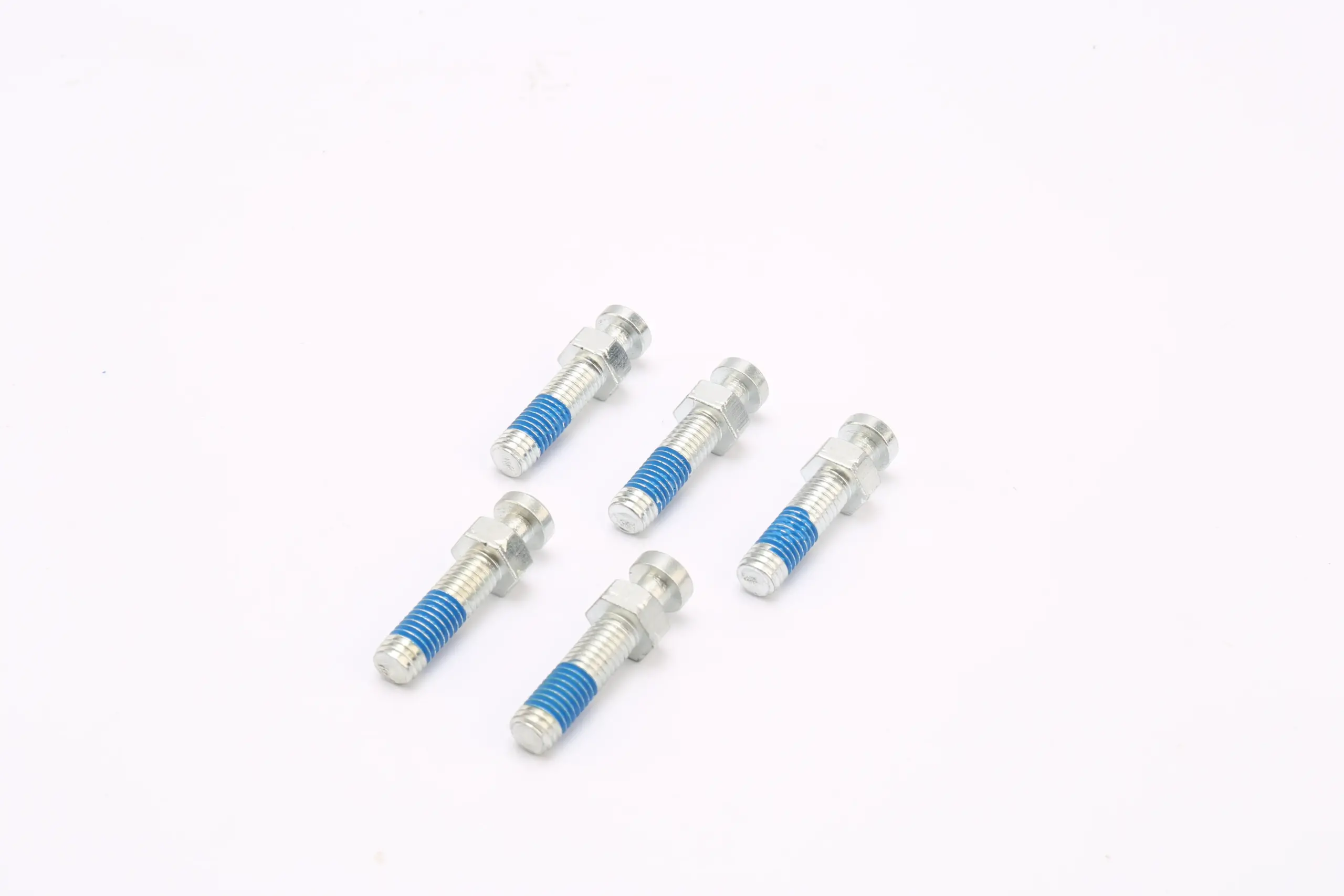
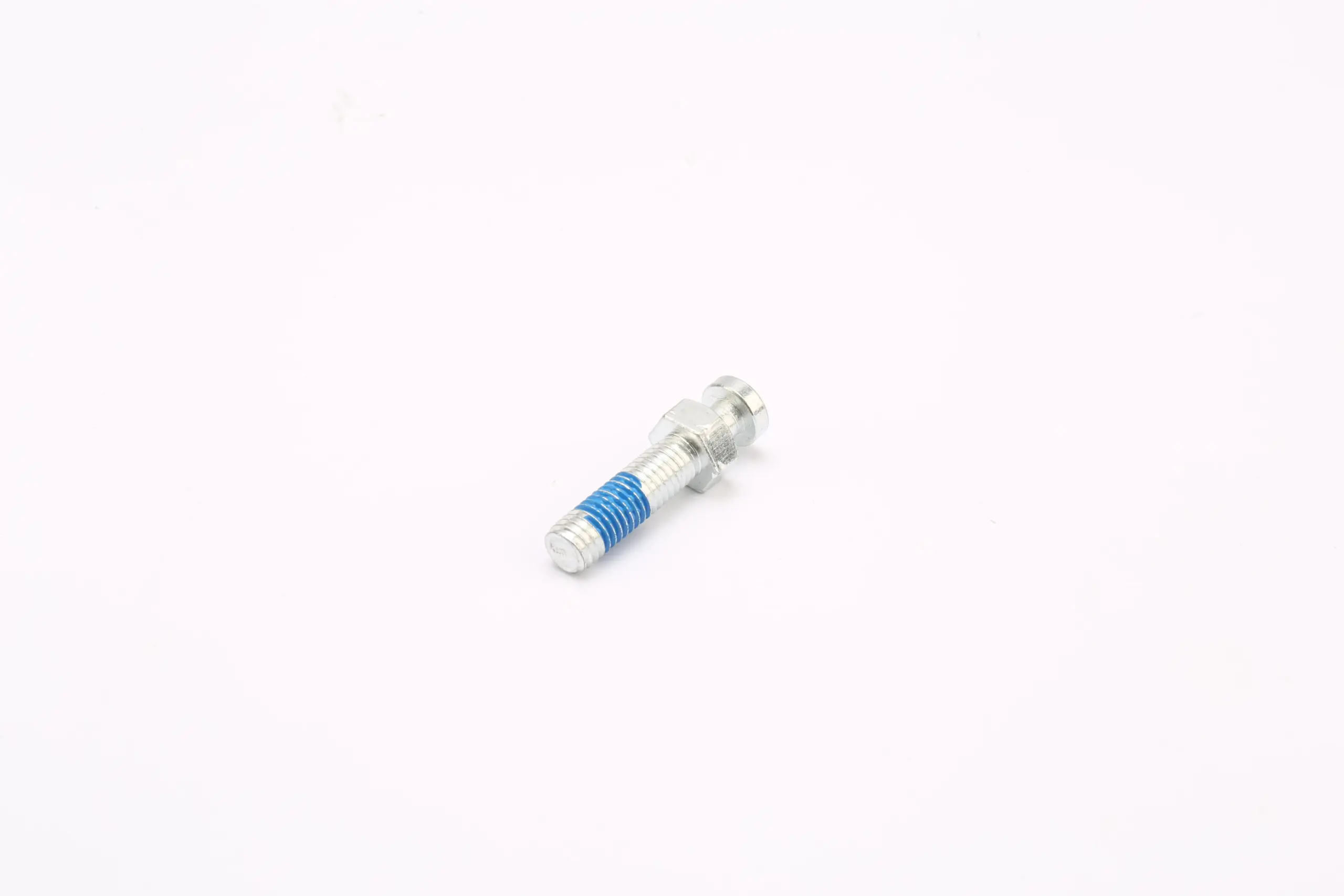
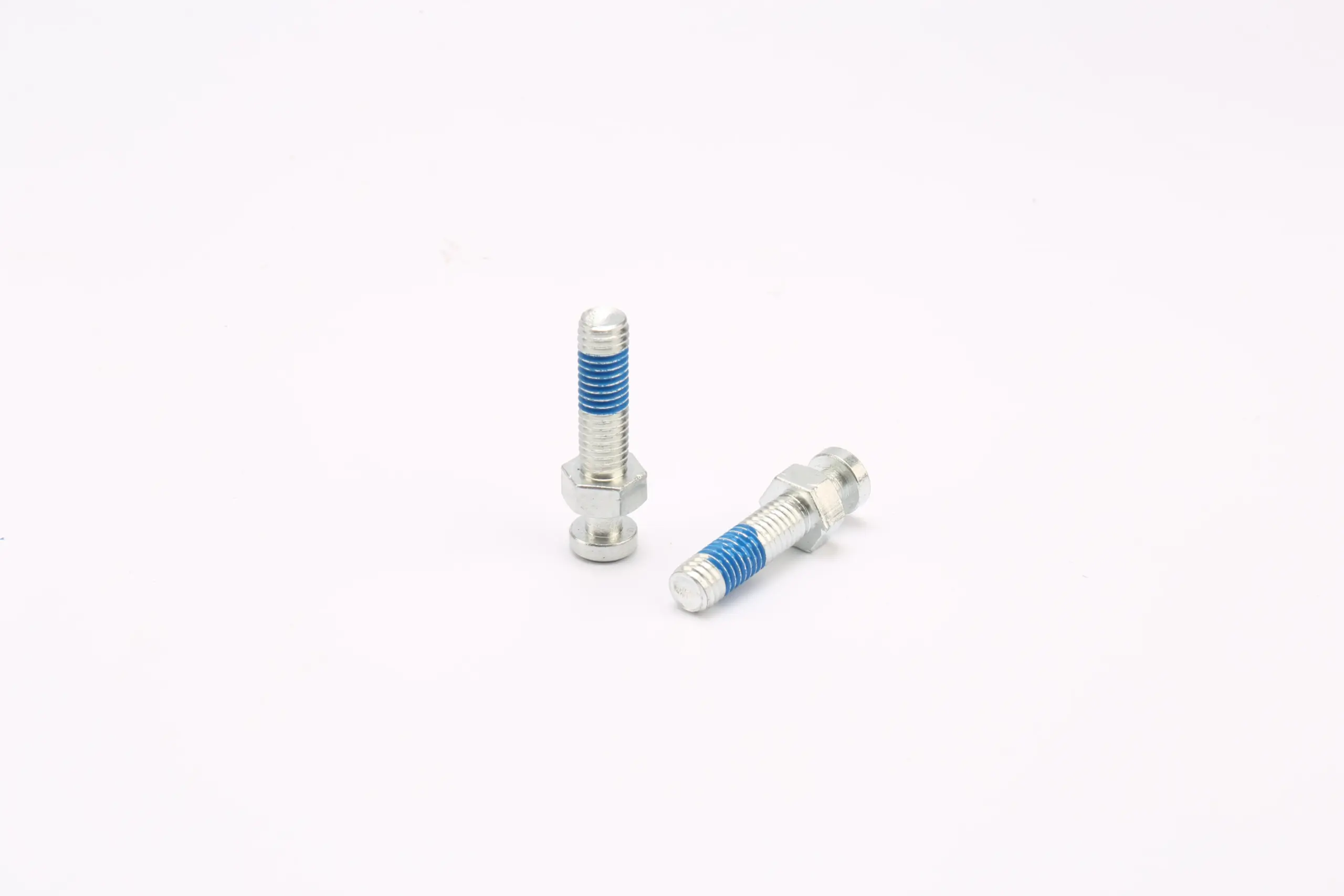
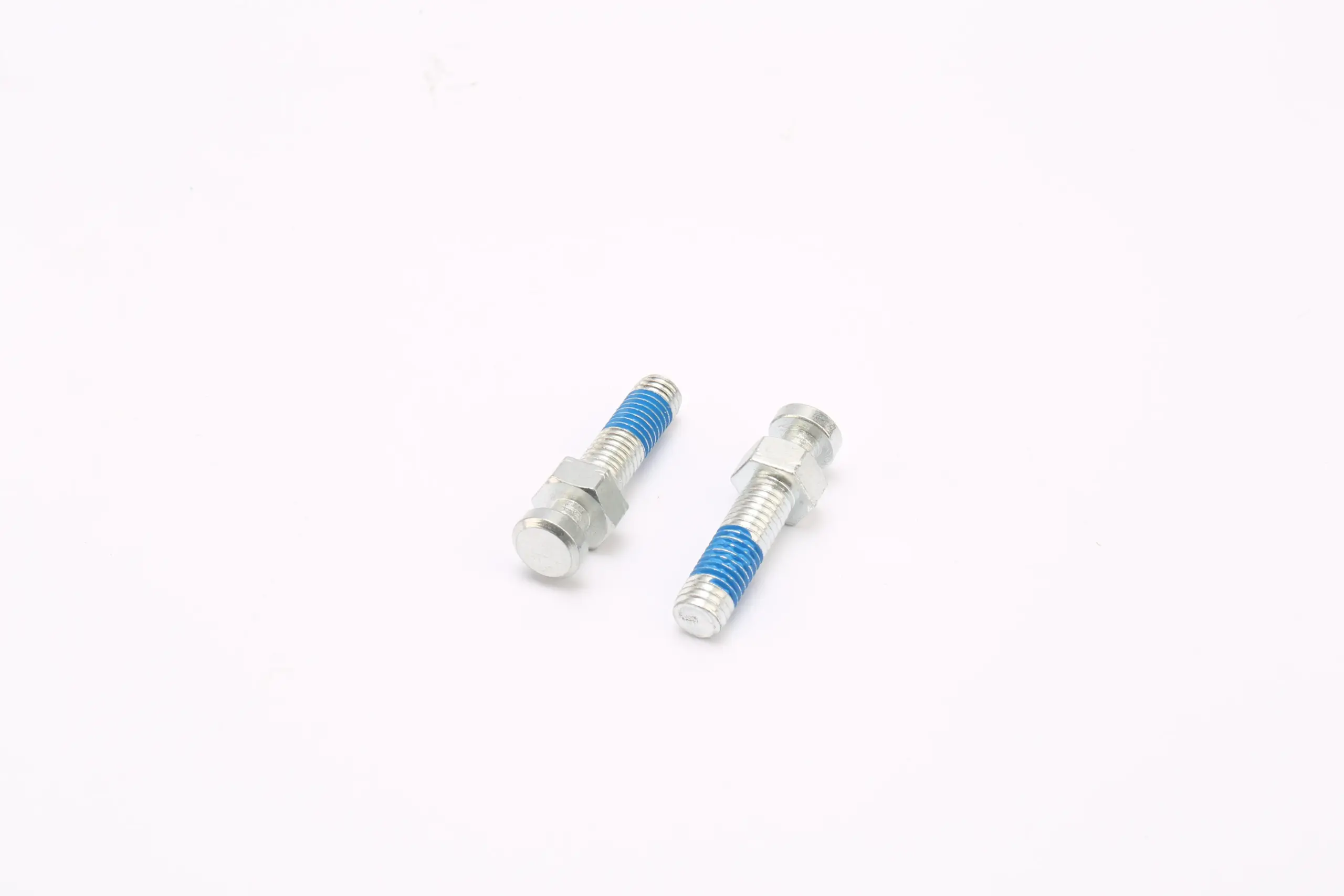
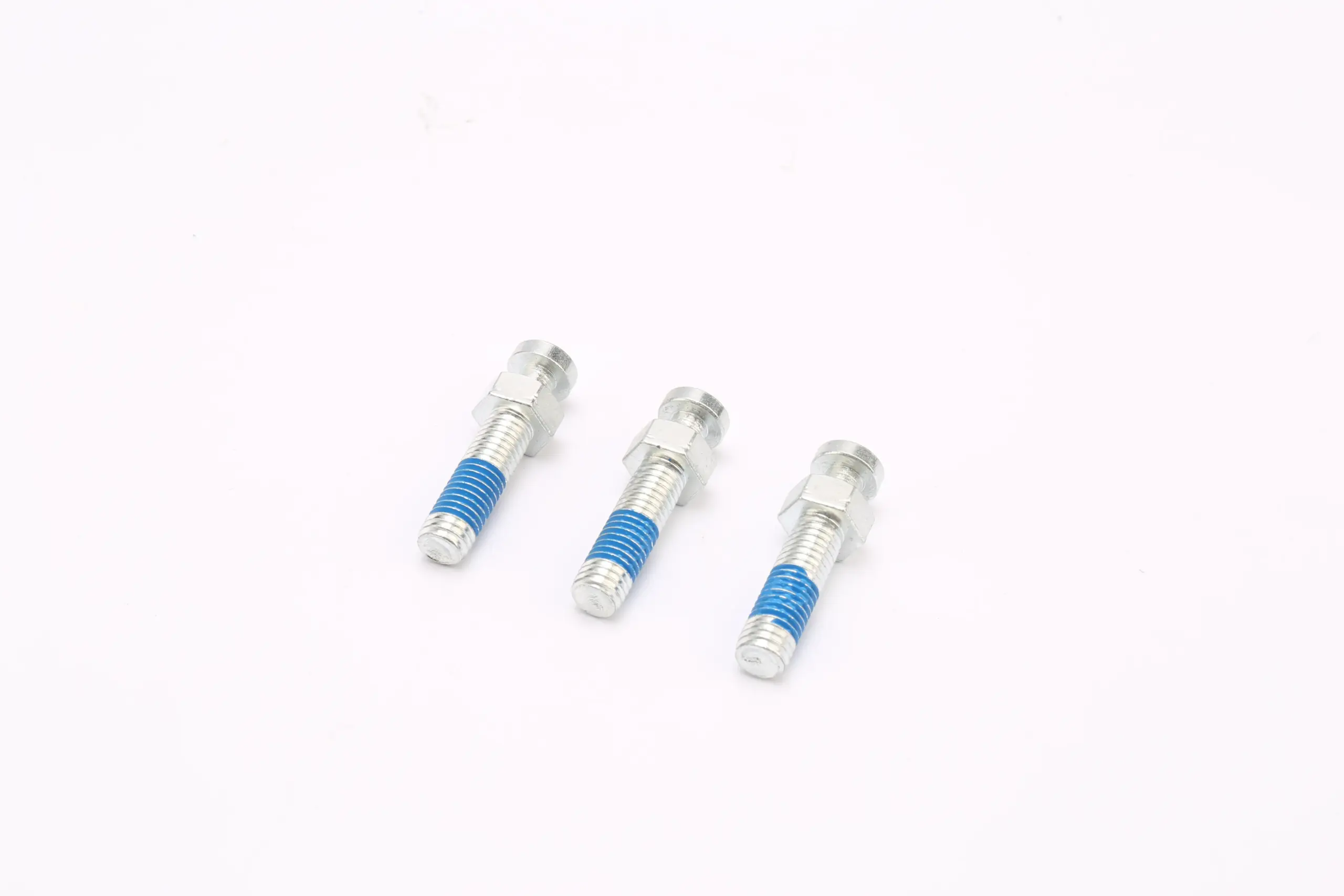
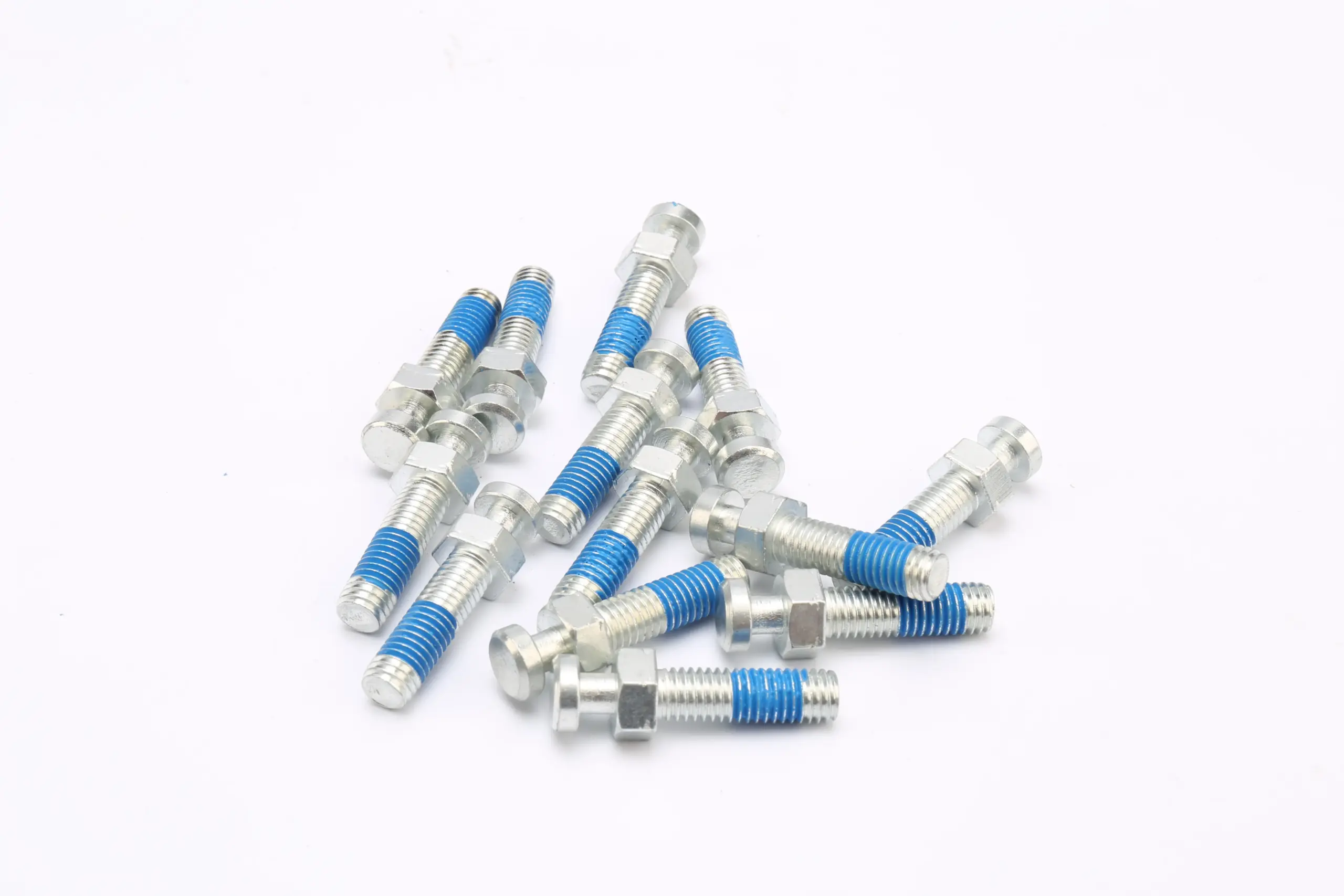
Irregular screws with blue thread-locking adhesive and a compact head for vibration-resistant custom assemblies. The notes below focus on the features that need to be confirmed before a drawing is approved.
Patch, head and thread
The blue patch on this irregular screw is a visible thread-treatment feature, not a performance rating. The drawing and process specification should identify the patch location, the thread area it covers and the intended assembly condition.
Begin with the interface that receives thread-locking irregular screws. The mating bore, panel or bracket establishes which surfaces locate and which clear. A dimension that is correct on the screw can still fail at that interface.
Locking function
A thread-locking patch can resist loosening only when the joint, thread fit and installation method are compatible. Do not infer a breakaway torque or reuse limit from the color. Confirm whether the patch is dry, pre-applied or applied during assembly, and whether the mating thread must be clean.
Use functional lengths for thread-locking irregular screws rather than overall length wherever possible. The distance from the seating face to the first thread, the length of a locating step and the depth of a bore all describe how the part behaves in the assembly.
Assembly access
The compact head and patch both affect installation. Check that the driver can reach the head, that the patch does not prevent starting and that the screw can be run down without scraping the patch away before engagement.
Define the assembly orientation for thread-locking irregular screws and the surfaces that must remain accessible. If the part can be installed in more than one direction, say how the correct orientation is recognized and whether the thread or a keyed feature prevents reversal.
Material and finish
State the base material, finish and any thread treatment separately. The blue color does not establish the adhesive chemistry, the substrate or the corrosion requirement. If the part is plated, confirm that the coating and patch process are compatible.
When thread-locking irregular screws will see moisture, cleaning agents or a different metal, state the exposure rather than selecting a finish from color alone. Functional surfaces such as threads, bores and locating diameters may need different protection from cosmetic surfaces.
Inspection and reuse
Trial the screw in the actual mating thread and inspect the patch before and after installation. Check that the head seats, the thread engages and the patch has not been pushed into a region where it could interfere. Decide the reuse policy before production.
Production inspection of thread-locking irregular screws should follow the functions that control assembly. Check the locating features, the thread or bore and the seating face, then add the visible edge and surface checks that matter for the finished part.
FAQ
Is the blue patch a thread-locking standard?
No. It is a visible treatment. The drawing and process specification must define its material and function.
Can the screw be reused?
Do not assume so. Reuse depends on the patch type and the assembly requirement, and should be stated explicitly.
What should be checked after tightening?
Check seating, thread engagement and whether the patch has been displaced or damaged.
Browse the irregular screws category, or compare hexagonal irregular screws(with thread-locking adhesive) and silver irregular screws.