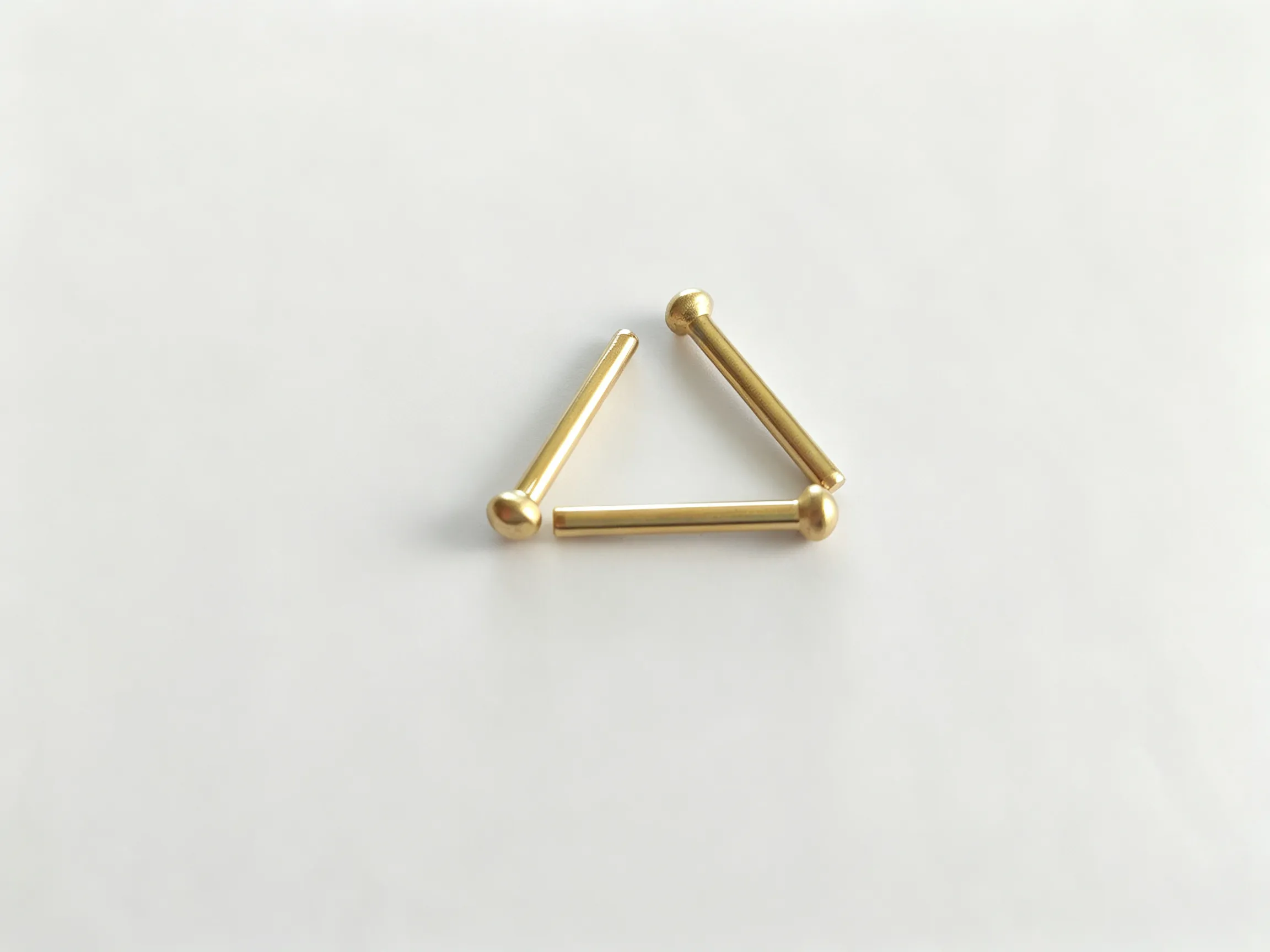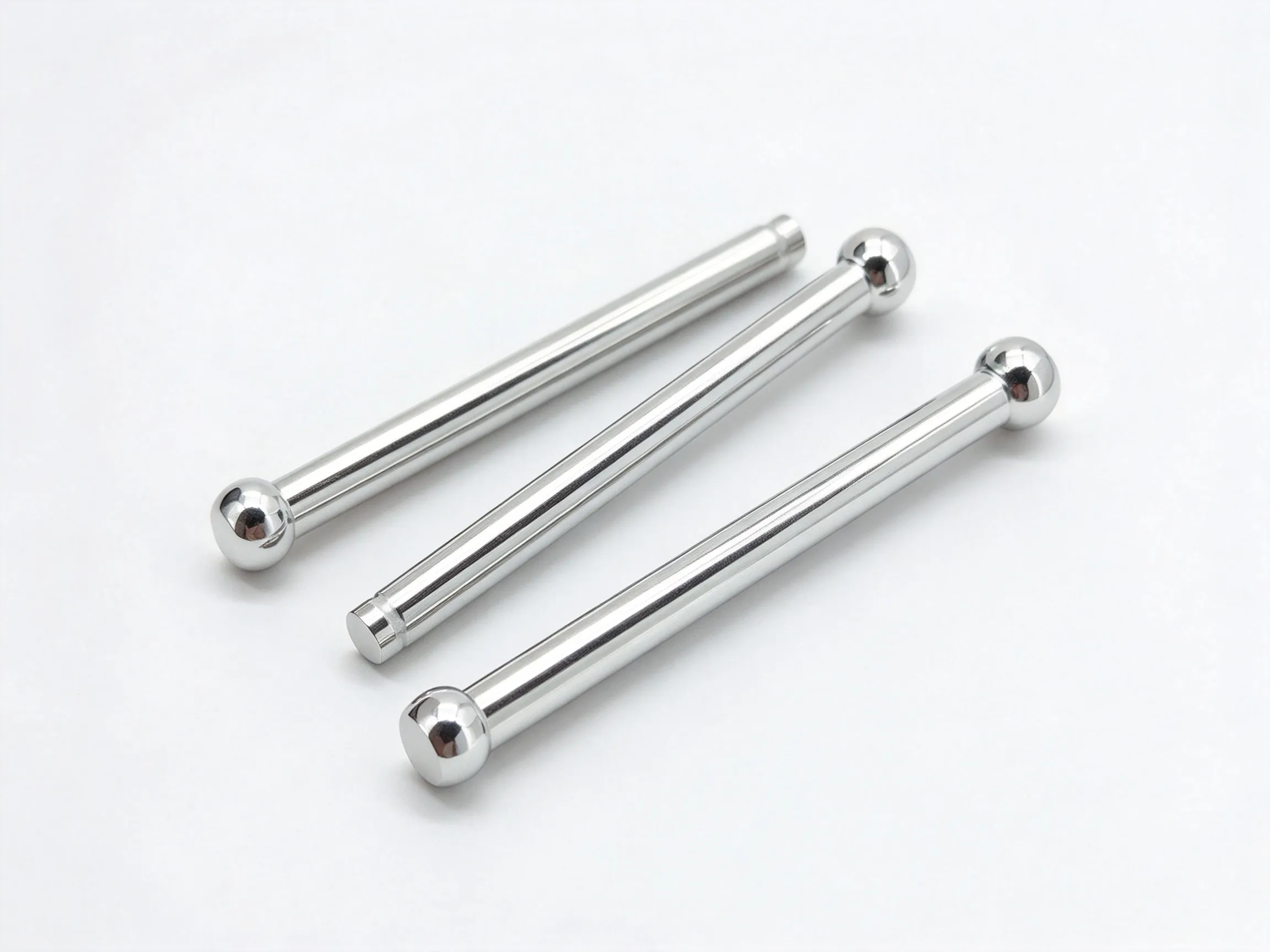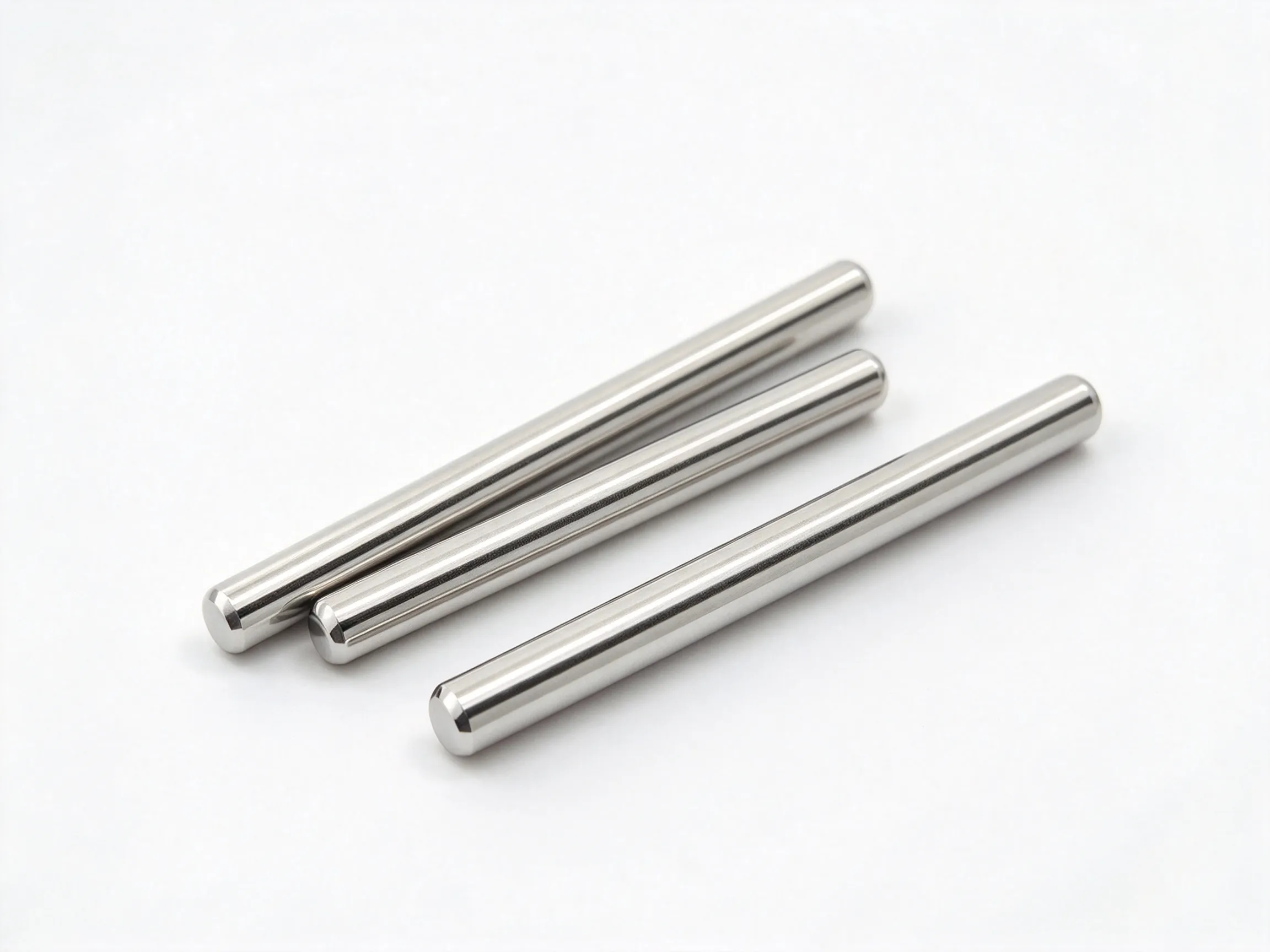
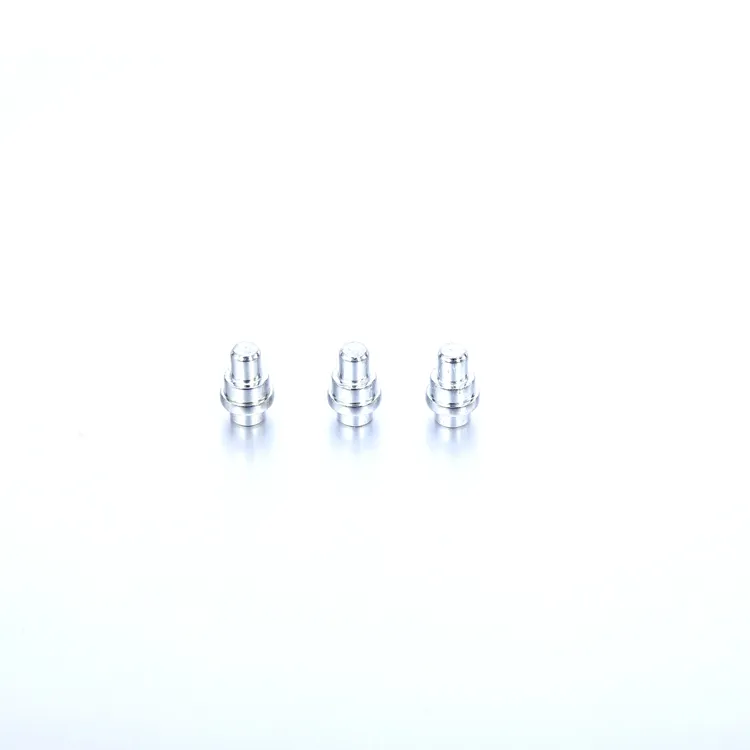
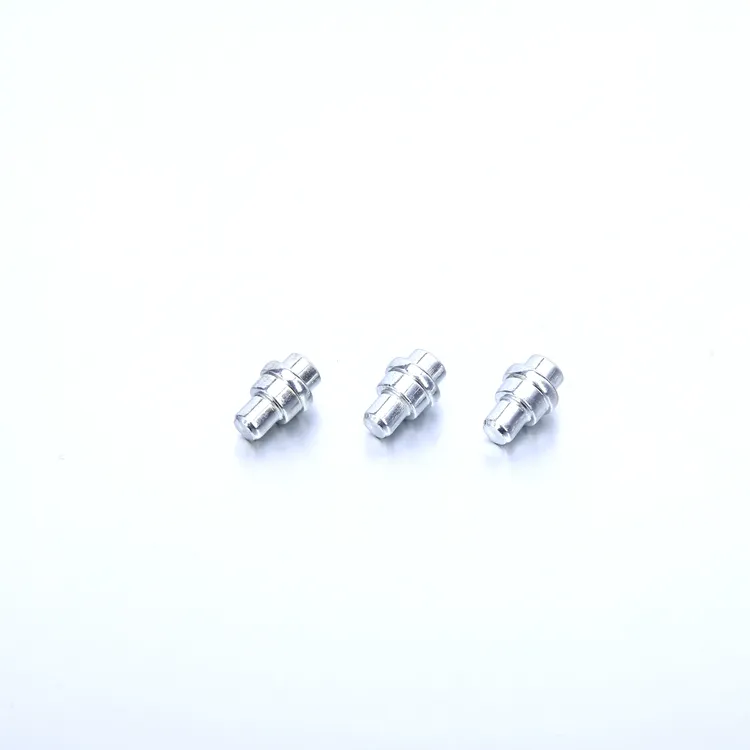
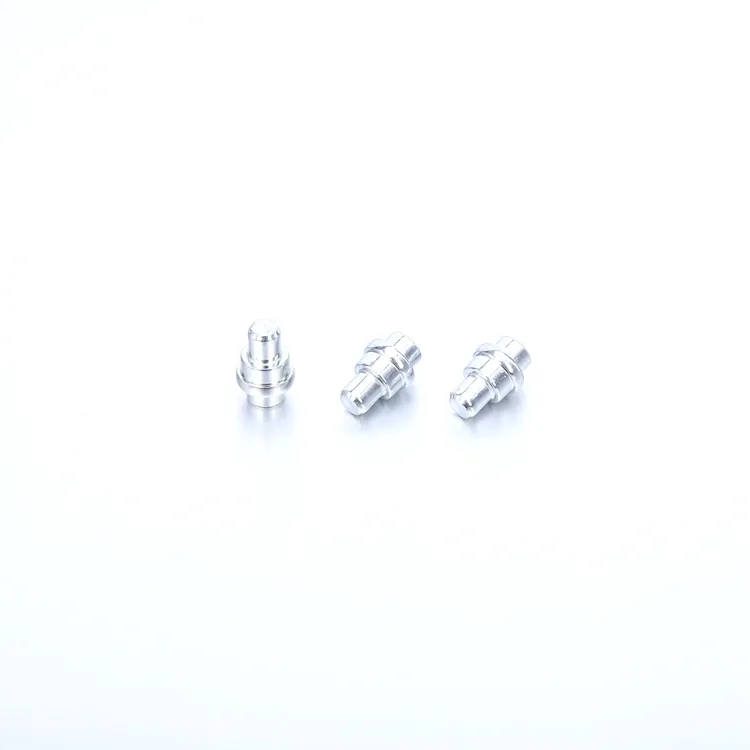
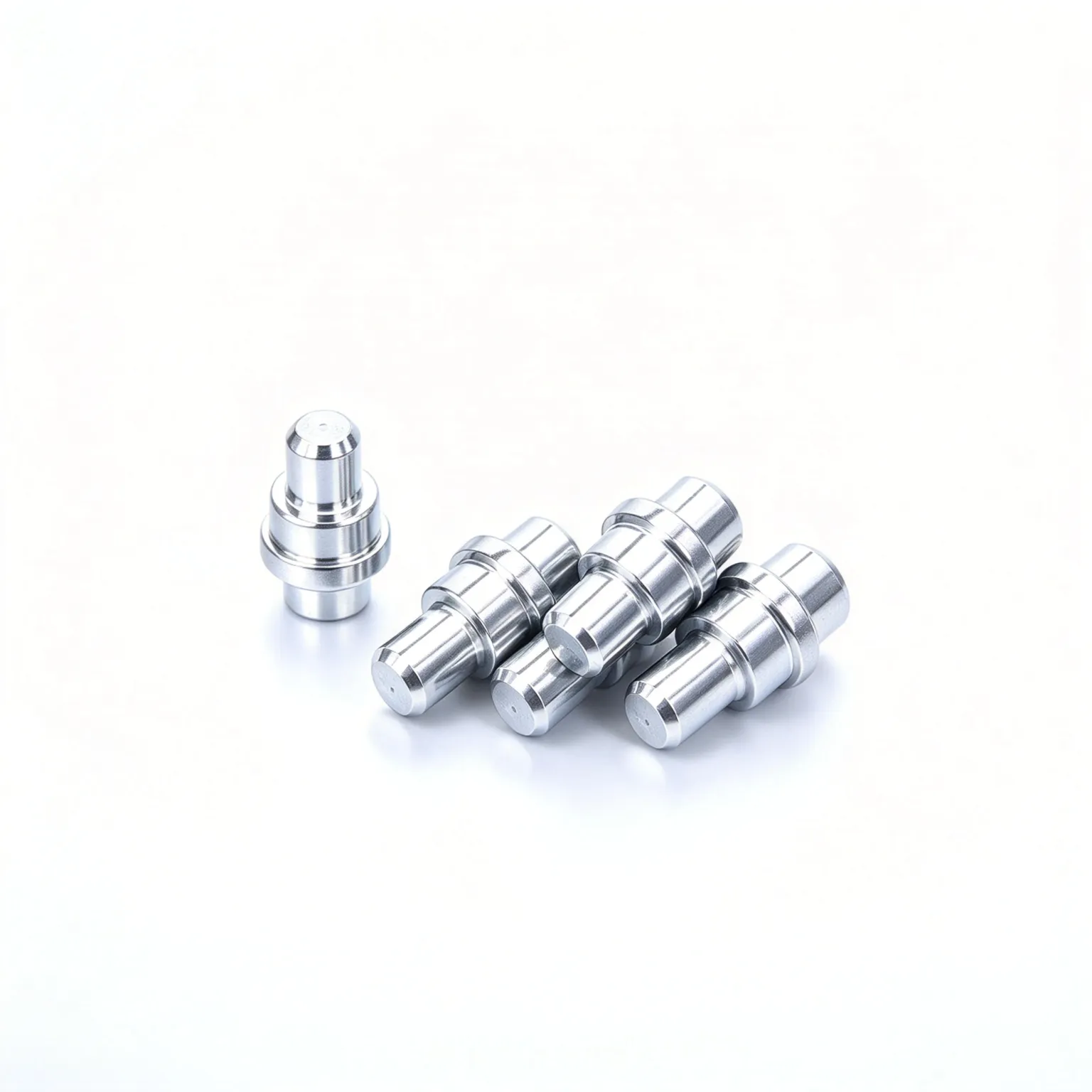
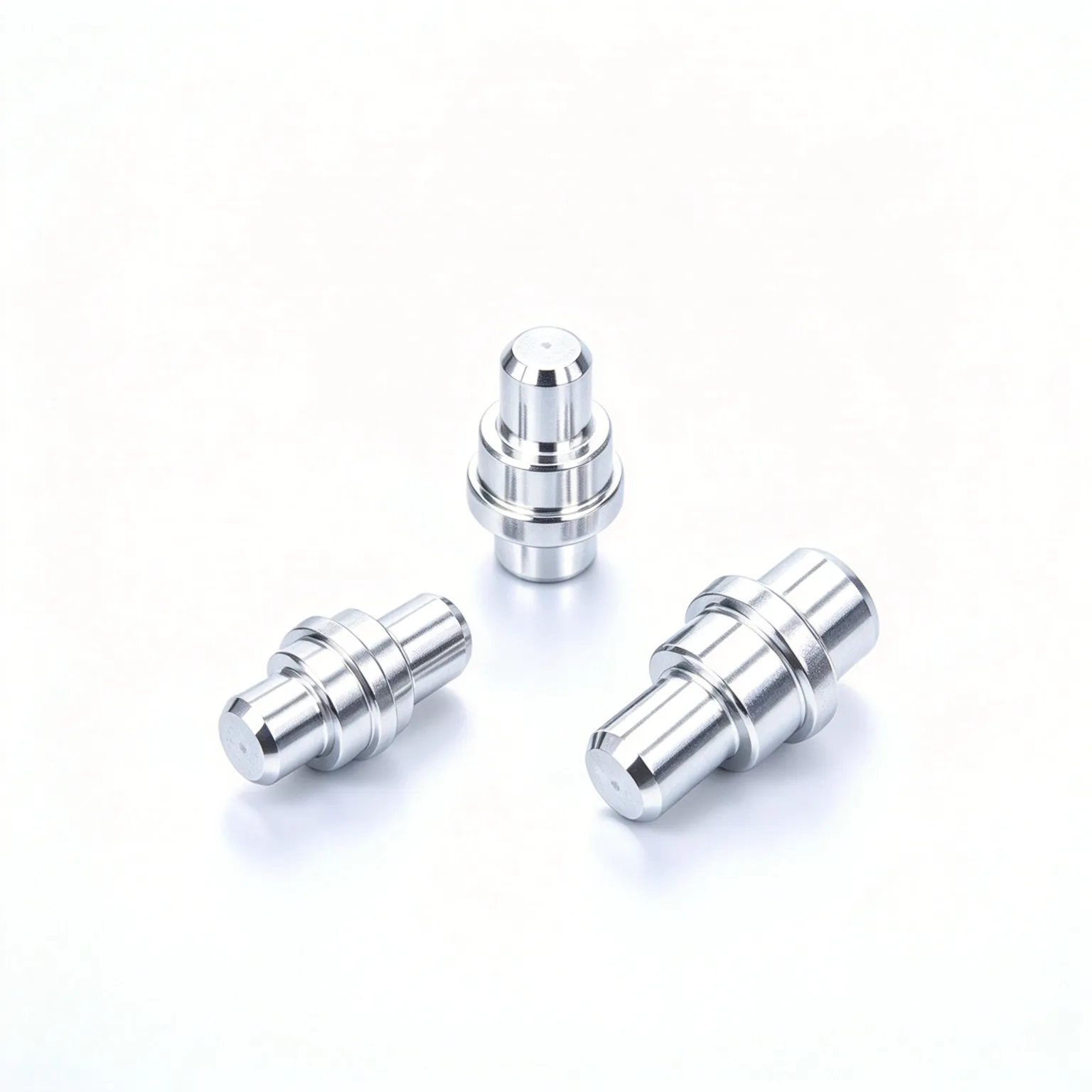
A customized step pin has two or more concentric diameters that create a step along the shaft. The gallery shows a compact pin with a larger body and a smaller end section, so the step position and the function of each diameter should be established before the part is made.
Multiple diameters and a defined step
The change in diameter creates a shoulder that can stop the pin, locate a component or provide a transition between two fits. The drawing should show the order of the diameters and the length of each section. A chamfer at the lead end can ease insertion, while a sharp shoulder may be needed for seating.
Location, spacing and assembly use
Step pins can be considered for small linkages, spacing hardware, fixture details and equipment assemblies. Check the mating holes for both diameters and the access for installation. If the larger diameter is a locating surface, its fit should be specified; if it is only a stop, the contact face should be identified.
Step pin and locating pin
A step pin may provide spacing or a simple shoulder, while a stepped locating pin is specifically used to control position. The names can overlap, so the drawing should state the locating function. Do not substitute one part for the other without checking the fit, shoulder depth and workpiece interface.
Specification inputs
- Provide each diameter and the length of every section.
- Show the shoulder, lead chamfer and end condition.
- Define the mating holes, insertion depth and contact face.
- State material, finish, quantity and inspection points.
Fit and inspection
Inspect the step for burrs and check the pin for bending. Trial-fit both diameters in the mating assembly and verify that the shoulder reaches its intended position without rocking. Confirm the material and finish separately, and define any required freedom of movement or retention.
Review the step pin in the assembly with both mating holes present. Confirm that the smaller diameter enters first, the larger diameter reaches its intended location and the shoulder seats without bottoming prematurely. Check the pin for bending and the step for burrs. If the pin is removed for service, make sure the exposed end can be gripped without damaging the locating surface. Record the fit for each diameter.
FAQ
How many steps can a custom pin have?
The drawing defines the number and order of steps. Each functional diameter should be dimensioned.
Is the larger diameter always a locating surface?
No. It may be a stop or a clearance feature; the drawing must state its function.
What should be checked first?
Check the fit of each diameter and the position of the shoulder in the mating assembly.
Browse the Custom Parts category, or compare customized carbon steel screws and customized flat head colored zinc plated rivets.