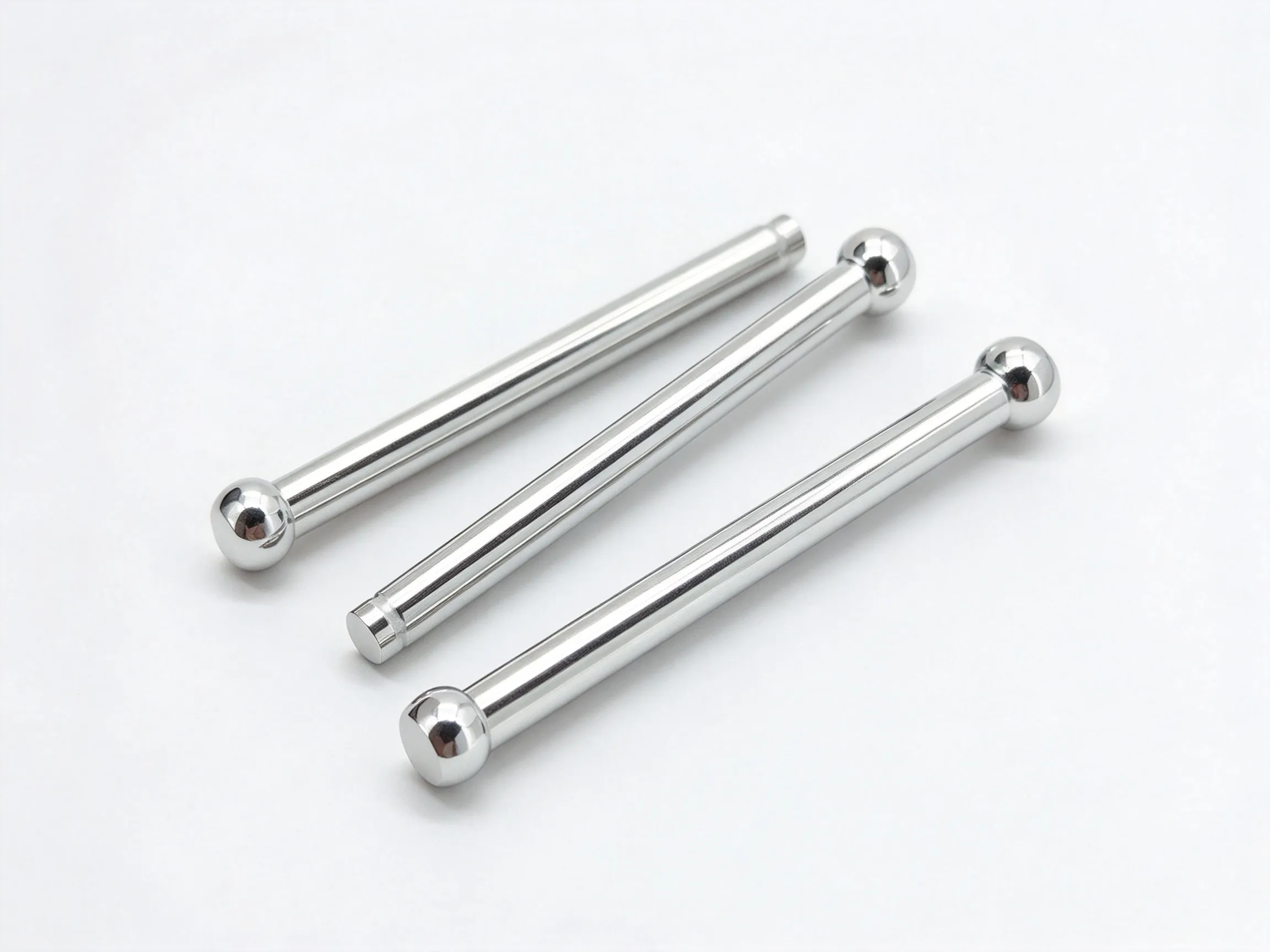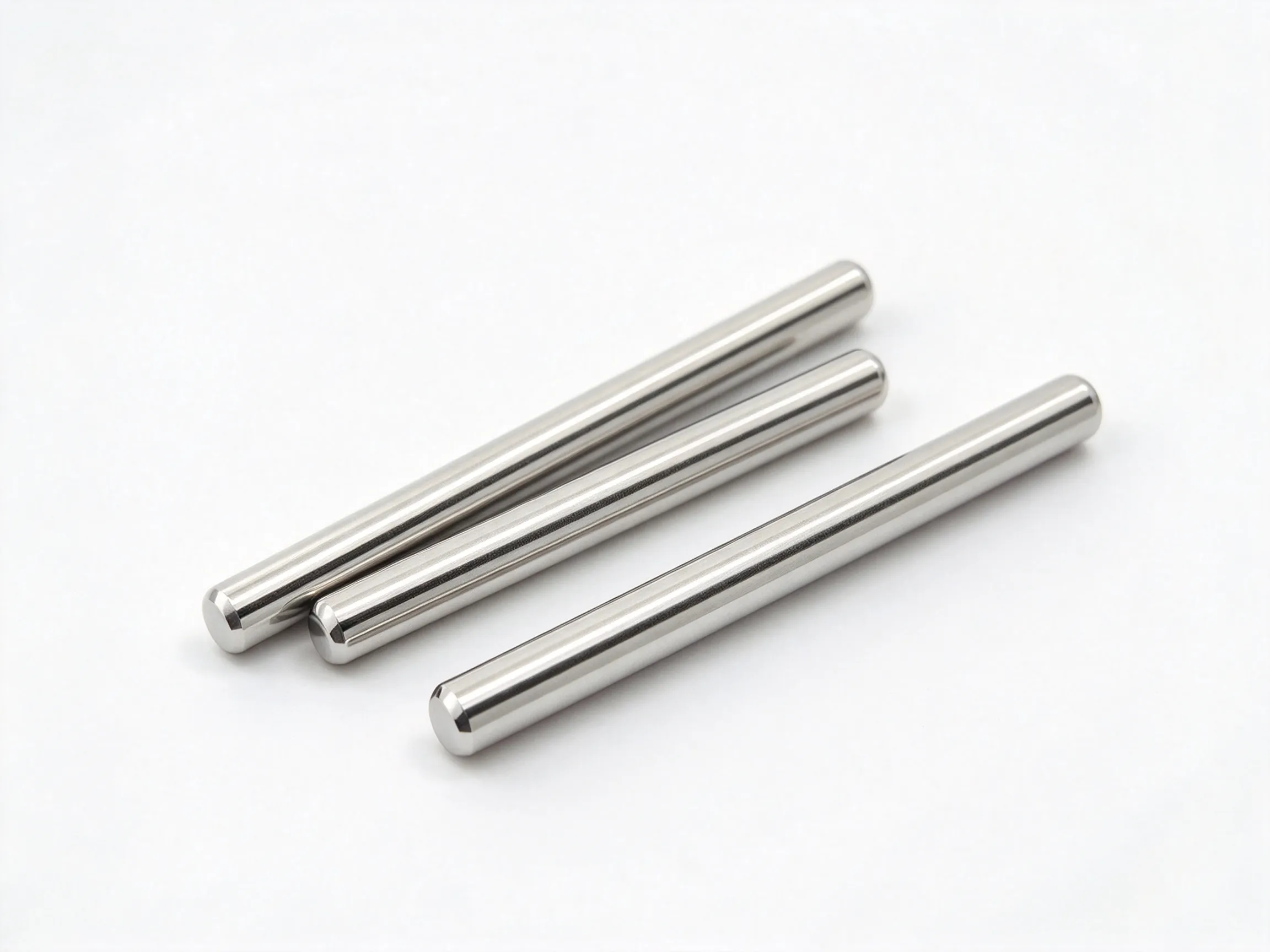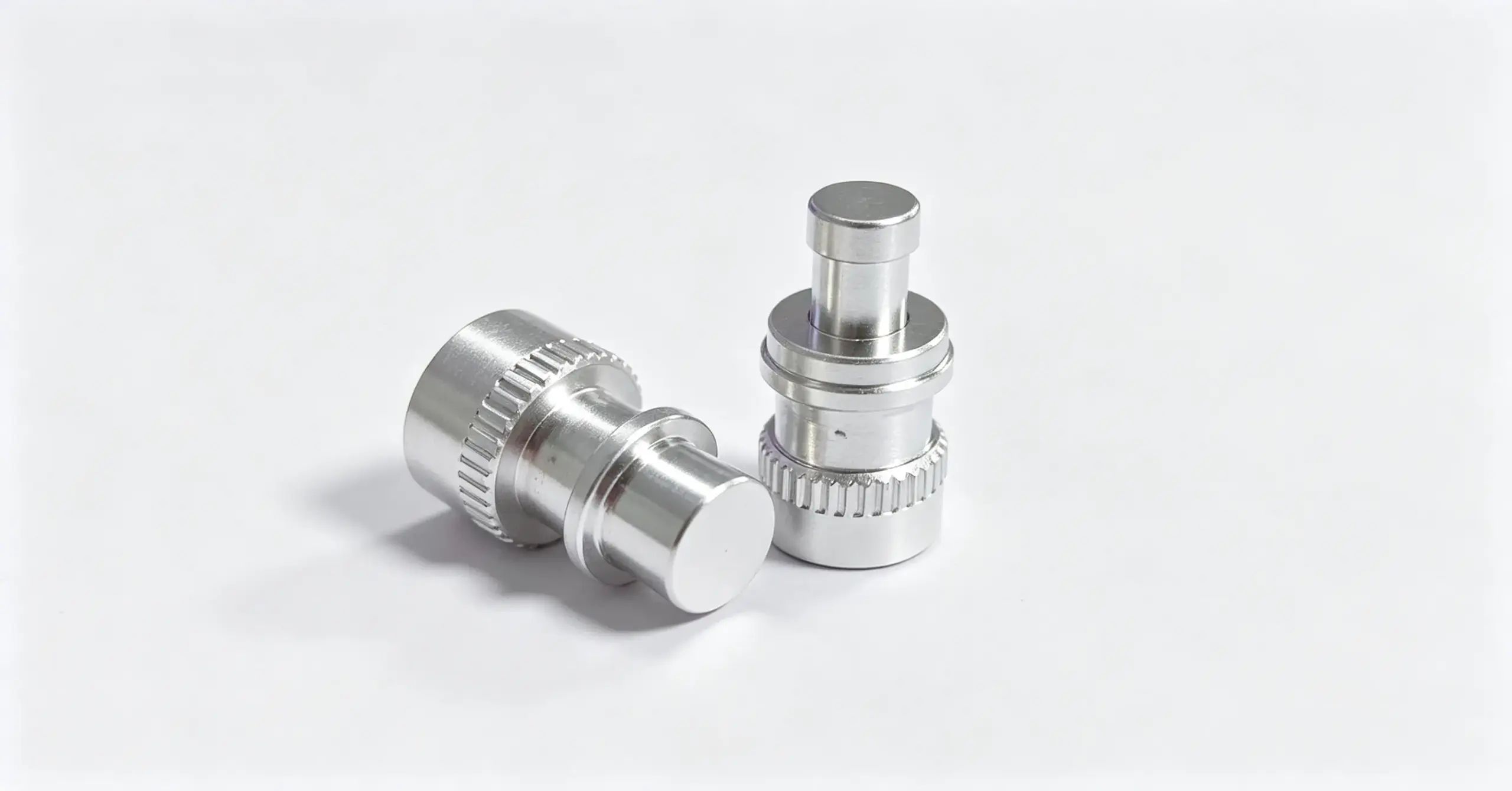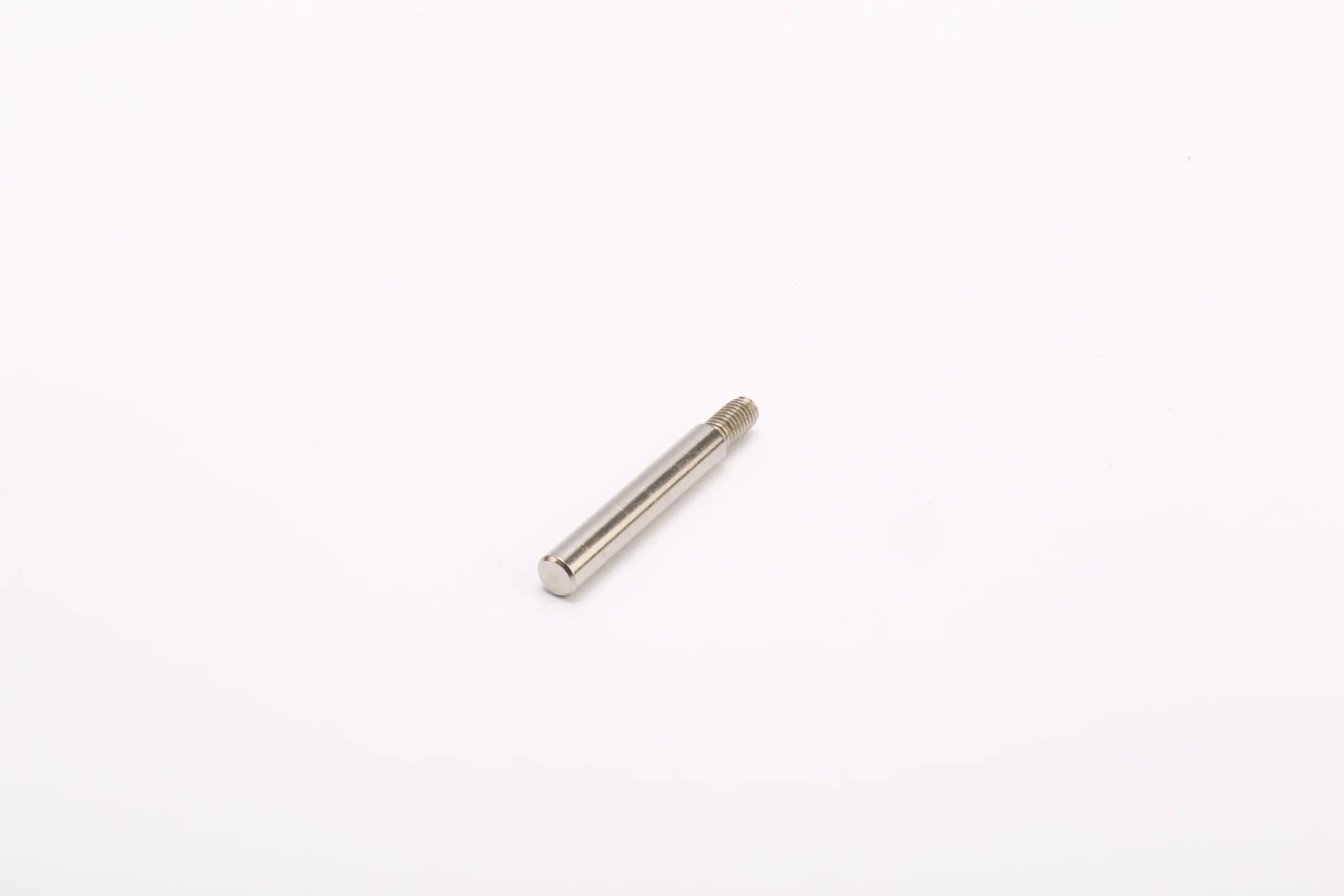
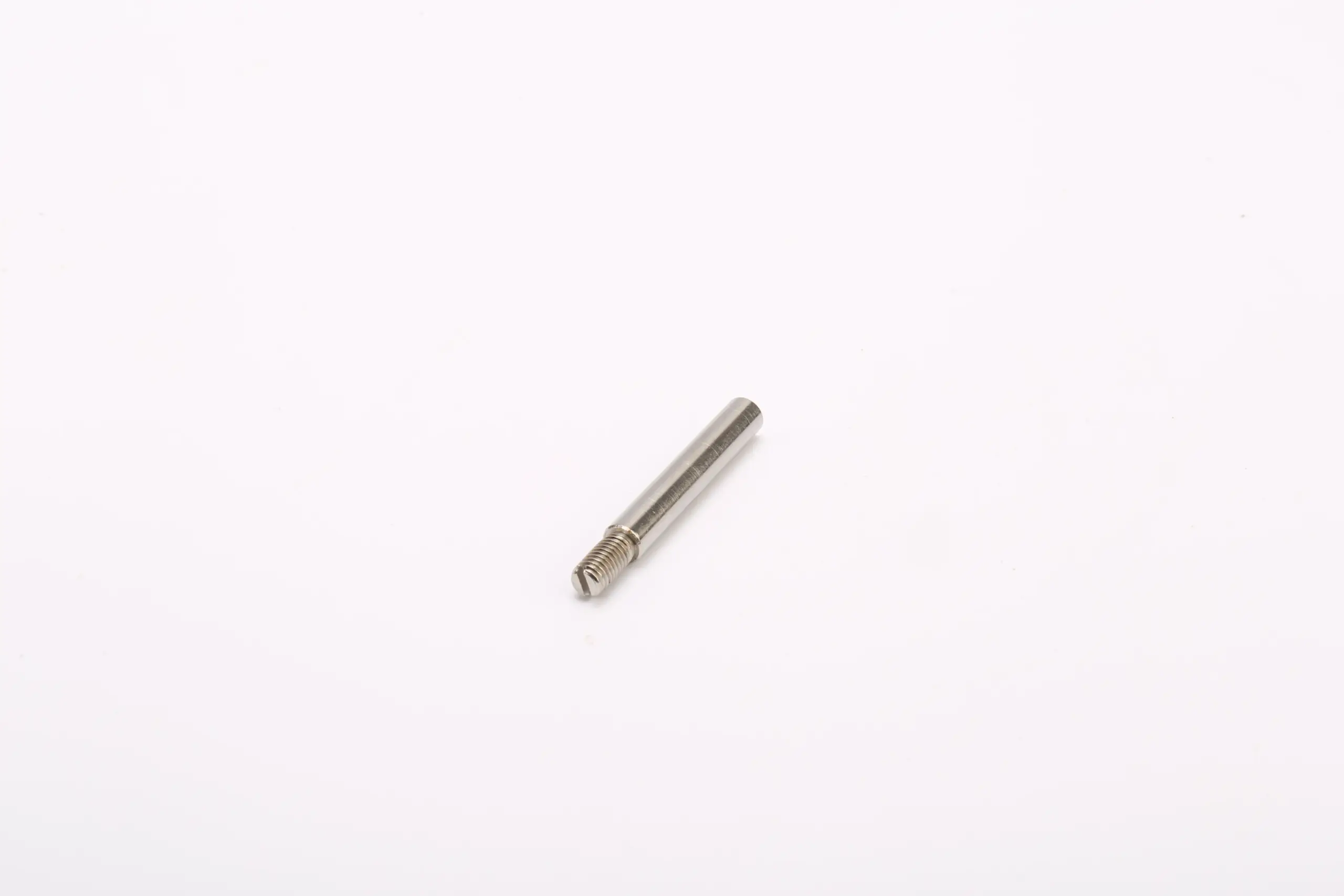
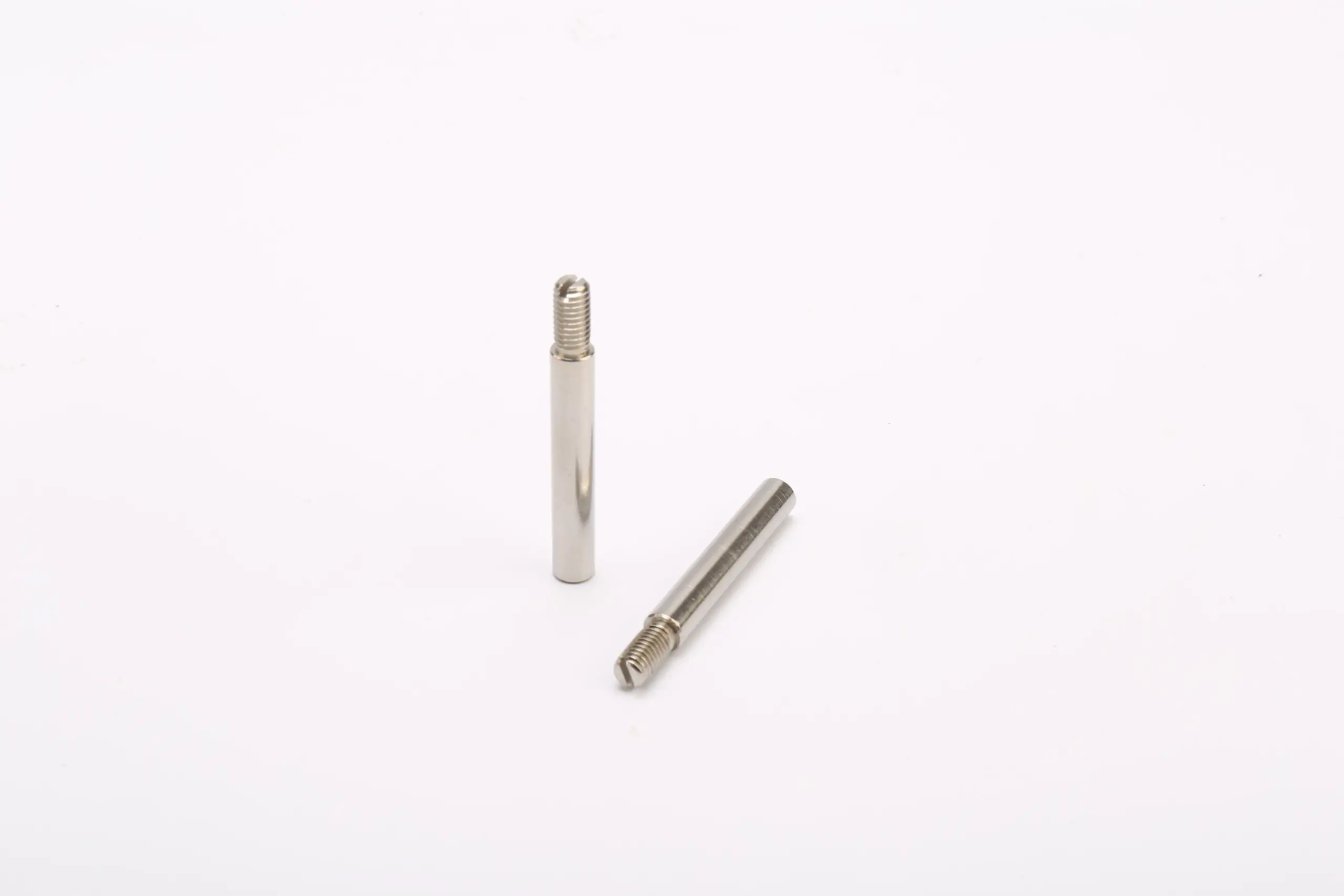
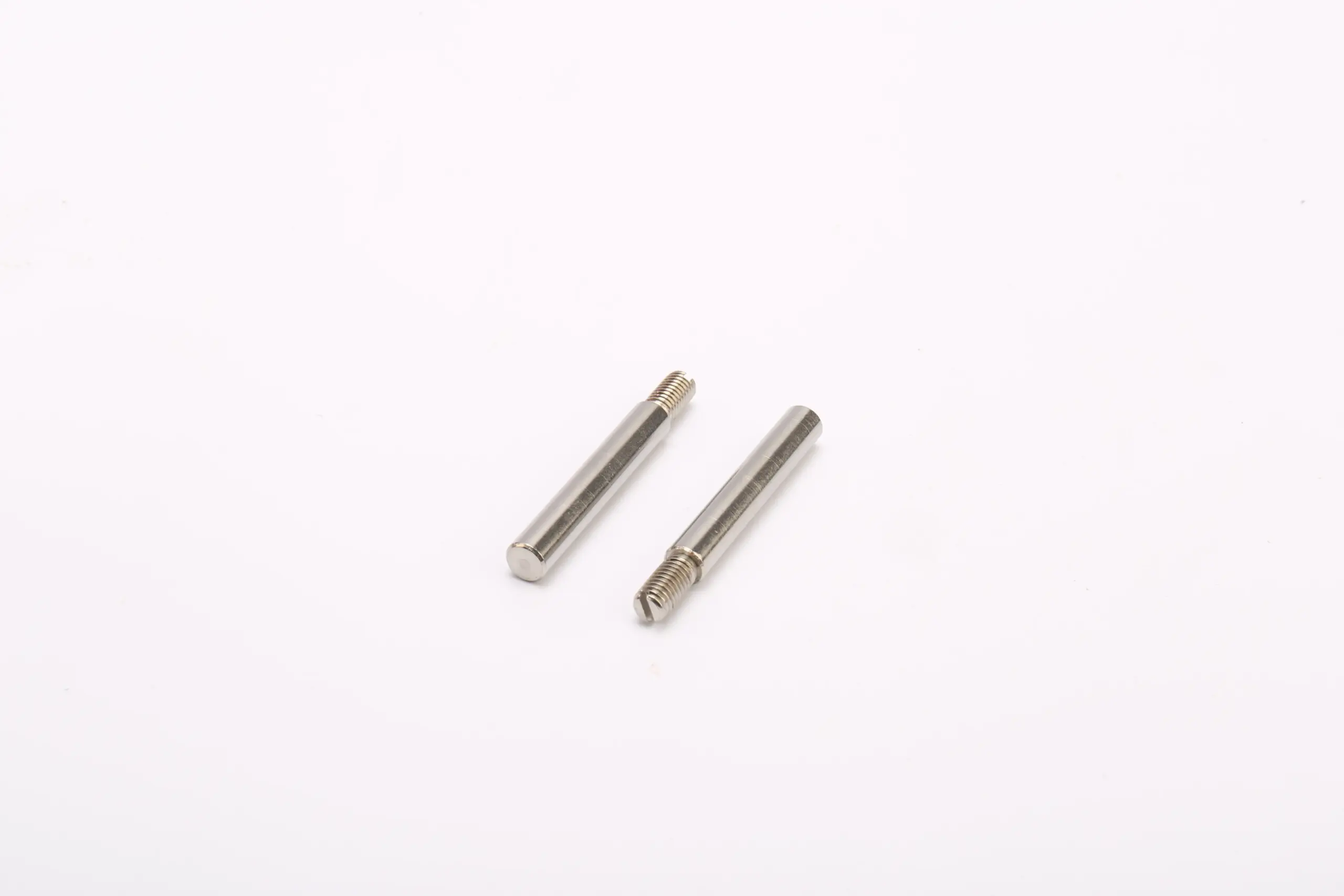
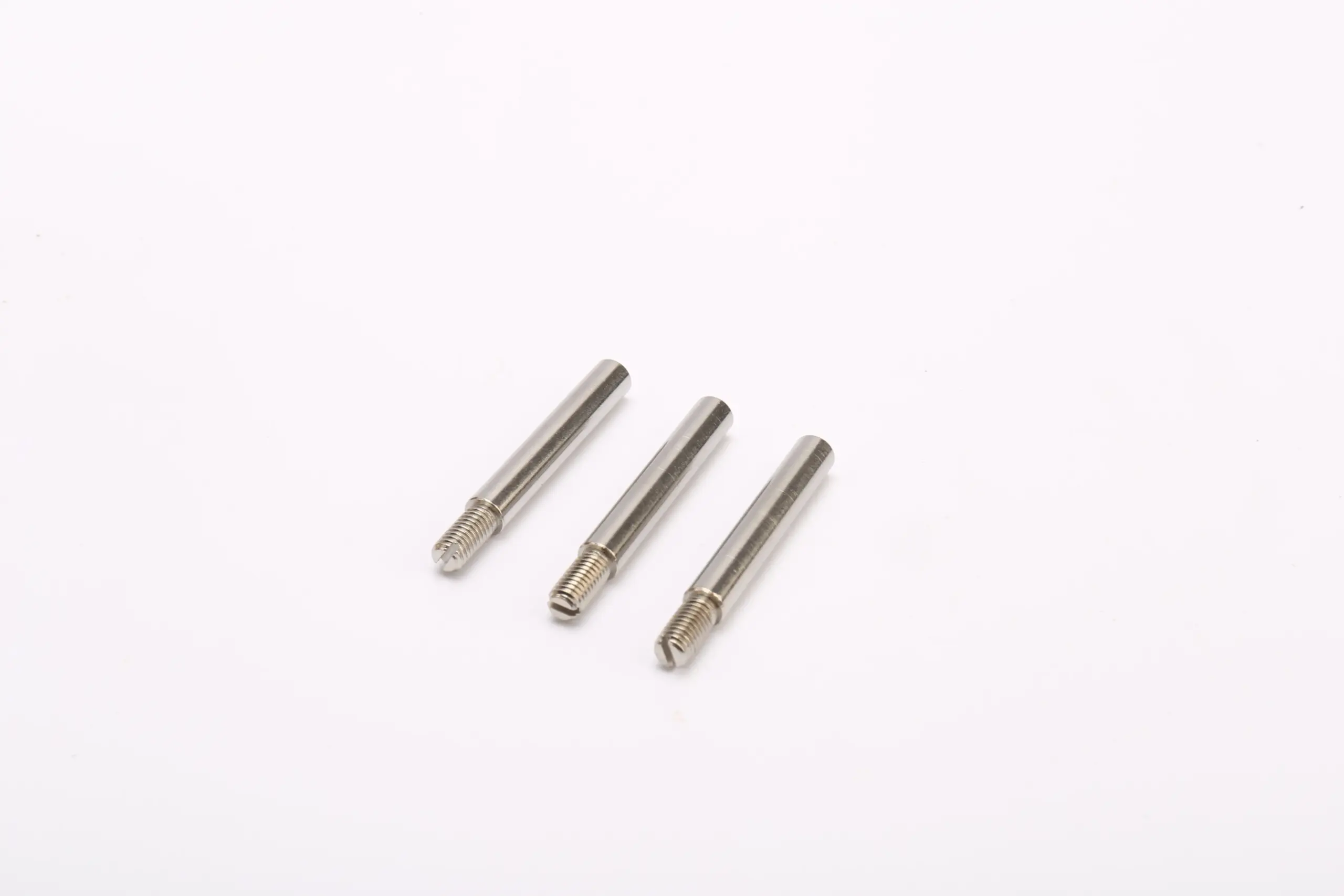
An external thread slotted cylindrical pin combines a cylindrical body, an external threaded section and a slot feature. The slot is visually prominent, but its function must come from the drawing; it may be a drive, adjustment or clearance feature rather than a standard screw slot.
Threaded shank and cylindrical body
The threaded section engages a mating tapped hole or nut, while the cylindrical body provides the pin form. The thread length, runout and transition to the plain body should be shown. A pin that looks continuous in the photo may still have a short unthreaded lead or relief that affects assembly.
Adjustment and location use
These pins can be considered for adjustable stops, locating hardware, equipment linkages and assemblies that need a threaded connection plus a slot feature. Check the mating thread and the available travel before defining the body length. If the slot is used for adjustment, the tool access and the locked position should be part of the assembly review.
Slot function must be defined
Do not assume the slot is for a screwdriver, a retaining clip or fluid passage. State its width, depth, end radius and orientation. The slot can reduce the local section, so its position relative to the thread and bearing surfaces matters. A sharp slot end can also create a stress concentration or a burr that interferes with the mating bore.
Specification inputs
- Provide the thread designation and threaded length.
- Show the body diameter, overall length and slot dimensions.
- Define the mating thread, adjustment range and tool access.
- State material, finish, quantity and inspection requirements.
Thread and material inspection
Check the thread for damage and the slot for burrs before assembly. Confirm that the pin enters the mating thread by hand where intended and that the slot does not contact an unintended surface. Material and finish should be specified separately; the external form does not establish strength, corrosion resistance or a tightening value.
Review the slot and thread transition together. A burr at the slot end can damage the mating thread or prevent the pin from entering a close bore. Confirm that the slot orientation is correct for the intended tool or adjustment and that the reduced section does not sit where the assembly needs full bearing contact. If the pin is adjusted after installation, check that the tool can reach the slot without removing nearby hardware.
FAQ
Is the slot a standard screwdriver slot?
Not unless the drawing says so. Its function and dimensions must be specified.
Can the threaded length be changed?
Yes, when the new thread length and transition are defined on the drawing.
Does the pin have a locking feature?
The slot is not automatically a lock. Any locking method must be shown or described in the assembly design.
Browse the Custom Parts category, or compare brass contact points and special shaped screws.